Wooden Safety Fence
CN → US| HS Code | Tariff Rate | Origin | Destination | Doc |
|---|---|---|---|---|
| 4418999150 | 38.2% | CN | US | Official Doc |
| 4407110053 | 35.0% | CN | US | Official Doc |
| 4407190093 | 35.0% | CN | US | Official Doc |
| 4409291100 | 35.0% | CN | US | Official Doc |
| 4418999195 | 38.2% | CN | US | Official Doc |
Product Images
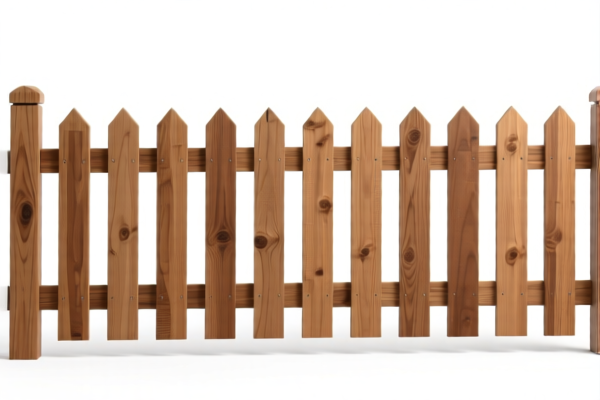
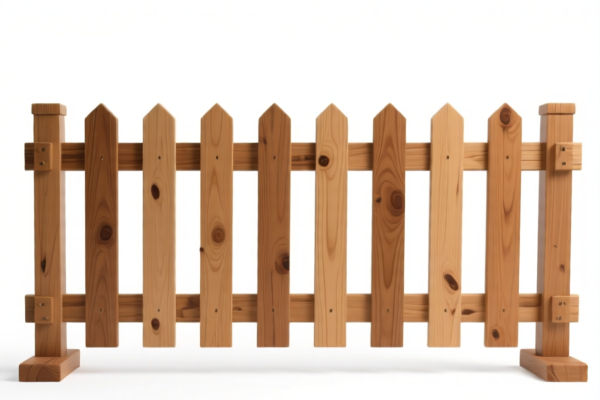
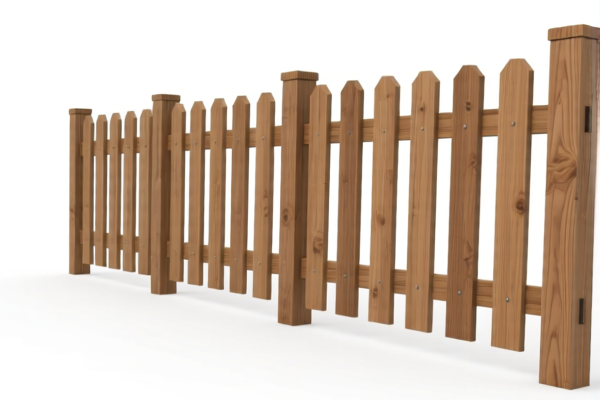
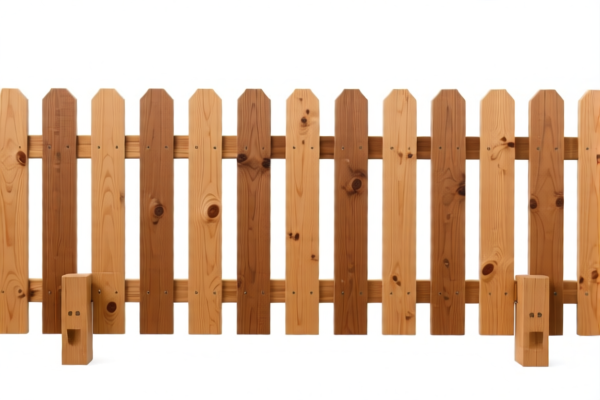
AI Analysis
🌲 Wooden Safety Fence (Wooden Fencing Panels & Components)
🌐 HS Code Reference & Customs Clearance Guide | 2026 Latest Tariff Analysis | Professional Clearance Strategy for Wooden Barriers
📌 I. Product Definition & Classification: Do You Really Understand "Wooden Safety Fence"?
A "Wooden Safety Fence" is not a single standardized product but a category of wood-based construction materials used for boundary definition, security, and aesthetic division in residential, commercial, and industrial settings. In international trade, classification depends heavily on the processing level and specific application of the wooden component.
The key distinction lies in whether the wood is: 1. Rawly Processed: Sawed, planed, or simply joined planks (Lumber/Siding). 2. Finished Construction Components: Pre-assembled panels, gates, or specialized fence boards designed for immediate installation.
⚠️ Key Classification Point:
- If the item is a pre-assembled fence panel or specific fencing board designed for outdoor structural use → Typically falls under Chapter 4418 (Builders' Joinery).
- If the item is raw or semi-processed lumber (e.g., sawn pine, processed planks >6mm) used to make fences → Typically falls under Chapter 4407/4409 (Sawn Wood/Wood Continuously Shaped).
- Note: The data provided focuses on these specific HS codes relevant to wooden fencing components.
📦 II. HS Code Classification Details (2026 Latest Tariff Authority Comparison)
| HS Code | Product Description | Application Scenario | Processing Level |
|---|---|---|---|
4418.99.91.50 |
Wooden Fence Boards / Construction Panels | Pre-made fence sections, decorative wooden dividers, outdoor structural panels | ✅ Processed/Assembled (Builders' Joinery) |
4407.11.00.53 |
Sawn/Worked Coniferous Wood (Pine) | Raw pine planks, rough-sawn wood used for fence posts or rails | ✅ Raw/Sawn (Lumber) |
4407.19.00.93 |
Wood Processed Products (>6mm Thickness) | Thick wooden boards, siding, or fence components with specific thickness requirements | ✅ Worked (Thickness-specified Lumber) |
4409.29.11.00 |
Wooden Board Materials | Tongue-and-groove boards, profiled wood sheets, or siding panels for fencing | ✅ Continuously Shaped (Profiled Lumber) |
4418.99.91.95 |
Other Wooden Construction Products (Fencing) | Generic other wooden fence parts, non-standard fence panels, wooden gates | ✅ Processed/Assembled (Other Builders' Joinery) |
🔍 Critical Reminder:
- Pre-fabricated panels (ready to install) generally fall under 4418.
- Raw planks or treated lumber (you cut/assemble them yourself) generally fall under 4407 or 4409.
- Misclassifying raw lumber as "finished joinery" (or vice versa) can lead to customs delays or penalties, as the duty rates differ slightly due to the base tariff component.
💰 III. 2026 Latest Tariff Rate Breakdown (Including Surcharges & Policy Add-ons)
✅ Applicable Country: United States (US)
✅ Origin: China (CN)
✅ Effective Time: Ongoing (Section 301 & Section 232/IEEPA measures)
🎯 1. 4418.99.91.50 & 4418.99.91.95 — Wooden Fence Boards & Other Construction Products
These codes cover finished or semi-finished fence components (Builders' Joinery).
| Item | Content |
|---|---|
| Base Tariff Rate | 3.2% (Ad Valorem) |
| Section 301 Surcharge | +25.0% (Additional Duty for Chinese Origin) |
| Section 122 / IEEPA Surcharge | +10.0% (Specific Additional Duty for Certain Wood Products from China) |
| Total Effective Tax Rate | 38.2% |
| Tax Calculation | CIF Value × 38.2% |
| De Minimis Exemption | ❌ NOT APPLICABLE (deny_de_minimis) |
| Legal Basis Path | USITC:4418.99.91.xx → Section 301: 25% → IEEPA/122: 10% |
📌 Explanation:
- The 3.2% is the standard Most Favored Nation (MFN) duty for wooden construction products.
- The 25% is the notorious "Section 301" tariff targeting Chinese manufacturing.
- The 10% is an additional layer, often referred to in trade contexts as "Section 122" or specific IEEPA actions affecting Chinese wood exports.
- Total 38.2% is a HIGH barrier. This applies to finished panels and specific fence boards.
🎯 2. 4407.11.00.53, 4407.19.00.93, & 4409.29.11.00 — Processed Wood, Lumber & Boards
These codes cover raw or semi-processed wood used to construct fences.
| Item | Content |
|---|---|
| Base Tariff Rate | 0.0% (Ad Valorem) |
| Section 301 Surcharge | +25.0% (Additional Duty for Chinese Origin) |
| Section 122 / IEEPA Surcharge | +10.0% (Specific Additional Duty for Certain Wood Products from China) |
| Total Effective Tax Rate | 35.0% |
| Tax Calculation | CIF Value × 35.0% |
| De Minimis Exemption | ❌ NOT APPLICABLE (deny_de_minimis) |
| Legal Basis Path | USITC:4407/4409.xx → Section 301: 25% → IEEPA/122: 10% |
📌 Explanation:
- The 0.0% base rate makes these codes look attractive compared to 4418 (3.2%).
- However, the 25% + 10% surcharges are identical.
- Total 35.0% is still a VERY HIGH barrier.
- Strategic Note: If your product is essentially "lumber," use 4407/4409 (35%). If it's a "fence panel," use 4418 (38.2%). The difference is small (3.2%), but classification accuracy is critical for compliance.
🛠️ IV. Customs Clearance Practical Advice (Battle-Tested Pitfall Avoidance Guide)
✅ 1. Documentation Checklist (Missing Items = Delay)
| Document | Required | Description |
|---|---|---|
| ✅ Product Specification Sheet | ✔️ | Must detail wood species (e.g., Pine, Fir), dimensions, treatment (treated/untreated), and finish. |
| ✅ Technical Drawing / Structure Photo | ✔️ | Critical to distinguish between "raw lumber" (4407) and "fence panel" (4418). Show joints, assemblies, and gaps. |
| ✅ Commercial Invoice | ✔️ | Must clearly state "Wooden Fence Panel" or "Sawn Wood Lumber." Avoid vague terms like "Wood Parts." |
| ✅ Phytosanitary Certificate | ✔️ | MANDATORY for wood. Proves no pests/diseases. Without it, goods will be quarantined or destroyed. |
| ✅ ISPM 15 Mark (If Applicable) | ✔️ | For pallets or untreated wood packaging. |
| ✅ Packing List | ✔️ | Itemize contents to match the HS Code description precisely. |
✅ 2. Declaration Tips (Golden Rules)
🔥 "Be Specific: 'Pine Lumber' vs 'Fence Panel' Changes the Base Rate!"
| Scenario | Correct Declaration | Wrong Practice | Consequence |
|---|---|---|---|
| Pre-cut, pre-drilled fence panels | 4418.99.91.50 (Wooden Fence Board/Panel) |
Calling it "Wood Lumber" | Audit Risk: Customs may reclassify to 4418 if it looks like a finished panel. |
| Raw Sawn Pine Planks | 4407.11.00.53 (Coniferous Sawing) |
Calling it "Fence Panel" | Audit Risk: If it lacks fence-specific features, it's lumber. |
| Treated Wood (Pressure Treated) | 4407 or 4418 + Chemical Info |
Hiding treatment type | Penalty: Misdeclaration of hazardous materials or origin. |
| Fence Posts | 4407.11.00.53 (if round/sawed) or 4418 (if shaped) |
Vague "Wooden Parts" | Delay: Customs will ask for clarification, causing storage fees. |
✅ 3. Special Handling for Wood Products
| Situation | Handling Advice |
|---|---|
| Heat Treatment (HT) vs. Kiln Dried (KD) | Clearly state on invoice. HT is required for international pest control. |
| Chemical Treatment (Copper, Creosote) | Must declare chemical composition. May require additional environmental documentation. |
| Mixed Wood Types | If a shipment contains Pine and Oak, split the declaration or use the dominant material/code. |
| Value Declaration | Ensure CIF value includes freight and insurance. Under-declaring leads to severe fines. |
🌍 V. Global Market Comparison (2026 Latest)
| Country/Region | Recommended HS Code | Tariff (China Origin) | Certification | Remarks |
|---|---|---|---|---|
| 🇺🇸 USA | 4418.99.91.50 / 4407.11.00.53 |
35.0% - 38.2% | ISPM 15, Phytosanitary | High Tariff! Section 301 + 122 apply strictly. |
| 🇨🇳 China | 4407 / 4418 |
0% - 5% | CCC (if applicable) | Low duty, but import restrictions on certain wood species. |
| 🇪🇺 EU | 4407 / 4418 |
0% - 4.5% | FLEGT / EUTR | Strict EUTR (EU Timber Regulation) due diligence required. |
| 🇦🇺 Australia | 4407 / 4418 |
5% | IPPC Mark | Strict biosecurity. Must arrive pest-free. |
| 🇯🇵 Japan | 4407 / 4418 |
3.2% - 5% | IPPC Mark | Phytosanitary certificate is mandatory. |
📌 Conclusion:
- The USA is the most challenging market for Chinese wooden fences due to the 35-38% total tariff.
- Supply Chain Strategy: Consider sourcing from Southeast Asia (Vietnam, Thailand) or North America to avoid Section 301/122 tariffs, if feasible.
- Documentation is Key: US CBP is extremely strict on phytosanitary and origin verification for wood products.
📌 VI. Common Errors & Pitfall Guide (Lessons from the Field)
❌ Error 1: Declaring "Fence Panels" as "General Wood Boards" (4407) to save 3.2% base duty.
👉 Consequence: If CBP inspects and sees finished panels with pre-drilled holes, they will reclassify to 4418 and charge the difference + penalties.
❌ Error 2: Missing the Phytosanitary Certificate.
👉 Consequence: Cargo Seizure. US Customs and Border Protection (CBP) and USDA will not release wood without this proof of treatment.
❌ Error 3: Ignoring the Section 122 / IEEPA 10% Surcharge.
👉 Consequence: Unexpected 38.2% bill instead of the expected 25%. Budget accordingly!
❌ Error 4: Using vague descriptions like "Wooden Stuff."
👉 Consequence: Customs will assign a "Best Judgment" code, often the highest duty rate available, and delay clearance.
✅ Correct Practice:
"Pre-assembled Wooden Privacy Fence Panel, Pine, Treated, 6ft x 6ft, Model XYZ, Phytosanitary Cert Attached, HS Code 4418.99.91.50"
🎯 VII. Conclusion: Professional Declaration, Cost Control, Risk Mitigation!
🎯 Remember the Mantra:
🔹 "Wood is Wood, but Detail is Duty."
🔹 "Lumber is 35%, Panels are 38.2%. Don't Mix Them Up!"
🔹 "Phytosanitary is Non-Negotiable. No Cert = No Entry."
📌 Pro Tip:
If your wooden fences are shipped on wooden pallets, ensure they have the ISPM 15 mark. Unmarked pallets will be destroyed at your expense.
Consider Advance Rulings from US CBP if you are launching a new fence design, to lock in the HS Code before shipment.
📣 Immediate Action Required:
📞 Engage a experienced customs broker who specializes in Chapter 44 (Wood).
📄 Ensure Phytosanitary Certificates are obtained before shipment.
🚀 Clearance Strategy: Calculate the 35-38% tariff into your landed cost now to ensure profit margins survive US customs.
✨ Precision Classification Starts Here!
💼 Every Percent Saved is Pure Profit.
Customer Reviews
About HS Code Classification
The Harmonized System (HS) is an internationally standardized nomenclature developed by the World Customs Organization (WCO) to classify traded products. Over 200 countries use the HS system as the basis for customs tariffs, trade statistics, and import/export regulations.
Each HS code follows a hierarchical structure:
- Chapter (2 digits) — Broad category of goods (e.g., Chapter 84: Machinery and Mechanical Appliances)
- Heading (4 digits) — More specific grouping within the chapter
- Subheading (6 digits) — Internationally standardized breakdown, used by all WCO member countries
- National subdivisions (8-10 digits) — Country-specific extensions for further classification, such as US HTSUS 10-digit codes
Correct HS code classification is essential for smooth customs clearance, accurate duty payment, and compliance with trade regulations. Misclassification can lead to customs delays, overpayment of duties, or penalties.
When importing from CN to US, the applicable tariff rates may include:
- Most-Favored-Nation (MFN) rate — The standard duty rate applied to WTO members
- General rate — Applied to countries without trade agreements
- Trade remedy duties — Additional tariffs such as Section 301 (anti-dumping), Section 232 (national security), or countervailing duties
The information provided on this page is for reference purposes only. For official classification, please consult with your local customs authority or a licensed customs broker.