Wooden Shingles
CN → US| HS Code | Tariff Rate | Origin | Destination | Doc |
|---|---|---|---|---|
| 4409101060 | 35.0% | CN | US | Official Doc |
| 4409101020 | 35.0% | CN | US | Official Doc |
| 4418500030 | 35.0% | CN | US | Official Doc |
Product Images
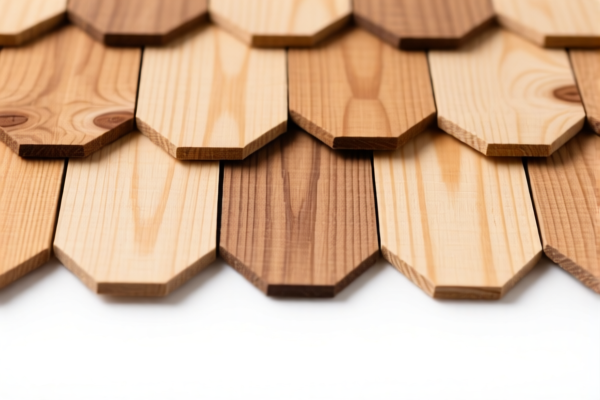
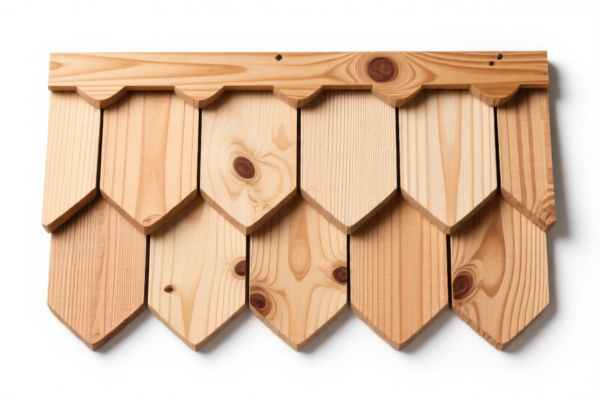
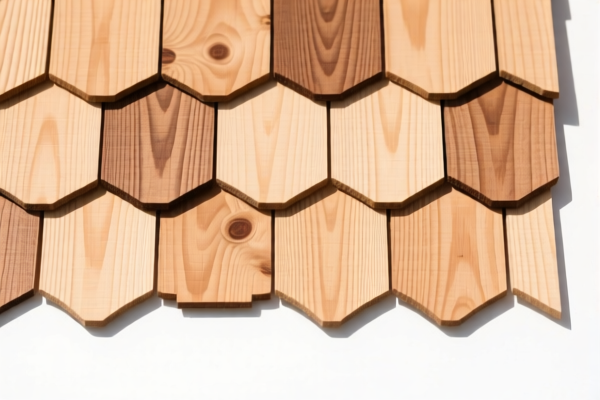
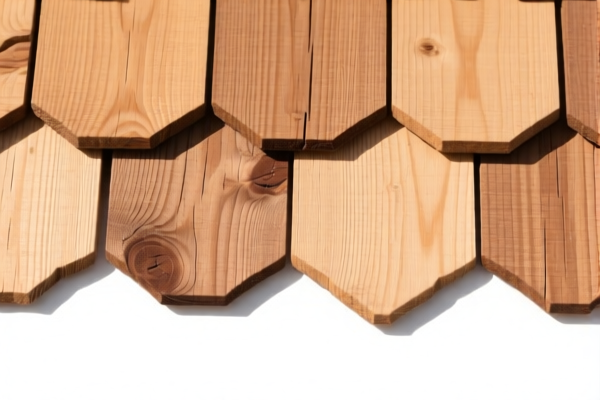
AI Analysis
🪵 Wooden Shingles (Timber Shingles)
🌐 HS Code Reference & Customs Clearance Guide | 2026 Latest Tariff Analysis | Professional Clearance Strategy
📌 I. Product Definition & Classification: Do You Really Understand "Wooden Shingles"?
Wooden shingles are traditional roofing and cladding materials made from natural timber. In international trade, they are primarily classified under Chapter 44 (Wood and articles of wood). The specific HS Code depends on the processing depth (sawn vs. shaped) and the wood species (coniferous vs. non-coniferous).
Based on the provided data, the following three HS Codes are relevant for Coniferous (Needle-leaved) Wood Shingles:
- 4409.10.10.60: Focused on Matching/Interlocking shingles (e.g., Western Red Cedar), often categorized under wooden wall panels/cladding due to their specific installation profile.
- 4409.10.10.20: Classified as Wooden Boards/Coverings, inferred as processed wood planks suitable for siding or roofing.
- 4418.50.00.30: Explicitly categorized under Shingles and Slates of Wood, focusing on the form (shingle shape) regardless of whether it is strictly for walls or roofs.
⚠️ Key Distinction Point:
- If the product is profiled/matched (e.g., tongue-and-groove or interlocking for walls) → May fall under 4409 (Profiling).
- If the product is strictly shaped/shingled (cut into specific shingle forms) → May fall under 4418 (Building Carpentry).
- Western Red Cedar is a common material, often triggering specific subheadings under 4409.
📦 II. HS Code Classification Details (2026 Latest Tariff Authority)
| HS Code | Product Description | Applicable Scenario | Key Characteristic |
|---|---|---|---|
4409.10.10.60 |
Wooden shingles, matching coniferous (e.g., Western Red Cedar), classified as wooden wall panels | Siding, interior/exterior cladding, decorative wall coverings | ✅ Matching/Profiled: Interlocking or matched edges for paneling |
4409.10.10.20 |
Wooden shingles, inferred as wooden boards/coverings, suitable for coniferous wood siding | General wooden cladding, roofing underlayment, basic siding | ✅ Board-like: Flat or slightly shaped wood boards |
4418.50.00.30 |
Wooden shingles, explicitly wood material with shingle form | Roofing shingles, shake shingles, distinct shingle shapes | ✅ Shingle Form: Specific shingle geometry, not just profiled boards |
🔍 Important Note:
- All three codes relate to Coniferous (Needle-leaved) Wood.
- The classification hinges on whether the product is viewed as a profiled board (4409) or a finished shingle product (4418).
- Western Red Cedar is frequently associated with the4409.10.10.60subheading due to its high value and specific use in premium cladding.
💰 III. 2026 Latest Tariff Rate Breakdown (Including Surcharges & Policy Add-ons)
✅ Applicable Country: United States (US)
✅ Origin: China (CN)
✅ Effective Date: Current as of 2026
🎯 1. 4409.10.10.60 & 4409.10.10.20 —— Coniferous Wood Shingles (Profiled/Board Form)
| Item | Content |
|---|---|
| Base Duty Rate | 0.0% (Ad Valorem) |
| Additional Duty (Section 301) | +25.0% |
| Section 122 Duty | +10.0% |
| Total Tax Rate | 35.0% |
| Tax Calculation | CIF Value × 35% |
| De Minimis Exemption | ❌ Not Available (High risk of audit) |
| Legal Basis Path | Base: 0% → 301 Tariff: +25% → Section 122: +10% |
📌 Explanation:
- "Base Duty 0%": Coniferous wood products often have low base tariffs.
- "301 Tariff 25%": This is the standard Section 301 additional duty on many Chinese wood products.
- "Section 122 Tariff 10%": A specific additional duty applied to certain wood products from China.
- Total 35%: This is a significant cost factor. Importers must budget accordingly.
🎯 2. 4418.50.00.30 —— Wooden Shingles (Shingle Form)
| Item | Content |
|---|---|
| Base Duty Rate | 0.0% (Ad Valorem) |
| Additional Duty (Section 301) | +25.0% |
| Section 122 Duty | +10.0% |
| Total Tax Rate | 35.0% |
| Tax Calculation | CIF Value × 35% |
| De Minimis Exemption | ❌ Not Available |
| Legal Basis Path | Base: 0% → 301 Tariff: +25% → Section 122: +10% |
📌 Note:
- The tariff structure is identical to the 4409 codes.
- Whether classified under 4409 (profiled) or 4418 (shingles), the total duty remains 35% for Chinese-origin goods.
- This consistency simplifies cost forecasting but does not eliminate the need for accurate classification to avoid penalties.
🛠️ IV. Customs Clearance Practical Advice (Real-World Pitfall Guide)
✅ 1. Required Documentation Checklist (Mandatory)
| Document | Required | Description |
|---|---|---|
| ✅ Product Specification Sheet | ✔️ | Must specify wood species (e.g., Western Red Cedar), thickness, length, width, and treatment (e.g., fire-retardant, pressure-treated). |
| ✅ Commercial Invoice | ✔️ | Clearly state "Wooden Shingles" and HS Code. Avoid vague terms like "Wood Products." |
| ✅ Packing List | ✔️ | Detail pallet configuration, gross/net weight, and dimensions. |
| ✅ Certificate of Origin (CO) | ✔️ | Essential for verifying Chinese origin (subject to 35% duty). |
| ✅ ISPM 15 Phytosanitary Certificate | ✔️ | Crucial for wood products. Ensures the wood is free from pests and has been heat-treated or fumigated. |
| ✅ Material Safety Data Sheet (MSDS) | ✔️ | If the shingles are treated with chemicals (e.g., preservatives, fire retardants), an MSDS is required. |
| ✅ Third-Party Inspection Report | ✔️ | Optional but recommended to verify wood grade and moisture content. |
✅ 2. Declaration Tips (Key Mantras)
🔥 "Specs Clear, Treatment Proven, HS Accurate, Duty Calculated!"
| Scenario | Correct Declaration | Incorrect Practice |
|---|---|---|
| Western Red Cedar Shingles | 4409.10.10.60 with explicit "Western Red Cedar" |
Vague "Wood Shingles" → Risk of reclassification |
| Pressure-Treated Wood | Include "Treated" in description + MSDS | Omit treatment info → Customs hold for phytosanitary check |
| Mixed Wood Species | Declare primary species or split shipment | Claim "Coniferous" for non-coniferous → Penalty |
| Small Sample Imports | Still declare full value | Rely on de minimis → 35% duty still applies if audited |
✅ 3. Special Considerations
| Situation | Handling Advice |
|---|---|
| Fire-Retardant Treated Wood | Must provide MSDS and Fire Rating Certificate. May affect HS Code if considered a "chemical-treated article" rather than pure wood. |
| Organic/Unprocessed Shingles | Strict ISPM 15 compliance required. No bark should remain (unless specified). |
| OEM Custom Sizes | Provide detailed drawings to justify HS Code (4409 vs. 4418). |
| Re-export to Third Country | Check if any Section 122 exemptions apply for re-export, but generally, duty is paid at entry. |
🌍 V. Global Market Comparison (2026 Latest)
| Country/Region | Recommended HS Code | Tariff (CN Origin) | Certification Requirements | Notes |
|---|---|---|---|---|
| 🇺🇸 USA | 4409.10.10.60 / 4418.50.00.30 |
35% | ISPM 15, MSDS (if treated) | High duty due to 301 + 122 |
| 🇨🇳 China | 4409.10.10.60 / 4418.50.00.30 |
0% - 5% | FSC/PEFC (optional) | Low tariff, strong domestic production |
| 🇪🇺 EU | 4409.10.90 / 4418.50.00 |
0% - 10% | FSC/PEFC, REACH | No Section 301 equivalent, but strict sustainability rules |
| 🇬🇧 UK | 4409.10.00 / 4418.50.00 |
0% - 10% | UKCA, FSC/PEFC | Post-Brexit tariffs may vary |
| 🇨🇦 Canada | 4409.10.90 / 4418.50.00 |
0% (if CUSMA) | FSC/PEFC | Preferential if from US/Mexico |
📌 Conclusion:
- The USA imposes the highest duty (35%) due to the combination of Section 301 and Section 122 tariffs.
- Other markets (EU, UK, Canada) have significantly lower or zero tariffs for Chinese wood products, but have stricter environmental certifications (FSC/PEFC).
- For US-bound shipments, cost efficiency is critical due to the high tax burden.
📌 VI. Common Mistakes & Pitfall Guide (Blood Lessons)
❌ Mistake 1: Failing to provide ISPM 15 Phytosanitary Certificate
👉 Consequence: Shipment detained or destroyed at US port due to pest risk.
❌ Mistake 2: Misclassifying as "Wooden Boards" (4407) instead of "Profiled Shingles" (4409)
👉 Consequence: Under-declaration of duty → Back taxes + Penalties (though base rate may be similar, accuracy is key for compliance).
❌ Mistake 3: Ignoring MSDS for treated wood
👉 Consequence: Customs refusal if chemical treatment is not declared. Risk of violating EPA or DOT regulations.
❌ Mistake 4: Assuming De Minimis Exemption applies
👉 Consequence: 35% duty is still charged on all shipments, regardless of value. Do not rely on $800 exemption.
✅ Correct Practice:
"Western Red Cedar Wooden Shingles, 1/2\" thick, 16\" length, pressure-treated with [Chemical Name], ISPM 15 Heat Treated, HS Code 4409.10.10.60"
🎯 VII. Conclusion: Professional Declaration, Cost Control, Smooth Clearance!
🎯 Remember the Mantras:
🔹 "Wood Products: ISPM 15 is a MUST, MSDS if Treated, HS Code Precision Saves Money!"
🔹 "35% Duty is Real, De Minimis is a Myth for Wood, Plan Ahead or Pay the Price!"
📌 Pro Tip:
- If your wooden shingles are treated with fire retardants, ensure the MSDS clearly lists all active ingredients.
- For US imports, consider pre-clearance services to verify ISPM 15 compliance and correct HS Code assignment.
- Explore FSC/PEFC certification to appeal to eco-conscious US buyers, even if not required for customs.
📣 Immediate Action:
📞 Contact a licensed customs broker + Provide product specs + Verify ISPM 15 compliance
🚀 Ensure smooth customs clearance, avoid delays, and manage costs effectively!
✨ Professional clearance starts with accurate classification!
💼 Every percentage point of duty counts in your profit margin!
Customer Reviews
About HS Code Classification
The Harmonized System (HS) is an internationally standardized nomenclature developed by the World Customs Organization (WCO) to classify traded products. Over 200 countries use the HS system as the basis for customs tariffs, trade statistics, and import/export regulations.
Each HS code follows a hierarchical structure:
- Chapter (2 digits) — Broad category of goods (e.g., Chapter 84: Machinery and Mechanical Appliances)
- Heading (4 digits) — More specific grouping within the chapter
- Subheading (6 digits) — Internationally standardized breakdown, used by all WCO member countries
- National subdivisions (8-10 digits) — Country-specific extensions for further classification, such as US HTSUS 10-digit codes
Correct HS code classification is essential for smooth customs clearance, accurate duty payment, and compliance with trade regulations. Misclassification can lead to customs delays, overpayment of duties, or penalties.
When importing from CN to US, the applicable tariff rates may include:
- Most-Favored-Nation (MFN) rate — The standard duty rate applied to WTO members
- General rate — Applied to countries without trade agreements
- Trade remedy duties — Additional tariffs such as Section 301 (anti-dumping), Section 232 (national security), or countervailing duties
The information provided on this page is for reference purposes only. For official classification, please consult with your local customs authority or a licensed customs broker.