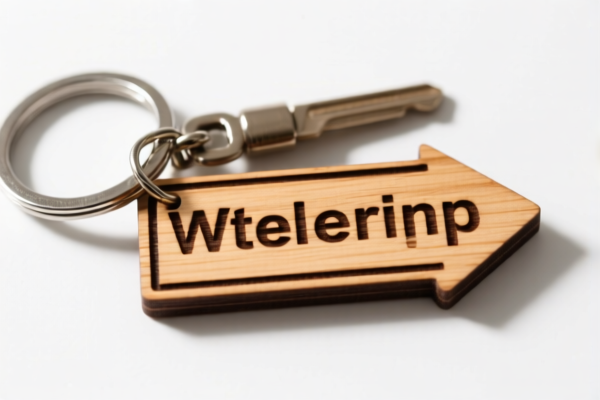
Wooden Sign
CN → US| HS Code | Tariff Rate | Origin | Destination | Doc |
|---|---|---|---|---|
| 4823908680 | 35.0% | CN | US | Official Doc |
| 4410110060 | 35.0% | CN | US | Official Doc |
| 4410190060 | 35.0% | CN | US | Official Doc |
Product Images



AI Analysis
🪵 Wooden Signs (Wooden Labels & Tag Boards)
🌐 HS Code Reference & Customs Clearance Guide | 2026 Latest Tariff Analysis | Professional Entry Strategy
📌 I. Product Definition & Classification: What Exactly Are "Wooden Signs"?
In international trade, "Wooden Signs" are generic terms covering various wood-based labeling, identification, or display items. They are broadly categorized into two main types based on their form and function:
- Raw/Processed Wood Boards/Slices (For Labeling): These are simple wooden plaques, tags, or small boards cut from timber, often used for packaging labels, price tags, or basic identification. They fall under Chapter 44 (Wood and Wood Products).
- Finished Wood Products (Tags/Labels): These are finished items specifically designed as labels or tags, which may include pre-drilled holes, string attachments, or specific shapes. They fall under Chapter 48 (Paper and Paperboard; Articles of Paper Pulp, of Paper or of Paperboard).
⚠️ Key Distinction Point:
- If the item is a simple board, plank, or sheet of wood (even if intended as a tag) → Classified under Chapter 44 (e.g.,4410.11.00.60or4410.19.00.60).
- If the item is a finished label/tag made of wood (considered a "manufactured article" rather than just wood material) → Classified under Chapter 48 (e.g.,4823.90.86.80).
- Note: The distinction between "Board" and "Finished Label" can be subtle. Customs often looks at whether the item is a "semi-finished wood product" (Ch 44) or a "manufactured good" (Ch 48).
📦 II. HS Code Classification Details (2026 Latest Tariff Authority Comparison)
| HS Code | Product Description | Applicable Scenario | Tax Rate (Total) |
|---|---|---|---|
4823.90.86.80 |
Wooden Labels, Other Finished Articles | Finished wooden tags, labels with strings, decorative wooden nameplates. Classified under "Other manufactured articles of paper pulp/paper/wood." | 35.0% |
4410.11.00.60 |
Wooden Tag Boards, Particleboard/Similar Wood Agglomerates | Wooden tags made from particleboard, fiberboard, or similar wood agglomerates. Form: Boards/Slices. | 35.0% |
4410.19.00.60 |
Wooden Tag Boards, Other Wood Agglomerates | Wooden tags made from other types of wood agglomerates (not particleboard). "Catch-all" category for wood agglomerates. | 35.0% |
🔍 Critical Reminder:
- All three codes listed above carry the same total tax rate of 35.0% for imports from China to the US.
- The difference lies in material composition (solid wood vs. agglomerated) and product form (finished label vs. board).
- Misclassification does not change the tax rate in this specific case, but it affects customs compliance and product description accuracy.
💰 III. 2026 Latest Tariff Rate Details (Including Surcharge & Policy Add-ons)
✅ Applicable Country: United States (US)
✅ Origin: China (CN)
✅ Effective Date: From November 10, 2025 (and subsequent imports)
🎯 1. 4823.90.86.80 —— Wooden Labels (Finished Articles)
| Item | Content |
|---|---|
| Base Tariff | 0% (ad valorem) |
| Section 301 Surcharge (USITC) | +25% |
| Section 122 Tariff (IEEPA) | +10% |
| Total Tax Rate | 35.0% |
| Tax Calculation | CIF Value × 35% |
| De Minimis Exemption Applicable? | ❌ NO (Not eligible for $800 de minimis exemption for Section 301/122 goods) |
| Legal Basis Path | IEEPA:9903.01.25 → IEEPA:9903.01.24 → USITC:4823.90.86.80 → FOOTNOTE:9903.88.01 |
📌 Explanation:
- Base 0%: Wood products often have low base tariffs.
- Section 301 (+25%): Standard USITC surcharge on many Chinese wood products.
- Section 122 (+10%): Additional 10% tariff imposed under the International Emergency Economic Powers Act (IEEPA) for specific Chinese goods.
- Total 35%: A significant cost factor for wooden signage imports.
🎯 2. 4410.11.00.60 & 4410.19.00.60 —— Wooden Tag Boards (Wood Agglomerates)
| Item | Content |
|---|---|
| Base Tariff | 0% (ad valorem) |
| Section 301 Surcharge (USITC) | +25% |
| Section 122 Tariff (IEEPA) | +10% |
| Total Tax Rate | 35.0% |
| Tax Calculation | CIF Value × 35% |
| De Minimis Exemption Applicable? | ❌ NO |
| Legal Basis Path | IEEPA:9903.01.25 → IEEPA:9903.01.24 → USITC:4410.xxxxxxx → FOOTNOTE:9903.88.01 |
📌 Note:
- Both4410.11.00.60(Particleboard) and4410.19.00.60(Other Agglomerates) are subject to the same 35% total tariff.
- Material Distinction:
- Use4410.11.00.60if the tag is made from particleboard or similar wood agglomerates.
- Use4410.19.00.60if the tag is made from other wood agglomerates (e.g., MDF, HDF not specifically particleboard).
- Solid Wood vs. Agglomerates: If the sign is made of solid wood (not agglomerated), it may fall under different subheadings (e.g.,4410.19.00.60can sometimes cover solid wood if misclassified, but strictly solid wood tags might be4823.90.86.80if considered finished labels). Clarification: The provided data groups these under the 35% rate, so ensure the material description matches the HS code.
🛠️ IV. Customs Clearance Practical Advice (Real-World Pitfall Avoidance Guide)
✅ 1. Required Documentation Checklist (No Exceptions)
| Document | Mandatory? | Notes |
|---|---|---|
| ✅ Product Specification Sheet | ✔️ | Must include dimensions, wood type (solid vs. agglomerate), weight, and intended use. |
| ✅ Product Photos (Clear) | ✔️ | Show front/back, any holes, strings, or printed text. Highlight material texture. |
| ✅ Commercial Invoice | ✔️ | Must clearly state "Wooden Signs," "Wooden Labels," or "Wooden Tag Boards." Avoid vague terms like "Decorative Items." |
| ✅ Packing List | ✔️ | Detail net/gross weight, number of pieces, and packaging type. |
| ✅ Certificate of Origin (CO) | ✔️ | Required for proving Chinese origin (triggering the 35% tariff). |
| ✅ Material Declaration | ✔️ | Explicitly state: "Made of Particleboard," "Made of MDF," or "Made of Solid Wood." |
✅ 2. Declaration Tips (Key Mantras)
🔥 "Material Matters, Form Defines, Name Accurate, Rate is Fixed!"
| Scenario | Correct Declaration | Incorrect Practice |
|---|---|---|
| Tag made of Particleboard | 4410.11.00.60 - "Wooden Tags, Particleboard" |
Call it "Wooden Label" (Vague) |
| Tag made of Solid Wood | 4823.90.86.80 - "Wooden Label, Finished Article" |
Call it "Wood Board" (Misleading) |
| Tag made of MDF/HDF | 4410.19.00.60 - "Wooden Tag, Wood Agglomerate" |
No specific material listed |
| Complete Sign with Stand | Still 4823.90.86.80 or 4410.xx.xx |
Split into "Sign" + "Stand" (Higher risk) |
⚠️ Critical:
- Even if the tax rate is the same (35%), misclassification can lead to customs audits, delays, or fines for incorrect reporting.
- Ensure the product name on the invoice matches the HS code description as closely as possible.
✅ 3. Special Handling
| Scenario | Handling Advice |
|---|---|
| Custom Printed Wooden Signs | Provide a sample photo. If it's just printing on wood, it's still a wooden product. |
| Wooden Signs with Metal Parts | If metal is minor (e.g., small hooks), still classify as wood. If metal is substantial, consult a customs broker. |
| Sample Shipments | No De Minimis Exemption! Even if value is <$800, Section 301/122 tariffs apply. Pay the 35% or declare as "Not for Resale" if eligible (but still subject to tariff). |
| Fumigation/Pesticide | If made of solid wood, ISPM 15 fumigation certificate may be required for US entry to prevent pest introduction. Agglomerated wood (MDF/Particleboard) usually does not require fumigation. |
🌍 V. Global Market Clearance Comparison (2026 Latest)
| Country/Region | Recommended HS Code | Tariff | Certification Requirements | Notes |
|---|---|---|---|---|
| 🇺🇸 USA | 4823.90.86.80 / 4410.19.00.60 |
35% (CN Origin) | Fumigation (if solid wood) | High tariff, no de minimis exemption. |
| 🇨🇳 China | 4823.90.86.80 / 4410.19.00.60 |
0% ~ 5% (Varies) | CCC (if applicable) | Low tariff for domestic trade. |
| 🇪🇺 EU | 4410.11.00 / 4823.90 |
~0% ~ 2.5% | CE (if applicable) | No major surcharges like US. |
| 🇯🇵 Japan | 4410.11.00 / 4823.90 |
~0% ~ 3.2% | FSC (Optional) | No significant surcharges. |
📌 Conclusion:
- USA is the most expensive market for wooden signs due to the 35% combined tariff.
- No De Minimis Exemption applies, so even small packages are taxed.
- Solid wood vs. Agglomerated wood impacts fumigation requirements but not the tariff rate in this specific dataset.
📌 VI. Common Mistakes & Pitfalls (Lessons Learned)
❌ Mistake 1: Declaring "Wooden Signs" without specifying material.
👉 Consequence: Customs may demand additional info, causing delays. May lead to incorrect HS code assignment.
❌ Mistake 2: Using "Wooden Label" for a solid wood tag, when it should be 4410.xx.xx.
👉 Consequence: While rate is same, documentation mismatch can trigger audits.
❌ Mistake 3: Assuming De Minimis Exemption applies to wooden signs.
👉 Consequence: 35% tax still applies. Surprise costs at customs.
❌ Mistake 4: Forgetting Fumigation for Solid Wood.
👉 Consequence: Goods held at port for fumigation or destruction. Costly delays.
✅ Correct Practice:
"Wooden Tag Board, Particleboard, 2x3 inches, Printed with Logo, No Fumigation Required."
OR
"Wooden Label, Solid Wood, Pre-drilled Hole, Natural Finish, ISPM 15 Certified."
🎯 VII. Conclusion: Precision in Classification, Savings in Clearance!
🎯 Remember the Mantra:
🔹 "Material Defines, Form Follows, Rate is 35, De Minimis is NO!"
🔹 "Solid Wood = Fumigate, Agglomerated = No Fumigate, Both = 35% Tax!"
📌 Pro Tip:
- If your wooden signs are made in Vietnam, Mexico, or Thailand, you may exempt from Section 301/122 tariffs.
- Always verify wood type (Solid vs. Agglomerated) for fumigation requirements.
- Pre-clearance Ruling is recommended for large volumes to ensure correct HS code assignment.
📣 Take Action Now:
📞 Contact your customs broker + Provide Material Specs + Apply for Pre-Ruling
🚀 Ensure smooth clearance, avoid delays, and control costs!
✨ Professional Clearance Starts with Accurate Classification!
💼 Every dollar saved is a profit earned!
Customer Reviews
About HS Code Classification
The Harmonized System (HS) is an internationally standardized nomenclature developed by the World Customs Organization (WCO) to classify traded products. Over 200 countries use the HS system as the basis for customs tariffs, trade statistics, and import/export regulations.
Each HS code follows a hierarchical structure:
- Chapter (2 digits) — Broad category of goods (e.g., Chapter 84: Machinery and Mechanical Appliances)
- Heading (4 digits) — More specific grouping within the chapter
- Subheading (6 digits) — Internationally standardized breakdown, used by all WCO member countries
- National subdivisions (8-10 digits) — Country-specific extensions for further classification, such as US HTSUS 10-digit codes
Correct HS code classification is essential for smooth customs clearance, accurate duty payment, and compliance with trade regulations. Misclassification can lead to customs delays, overpayment of duties, or penalties.
When importing from CN to US, the applicable tariff rates may include:
- Most-Favored-Nation (MFN) rate — The standard duty rate applied to WTO members
- General rate — Applied to countries without trade agreements
- Trade remedy duties — Additional tariffs such as Section 301 (anti-dumping), Section 232 (national security), or countervailing duties
The information provided on this page is for reference purposes only. For official classification, please consult with your local customs authority or a licensed customs broker.