Wooden Stair Door
CN → US| HS Code | Tariff Rate | Origin | Destination | Doc |
|---|---|---|---|---|
| 4418298060 | 39.8% | CN | US | Official Doc |
| 4418218060 | 39.8% | CN | US | Official Doc |
| 9403999061 | 35.0% | CN | US | Official Doc |
| 9403910080 | 35.0% | CN | US | Official Doc |
| 4418298060 | 39.8% | CN | US | Official Doc |
Product Images
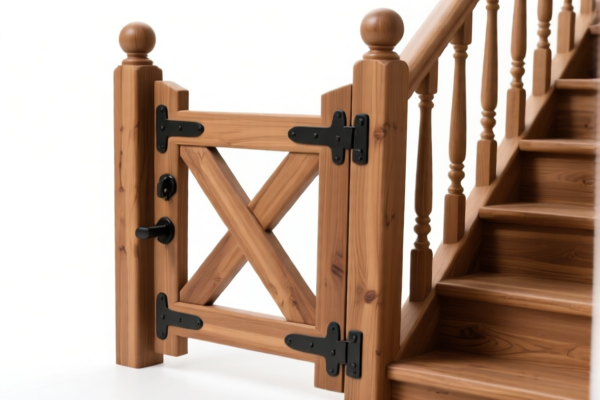
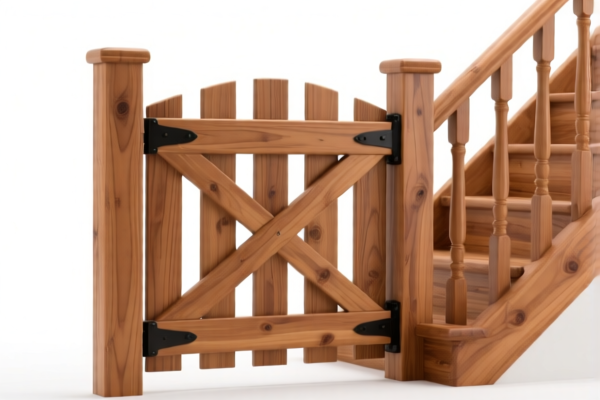
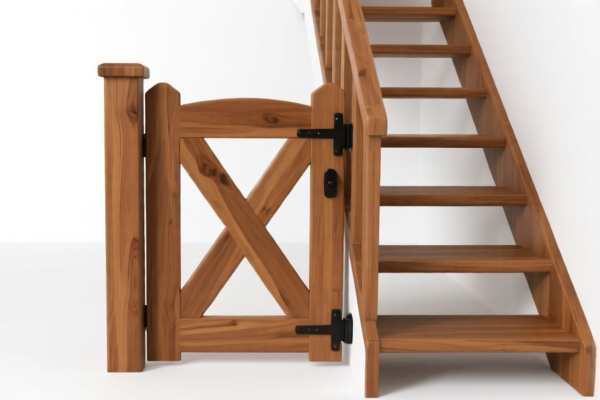
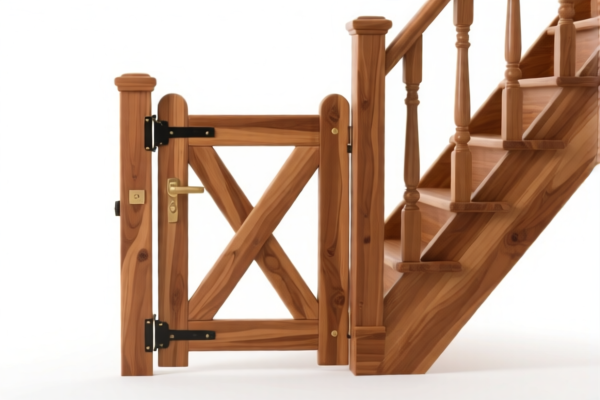
AI Analysis
🚪 Wooden Stair Door (Wooden Doors for Staircases)
🌐 HS Code Reference & Customs Clearance Guide | 2026 Latest Tariff Analysis | Professional Clearance Strategy
📌 I. Product Definition & Classification: What is a "Wooden Stair Door"?
A Wooden Stair Door refers to wooden door assemblies specifically designed for or associated with staircases, including landing doors, fire-rated doors in stairwells, or decorative interior doors leading to/from stairs. In international trade, these are primarily classified under two major categories depending on their functional status:
1. Construction Woodwork (Building Components):
If the door is treated as a structural or finishing element of the building (part of the architecture), it falls under Chapter 44 (Wood and articles of wood).
2. Furniture & Parts:
If the door is considered a finished piece of furniture or a detachable component sold as such (not installed), it falls under Chapter 94 (Furniture and parts thereof).
⚠️ Key Distinction Point:
- If intended for permanent installation as part of the building structure → Classify under 4418 (Building woodwork).
- If sold as a standalone furniture item or spare part → Classify under 9403 (Other furniture and parts).
📦 II. HS Code Classification Details (2026 Latest Tariff Authoritative Comparison)
| HS Code | Product Description | Application Scenario | Material/Status |
|---|---|---|---|
4418.29.80.60 |
Wooden doors (other than those of tropical wood) | Standard wooden stair doors, fire doors, interior stairway doors | ✅ Wooden (Non-tropical) |
4418.21.80.60 |
Wooden doors of tropical wood | Premium tropical wood stair doors (e.g., Teak, Mahogany) | ✅ Tropical Wood |
9403.99.90.61 |
Parts of other furniture | Wooden doors sold as furniture components or finished furniture items | ✅ Furniture Part |
9403.91.00.80 |
Parts of wooden furniture | Wooden doors specifically classified as parts of wooden furniture sets | ✅ Wooden Furniture Part |
🔍 Key Reminder:
- "Building Woodwork" (4418) applies when the door is installed or intended for installation in a building. This is the most common classification for construction-related imports.
- "Furniture" (9403) applies if the door is not fixed to a building frame during shipment or is marketed as a furniture piece (e.g., closet doors sold separately).
- Do not split shipments: If a door frame is included, it must be declared together with the door under the same heading to avoid complex multi-category declarations.
💰 III. 2026 Latest Tariff Rate Details (Including Surcharges, Policy Add-ons)
✅ Applicable Country: United States (US)
✅ Country of Origin: China (CN)
✅ Effective Date: From November 10, 2025 (and subsequent imports)
🎯 1. 4418.29.80.60 & 4418.21.80.60 —— Wooden Doors (Building Woodwork)
| Item | Content |
|---|---|
| Base Tariff Rate | 4.8% (ad valorem) |
| Section 301 Surcharge | +25.0% (Under US Trade Act Section 301) |
| Section 122 Tariff | +10.0% (Specific statutory surcharge) |
| Total Tax Rate | 39.8% |
| Tax Calculation | CIF Value × 39.8% |
| De Minimis Eligibility | ❌ Not Eligible (deny_de_minimis applies to these HS codes) |
| Legal Basis Path | USITC:4418.29.80.60 → Section 301 Footnote → Section 122 Statute |
📌 Explanation:
- "Base Tariff 4.8%": Standard Most Favored Nation (MFN) rate for wooden doors.
- "Section 301 25%": The primary Trump-era/Biden-continuing tariff on Chinese goods under Section 301.
- "Section 122 10%": An additional tariff imposed under Section 222 of the Trade Act (often related to national security or specific trade remedies).
- Total 39.8% is very high. Importers must budget accordingly. This rate applies to both standard wood (4418.29...) and tropical wood (4418.21...) doors.
🎯 2. 9403.99.90.61 & 9403.91.00.80 —— Parts of Furniture (Wooden Doors as Furniture Parts)
| Item | Content |
|---|---|
| Base Tariff Rate | 0.0% |
| Section 301 Surcharge | +25.0% |
| Section 122 Tariff | +10.0% |
| Total Tax Rate | 35.0% |
| Tax Calculation | CIF Value × 35.0% |
| De Minimis Eligibility | ❌ Not Eligible |
| Legal Basis Path | USITC:9403.99.90.61 → Section 301 Footnote → Section 122 Statute |
📌 Important Note:
- The base rate is 0% for furniture parts, which makes the total tax rate 4.8 percentage points lower than the building woodwork category.
- However, this only applies if the door is correctly classified as a "part of furniture" and not as a "building component."
- Misclassification from9403to4418can result in audits and back taxes if customs determines the goods are for construction/installation.
🛠️ IV. Customs Clearance Practical Advice (Pitfall Avoidance Guide)
✅ 1. Required Documentation Checklist (All Mandatory)
| Document | Required? | Explanation |
|---|---|---|
| ✅ Product Specification Sheet | ✔️ | Must state dimensions, material type (tropical/non-tropical), thickness, and finish. |
| ✅ Product Photos (Clear) | ✔️ | Must show the door, handle (if attached), and any hardware. Must prove it's a "door." |
| ✅ Commercial Invoice | ✔️ | Description must match HS Code: "Wooden Door for Staircase" or "Wooden Door Part." |
| ✅ Packing List | ✔️ | Detail quantity, weight, and packaging. |
| ✅ Certificate of Origin (CO) | ✔️ | To prove origin as China (triggers tariffs) or other countries (potential exemption). |
| ✅ Installation Intent Declaration | ✔️ | If claiming 4418, provide evidence it's for building use. If claiming 9403, state it's for furniture/resale. |
✅ 2. Declaration Strategy (Critical Tips)
🔥 "Buildings go to 44, Furniture goes to 94. Get the code wrong, and the cost goes up!"
| Scenario | Correct Declaration | Incorrect Practice |
|---|---|---|
| Doors for new home construction/staircase install | 4418.29.80.60 (Standard) or 4418.21.80.60 (Tropical) |
Reporting as 9403 → Audit Risk + Back Tax Difference |
| Doors sold for closet/wardrobe installation (furniture) | 9403.99.90.61 or 9403.91.00.80 |
Reporting as 4418 → Overpaying Tax (39.8% vs 35.0%) |
| Doors with Frames Included | Declare as a set under the primary HS Code (usually 4418 if for building) | Splitting Door and Frame into different HS Codes → Complexity & Delay |
| Hardware (Handles/Hinges) Included | Include in the value of the door; do not declare separately unless significant | Declaring hardware separately → Potential Misclassification |
✅ 3. Special Circumstances Handling
| Situation | Handling Advice |
|---|---|
| Tropical Wood vs. Non-Tropical | Must provide species certificate if claiming 4418.21 (Tropical). If unsure, use 4418.29 (Other) to be safe, but tax rate is same. |
| Fire-Rated Doors | Still classified under 4418 if for building. May require additional fire safety certifications (e.g., UL, FM) for entry, but tax code remains 4418. |
| OEM Custom Doors | Provide customer PO and design specs. Ensure description matches "Wooden Door" clearly. |
| Origin Shifting | If the wood is sourced from Vietnam/Malaysia but processed in China, it remains Chinese Origin. Tariffs apply. |
🌍 V. Global Market Clearance Comparison (2026 Latest)
| Country/Region | Recommended HS Code | Tariff Rate (China Origin) | Certification Requirements | Notes |
|---|---|---|---|---|
| 🇺🇸 USA | 4418.29.80.60 |
39.8% | None specific (but ensure accurate description) | High due to 301 + 122. |
| 🇺🇸 USA | 9403.99.90.61 |
35.0% | None specific | Lower base rate, but classification risk. |
| 🇨🇳 China | 4418.29.80.60 |
5% - 10% | FSC (if exporting back) | Standard import rate. |
| 🇪🇺 EU | 4418.99 |
0% - 5% | FSC/PEFC (if wood proof) | No Section 301 surcharge. |
| 🇬🇧 UK | 4418.99 |
0% - 5% | FSC/PEFC | Post-Brexit trade terms apply. |
📌 Conclusion:
- The USA imposes the highest tariffs on Chinese wooden doors due to multiple surcharges.
- EU and UK are much more favorable regarding tariffs, focusing on sustainability certifications (FSC) rather than punitive duties.
📌 VI. Common Mistakes & Pitfall Guide (Lessons Learned)
❌ Mistake 1: Classifying construction doors as "Furniture" (9403) to save tax.
👉 Consequence: Customs may reclassify to 4418, demand the extra 4.8% + penalties. Risk of Audit!
❌ Mistake 2: Ignoring the "Tropical Wood" distinction.
👉 Consequence: If declared as 4418.29 but actual wood is Teak (Tropical), customs may dispute the classification, though tax rate is currently the same, it affects regulatory compliance.
❌ Mistake 3: Omitting "122 Clause" Tariff in Cost Calculation.
👉 Consequence: Underestimating landed cost by 10%. Profit Margin Erosion!
❌ Mistake 4: Declaring "Door Parts" separately from the Door.
👉 Consequence: If sold together, they should be declared as a set. Splitting may lead to higher combined duties if parts are taxed differently.
✅ Correct Approach:
"Wooden Door for Staircase, 2100x900mm, Oak, With Frame, Model XYZ, For Building Installation"
(Use4418.29.80.60)
OR
"Wooden Door Panel, 2100x900mm, Walnut, For Closet Installation, Spare Part"
(Use9403.99.90.61)
🎯 VII. Conclusion: Professional Classification, Cost Efficiency!
🎯 Remember the Rule of Thumb:
🔹 "Building Use → 4418 (39.8% Total)"
🔹 "Furniture Use → 9403 (35.0% Total)"
🔹 "Tropical vs. Standard → Same Tax Rate (for now), Different Description"
🔹 "301 + 122 = High Cost, Plan Ahead!"
📌 Pro Tip:
If you can prove the wood is not from China (e.g., timber sourced from Europe, processed in a third country like Malaysia), you may avoid the Chinese origin tariffs. However, processing must be substantial to change origin status.
Always apply for a Pre-Ruling (Advance Ruling) from US Customs (CBP) if unsure about the 4418 vs. 9403 classification.
📣 Immediate Action:
📞 Consult with a licensed customs broker.
📸 Provide clear photos and specs.
📝 Verify if your door is "For Building" or "For Furniture."
🚀 Ensure accurate HS Code, avoid audits, and maximize profit!
✨ Professional clearance starts with precise classification!
💼 Every percentage point of tax is money in your pocket—or out of it!
Customer Reviews
About HS Code Classification
The Harmonized System (HS) is an internationally standardized nomenclature developed by the World Customs Organization (WCO) to classify traded products. Over 200 countries use the HS system as the basis for customs tariffs, trade statistics, and import/export regulations.
Each HS code follows a hierarchical structure:
- Chapter (2 digits) — Broad category of goods (e.g., Chapter 84: Machinery and Mechanical Appliances)
- Heading (4 digits) — More specific grouping within the chapter
- Subheading (6 digits) — Internationally standardized breakdown, used by all WCO member countries
- National subdivisions (8-10 digits) — Country-specific extensions for further classification, such as US HTSUS 10-digit codes
Correct HS code classification is essential for smooth customs clearance, accurate duty payment, and compliance with trade regulations. Misclassification can lead to customs delays, overpayment of duties, or penalties.
When importing from CN to US, the applicable tariff rates may include:
- Most-Favored-Nation (MFN) rate — The standard duty rate applied to WTO members
- General rate — Applied to countries without trade agreements
- Trade remedy duties — Additional tariffs such as Section 301 (anti-dumping), Section 232 (national security), or countervailing duties
The information provided on this page is for reference purposes only. For official classification, please consult with your local customs authority or a licensed customs broker.