Wooden Wicker Basket
CN → US| HS Code | Tariff Rate | Origin | Destination | Doc |
|---|---|---|---|---|
| 4602110700 | 35.0% | CN | US | Official Doc |
| 4602110900 | 45.0% | CN | US | Official Doc |
| 4601920500 | 37.7% | CN | US | Official Doc |
| 3926909989 | 22.8% | CN | US | Official Doc |
| 4602110700 | 35.0% | CN | US | Official Doc |
Product Images
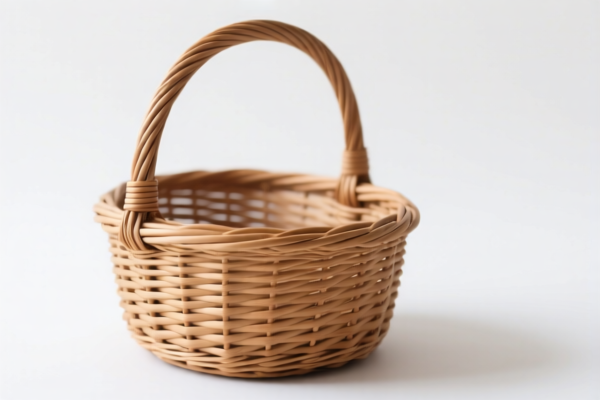
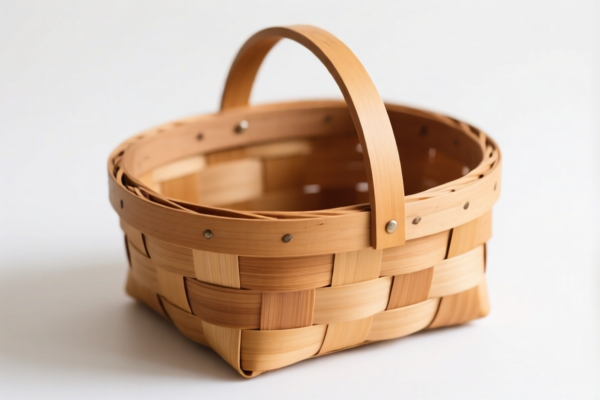
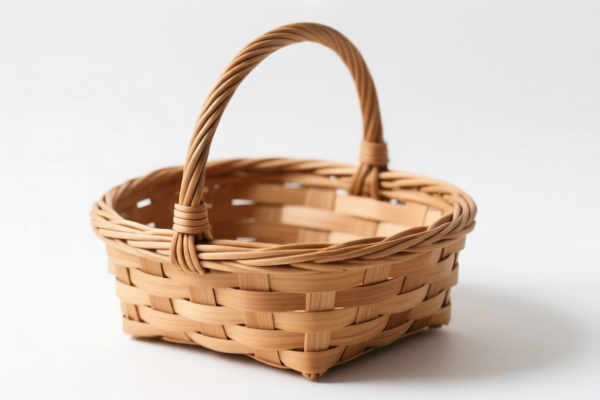
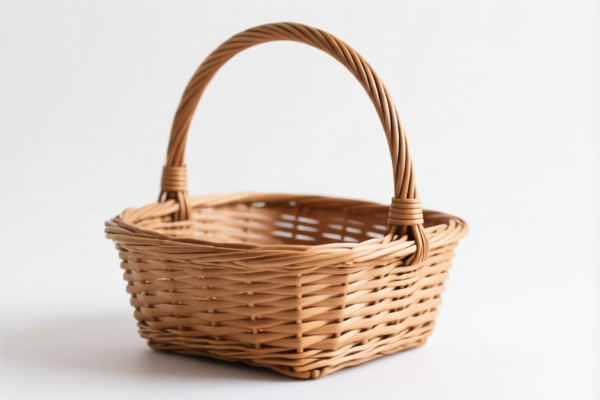
AI Analysis
🧺 Wooden Wicker Basket (Plant Fiber Baskets)
🌐 HS Code Reference & Customs Clearance Guide | 2026 Latest Tariff Analysis | Strategic Import Strategy for US Market
📌 I. Product Definition & Classification: Do You Really Understand "Wicker Baskets"?
Wooden wicker baskets, often made from bamboo, rattan, willow, or other plant fibers, are ubiquitous in retail, storage, and decoration. However, in international trade, their classification depends heavily on material composition and manufacturing process.
Key Distinctions: * True Basketry (Chapter 46): Hand-woven or machine-woven articles made of plaiting materials (bamboo, rattan, straw, etc.). These fall under headings 4601 (Plaiting materials) or 4602 (Basketware). * Plastic/Synthetic Imitation: If the "wicker" appearance is created using plastic strips or synthetic fibers, it falls under Chapter 39 (Plastics).
⚠️ Critical Classification Point:
- If the item is naturally woven plant fiber (bamboo, rattan, willow) → HS 4602.xxxx
- If the item is plastic strips woven to look like wicker → HS 3926.90.99.89
- If it is a mat or plaited material (not a finished container) → HS 4601.xxxx
📦 II. HS Code Classification Details (2026 Official Tariff Schedule)
| HS Code | Product Description | Application Scenario | Total Tax Rate (US/CN) | Tax Breakdown |
|---|---|---|---|---|
4602.11.07.00 |
Basketware of bamboo | Bamboo baskets, woven plant fiber containers | 35.0% | Base: 0%, Sec 301: 25%, IEEPA: 10% |
4602.11.09.00 |
Basketware of other plant materials | Rattan, Willow, Cane, Grass baskets | 45.0% | Base: 10%, Sec 301: 25%, IEEPA: 10% |
4601.92.05.00 |
Plaiting materials & articles | Bamboo mats, plaited sheets, unfinished basket materials | 37.7% | Base: 2.7%, Sec 301: 25%, IEEPA: 10% |
3926.90.99.89 |
Other plastic articles | Plastic wicker look-alikes, synthetic fiber baskets | 22.8% | Base: 5.3%, Sec 301: 7.5%, IEEPA: 10% |
🔍 Key Insight:
- "Wicker" is a style, not a material. Customs looks at the actual substance.
- Bamboo gets a slight advantage (lower base duty) compared to other plant fibers like rattan.
- Plastic imitation is significantly cheaper in base duties but still faces high US tariffs.
💰 III. 2026 Tariff Rate Detailed Explanation (Including Surcharges)
✅ Applicable Country: United States (US)
✅ Country of Origin: China (CN)
✅ Effective Date: From November 10, 2025 onwards (and subsequent imports)
🎯 1. 4602.11.07.00 — Basketware of Bamboo
| Item | Content |
|---|---|
| Base Duty Rate | 0% (Ad Valorem) |
| USITC Additional Duty (Section 301) | +25% (Footnote 9903.88.01) |
| IEEPA Additional Duty (China-specific) | +10% (Effective from Nov 10, 2025) |
| Total Effective Rate | 35.0% |
| Tax Calculation | CIF Value × 35% |
| De Minimis Eligibility | ❌ No (Deny de minimis for Sections 301/IEEPA goods) |
| Legal Basis Path | IEEPA:9903.01.25 → IEEPA:9903.01.24 → USITC:4602.11.07.00 → FOOTNOTE:9903.88.01 |
📌 Explanation:
- Bamboo basketware has 0% base duty, making it one of the few plant-fiber baskets with lower starting costs.
- However, the 35% total tariff is still substantial.
- Strict prohibition on de minimis (Section 321) entry if declared as Section 301 goods.
🎯 2. 4602.11.09.00 — Basketware of Other Plant Materials (Rattan/Willow)
| Item | Content |
|---|---|
| Base Duty Rate | 10% |
| USITC Additional Duty (Section 301) | +25% |
| IEEPA Additional Duty (China-specific) | +10% |
| Total Effective Rate | 45.0% |
| Tax Calculation | CIF Value × 45% |
| De Minimis Eligibility | ❌ No |
| Legal Basis Path | IEEPA:9903.01.25 → IEEPA:9903.01.24 → USITC:4602.11.09.00 → FOOTNOTE:9903.88.01 |
📌 Note:
- This is the most expensive category for genuine wicker baskets.
- Rattan and willow do not benefit from the 0% base rate that bamboo enjoys.
- High risk of audit due to high tax burden; ensure material origin is clearly documented.
🎯 3. 4601.92.05.00 — Plaiting Materials / Bamboo Mats
| Item | Content |
|---|---|
| Base Duty Rate | 2.7% |
| USITC Additional Duty (Section 301) | +25% |
| IEEPA Additional Duty (China-specific) | +10% |
| Total Effective Rate | 37.7% |
| Tax Calculation | CIF Value × 37.7% |
| De Minimis Eligibility | ❌ No |
| Legal Basis Path | IEEPA:9903.01.25 → IEEPA:9903.01.24 → USITC:4601.92.05.00 → FOOTNOTE:9903.88.01 |
📌 Distinction:
- This code is for unfinished or sheet-like woven products (e.g., bamboo mats, plaited strips), not fully formed baskets with handles.
- If your product is a complete basket, do NOT use this code. Misclassification leads to penalties.
🎯 4. 3926.90.99.89 — Plastic Wicker / Synthetic Baskets
| Item | Content |
|---|---|
| Base Duty Rate | 5.3% |
| USITC Additional Duty (Section 301) | +7.5% |
| IEEPA Additional Duty (China-specific) | +10% |
| Total Effective Rate | 22.8% |
| Tax Calculation | CIF Value × 22.8% |
| De Minimis Eligibility | ❌ No (If subject to Section 301) |
| Legal Basis Path | IEEPA:9903.01.25 → IEEPA:9903.01.24 → USITC:3926.90.99.89 → FOOTNOTE:9903.88.01 |
📌 Strategic Advantage:
- Lowest total tariff (22.8%) among the four options.
- If your product is polyethylene (PE) wicker or synthetic resin, classify here to save ~12–22% in duties.
- Warning: You must prove the material is plastic/synthetic, not natural fiber.
🛠️ IV. Customs Clearance Practical Advice (Real-World Pitfall Guide)
✅ 1. Documentation Checklist (All Required)
| Document | Required? | Notes |
|---|---|---|
| ✅ Material Composition Statement | ✔️ | Must explicitly state: "100% Bamboo" OR "100% Plastic PE" |
| ✅ Product Photos | ✔️ | Close-up of weave, texture, and any labels |
| ✅ Bill of Lading / Packing List | ✔️ | Ensure HS Code matches invoice description |
| ✅ Commercial Invoice | ✔️ | Clearly state "Wicker Basket" or "Plastic Wicker Basket" |
| ✅ Third-Party Lab Report | 🔶 | Recommended if disputed; confirms material (FTIR test for plastic vs. natural) |
✅ 2. Classification Strategy (Key Mnemonic)
🔥 "Bamboo is 0%, Other Plants 10%, Plastic 5.3%! Declare Material, Not Style!"
| Scenario | Correct HS Code | Error if Wrong |
|---|---|---|
| Natural Bamboo Basket | 4602.11.07.00 (35%) |
Misclassify as Rattan (4602.11.09.00) → Pay extra 10% |
| Rattan/Willow Basket | 4602.11.09.00 (45%) |
Misclassify as Bamboo → Penalty for fraud |
| Plastic "Wicker" Basket | 3926.90.99.89 (22.8%) |
Misclassify as Natural Fiber → Underpayment + Fine |
| Bamboo Mat (Unfinished) | 4601.92.05.00 (37.7%) |
Misclassify as Basket → Overpayment (if basket is bamboo) or Underpayment (if plastic) |
✅ 3. Special Cases
| Situation | Handling Advice |
|---|---|
| Mixed Materials (e.g., Bamboo frame + Plastic handle) | Classify based on essential character. Usually, the main body material determines the code. |
| Set of Baskets (Nested) | Declare as a set. Use the HS code of the primary basket if one dominates. |
| OEM Custom Baskets | Provide design specs. If custom-made from plastic, insist on 3926.90.99.89. |
| De Minimis (Section 321) Attempt | ❌ Do NOT attempt. Since Nov 2025, Section 301 and IEEPA goods are excluded from de minimis entry. You must file formal entry. |
🌍 V. Global Market Comparison (2026 Update)
| Country/Region | Recommended HS Code | Estimated Duty (China Origin) | Certification | Notes |
|---|---|---|---|---|
| 🇺🇸 USA | 4602.11.07.00 (Bamboo) |
35.0% | None specific | High tariffs due to Sec 301 & IEEPA |
| 🇺🇸 USA | 3926.90.99.89 (Plastic) |
22.8% | None specific | Best for synthetic wicker |
| 🇪🇺 EU | 4602.11.00 |
0% – 6% | CE (if plastic) | No Section 301 tariffs in EU |
| 🇨🇳 China | 4602.11.00 |
0% – 10% | N/A | Low import duty to China |
📌 Conclusion:
- The US market is harsh on Chinese-origin wicker baskets.
- Plastic imitation offers the best cost-saving (~22.8% vs 35-45%).
- Bamboo is the cheapest natural option (35%).
📌 VI. Common Mistakes & Pitfalls (Blood Lessons)
❌ Mistake 1: Using "Wicker" as the only description.
👉 Result: Customs cannot determine material → Delay + Inspection + Potential Re-classification to higher rate.
✅ Fix: State "100% Plastic Wicker" or "Natural Bamboo Wicker."
❌ Mistake 2: Declaring a Rattan basket as Bamboo.
👉 Result: You pay 35% instead of 45%. This is underpayment. Customs will audit, demand back taxes + penalties.
✅ Fix: Conduct a material test if unsure.
❌ Mistake 3: Trying to use De Minimis ($800) for small shipments.
👉 Result: Shipment seized or returned. IEEPA and Sec 301 goods are explicitly excluded from de minimis since late 2025.
✅ Fix: File formal entry for all shipments.
❌ Mistake 4: Confusing "Basketware" (4602) with "Plaiting Materials" (4601).
👉 Result: If it’s a finished basket with handles, it’s 4602. Using 4601 is misclassification.
✅ Fix: If it has a defined shape and is a container, use 4602.
🎯 VII. Conclusion: Professional Classification Saves Money!
🎯 Remember the Mantra:
🔹 "Bamboo is King (35%), Rattan is Expensive (45%), Plastic is Smart (22.8%)!"
🔹 "Declare Material, Not Style. Avoid De Minimis. Pay the Right Tax!"
📌 Pro Tip:
If your product is 100% Plastic Wicker, explicitly highlight this in your invoice to secure the 22.8% rate instead of the natural fiber rates.
For Bamboo products, ensure your supplier provides a Material Certificate to prove it is bamboo (not other plant fibers) to qualify for the 0% base duty.
📣 Immediate Action:
📞 Contact your customs broker with a photo of the weave.
📄 Verify material composition before shipping.
🚀 Optimize your HS Code to minimize the 22.8%–45% tax burden!
✨ Professional Clearance Starts with Accurate Classification!
💼 Every Percent Matters in Your Profit Margin!
Customer Reviews
About HS Code Classification
The Harmonized System (HS) is an internationally standardized nomenclature developed by the World Customs Organization (WCO) to classify traded products. Over 200 countries use the HS system as the basis for customs tariffs, trade statistics, and import/export regulations.
Each HS code follows a hierarchical structure:
- Chapter (2 digits) — Broad category of goods (e.g., Chapter 84: Machinery and Mechanical Appliances)
- Heading (4 digits) — More specific grouping within the chapter
- Subheading (6 digits) — Internationally standardized breakdown, used by all WCO member countries
- National subdivisions (8-10 digits) — Country-specific extensions for further classification, such as US HTSUS 10-digit codes
Correct HS code classification is essential for smooth customs clearance, accurate duty payment, and compliance with trade regulations. Misclassification can lead to customs delays, overpayment of duties, or penalties.
When importing from CN to US, the applicable tariff rates may include:
- Most-Favored-Nation (MFN) rate — The standard duty rate applied to WTO members
- General rate — Applied to countries without trade agreements
- Trade remedy duties — Additional tariffs such as Section 301 (anti-dumping), Section 232 (national security), or countervailing duties
The information provided on this page is for reference purposes only. For official classification, please consult with your local customs authority or a licensed customs broker.