Wooden and Fabric Binocular Case
CN → US| HS Code | Tariff Rate | Origin | Destination | Doc |
|---|---|---|---|---|
| 4202993000 | 35.0% | CN | US | Official Doc |
| 4202999000 | 55.0% | CN | US | Official Doc |
| 9002909500 | 35.0% | CN | US | Official Doc |
Product Images
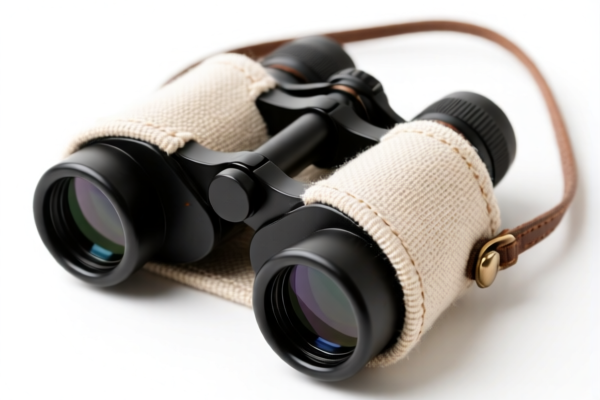
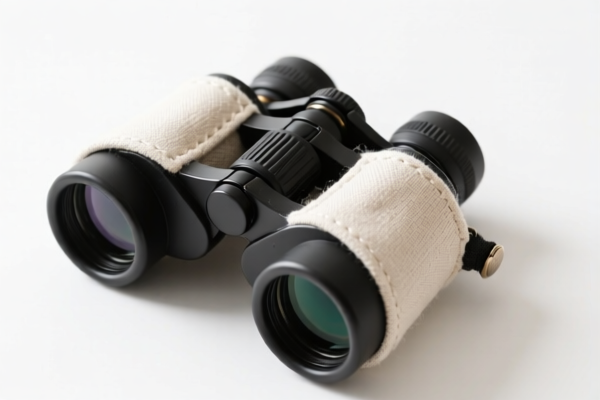
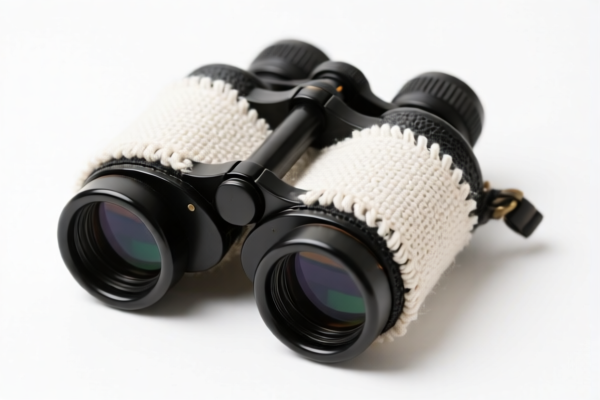
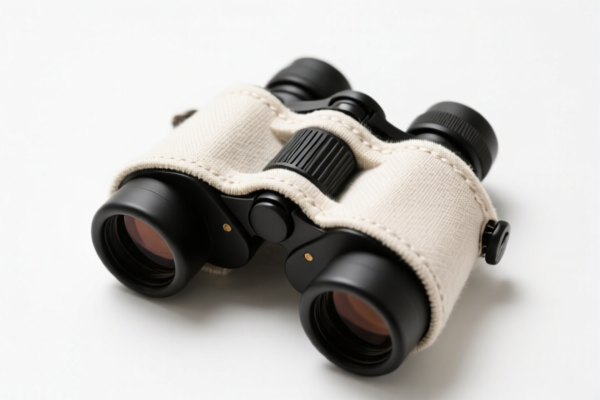
AI Analysis
🧳 Wooden and Fabric Binocular Case (Wooden-Lined Textile Pouch)
🌐 HS Code Reference & Customs Clearance Guide | 2026 Latest Tariff Full Analysis | Professional-Level Clearance Strategy
📌 I. Product Definition and Classification: Do You Really Understand "Binocular Cases"?
A wooden and fabric binocular case is a protective container designed specifically for binoculars. In international trade, its classification depends heavily on material composition and primary function. It can be viewed from three main perspectives:
- Textile-Primary Containers: If the outer shell is primarily textile/fabric, even with wood lining, it may be classified under general textile containers.
- Wood-Primary Containers: If the structural integrity or significant value is derived from the wood, it might fall under wooden containers.
- Optical Accessories: If deemed an integral accessory to binoculars (optical instruments), it could be classified as a part/attachment of optical equipment.
⚠️ Key Distinction Points:
- If the case is primarily textile fabric with a wooden interior lining → Likely Chapter 42 (Articles of Leather; Saddle Harness).
- If the case is primarily wooden with a fabric/linen interior → Likely Chapter 44 (Wood) or Chapter 42 depending on specific construction (often 4202 if made of wood but categorized as bags/cases). Note: The data provided suggests 4202 classification for wood-lined fabric cases, implying customs view them as textile/leather goods containers.
- If considered a specialized accessory for binoculars → Likely Chapter 90 (Optical, photographic, measuring instruments).
📦 II. HS Code Classification Details (2026 Latest Tariff Authority Comparison)
| HS Code | Product Description | Application Scenario | Material/Function Focus |
|---|---|---|---|
4202.99.30.00 |
Wooden-lined textile binocular case, material is wood + textile, belongs to containers. | Protective cases for optical devices, prioritizing textile exterior. | ✅ Wood + Textile (Container category) |
4202.99.90.00 |
Wooden-lined textile binocular case, material is textile, use is binocular case, belongs to containers and bags. | General protective cases, primarily textile structure. | ✅ Textile (Container/Bag category) |
9002.90.95.00 |
Wooden-lined cloth binocular case, as a binocular accessory, belongs to other categories of optical element parts/accessories. | Specialized accessories for binoculars, optical instrument parts. | ✅ Optical Accessory |
🔍 Key Reminder:
-4202.99.30.00and4202.99.90.00are both under Chapter 42 (Articles of Leather; Saddle Harness and Harness Travel Goods; Handbags...). The distinction lies in specific sub-category listings for "other containers." The data indicates4202.99.30.00is associated with "wood + textile" while4202.99.90.00is associated with "textile" only, yet both share the base duty of 0% or 20% depending on the specific interpretation in the data. Crucially, both attract the same Section 301 + IEEPA tariffs.
-9002.90.95.00falls under Chapter 90 (Optical Instruments), specifically as an accessory. This classification often has different base duties (0% in this data set) but still attracts the same trade war tariffs.
💰 III. 2026 Latest Tariff Rate Detailed Explanation (Including Additional Taxes, Policy Additions)
✅ Applicable Country: United States (US)
✅ Origin: China (CN)
✅ Effective Date: November 10, 2025 (and subsequent imports)
🎯 1. 4202.99.30.00 —— Wooden-Lined Textile Binocular Case (Wood + Textile)
| Item | Content |
|---|---|
| Base Duty Rate | 0% (ad valorem) |
| Section 301 Additional Duty | +25% (USITC Footnote 9903.88.01) |
| IEEPA Additional Duty | +10% (Against China/HK products, from Nov 10, 2025) |
| Total Tariff Rate | 35% |
| Tax Calculation | CIF Value × 35% |
| De Minimis Eligibility | ❌ No (deny_de_minimis) |
| Legal Basis Path | IEEPA:9903.01.25 → IEEPA:9903.01.24 → USITC:4202.99.30.00 → FOOTNOTE:9903.88.01 |
📌 Explanation:
- "Section 301 Additional Duty 25%" comes from the "Additional Tariffs" under US Trade Law Section 301;
- "IEEPA 10%" is the additional tariff against China under the International Emergency Economic Powers Act;
- Total 35%, considered a high tariff, must be anticipated in advance!
🎯 2. 4202.99.90.00 —— Wooden-Lined Textile Binocular Case (Textile Primary)
| Item | Content |
|---|---|
| Base Duty Rate | 20% (ad valorem) |
| Section 301 Additional Duty | +25% (USITC Footnote 9903.88.01) |
| IEEPA Additional Duty | +10% (Against China/HK products, from Nov 10, 2025) |
| Total Tariff Rate | 55% |
| Tax Calculation | CIF Value × 55% |
| De Minimis Eligibility | ❌ No (deny_de_minimis) |
| Legal Basis Path | IEEPA:9901.25 → IEEPA:9903.01.24 → USITC:4202.99.90.00 → FOOTNOTE:9903.88.01 |
📌 Note:
- This code has a higher base duty (20%) compared to4202.99.30.00(0%).
- Even though the physical product is identical (wood-lined textile case), misclassification or specific subheading nuances can lead to a 20% base duty instead of 0%, resulting in a 55% total tariff.
- This highlights the critical importance of precise subheading selection.
🎯 3. 9002.90.95.00 —— Wooden-Lined Cloth Binocular Case (Optical Accessory)
| Item | Content |
|---|---|
| Base Duty Rate | 0% (ad valorem) |
| Section 301 Additional Duty | +25% (USITC Footnote 9903.88.01) |
| IEEPA Additional Duty | +10% (Against China/HK products, from Nov 10, 2025) |
| Total Tariff Rate | 35% |
| Tax Calculation | CIF Value × 35% |
| De Minimis Eligibility | ❌ No (deny_de_minimis) |
| Legal Basis Path | IEEPA:9903.01.25 → IEEPA:9903.01.24 → USITC:9002.90.95.00 → FOOTNOTE:9903.88.01 |
📌 Note:
- Classified under Chapter 90 as an accessory to optical instruments.
- Like4202.99.30.00, it has a 0% base duty, resulting in a 35% total tariff.
- This classification is valid if the case is explicitly marketed as an accessory/part of the binocular system rather than a general-purpose container.
🛠️ IV. Customs Clearance Practical Advice (Battlefield Pit-Avoidance Guide)
✅ 1. Preparation Checklist (Indispensable)
| Material | Required | Explanation |
|---|---|---|
| ✅ Product Specification Sheet | ✔️ | Must detail dimensions, materials (wood type, fabric type), and lining composition. |
| ✅ Material Breakdown | ✔️ | Crucial for distinguishing between 4202.99.30.00 (Wood+Textile) and 4202.99.90.00 (Textile). |
| ✅ Product Photos (Including Label) | ✔️ | Clear images showing the exterior fabric and interior wooden structure. |
| ✅ Commercial Invoice | ✔️ | Clearly describe the item as "Binocular Case, Wooden Lined, Textile Exterior." |
| ✅ Packing List | ✔️ | Confirm no other items are included. |
✅ 2. Declaration Tips (Key Mantra)
🔥 "Material Composition Dictates HS Code, Base Duty Changes Everything!"
| Scenario | Correct Declaration Method | Wrong Practice |
|---|---|---|
| Primary Material is Textile | 4202.99.30.00 (if specific subheading allows) or 4202.99.90.00 |
Misclassifying as 9002 without proof of being an optical accessory → Potential penalty or higher duty. |
| Explicit Optical Accessory | 9002.90.95.00 |
Using general container codes when specific accessory code is more appropriate → Missed optimization if 4202 has 20% base duty. |
Misclassifying 4202.99.90.00 as 4202.99.30.00 |
Ensure documentation supports the "Wood+Textile" specific definition for 30.00. | If customs reject the 30.00 classification, you fall back to 90.00 with 20% base duty. |
📌 Critical Insight:
The difference between 35% and 55% total tariff is entirely due to the base duty (0% vs 20%). Therefore, ensuring the correct subheading under4202.99that carries 0% base duty (4202.99.30.00) is vital for cost saving, if applicable to the specific product construction.
✅ 3. Special Case Handling
| Situation | Handling Advice |
|---|---|
| OEM Custom Cases | Provide design drawings showing material layers to justify 4202.99.30.00. |
| Mixed Materials | If the wood is just a thin liner and fabric is the main structure, argue for textile-based classification (4202). |
| Sold with Binoculars | If imported as a set, the case might be considered part of the main article. However, if shipped separately, it is treated as an accessory. |
| High Value Claims | For high-value luxury cases, ensure description emphasizes "luxury accessories" to potentially support 9002 if justified as optical accessory. |
🌍 V. Global Market Clearance Comparison (2026 Latest)
| Country/Region | Recommended HS Code | Tariff (China Origin) | Certification Requirements | Remarks |
|---|---|---|---|---|
| 🇺🇸 USA | 4202.99.30.00 |
35% (0% Base + 25% + 10%) | None specific | High tariff due to Section 301 + IEEPA. |
| 🇺🇸 USA | 4202.99.90.00 |
55% (20% Base + 25% + 10%) | None specific | Higher base duty makes this less favorable. |
| 🇨🇳 China | 4202.99.30.00 |
~5-8% | None | Low import tax in China. |
| 🇪🇺 EU | 4202.99.30.00 |
0-4% | CE (if applicable) | No Section 301 tariffs. |
| 🇬🇧 UK | 4202.99.30.00 |
0-4% | UKCA (if applicable) | Post-Brexit tariffs may vary slightly. |
📌 Conclusion:
- USA is the only major market with high additional tariffs (35%-55%) for these products from China.
- Cost Optimization: Aim for4202.99.30.00(35%) over4202.99.90.00(55%) if product construction allows.
- Alternative: Consider9002.90.95.00(35%) if marketing as a specialized optical accessory, though it requires stronger justification.
📌 VI. Common Mistakes & Pitfall Guide (Lessons Learned)
❌ Mistake 1: Assuming all binocular cases have the same tariff.
👉 Consequence: Misclassifying a case with 20% base duty as one with 0% base duty can lead to 20% additional tax + penalties upon customs audit.
❌ Mistake 2: Using "Accessory" classification (9002) without proper proof.
👉 Consequence: Customs may reject 9002 and revert to general containers (4202), potentially applying the higher 55% rate if the specific 0% base duty subheading (4202.99.30.00) is not supported.
❌ Mistake 3: Ignoring the IEEPA 10% tariff.
👉 Consequence: Failing to account for the 10% IEEPA tariff leads to unexpected costs. Remember, Base + 301 + IEEPA = Total.
✅ Correct Approach:
"Binocular Case, Textile Exterior, Wooden Lined, Model XYZ, Origin China"
- Declare carefully under4202.99.30.00if applicable to save 20% base duty.
- Prepare documentation to prove material composition.
🎯 VII. Conclusion: Professional Declaration, Save Time and Money!
🎯 Remember the Mantra:
🔹 "Base Duty is King: 0% vs 20% makes a 20% difference!"
🔹 "Section 301 + IEEPA are Fixed: 35% Total (0% base) or 55% Total (20% base)."
🔹 "Choose Wisely:4202.99.30.00(35%) is better than4202.99.90.00(55%)."
📌 Tips:
- If your binocular case is originally from Vietnam, Mexico, Thailand, or Malaysia, you may apply for IEEPA exemptions, reducing tariffs to 0%-5%.
- Suggest Advance Ruling (Pre-classification) from US Customs (CBP) to confirm the correct subheading under 4202.99.
📣 Immediate Action:
📞 Contact professional customs brokers + Provide material details + Apply for HS Code Pre-ruling
🚀 Let your binocular cases pass customs smoothly, maximize profits!
✨ Professional Customs Clearance Starts with Accurate Classification!
💼 Every cent of your cost deserves precise calculation!
Customer Reviews
About HS Code Classification
The Harmonized System (HS) is an internationally standardized nomenclature developed by the World Customs Organization (WCO) to classify traded products. Over 200 countries use the HS system as the basis for customs tariffs, trade statistics, and import/export regulations.
Each HS code follows a hierarchical structure:
- Chapter (2 digits) — Broad category of goods (e.g., Chapter 84: Machinery and Mechanical Appliances)
- Heading (4 digits) — More specific grouping within the chapter
- Subheading (6 digits) — Internationally standardized breakdown, used by all WCO member countries
- National subdivisions (8-10 digits) — Country-specific extensions for further classification, such as US HTSUS 10-digit codes
Correct HS code classification is essential for smooth customs clearance, accurate duty payment, and compliance with trade regulations. Misclassification can lead to customs delays, overpayment of duties, or penalties.
When importing from CN to US, the applicable tariff rates may include:
- Most-Favored-Nation (MFN) rate — The standard duty rate applied to WTO members
- General rate — Applied to countries without trade agreements
- Trade remedy duties — Additional tariffs such as Section 301 (anti-dumping), Section 232 (national security), or countervailing duties
The information provided on this page is for reference purposes only. For official classification, please consult with your local customs authority or a licensed customs broker.