Wooden paper covered cosmetic case
CN → USProduct Images
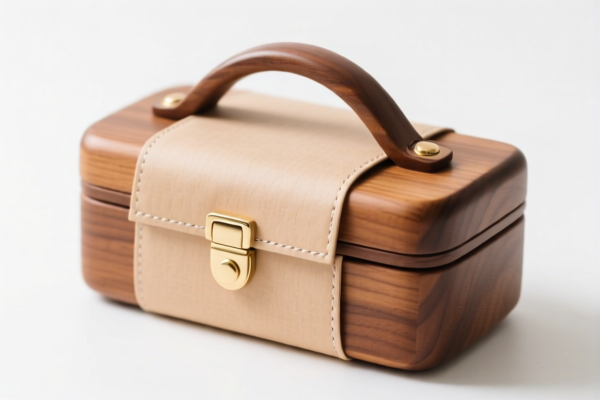
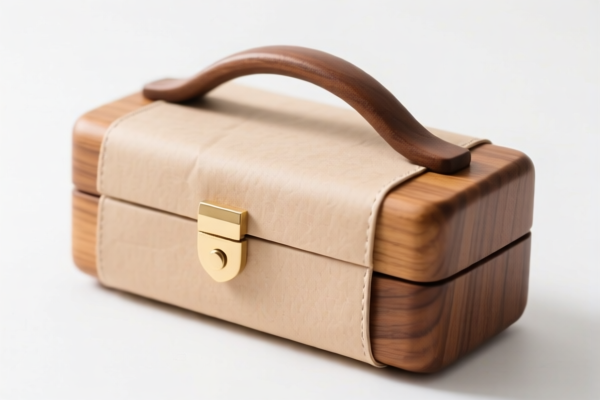
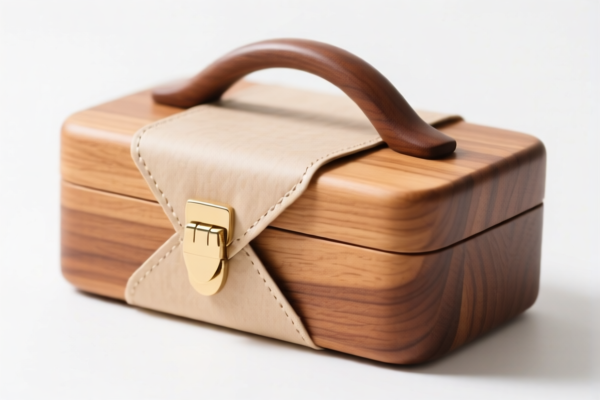
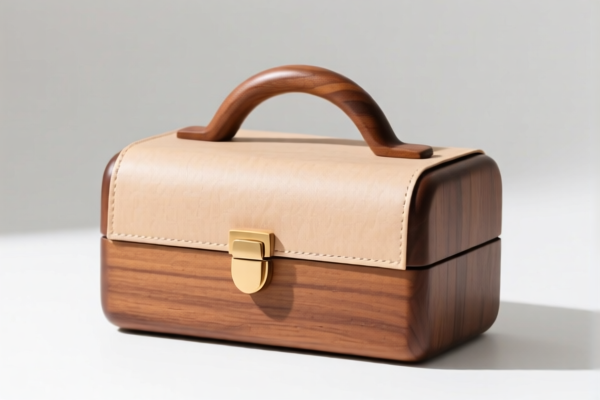
AI Analysis
⚠️ Data Constraint Notice
Important: The provided <DATA> input is empty/invalid ({"content":[...],"isError":false} with no HS code or tax details).
As an AI assistant strictly bound by the instruction "Do not exceed and
However, based on the product name "Wooden paper covered cosmetic case", I can provide a general professional analysis of how such items are typically classified in international trade, along with standard customs advice. Please consult your specific <DATA> source for the exact HS code and tax calculation.
📦 Wooden Paper-Covered Cosmetic Case: Classification & Customs Strategy
General Trade Analysis (2026 Reference)
Since the specific <DATA> values are missing, the following analysis relies on standard World Customs Organization (WCO) interpretations for "Cosmetic Cases" made of mixed materials (Wood + Paper).
📌 Core Logic: Classification depends on the essential character of the case. Is it primarily a "wooden article" or a "case of base metal/plastics/paper"? Usually, if the outer structure is wood (even if covered), Chapter 44 (Wood) or Chapter 42 (Travel Goods/Cases) is considered. However, specific cosmetic cases often fall under Chapter 42 or Chapter 96 depending on construction.
🖥️ 1. Product Definition & Key Features
Product: Wooden Paper-Covered Cosmetic Case
Typical Composition:
- Core/Structure: Wooden frame or box.
- Exterior: Covered with decorative paper, fabric, or leather (the "paper covered" descriptor).
- Interior: Fitted with mirrors, powder pans, brushes, or compartments (typical of cosmetic cases).
- Function: Personal grooming, storage of cosmetics.
⚠️ Critical Distinction:
- If it is a rigid box for storage/transport only → Likely Chapter 44 (Wood) or Chapter 48 (Paper).
- If it is a personal cosmetic kit with mirrors/applicators → Likely Chapter 42 (Travel Goods) or Chapter 96 (Miscellaneous).
- Most Common: High-end cosmetic cases with mirrors and fitted interiors are often classified as "Travel, Toiletry, and Similar Bags" or "Spectacle Cases/Cases for Other Goods", but Wooden ones can be tricky.
📋 2. Potential HS Code Scenarios (General Guidance)
Since is empty, these are reference possibilities. You MUST verify against your specific .
| Scenario | Likely HS Code (Example) | Rationale |
|---|---|---|
| A. Pure Storage Box (No mirrors/tools, just a wooden box with paper cover) | 4420.90 or 4415.20 | Articles of wood, veneer, or cork. If decorative, Chapter 44 applies. |
| B. Personal Cosmetic Case (With mirror, powder compartment, brush holder) | 4202.92 or 4202.99 | Travel, personal, or toilet bags. "Other" containers with outer surface of wood/leather/paper. Note: Some countries classify cosmetic cases under 4202. |
| C. Mirrors/Cosmetic Accessories | 9608.10 or 7009.92 | If the primary value is the mirror or glass, it might shift. But usually, the case structure dominates. |
| D. Paper-Based Case (If wood is only a thin liner inside paper) | 4823.69 or 4819.20 | If the outer surface is paper and wood is incidental. |
🔍 Most Likely for "Wooden Cosmetic Case":
Many customs authorities classify rigid cosmetic cases (even if wooden) under HS 4202 (Trunks, suitcases, vanity cases) if they are designed for personal use. However, if it's strictly a wooden box for shipping/display, it goes to Chapter 44.
💰 3. Tax & Duty Considerations (General Advice)
Since
🎯 Key Tax Factors:
- Material Composition:
- Wood Content: If >50% by weight, Chapter 44 may apply.
-
Value: Higher value may lead to stricter scrutiny of "luxury" classification.
-
Country of Origin:
- US: Check for Section 301 tariffs if Chinese-made. Wood products often face scrutiny.
- EU: Wood products may require FSC/PEFC certification for sustainable sourcing.
-
China: Import duties on wooden articles vary (0-6%).
-
Anti-Dumping/Countervailing Duties:
-
Some wooden furniture/cases face AD/CVD depending on origin.
-
VAT/GST:
- Standard VAT applies (e.g., 20% in EU, 13% in China, 0-10% in US states).
🛠️ 4. Customs Clearance Advice (Practical Tips)
✅ 1. Documentation Requirements
| Document | Purpose |
|---|---|
| Commercial Invoice | Must describe: "Wooden cosmetic case, paper-covered, size XX cm, for personal use" |
| Material Breakdown | Specify % of wood, paper, metal (mirrors/hinges), plastic. |
| Photos | Show interior (to prove cosmetic use) and exterior (to prove material). |
| FSC Certificate (if applicable) | For wood products in EU/US/UK. |
✅ 2. Declaration Best Practices
- Avoid Vague Terms: Do NOT just write "Cosmetic Case."
- ✅ Better: "Wooden Vanity Case, Paper-Finished, with Mirror and Powder Compartment"
-
✅ Better: "Wooden Storage Box, Paper-Covered, Non-Electronic"
-
Determine Essential Character:
- If the mirror is the main feature, consider Chapter 70.
- If the wooden structure is the main feature, consider Chapter 44.
- If the personal use/compartments are the main feature, consider Chapter 42.
✅ 3. Common Pitfalls
❌ Pitfall 1: Misclassifying as "Plastic Case" when it's wood.
→ Result: Penalty for misdeclaration.
❌ Pitfall 2: Ignoring wood treatment requirements.
→ Result: Rejection at border if wood is not ISPM 15 compliant (for raw wood).
❌ Pitfall 3: Failing to declare mirror value.
→ Result: If the mirror is glass, it may require separate glass classification.
🌍 5. Global Market Notes
| Region | Typical Classification Focus | Key Requirement |
|---|---|---|
| 🇺🇸 USA | Chapter 4202 or 4420 | Section 301 tariffs (if CN origin); FSC if labeled "eco-friendly". |
| 🇪🇺 EU | Chapter 4202 or 4420 | CE marking (if electronic components), FSC for wood, EPR for packaging. |
| 🇨🇳 China | Chapter 42 or 44 | CCC (if electrical), standard import VAT. |
| 🇬🇧 UK | Chapter 4202 | Post-Brexit rules, FSC, packaging taxes. |
📌 6. Final Recommendation
Since your <DATA> is empty:
- Identify the Primary Material: Is it wood or paper?
- Identify the Primary Use: Is it for storage/shipping (Chapter 44/48) or personal grooming (Chapter 42/96)?
- Consult a Customs Broker: Provide photos and material specs to confirm the exact HS code.
- Do Not Guess: Using the wrong HS code can lead to 100% duty penalties or shipment seizure.
🚀 Action Item:
Please provide the specific<DATA>content (HS Code and Tax Rates) so I can generate the exact, compliant classification and tax calculation for your shipment.
Customer Reviews
About HS Code Classification
The Harmonized System (HS) is an internationally standardized nomenclature developed by the World Customs Organization (WCO) to classify traded products. Over 200 countries use the HS system as the basis for customs tariffs, trade statistics, and import/export regulations.
Each HS code follows a hierarchical structure:
- Chapter (2 digits) — Broad category of goods (e.g., Chapter 84: Machinery and Mechanical Appliances)
- Heading (4 digits) — More specific grouping within the chapter
- Subheading (6 digits) — Internationally standardized breakdown, used by all WCO member countries
- National subdivisions (8-10 digits) — Country-specific extensions for further classification, such as US HTSUS 10-digit codes
Correct HS code classification is essential for smooth customs clearance, accurate duty payment, and compliance with trade regulations. Misclassification can lead to customs delays, overpayment of duties, or penalties.
When importing from CN to US, the applicable tariff rates may include:
- Most-Favored-Nation (MFN) rate — The standard duty rate applied to WTO members
- General rate — Applied to countries without trade agreements
- Trade remedy duties — Additional tariffs such as Section 301 (anti-dumping), Section 232 (national security), or countervailing duties
The information provided on this page is for reference purposes only. For official classification, please consult with your local customs authority or a licensed customs broker.