Wooden paper covered pencil case
CN → US| HS Code | Tariff Rate | Origin | Destination | Doc |
|---|---|---|---|---|
| 4823901000 | 35.0% | CN | US | Official Doc |
| 4421999820 | 38.3% | CN | US | Official Doc |
| 4823908680 | 35.0% | CN | US | Official Doc |
| 4417008010 | 40.1% | CN | US | Official Doc |
| 4417008090 | 40.1% | CN | US | Official Doc |
Product Images
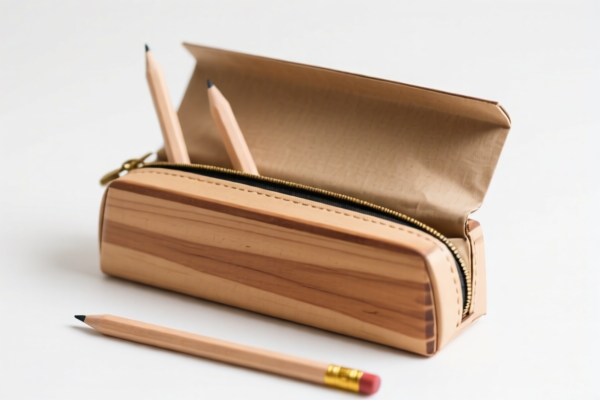
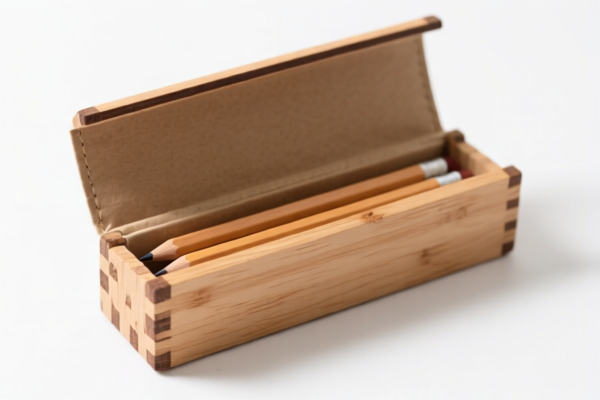
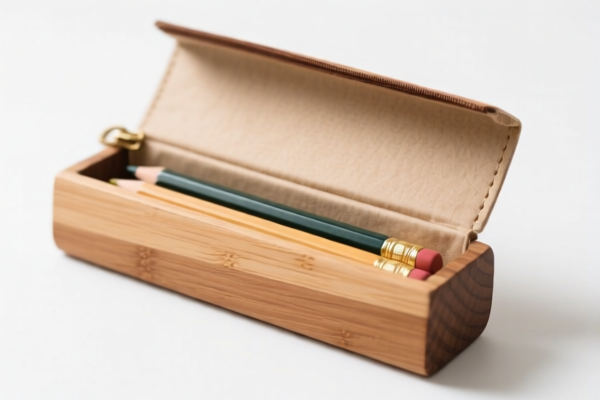
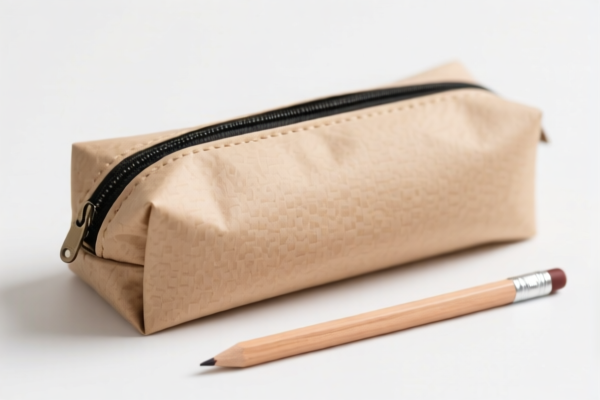
AI Analysis
📝 Pencil Case (Wooden, Paper-Covered / Paper-Wrapped)
🌐 HS Code Reference & Customs Clearance Guide | 2026 Latest Tariff Analysis | Professional Clearance Strategy
📌 I. Product Definition & Classification: Decoding the "Wooden Paper Covered Pencil Case"
This product presents a unique classification challenge due to the conflict between materials. It is a container for pencils (stationery accessory) made of wood, but covered/wrapped in paper. In international trade, the classification depends heavily on which material is considered the "essential character" or the primary structural component.
The Two Main Classification Paths:
1. Paper-Based Classification (4823 Series)
If customs authorities view the paper covering as defining the product’s identity (e.g., thin paper wrap over a minimal wood frame), it is classified under Chapter 48 (Paper and Paperboard). This is often a "catch-all" or residual category for other paper articles.
2. Wood-Based Classification (4417/4421 Series)
If the wooden core/structure is deemed the essential character (e.g., a solid wooden box merely decorated or protected by paper), it falls under Chapter 44 (Wood and Articles of Wood). This path further splits based on whether it is viewed as a tool handle/component or a general wooden article.
⚠️ Key Distinction Point:
- Paper Wrapper as Primary Feature: → 4823.90.xxxxxx
- Wooden Structure as Primary Feature: → 4421.99.xxxxxx (Wooden articles)
- Wooden Core as "Handle/Component": → 4417.00.xxxxxx (Wooden tool handles/components)
📦 II. HS Code Classification Details (2026 Latest Tariff Authority对照)
| HS Code | Product Description | Applicable Scenario | Material Dominance |
|---|---|---|---|
4823.90.10.00 |
Other articles of paper and paperboard | If the paper covering defines the product as a "paper package" or "paper wrap". | ✅ Paper |
4823.90.86.80 |
Other paper articles (Catch-all) | Based on the presence of "paper"; residual category for other paper products. | ✅ Paper |
4421.99.98.20 |
Other articles of wood | Pencil box/case made of wood, no conflict with material definition. Most logical for a "wooden pencil case". | ✅ Wood |
4417.00.80.10 |
Wooden tool handles/blanks | If the wooden part is viewed as a pencil shaft/handle component (structural core). | ✅ Wood |
4417.00.80.90 |
Other wooden tool handles | Generic category for wooden tool-like components. | ✅ Wood |
🔍 Key Reminder:
- Misclassification Risk: Declaring a wooden box as "paper" (4823) when it is structurally wood may lead to under-declaration of duties. Conversely, declaring a paper-wrapped item as "wood" (4421) when it is primarily paper may lead to over-declaration. - USITC Footnotes: All these codes are subject to Section 301 and IEEPA tariffs for Chinese origin.
💰 III. 2026 Latest Tariff Rate Breakdown (Including Surcharges)
✅ Applicable Country: United States (US)
✅ Origin: China (CN)
✅ Effective Date: 2025年11月10日起 (Including subsequent imports)
🎯 1. 4823.90.10.00 —— Articles of Paper (Paper-Covered View)
| Item | Content |
|---|---|
| Base Tariff | 0.0% (ad valorem) |
| USITC Surcharge (301) | +25.0% |
| IEEPA Surcharge | +10.0% |
| Total Tax Rate | 35.0% |
| Tax Calculation | CIF Value × 35.0% |
| De Minimis Exemption | ❌ Not Eligible (deny_de_minimis) |
| Legal Path | IEEPA:9903.01.25 → USITC:4823.90.10.00 → FOOTNOTE:9903.88.01 |
📌 Explanation:
- Although the base rate is 0%, the 35% effective rate is significant. - The "25% 301 Tariff" and "10% IEEPA Tariff" apply to all Chinese-origin goods in Chapter 48, 44, etc.
🎯 2. 4823.90.86.80 —— Other Paper Articles (Residual)
| Item | Content |
|---|---|
| Base Tariff | 0.0% |
| USITC Surcharge (301) | +25.0% |
| IEEPA Surcharge | +10.0% |
| Total Tax Rate | 35.0% |
| Tax Calculation | CIF Value × 35.0% |
| De Minimis Exemption | ❌ Not Eligible |
| Legal Path | IEEPA:9903.01.25 → USITC:4823.90.86.80 → FOOTNOTE:9903.88.01 |
📌 Note:
- Same tariff structure as4823.90.10.00. - Used if the product does not fit specific subheadings but is clearly "other paper articles".
🎯 3. 4421.99.98.20 —— Wooden Articles (Pencil Box/Case)
| Item | Content |
|---|---|
| Base Tariff | 3.3% |
| USITC Surcharge (301) | +25.0% |
| IEEPA Surcharge | +10.0% |
| Total Tax Rate | 38.3% |
| Tax Calculation | CIF Value × 38.3% |
| De Minimis Exemption | ❌ Not Eligible |
| Legal Path | IEEPA:9903.01.25 → USITC:4421.99.98.20 → FOOTNOTE:9903.88.01 |
📌 Analysis:
- This is likely the most accurate classification for a "Wooden Pencil Case". - Higher base rate (3.3%) than paper, but still subject to the same surcharges. - Total 38.3% is slightly higher than the paper classification (35.0%).
🎯 4. 4417.00.80.10 —— Wooden Tool Handles/Components
| Item | Content |
|---|---|
| Base Tariff | 5.1% |
| USITC Surcharge (301) | +25.0% |
| IEEPA Surcharge | +10.0% |
| Total Tax Rate | 40.1% |
| Tax Calculation | CIF Value × 40.1% |
| De Minimis Exemption | ❌ Not Eligible |
| Legal Path | IEEPA:9903.01.25 → USITC:4417.00.80.10 → FOOTNOTE:9903.88.01 |
📌 Analysis:
- If customs views the wooden part as a "tool handle" (e.g., pencil shaft), this applies. - Highest base rate (5.1%) among the options. - Total 40.1% is the most expensive option.
🎯 5. 4417.00.80.90 —— Other Wooden Tool Handles
| Item | Content |
|---|---|
| Base Tariff | 5.1% |
| USITC Surcharge (301) | +25.0% |
| IEEPA Surcharge | +10.0% |
| Total Tax Rate | 40.1% |
| Tax Calculation | CIF Value × 40.1% |
| De Minimis Exemption | ❌ Not Eligible |
| Legal Path | IEEPA:9903.01.25 → USITC:4417.00.80.90 → FOOTNOTE:9903.88.01 |
📌 Analysis:
- Same as above, residual category for wooden tool components. - Not recommended unless the product is strictly a component, not a finished case.
🛠️ IV. Customs Clearance Practical Advice (Battle-Tested Pitfall Avoidance)
✅ 1. Required Documents Checklist (All Mandatory)
| Document | Must Provide | Description |
|---|---|---|
| ✅ Product Specifications | ✔️ | Material breakdown: % Wood vs. % Paper, dimensions, weight. |
| ✅ Product Photos | ✔️ | Clear images showing the wooden core and paper covering. Side-by-side views. |
| ✅ Bill of Materials (BOM) | ✔️ | Detailed list of materials to prove the "essential character". |
| ✅ Commercial Invoice | ✔️ | Must specify: "Wooden Pencil Case with Paper Covering" (Do not use vague terms like "Stationery"). |
| ✅ Packing List | ✔️ | Net/Gross weight, packaging details. |
| ✅ Origin Certificate | ✔️ | If applicable, though US-China tariffs are high regardless. |
✅ 2. Declaration Strategy (Key Mnemonic)
🔥 "Wood Core, Paper Skin, Classify as Wood, Avoid Paper Pit!"
(If the wooden structure is rigid and defines the shape, declare as Wood. If it's just a paper tube with a tiny wood stick, declare as Paper.)
| Scenario | Correct HS Code | Wrong Practice | Consequence |
|---|---|---|---|
| Solid wooden box with paper wrap | 4421.99.98.20 (38.3%) |
Declare as 4823 (35.0%) |
Under-declaration → Penalty + Back Taxes |
| Paper tube with minimal wood support | 4823.90.10.00 (35.0%) |
Declare as 4421 (38.3%) |
Over-declaration → Lost profit, no penalty but inefficiency |
| Pencil shaft/component only | 4417.00.80.10 (40.1%) |
Declare as finished case | Misclassification → Delayed clearance |
✅ 3. Special Handling Tips
| Situation | Advice |
|---|---|
| Mixed Material Products | If the product is >50% value by wood, lean towards Chapter 44. If >50% value by paper, lean towards Chapter 48. |
| Precedent Case | Check previous shipments of similar products. If you previously declared 4421, maintain consistency to avoid audits. |
| IEEPA Exemptions | ❌ No exemptions for wooden or paper pencil cases from China under current IEEPA rules. |
| De Minimis (Section 321) | ❌ Not eligible for $800 de minimis exemption for China-origin goods in these categories. |
🌍 V. Global Market Clearance Comparison (2026 Latest)
| Country/Region | Recommended HS Code | Tariff (China Origin) | Certification | Notes |
|---|---|---|---|---|
| 🇺🇸 USA | 4421.99.98.20 |
38.3% | No specific, but 301/IEEPA apply | High tariff risk |
| 🇨🇳 China | 4421.99.98.20 |
~5-10% | N/A | Low import duty, no 301 |
| 🇪🇺 EU | 4421.99.98.20 |
~3-4% | CE (if any), FSC (wood) | No 301 equivalent, but eco-regs apply |
| 🇬🇧 UK | 4421.99.98.20 |
~3-4% | UKCA | Post-Brexit rules |
| 🇯🇵 Japan | 4421.99.98.20 |
~5-6% | FSC | Stable tariffs |
📌 Conclusion:
- The US market is the most expensive due to the 301 + IEEPA layers. - Chapter 44 (Wood) is generally more defensible for a "pencil case" than Chapter 48, as it is a functional container, not just packaging. - Paper classification (35%) is slightly cheaper than Wooden classification (38.3% or 40.1%), but risky if the wooden component is substantial.
📌 VI. Common Mistakes & Pitfall Guide (Blood-Stained Lessons)
❌ Mistake 1: Declaring a wooden pencil case as "Paper Package" (4823) to save 3.3%
👉 Consequence: Customs audit finds wood core → Penalty + Back Taxes + 10% interest.
❌ Mistake 2: Declaring as "Wooden Tool Handle" (4417) for a finished case
👉 Consequence: Higher base rate (5.1% vs 3.3%) → Unnecessary extra cost.
❌ Mistake 3: Ignoring IEEPA 10% in cost calculation
👉 Consequence: Profit margin erased by unexpected 10% surcharge.
✅ Correct Practice:
"Wooden Pencil Case, Covered with Printed Paper, For Stationery Use, Model XYZ"
🎯 VII. Conclusion: Precision Classification, Profit Protection
🎯 Remember the Mnemonic:
🔹 "Wood Core, Paper Skin → Classify as Wood (4421)"
🔹 "Base 3.3% + 25% + 10% = 38.3% (Best Balance)"
🔹 "Paper Classification (4823) is 35%, but Risky if Wood is Dominant"
📌 Pro Tip:
- If the paper covering is removable and the wood is the primary structure, always declare as Wood (4421.99.98.20).
- If the product is primarily a paper wrapper with minimal wood support, consider 4823.90.10.00 (35%), but prepare documentation to prove paper dominance.
- Pre-ruling: Consider applying for an Advance Ruling from US Customs (CBP) if the shipment volume is high, to lock in the HS Code.
📣 Immediate Action:
📞 Consult with a licensed customs broker + Provide material composition report + Apply for CBP Advance Ruling if needed.
🚀 Ensure your commercial invoice matches the HS Code description exactly.
✨ Professional Clearance Starts with Accurate Classification!
💼 Every Percentage Point of Tariff Matters!
Customer Reviews
About HS Code Classification
The Harmonized System (HS) is an internationally standardized nomenclature developed by the World Customs Organization (WCO) to classify traded products. Over 200 countries use the HS system as the basis for customs tariffs, trade statistics, and import/export regulations.
Each HS code follows a hierarchical structure:
- Chapter (2 digits) — Broad category of goods (e.g., Chapter 84: Machinery and Mechanical Appliances)
- Heading (4 digits) — More specific grouping within the chapter
- Subheading (6 digits) — Internationally standardized breakdown, used by all WCO member countries
- National subdivisions (8-10 digits) — Country-specific extensions for further classification, such as US HTSUS 10-digit codes
Correct HS code classification is essential for smooth customs clearance, accurate duty payment, and compliance with trade regulations. Misclassification can lead to customs delays, overpayment of duties, or penalties.
When importing from CN to US, the applicable tariff rates may include:
- Most-Favored-Nation (MFN) rate — The standard duty rate applied to WTO members
- General rate — Applied to countries without trade agreements
- Trade remedy duties — Additional tariffs such as Section 301 (anti-dumping), Section 232 (national security), or countervailing duties
The information provided on this page is for reference purposes only. For official classification, please consult with your local customs authority or a licensed customs broker.