Woodworking Clamps
CN → US| HS Code | Tariff Rate | Origin | Destination | Doc |
|---|---|---|---|---|
| 8466208065 | 38.7% | CN | US | Official Doc |
| 8466208040 | 38.7% | CN | US | Official Doc |
| 8201903000 | 0.0% | CN | US | Official Doc |
| 8201906000 | 35.0% | CN | US | Official Doc |
| 8205306000 | 40.0% | CN | US | Official Doc |
Product Images
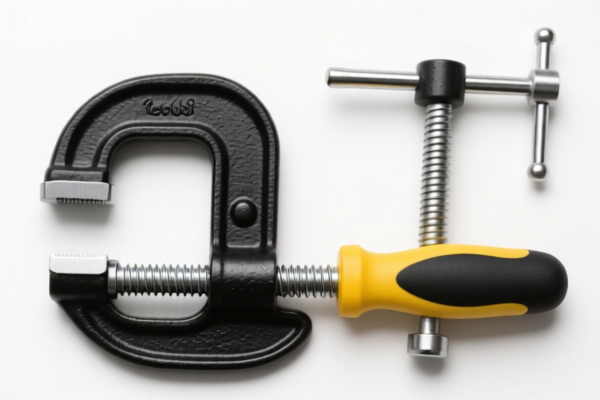
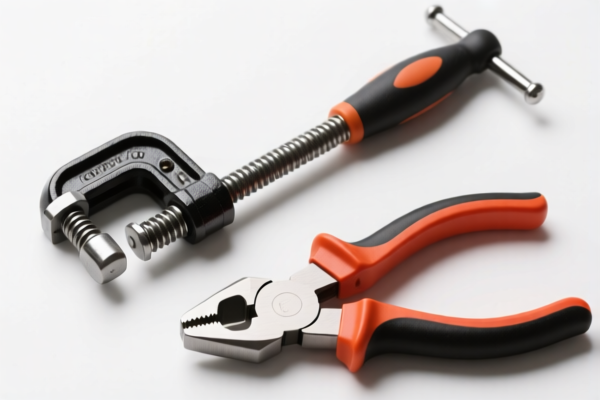
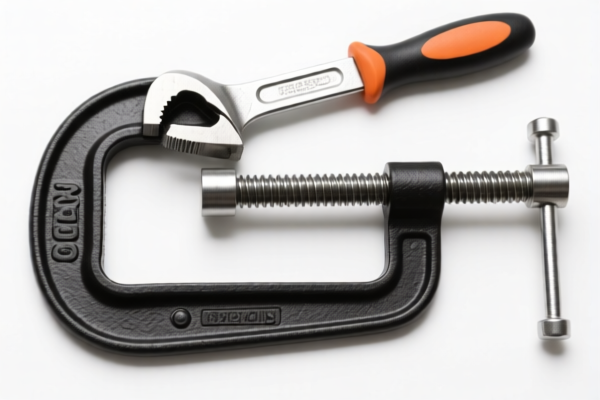
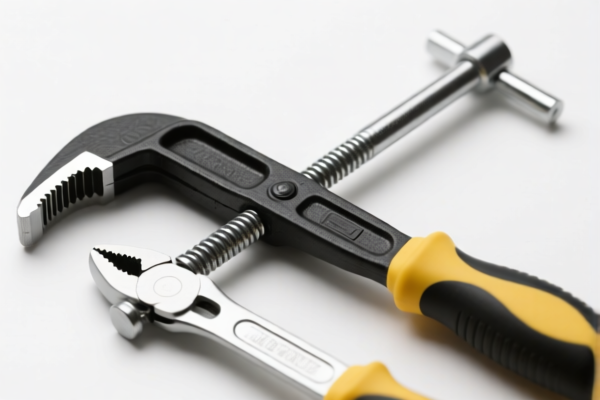
AI Analysis
🪚 Woodworking Clamps: HS Code Classification & Customs Clearance Guide (2026 Update)
🌐 HS Code Reference & Customs Strategy | Latest Tariff Analysis for China-Origin Goods
📌 I. Product Definition & Classification: What Exactly Are "Woodworking Clamps"?
In international trade, "Woodworking Clamps" are not a single entity. They are categorized based on their mechanism, material, and specific application. The distinction is critical because misclassification can lead to drastically different tax liabilities under current US trade policies.
⚠️ Key Distinction Point:
- If the clamp is a dedicated jig/fixture for machine tools or industrial setup → Section 84 (Mechanical Appliances).
- If the clamp is a hand tool or part thereof → Section 82 (Base Metal Articles/Hand Tools).
- If the clamp is a specialized carving/chiseling accessory → Section 82 (Manual Tools).
📦 II. HS Code Classification Matrix (2026 Latest Tariff Regime)
| HS Code | Product Description | Application Context | Material Inference |
|---|---|---|---|
8466.20.80.65 |
Workholding devices (Jigs/Fixtures) | Industrial/Machine tool fixtures | Metal or Composite |
8466.20.80.40 |
Clamps & Fixing Devices | General fixture systems, machine setups | Metal or Composite |
8201.90.30.00 |
Parts of Hand Tools (Clamps as accessories) | Tool accessories, carpentry tool kits | Metal or Composite |
8201.90.60.00 |
Parts of Hand Tools (Gardening/Woodworking) | Hand-held woodworking clamps, chisels | Metal or Composite |
8205.30.60.00 |
Wood Carving Knives & Accessories | Specialized carving tools, chisel holders | Metal or Composite |
🔍 Critical Note:
- Industrial Clamps (used with CNC, saws, lathes) belong in 8466.
- Handheld Clamps (bar clamps, pipe clamps, quick-grip) often fall under 8201 (Parts of Hand Tools) or are treated as 8205 if they resemble carving accessories.
- Material Inference: All inferred as Metal or Composite based on standard woodworking equipment specifications.
💰 III. 2026 Tariff Rate Breakdown (Detailed Tax Clauses)
✅ Applicable Country: United States (US)
✅ Country of Origin: China (CN)
✅ Effective Date: Current rates apply (2025-2026 Trade Policy Era)
🎯 1. 8466.20.80.65 & 8466.20.80.40 — Industrial Jigs & Fixtures
| Item | Detail |
|---|---|
| Base Tariff | 3.7% |
| Section 301 Tariff (Add-on) | +25.0% |
| Section 122 Tariff (Add-on) | +10.0% |
| Total Effective Rate | 38.7% |
| Calculation Basis | CIF Value × 38.7% |
| De Minimis Exemption | ❌ Not Applicable |
| Legal Reference Path | USITC:8466.20.80 → Section 301 Footnote → Section 122 Provision |
📌 Interpretation:
- These codes cover machine-tool accessories.
- The 38.7% total rate is a combination of the standard duty (3.7%) plus the aggressive trade war tariffs (25% + 10%).
- High Cost Alert: This is a significant margin killer for industrial hardware exporters.
🎯 2. 8201.90.30.00 — Parts of Hand Tools (General)
| Item | Detail |
|---|---|
| Base Tariff | 2¢ each + 5.1% |
| Section 301 Tariff (Add-on) | +25.0% |
| Section 122 Tariff (Add-on) | +10.0% |
| Total Effective Rate | ~35.0% + 2¢/unit (Complex Mixed Rate) |
| Calculation Basis | (CIF × 5.1%) + (CIF × 25%) + (CIF × 10%) + (2¢ × Quantity) |
| De Minimis Exemption | ❌ Not Applicable |
| Legal Reference Path | USITC:8201.90.30 → Section 301 Footnote → Section 122 Provision |
📌 Interpretation:
- Applies to accessories that are not themselves complete hand tools but are parts of them.
- The 2¢ per unit fee can become substantial for high-volume, low-value items.
- The ad valorem portion sums to 35.1%.
🎯 3. 8201.90.60.00 — Parts of Hand Tools (Woodworking/Gardening Specific)
| Item | Detail |
|---|---|
| Base Tariff | 0.0% |
| Section 301 Tariff (Add-on) | +25.0% |
| Section 122 Tariff (Add-on) | +10.0% |
| Total Effective Rate | 35.0% |
| Calculation Basis | CIF Value × 35.0% |
| De Minimis Exemption | ❌ Not Applicable |
| Legal Reference Path | USITC:8201.90.60 → Section 301 Footnote → Section 122 Provision |
📌 Interpretation:
- This is often the most favorable code for standard woodworking hand clamps.
- Base duty is 0%, but the 35% additive tariffs still apply.
- Strategy: Ensure the product is declared as a "Part of Hand Tool" or "Handheld Clamp" rather than an "Industrial Fixture" to potentially avoid the higher base rate of 8466.
🎯 4. 8205.30.60.00 — Wood Carving Knives & Accessories
| Item | Detail |
|---|---|
| Base Tariff | 5.0% |
| Section 301 Tariff (Add-on) | +25.0% |
| Section 122 Tariff (Add-on) | +10.0% |
| Total Effective Rate | 40.0% |
| Calculation Basis | CIF Value × 40.0% |
| De Minimis Exemption | ❌ Not Applicable |
| Legal Reference Path | USITC:8205.30.60 → Section 301 Footnote → Section 122 Provision |
📌 Interpretation:
- Applies only if the clamp is specifically categorized as a carving accessory or specialized knife holder.
- Highest Rate (40%) among the options. Avoid this code unless the product is explicitly a carving tool.
🛠️ IV. Customs Clearance Practical Advice (Avoiding Pitfalls)
✅ 1. Documentation Checklist (Mandatory)
| Document | Required? | Description |
|---|---|---|
| ✅ Product Specification Sheet | ✔️ | Must detail: Material (Metal/Composite), Weight, Dimensions, Mechanism (e.g., screw, toggle, quick-release). |
| ✅ Photographs (Clear & Labeled) | ✔️ | Show the clamp in use, highlighting if it’s handheld vs. machine-mounted. |
| ✅ Commercial Invoice | ✔️ | Clearly state: "Woodworking Hand Clamp" OR "CNC Workholding Fixture". Avoid vague terms like "Metal Part". |
| ✅ Origin Declaration | ✔️ | Certify China origin if applicable, to confirm tariff applicability. |
| ✅ Packing List | ✔️ | Separate kits vs. individual units to justify "per unit" duties if applicable. |
✅ 2. Declaration Strategy (Key Mnemonic)
🔥 "Handheld = 8201, Machine = 8466, Carving = 8205. Declare Function, Not Just Material!"
| Scenario | Recommended HS Code | Risk if Misdeclared |
|---|---|---|
| Handheld Bar Clamp / Pipe Clamp | 8201.90.60.00 (35%) |
Misdeclare as 8466 → 38.7% (Overpay) |
| CNC Machine Fixture | 8466.20.80.65 (38.7%) |
Misdeclare as 8201 → 35% (Underpay → Audit/Penalty) |
| Carving Chisel/Holder Set | 8205.30.60.00 (40%) |
Misdeclare as 8201 → 35% (Underpay → Audit/Penalty) |
✅ 3. Special Considerations
| Situation | Advice |
|---|---|
| Kitted Sets (Clamp + Screws + Case) | Declare as the principal component (the Clamp). Do not split into parts to avoid complex duty calculations. |
| OEM Custom Clamps | Provide engineering drawings to prove whether it is "Hand Tool" or "Machine Accessory". |
| Mixed Container | If a container has both Industrial Fixtures and Hand Clamps, segregate and declare separately. Combining them may trigger highest-rate classification for the whole lot. |
| De Minimis (Section 321) | ❌ Not Eligible. All these codes are subject to Section 301 and 122 tariffs, which override the $800 de minimis exemption for Chinese goods in many enforcement scenarios. Assume taxes apply. |
🌍 V. Global Market Comparison (2026)
| Region | Typical HS Code | Base Rate | Add-on Tariffs (China) | Total Est. Rate | Notes |
|---|---|---|---|---|---|
| 🇺🇸 USA | 8466 or 8201 |
0-5% | +35% to +40% | 35% - 40% | Highest burden. Strict enforcement. |
| 🇪🇺 EU | 8205 or 8466 |
0-4.5% | None | 0% - 4.5% | No Section 301 equivalents. Easier entry. |
| 🇨🇳 China | 8201 or 8466 |
0-6% | None | 0% - 6% | Low import duty. Focus on domestic sales. |
| 🇲🇽 Mexico | Varies | 0-10% | None | 0% - 10% | USMCA may apply if rules of origin met. |
📌 Conclusion:
- The US market is the most expensive for Chinese-origin woodworking clamps due to the cumulative 35-40% tariff burden.
- EU/Mexico/Asia markets offer significantly lower entry costs. Consider supply chain diversification if targeting the US.
📌 VI. Common Mistakes & Blood-Lesson Guide
❌ Mistake 1: Calling a "CNC Fixture" a "Woodworking Clamp" to get the lower 35% rate.
👉 Consequence: Customs audit. Penalty for undervaluation + retroactive duties + fines.
❌ Mistake 2: Ignoring Section 122 Tariffs.
👉 Consequence: Underestimating costs by 10%. Your profit margin evaporates.
❌ Mistake 3: Assuming "De Minimis" applies because the item is small.
👉 Consequence: Seizure of cargo. Section 301/122 goods are strictly scrutinized.
✅ Correct Approach:
"Precision Woodworking Hand Clamp, Aluminum Alloy, Model XYZ, For Handheld Use Only."
→ Declared under8201.90.60.00with 35% total duty.
🎯 VII. Final Recommendations: Professional Clearance
🎯 Remember the Golden Rule:
🔹 "Handheld = 8201, Machine = 8466. Never Guess the HS Code."
🔹 "Tariffs are Cumulative: 3.7% + 25% + 10% = 38.7%. Calculate Before You Ship."
📌 Pro Tip:
If you are exporting to the US, apply for an Advance Ruling from US Customs (CBP) before shipping. This provides legal certainty on the HS Code and tariff rate.
If possible, consider repackaging or assembling in a third country (e.g., Vietnam, Thailand) to mitigate Section 301/122 tariffs, ensuring substantial transformation criteria are met.
📣 Immediate Action:
📞 Contact your freight forwarder with detailed product photos.
📄 Request a formal HS Code pre-ruling.
🚀 Optimize your supply chain to absorb or mitigate the 35-40% tariff impact.
✨ Professional Customs Clearance Starts with Precise Classification!
💼 Every percentage point of duty affects your final profit. Know your numbers.
Customer Reviews
About HS Code Classification
The Harmonized System (HS) is an internationally standardized nomenclature developed by the World Customs Organization (WCO) to classify traded products. Over 200 countries use the HS system as the basis for customs tariffs, trade statistics, and import/export regulations.
Each HS code follows a hierarchical structure:
- Chapter (2 digits) — Broad category of goods (e.g., Chapter 84: Machinery and Mechanical Appliances)
- Heading (4 digits) — More specific grouping within the chapter
- Subheading (6 digits) — Internationally standardized breakdown, used by all WCO member countries
- National subdivisions (8-10 digits) — Country-specific extensions for further classification, such as US HTSUS 10-digit codes
Correct HS code classification is essential for smooth customs clearance, accurate duty payment, and compliance with trade regulations. Misclassification can lead to customs delays, overpayment of duties, or penalties.
When importing from CN to US, the applicable tariff rates may include:
- Most-Favored-Nation (MFN) rate — The standard duty rate applied to WTO members
- General rate — Applied to countries without trade agreements
- Trade remedy duties — Additional tariffs such as Section 301 (anti-dumping), Section 232 (national security), or countervailing duties
The information provided on this page is for reference purposes only. For official classification, please consult with your local customs authority or a licensed customs broker.