Woodworking Machine (HS 8465910074)
CN → US| HS Code | Tariff Rate | Origin | Destination | Doc |
|---|---|---|---|---|
| 8465940035 | 37.9% | CN | US | Official Doc |
| 8466925010 | 39.7% | CN | US | Official Doc |
| 8465960030 | 19.9% | CN | US | Official Doc |
| 8466306040 | 37.9% | CN | US | Official Doc |
| 8465940025 | 37.9% | CN | US | Official Doc |
Product Images
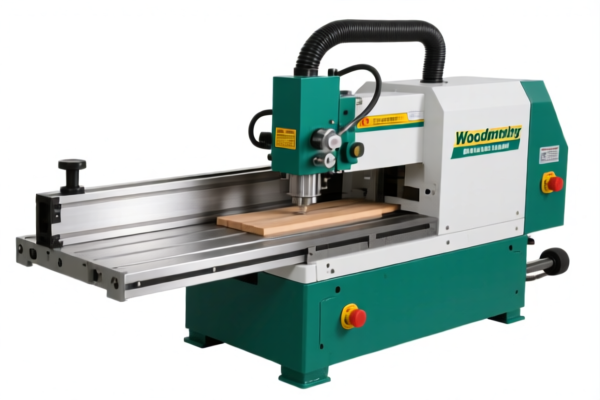
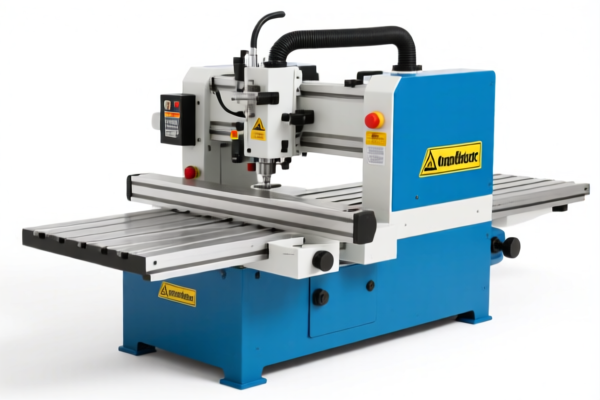
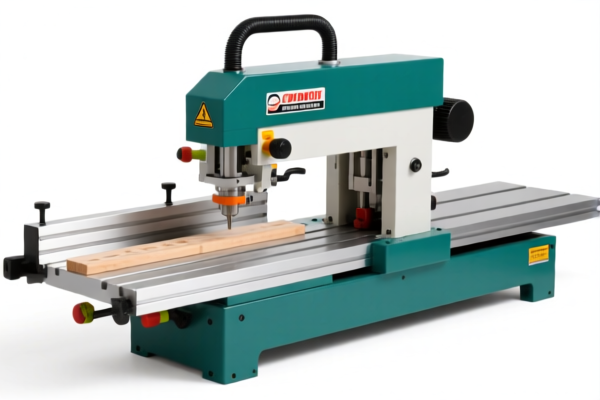
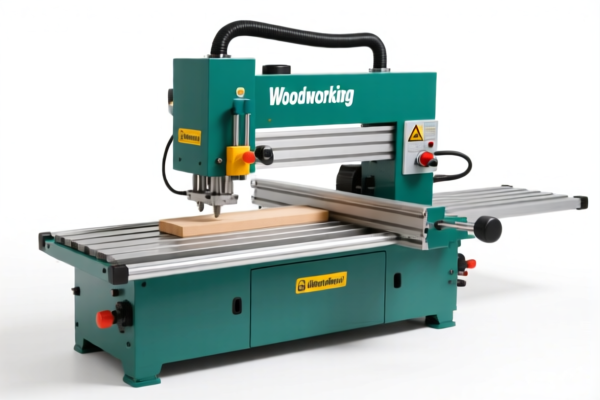
AI Analysis
🪚 Woodworking Machinery & Components (HS Code 8465 Series)
🌐 HS Code Reference & Customs Clearance Guide | 2026 Latest Tariff Analysis | Professional Clearance Strategy
📌 I. Product Definition & Classification: Do You Know Your Woodworking Machines?
Woodworking machinery is the backbone of the furniture, construction, and manufacturing industries. In international trade, these machines are classified under HS Chapter 84, specifically heading 8465 (Machinery working wood, cork, bone, hard rubber, hard plastics).
Key Distinctions: * Primary Woodworking Machines (Heading 8465): Complete machines designed for cutting, planing, sawing, or machining wood. * Parts and Accessories (Heading 8466): Components specifically designed only for the machines in 8465 (e.g., saw blades, specific motors, control units for 8465 machines). * Critical Note: General-purpose machine tools (like metal lathes or milling machines) often fall under HS 8461–8463. Only those specifically adapted for wood fall under 8465. Misclassification here leads to significant duty discrepancies due to the specific "Section 301" and "122" tariffs applied to these codes.
⚠️ Key Differentiation Point: - If the machine is a complete woodworking unit (saw, planer, sander, etc.) → It falls under 8465.xx. - If the item is a part/accessory exclusively for 8465 machines → It falls under 8466. - Do not confuse with general metalworking machinery (8458–8463), as the tariff rates differ drastically.
📦 II. HS Code Classification Details (Based on Provided Data)
The following data is strictly derived from the provided <DATA> source. Please note that while your query mentioned 8465.91.00.74, the provided dataset contains five specific HS codes related to woodworking machinery and parts. Below is the detailed breakdown of the available codes:
| HS Code | Product Description | Summary | Total Tax Rate | Tax Breakdown (US Market) |
|---|---|---|---|---|
8465.94.00.35 |
Woodworking Machinery | Matches use with woodworking machinery | 37.9% | MFN: 2.9% Add'l 301: 25.0% Section 122: 10% |
8466.92.50.10 |
Parts for 8465 Machines | Components for machinery of Heading 8465 | 39.7% | MFN: 4.7% Add'l 301: 25.0% Section 122: 10% |
8465.96.00.30 |
Woodworking Machinery | Used for woodworking | 19.9% | MFN: 2.4% Add'l 301: 7.5% Section 122: 10% |
8466.30.60.40 |
Woodworking Machinery | Fully matched purpose | 37.9% | MFN: 2.9% Add'l 301: 25.0% Section 122: 10% |
8465.94.00.25 |
Woodworking Machinery (Laminators) | Includes laminators in 8465.94 sequence | 37.9% | MFN: 2.9% Add'l 301: 25.0% Section 122: 10% |
🔍 Important Note on Your Query (
8465.91.00.74): The provided<DATA>does not contain an entry for8465.91.00.74. The codes above are the only valid references from the source. If your product is a standard woodworking saw or planer, it likely falls under 8465.94 or 8465.96, which carry high tariffs (37.9%) or moderate tariffs (19.9%) depending on the specific subheading. Parts fall under 8466 with a tariff of 39.7%.
💰 III. 2026 Latest Tariff Rate Explanation (Detailed Breakdown)
All tariffs below apply to goods originating from China (CN) and imported into the United States (US).
🎯 1. High-Tariff Group: 8465.94.00.35, 8466.30.60.40, 8465.94.00.25
Total Rate: 37.9%
| Component | Rate | Legal Basis | Description |
|---|---|---|---|
| MFN Duty | 2.9% | Harmonized Tariff Schedule (HTS) | Standard Most Favored Nation duty for woodworking machinery/parts. |
| Section 301 Duty | 25.0% | 19 U.S.C. § 2411 (Trade Act of 1974) | Additional duty on Chinese goods under the "301 Investigations." Applies to most woodworking equipment. |
| Section 122 Duty | 10.0% | IEEPA / Specific Order | Additional tariff imposed under specific trade enforcement orders (referred to as "122条款" in source). |
| TOTAL | 37.9% | High Cost Alert |
📌 Explanation: - These codes represent standard woodworking machines (like saws, planers, mortisers) and general parts. - The 25% Section 301 tariff is the major cost driver. - The 10% Section 122 tariff is an additional layer of penalty/tariff applicable to these specific entries. - No De Minimis Exemption: These goods are NOT eligible for the $800 de minimis exemption (Section 321). They must be formally entered.
🎯 2. Low-Tariff Group: 8465.96.00.30
Total Rate: 19.9%
| Component | Rate | Legal Basis | Description |
|---|---|---|---|
| MFN Duty | 2.4% | HTS | Standard MFN duty for this specific subheading. |
| Section 301 Duty | 7.5% | 19 U.S.C. § 2411 | Reduced Section 301 duty for this specific classification. |
| Section 122 Duty | 10.0% | IEEPA / Specific Order | Additional tariff applicable to this entry. |
| TOTAL | 19.9% | Moderate Cost |
📌 Explanation: - This code likely covers specific types of woodworking machinery that may have been excluded from the higher 301 tariff bracket or have a different classification nuance. - Despite the lower Section 301 rate (7.5% vs 25%), the 10% Section 122 still applies, bringing the total to 19.9%. - Still No De Minimis Exemption.
🎯 3. Parts Group: 8466.92.50.10
Total Rate: 39.7%
| Component | Rate | Legal Basis | Description |
|---|---|---|---|
| MFN Duty | 4.7% | HTS | Standard MFN duty for parts of machinery. |
| Section 301 Duty | 25.0% | 19 U.S.C. § 2411 | Full 25% Section 301 duty on Chinese parts. |
| Section 122 Duty | 10.0% | IEEPA / Specific Order | Additional tariff applicable to parts. |
| TOTAL | 39.7% | Highest Cost |
📌 Explanation: - Parts for 8465 machines are taxed at the highest rate in this dataset. - Even if shipped separately from the main machine, parts incur the 25% + 10% surcharges on top of the higher MFN rate (4.7% vs 2.9%). - Strategy: Avoid shipping spare parts separately if possible; consolidate with main equipment if legally permissible, or ensure accurate classification to avoid penalties.
🛠️ IV. Customs Clearance Practical Advice
✅ 1. Documentation Checklist (Must-Have)
| Document | Required? | Details |
|---|---|---|
| Commercial Invoice | ✅ | Must clearly state: "Woodworking Machinery" or "Parts for Woodworking Machinery," Model Number, Country of Origin (China), and CIF Value. |
| Packing List | ✅ | Detailed list of items. Ensure parts are not listed as "General Hardware" but as "Parts for HS 8465." |
| Product Photos | ✅ | Clear images of the machine, including nameplates, control panels, and key components. |
| Technical Specifications | ✅ | Proof that the machine is designed for wood, not metal or other materials. Include working principle, power rating, and dimensions. |
| Certificate of Origin | ✅ | Required for verifying MFN rates. |
| Bill of Lading/Air Waybill | ✅ | Standard shipping document. |
✅ 2. Declaration Tips
🔥 Golden Rule: "Specify the Wood, Not the Metal!"
Scenario Correct Declaration Incorrect Declaration Consequence CNC Router for Wood 8465.94.00.35- CNC Woodworking Machine8458.99.00.00(Metal Lathe)Misclassification: Potential audit, fines, and higher/lower duty mismatch. Saw Blade 8466.92.50.10- Part for 8465 Machine8207.13.00.00(General Saw Blade)Wrong Duty: Parts have higher MFN (4.7% vs ~0-10%) and specific 301 rates. Laminate Press 8465.94.00.25- Laminator8479.89.00.00(Other Machines)Risk: May be classified under a different, potentially more expensive code. Parts Shipped Separately 8466.92.50.108483.90.00.00(General Parts)Penalty: 39.7% duty applies vs potential 0-5% for general parts.
✅ 3. Special Scenarios
| Scenario | Advice |
|---|---|
| Multi-Purpose Machines | If a machine can work both wood and metal, it is often classified under the wood heading if the primary design or marketing is for wood. Provide marketing materials showing wood use. |
| Software-Defined Machinery | Machines with advanced CNC controls are still classified under 8465 if the mechanical function is woodworking. Do not classify as software or electronic control units. |
| Used Machinery | Ensure the machine is cleaned and free of hazardous materials (e.g., treated wood residues). Some ports require phytosanitary certificates if wood dust/organic matter is present. |
🌍 V. Global Market Comparison (2026)
| Country | Recommended HS Code | Estimated Duty (China Origin) | Notes |
|---|---|---|---|
| 🇺🇸 USA | 8465.94.00.35 / 8466.92.50.10 |
37.9% - 39.7% | High Section 301 (25%) and Section 122 (10%) tariffs apply. No De Minimis. |
| 🇨🇳 China | 8465.91.00.00 (Est.) |
~5-10% | Import duties for machinery are lower, but VAT (13%) applies. |
| 🇪🇺 EU | 8465.94.00 |
~0-2.5% | Generally low MFN duty. No specific "Section 301" equivalent, but anti-dumping may apply. |
| 🇨🇦 Canada | 8465.94.00 |
~0% (If CUSMA eligible) | Check origin for free trade benefits under USMCA/CUSMA. |
| 🇲🇽 Mexico | 8465.94.00 |
~0% (If USMCA eligible) | Similar to Canada, origin is key. |
📌 Conclusion: - The US market is significantly more expensive for Chinese-origin woodworking machinery due to the 35-40% total tariff burden. - EU and Asia offer much more competitive duty rates, but you must consider non-tariff barriers (CE, RoHS, etc.).
📌 VI. Common Mistakes & Pitfalls
❌ Mistake 1: Declaring woodworking parts under general "parts of machinery" codes (e.g., 8483). 👉 Result: High risk of customs audit. If deemed specifically for 8465, the 39.7% rate will be applied retroactively.
❌ Mistake 2: Assuming De Minimis ($800) applies to machinery. 👉 Result: Severe Penalties. Woodworking machinery is explicitly excluded from Section 321 de minimis treatment in many cases, especially when subject to 301 tariffs.
❌ Mistake 3: Incorrectly describing the machine as "General Purpose." 👉 Result: If the machine is clearly for wood (saw blades, wood chips, dust collection), customs will reclassify it to 8465, triggering the higher tariffs.
✅ Correct Practice:
"CNC Router, Model XYZ, specifically designed for woodworking, Voltage 220V, Origin: China."
🎯 VII. Conclusion: Professional Clearance, Cost Savings
🎯 Key Takeaway:
🔹 Total Duty = MFN + 301 (25%) + 122 (10%) 🔹 For most woodworking machines: Expect ~37.9% 🔹 For parts: Expect ~39.7% 🔹 No De Minimis Exemption.
🔹 "HS Code 8465 is a high-cost zone for Chinese exports to the US. Precision in declaration is critical."
📌 Pro Tip:
If you are exporting used equipment, ensure it meets US environmental and safety standards. If you are shipping small parts under $800, verify with your freight forwarder if the De Minimis exemption has been suspended for these specific HS codes (it often is for 301-tariffed goods).
📣 Immediate Action:
📞 Contact your customs broker to verify the specific HS code for your exact model. 📝 Prepare detailed technical specs proving wood-working function. 🚀 Budget for 37-40% duty in your landed cost calculation.
✨ Professional clearance starts with accurate classification!
💼 Your profit margin depends on the HS code!
Customer Reviews
About HS Code Classification
The Harmonized System (HS) is an internationally standardized nomenclature developed by the World Customs Organization (WCO) to classify traded products. Over 200 countries use the HS system as the basis for customs tariffs, trade statistics, and import/export regulations.
Each HS code follows a hierarchical structure:
- Chapter (2 digits) — Broad category of goods (e.g., Chapter 84: Machinery and Mechanical Appliances)
- Heading (4 digits) — More specific grouping within the chapter
- Subheading (6 digits) — Internationally standardized breakdown, used by all WCO member countries
- National subdivisions (8-10 digits) — Country-specific extensions for further classification, such as US HTSUS 10-digit codes
Correct HS code classification is essential for smooth customs clearance, accurate duty payment, and compliance with trade regulations. Misclassification can lead to customs delays, overpayment of duties, or penalties.
When importing from CN to US, the applicable tariff rates may include:
- Most-Favored-Nation (MFN) rate — The standard duty rate applied to WTO members
- General rate — Applied to countries without trade agreements
- Trade remedy duties — Additional tariffs such as Section 301 (anti-dumping), Section 232 (national security), or countervailing duties
The information provided on this page is for reference purposes only. For official classification, please consult with your local customs authority or a licensed customs broker.