Woodworking Machine Tool
CN → US| HS Code | Tariff Rate | Origin | Destination | Doc |
|---|---|---|---|---|
| 8479300000 | 35.0% | CN | US | Official Doc |
| 8479909560 | 35.0% | CN | US | Official Doc |
| 8465100045 | 37.4% | CN | US | Official Doc |
| 8465990230 | 37.4% | CN | US | Official Doc |
Product Images
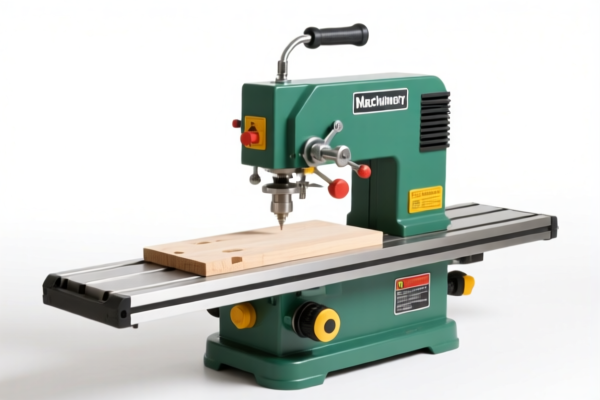
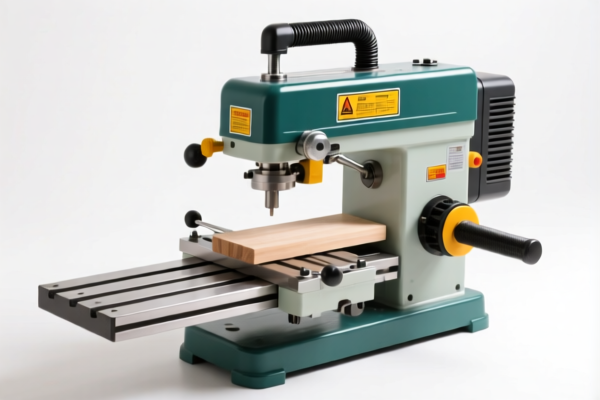
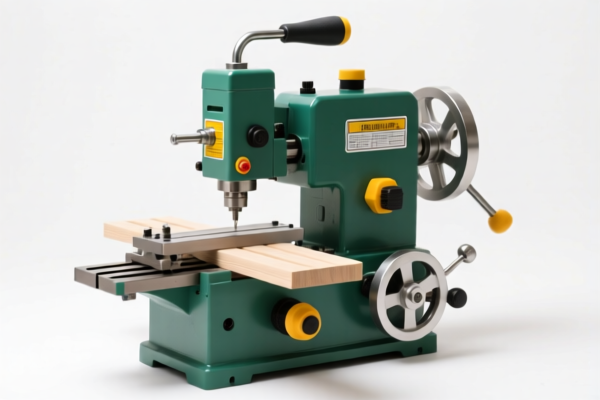
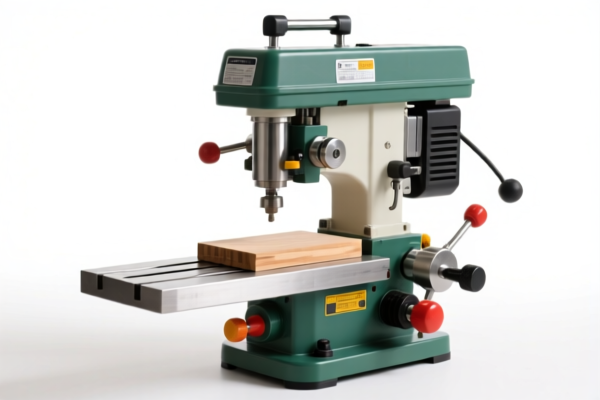
AI Analysis
🪚 Woodworking Machine Tool (木工机械)
🌐 HS Code Reference & Customs Clearance Guide | 2026 Latest Tariff Analysis | Professional Strategy for High-Tax Imports
📌 Part 1: Product Definition & Classification Logic
Woodworking Machine Tools are mechanical devices specifically designed to cut, shape, smooth, or process timber and wood-based materials. In international trade classification, the core determinant for these machines is their specific utility (processing wood/cork) rather than just general mechanical movement.
Because wood processing is a specialized subset of general machinery, customs authorities often scrutinize whether the machine is "specific" (e.g., dedicated saws, planers) or "general-purpose" (e.g., general motors, parts).
⚠️ Key Classification Distinction:
- If the machine is specifically designed for woodworking (e.g., a dedicated circular saw for wood), it usually falls under Chapter 84, Heading 8465.
- If the machine is a general mechanical unit not specifically described elsewhere, or if it’s a "other machine" that could be used for wood but isn't exclusively defined, it may fall under Chapter 84, Heading 8479.
- Crucial Note: The data provided indicates a high-risk environment with significant Section 301 and 122 Clause tariffs for Chinese-origin goods.
📦 Part 2: HS Code Classification Details (2026 Latest Tariff Reference)
Based on the provided data, here are the four most likely HS Code matches for "Woodworking Machine Tool," analyzed by their classification logic and tax implications.
| HS Code | Product Description | Classification Logic (Why this code?) | Total Tax Rate |
|---|---|---|---|
| 8479.30.00.00 | Other machines and mechanical appliances having individual functions, not specified elsewhere. | Match Success: The summary notes high consistency with "machines for working wood or cork." This is a "catch-all" for specific woodworking machinery that doesn't fit more precise headings like 8465. | 35.0% |
| 8479.90.95.60 | Parts and accessories of machines under 8479. | Usage & Material Match: The machine’s use (wood processing) aligns with the category. No material conflict. This code often captures specific functional units or parts thereof that are categorized under "Other Machines." | 35.0% |
| 8465.10.00.45 | Machinery specifically for working wood (e.g., saws, planers). | Direct Match: The product name "Woodworking Machine" directly corresponds to the purpose (woodworking) and material scope. Since this code is a "sub-residual" category under "Other" specific wood machinery, it fits where no more specific sub-heading applies. | 37.4% |
| 8465.99.02.30 | Other machinery for working wood (residual category). | Usage Consistency: Product name matches the usage. As an "Other" category code, it defaults to woodworking machinery in the absence of material conflicts. | 37.4% |
🔍 Critical Insight:
- Codes 8465.xxxx are for specific woodworking machinery.
- Codes 8479.xxxx are for other machinery not elsewhere specified.
- The tax difference is small (2.4%), but the legal basis for the 35% vs 37.4% is critical. The 2.4% difference comes from the Base Tariff (0% for 8479 vs 2.4% for 8465). Both share the same punitive附加税s.
💰 Part 3: 2026 Latest Tariff Rate Breakdown (Including Surcharges)
✅ Applicable Country: United States (US)
✅ Country of Origin: China (CN)
✅ Effective Date: Ongoing (Including all imports from 2025 onwards)
🎯 Common Tax Structure for All Four HS Codes
All four HS Codes in the provided data share the same punitive tariff structure. The base tariff is low, but the附加税s are severe.
| Tax Component | Rate | Source/Legal Basis |
|---|---|---|
| Base Tariff (MFN) | 0.0% | For 8479.30.00.00 and 8479.90.95.60 |
| Base Tariff (MFN) | 2.4% | For 8465.10.00.45 and 8465.99.02.30 |
| Section 301 Tariff | +25.0% | US Trade Act Section 301 (List 4B/4C items, typically machinery) |
| 122 Clause Tariff | +10.0% | Specific Section 122 Provision (often applied to specific machinery components or categories under USITC rulings) |
| TOTAL TAX RATE | 35.0% | (0% + 25% + 10%) for 8479 codes |
| TOTAL TAX RATE | 37.4% | (2.4% + 25% + 10%) for 8465 codes |
📌 Detailed Tax Explanation:
- Section 301 Tariff (25%): This is the most significant cost driver. It applies to a wide range of Chinese-made machinery, including woodworking equipment, under the US-China trade dispute.
- 122 Clause Tariff (10%): This is a specific additional duty applied to certain goods. In the context of woodworking machinery, it suggests that these items are not only subject to general trade tariffs but also face specific policy-based surcharges.
- No De Minimis Exemption: 🚫 DO NOT rely on the $800 de minimis threshold. Machinery of this value and type is strictly prohibited from using de minimis entry (Section 321) due to Section 301 and 122 clause restrictions. You MUST file a formal entry (Type 86 or 87) and pay these duties upfront.
🛠️ Part 4: Customs Clearance Practical Advice (Avoiding Pitfalls)
✅ 1. Documentation Checklist (Non-Negotiable)
| Document | Required? | Explanation |
|---|---|---|
| ✅ Product Specification Sheet | Yes | Must clearly state: "Machine for processing wood," motor power, dimensions, and specific functions (sawing, planing, etc.). |
| ✅ Technical Drawings/Photos | Yes | Show the machine in operation or key components. Must prove it is a dedicated woodworking machine, not a general-purpose motor or part. |
| ✅ Commercial Invoice | Yes | Value must be accurate (CIF). Clearly list the HS Code. Do not use vague terms like "Machine Part" if it's a complete unit. |
| ✅ Packing List | Yes | Detail the contents. If the machine comes with accessories (blades, fences), they should be included in the main entry to avoid separate high-tax classifications for "parts." |
| ✅ Certificate of Origin (CO) | Yes | To confirm China origin. If you have a CO from another country, the Section 301/122 tariffs may not apply (unless transshipped fraudulently). |
✅ 2. Declaration Strategy (Critical Keywords)
🔥 Golden Rule: "Be Specific, Not General."
| Scenario | Correct Declaration | Wrong Declaration | Risk |
|---|---|---|---|
| Dedicated Wood Saws/Planers | "Woodworking Machine: Circular Saw for Timber Processing, HS 8465.10.00.45" | "General Machinery" or "Motor" | Misclassification → Audit, Penalty, Rejection |
| General Mechanical Unit used for Wood | "Machine for Working Wood, HS 8479.30.00.00" | "Part of Woodworking Machine" (if it's a main unit) | Duty evasion suspicion |
| Accessories/Blades | "Saw Blades for Woodworking Machines, HS 8202..." (Check separately) | Included in main machine value without distinction | Complex valuation issues |
✅ 3. Special Considerations for High-Tariff Items
- No De Minimis: As noted, these items cannot be shipped via courier (DHL/FedEx/UPS) under the $800 exemption. They must go via Air Freight or Ocean Freight with a formal customs broker.
- Pre-Ruling Recommendation: Given the high cost (35-37.4%), it is highly advisable to apply for an Advance Ruling (Form CBP 5106) from U.S. Customs and Border Protection (CBP) before shipping. This locks in the HS Code and confirms the tax rate, avoiding surprise bills upon arrival.
- Supply Chain Check: If your product is assembled in Vietnam, Mexico, or Malaysia, and the substantial transformation occurs there, you may avoid the China-specific Section 301 and 122 tariffs. Ensure your Certificate of Origin reflects the true country of origin.
🌍 Part 5: Global Market Comparison (2026)
| Market | Recommended HS Code | Approx. Base Tariff | Section 301/Retaliatory? | Notes |
|---|---|---|---|---|
| 🇺🇸 USA | 8465.xxxx or 8479.xxxx |
0% - 2.4% | YES (+25% + 10%) | Total 35-37.4%. Highest cost. |
| 🇨🇳 China (Export) | 8465.xxxx |
0% | N/A | Low export duty, but high import duty at destination. |
| 🇪🇺 EU | 8465.xxxx |
~4.5% | No (Retaliatory tariffs lifted) | Much lower cost. Consider EU market. |
| 🇨🇦 Canada | 8465.xxxx |
~4.5% | No | CUSMA benefits may apply for Canadian-made. |
| 🇦🇺 Australia | 8465.xxxx |
~5% | No | No major retaliatory tariffs. |
📌 Conclusion:
The US market is exceptionally expensive for Chinese-made woodworking machinery due to the combination of Section 301 and 122 clause tariffs.
- Strategy: If shipping to the US, ensure exact classification to avoid penalties.
- Alternative: Explore manufacturing or assembly in non-China countries to qualify for lower tariffs.
📌 Part 6: Common Mistakes & Pitfalls (Blood Lessons)
❌ Mistake 1: Using "General Machinery" as the product name.
👉 Consequence: CBP may misclassify it under a higher-tariff "Other" category or demand expensive forensic analysis.
✅ Fix: Use "Woodworking Machine" or "Machine for Working Wood."
❌ Mistake 2: Attempting De Minimis Entry ($800 rule).
👉 Consequence: Seizure and forfeiture. Section 301 and 122 goods are explicitly excluded.
✅ Fix: Always use formal entry (Type 86/87).
❌ Mistake 3: Ignoring the "122 Clause."
👉 Consequence: Under-declaration of duty. The 10% surcharge is often overlooked by brokers, leading to post-audit penalties.
✅ Fix: Explicitly state that the declared value includes the 122 clause adjustment if required, or ensure the broker applies it correctly.
❌ Mistake 4: Mixing "Machine Parts" with "Complete Machine."
👉 Consequence: If parts are shipped separately, they may be taxed differently (e.g., as raw materials or accessories).
✅ Fix: Ship as a complete unit or declare parts accurately under their specific headings.
🎯 Part 7: Conclusion & Action Plan
🎯 Key Takeaway:
🔹 "35% Tax is Real." Do not assume it's cheaper than it looks.
🔹 "No De Minimis." Brokerage fees + Taxes will apply.
🔹 "Specificity Wins." Correct HS Code (8465 vs 8479) saves 2.4% base duty, but the punitive taxes remain.
📌 Pro Tip:
If you are importing these machines into the US:
1. Get an Advance Ruling from CBP.
2. Verify Country of Origin (Is it truly China?).
3. Calculate Landed Cost: (CIF Value × 35.4% or 37.4%) + Broker Fees + Bond Costs.
4. Consider Diversification: Look at EU/Canada markets where tariffs are significantly lower (~4-5%).
📣 Immediate Action:
📞 Contact a Licensed US Customs Broker before booking any freight.
📄 Prepare Detailed Specs showing the machine's exclusive use for woodworking.
🚀 Plan for Formal Entry and budget for the full 35-37.4% duty.
✨ Professional Customs Clearance Starts with Accurate Classification!
💼 Every percent matters in high-tariff categories!
Customer Reviews
About HS Code Classification
The Harmonized System (HS) is an internationally standardized nomenclature developed by the World Customs Organization (WCO) to classify traded products. Over 200 countries use the HS system as the basis for customs tariffs, trade statistics, and import/export regulations.
Each HS code follows a hierarchical structure:
- Chapter (2 digits) — Broad category of goods (e.g., Chapter 84: Machinery and Mechanical Appliances)
- Heading (4 digits) — More specific grouping within the chapter
- Subheading (6 digits) — Internationally standardized breakdown, used by all WCO member countries
- National subdivisions (8-10 digits) — Country-specific extensions for further classification, such as US HTSUS 10-digit codes
Correct HS code classification is essential for smooth customs clearance, accurate duty payment, and compliance with trade regulations. Misclassification can lead to customs delays, overpayment of duties, or penalties.
When importing from CN to US, the applicable tariff rates may include:
- Most-Favored-Nation (MFN) rate — The standard duty rate applied to WTO members
- General rate — Applied to countries without trade agreements
- Trade remedy duties — Additional tariffs such as Section 301 (anti-dumping), Section 232 (national security), or countervailing duties
The information provided on this page is for reference purposes only. For official classification, please consult with your local customs authority or a licensed customs broker.