Woodworking Machinery
CN → US| HS Code | Tariff Rate | Origin | Destination | Doc |
|---|---|---|---|---|
| 8479300000 | 35.0% | CN | US | Official Doc |
| 8479909560 | 35.0% | CN | US | Official Doc |
| 8465100045 | 37.4% | CN | US | Official Doc |
| 8465990230 | 37.4% | CN | US | Official Doc |
Product Images
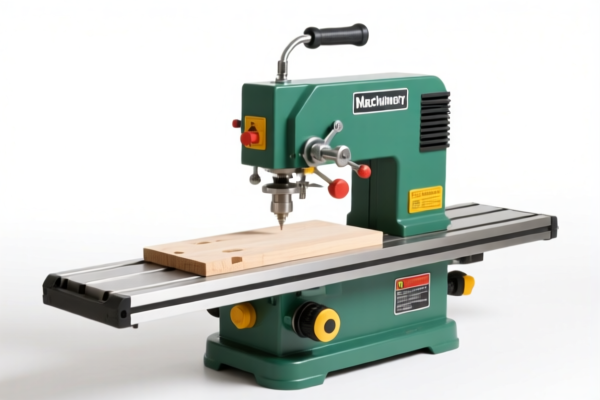
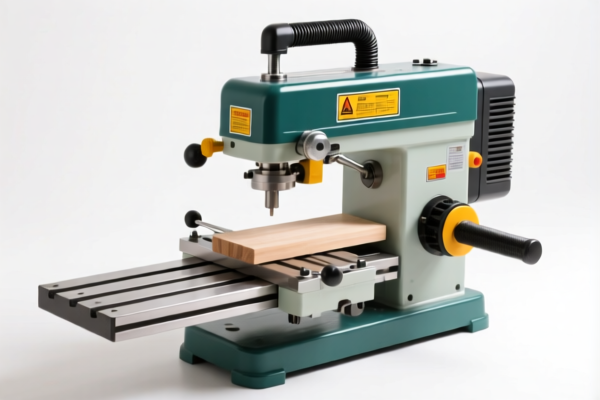
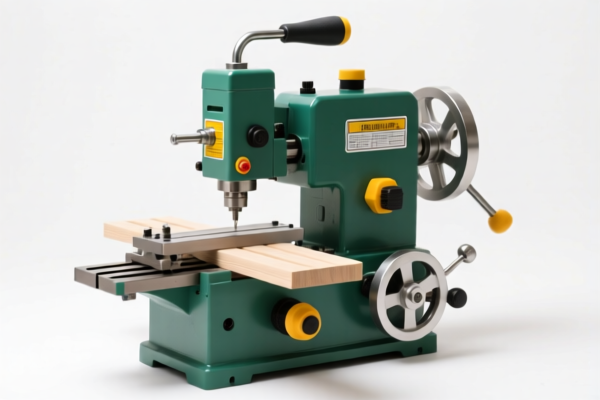
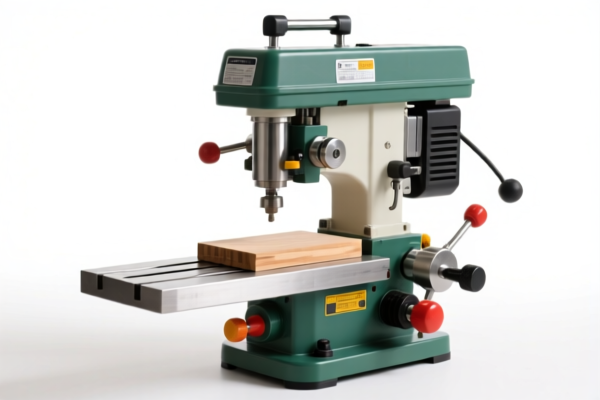
AI Analysis
🪚 Woodworking Machinery (Woodworking Equipment)
🌐 HS Code Reference & Customs Clearance Guide | 2026 Latest Tariff Analysis | Professional Entry Strategy
📌 I. Product Definition & Classification: Do You Really Understand "Woodworking Machinery"?
Woodworking machinery refers to mechanical devices specifically designed for processing, shaping, cutting, or treating wood and wood-based materials. In international trade, these are primarily classified under Chapter 84 (Nuclear reactors, boilers, machinery and mechanical appliances). The key distinction often lies in whether the machine is a standalone functional unit (e.g., a saw, planer, or drill) or a generic part/accessory for such machines, or if it falls into a "catch-all" category for other machinery.
⚠️ Key Distinction Points:
- Specific Purpose (8479/8465): Machines explicitly designed for wood processing (sawing, planing, sanding, etc.) usually fall under 8479 (Machines having individual functions not specified elsewhere) or 8465 (Woodworking machinery).
- Generic/Other (8479.90): If the machine doesn't fit the specific descriptions of 8465 but is still for wood, it might be classified under "Other machines having individual functions."
- Parts & Accessories (8479.90.95): If the item is a component (e.g., a specific motor mount or control box) rather than a complete working machine, it may fall under parts. However, the provided data suggests "complete" machines are being matched here.
📦 II. HS Code Classification Details (2026 Latest Tariff Authority Match)
Based on the provided data, the following HS Codes are potential matches for "Woodworking Machinery," depending on the specific function and design of the equipment.
| HS Code | Product Description & Logic | Application Scenario | Tax Rate (China-Origin) |
|---|---|---|---|
8479.30.00.00 |
Machines for treating wood or cork Highly consistent with "Woodworking Machinery" due to specific purpose match. |
Specialized wood treatment machines (e.g., kilns, impregnation machines, or specific treatment lines). | 35.0% |
8479.90.95.60 |
Other machines having individual functions Matches usage & material. No material conflict. Used for wood/cork processing. |
Machinery with specific functions not explicitly listed in 8465, but still for wood processing. | 35.0% |
8465.10.00.45 |
Woodworking machinery (Other) Direct correspondence to "Woodworking." "Other" category catch-all. |
General woodworking machines not specified elsewhere in 8465 (e.g., specialized saws, planers). | 37.4% |
8465.99.02.30 |
Woodworking machinery (Other) Category "Other." Default match for woodworking scope. |
General woodworking equipment falling under residual categories. | 37.4% |
🔍 Important Note:
- 8479 Series (35%): Generally applies to machines with specific individual functions not covered by more specific chapters. For wood, this includes treatment or specialized processing machines not listed in 8465.
- 8465 Series (37.4%): The primary chapter for "Woodworking Machinery." The slight increase in base tariff (2.4% vs 0%) results in a higher total rate due to the combination of base tariff + additional duties.
- No Material Conflict: All matches assume the machine is primarily for wood/cork and does not contain conflicting materials that would shift it to other chapters (e.g., metalworking if it's actually a metal lathe disguised as wood).
💰 III. 2026 Latest Tariff Rate Breakdown (Including Additional Duties & Policy Surcharges)
✅ Applicable Country: United States (US)
✅ Country of Origin: China (CN)
✅ Effective Time: From November 10, 2025 (and subsequent imports)
🎯 1. 8479.30.00.00 & 8479.90.95.60 —— Wood/Cork Treatment & Other Individual Function Machines
| Item | Content |
|---|---|
| Base Tariff | 0.0% (ad valorem) |
| USITC Additional Duty (Section 301) | +25.0% (From USITC Footnote 9903.88.01 / Section 301 List 4A) |
| IEEPA Additional Duty | +10.0% (Targeting China/Hong Kong products, effective from Nov 10, 2025) |
| Total Tariff Rate | 35.0% |
| Tax Calculation | CIF Value × 35% |
| De Minimis Exemption Available? | ❌ NO (deny_de_minimis) |
| Legal Basis Path | IEEPA:9903.01.25 → IEEPA:9903.01.24 → USITC:8479.30/90 → FOOTNOTE:9903.88.01 |
📌 Explanation:
- The 0% base tariff reflects the standard Most Favored Nation (MFN) rate for these machinery categories.
- The 25% Section 301 tariff is the standard additional duty for many Chinese-origin machinery items.
- The 10% IEEPA tariff is a new layer added for China-origin goods under the International Emergency Economic Powers Act.
- Total: 35%. This is a high-cost category for importers. Pre-planning is essential.
🎯 2. 8465.10.00.45 & 8465.99.02.30 —— General Woodworking Machinery
| Item | Content |
|---|---|
| Base Tariff | 2.4% (ad valorem) |
| USITC Additional Duty (Section 301) | +25.0% |
| IEEPA Additional Duty | +10.0% |
| Total Tariff Rate | 37.4% |
| Tax Calculation | CIF Value × 37.4% |
| De Minimis Exemption Available? | ❌ NO (deny_de_minimis) |
| Legal Basis Path | IEEPA:9903.01.25 → IEEPA:9903.01.24 → USITC:8465.10/99 → FOOTNOTE:9903.88.01 |
📌 Note:
- Compared to the 8479 series, these codes have a 2.4% base tariff.
- Even though the base is low, the addition of 25% + 10% results in a 37.4% total rate, which is 2.4% higher than the 8479 matches.
- Classification Strategy: If your machine is a standard saw, planer, or drill,8465is the correct chapter. If it's a specialized treatment or non-standard function machine,8479might apply (saving 2.4%). However, misclassification carries risk.
🛠️ IV. Customs Clearance Practical Advice (Battle-Tested Pitfall Avoidance)
✅ 1. Documentation Checklist (Mandatory)
| Document | Required | Explanation |
|---|---|---|
| ✅ Product Specifications | ✔️ | Must detail function, power, dimensions, and specific wood processing capabilities (e.g., "CNC Router for 3D Wood Carving"). |
| ✅ Technical Drawings | ✔️ | To prove the machine is for wood (not metal or plastic) and to define its "individual function." |
| ✅ Product Photos | ✔️ | Clear shots of the machine, control panel, and label/nameplate. |
| ✅ Commercial Invoice | ✔️ | Must clearly state "Woodworking Machinery" and match the HS Code description. Avoid vague terms like "Machine." |
| ✅ Packing List | ✔️ | Itemize all components. If accessories are shipped separately, ensure they are declared correctly (parts vs. machine). |
| ✅ Origin Certificate (CO) | ✔️ | To confirm China origin and apply correct tariff rates. |
| ✅ Third-Party Test Reports | ✔️ | CE, UL, or other safety certifications may be required for customs inspection. |
✅ 2. Declaration Strategy (Key Mnemonic)
🔥 “Function First, Material Second, Name Specific, Tax Minimized!”
| Scenario | Correct Declaration | Incorrect Practice |
|---|---|---|
| Standard Saw/Planer | 8465.xxxx.xxxx (Woodworking Machinery) |
Misclassified as "Other Machinery" → Higher risk of audit |
| Specialized Treatment Machine | 8479.30.00.00 (Wood Treatment) |
Misclassified as 8465 → Base tariff 2.4% vs 0% (but check function!) |
| Machine Parts (e.g., Blade) | 8466.93 or 8479.90.95 (Parts) |
Declared as "Machine" → Massive overpayment or underpayment penalty |
| Vague Name ("Processing Unit") | Never | Results in customs hold, re-inspection, and potential seizure |
✅ 3. Special Case Handling
| Scenario | Handling Advice |
|---|---|
| OEM Custom Machinery | Provide client order + design drawings. Declare the primary function clearly (e.g., "CNC Wood Router"). |
| Multi-Function Machine | If it can process wood AND metal, classify based on primary intended use. If wood is primary, use 8465 or 8479. |
| Shipped with Software | Software embedded in the machine is usually duty-free or included in the machine value. Declare as "Woodworking Machinery with Control Software." |
| Used Machinery | Must declare "Used" on the invoice. Some ports may require pre-shipment inspection or sanitation certificates for wood processing equipment (to prevent pest spread). |
🌍 V. Global Market Comparison (2026 Latest)
| Country/Region | Recommended HS Code | Tariff (China-Origin) | Certification | Notes |
|---|---|---|---|---|
| 🇺🇸 USA | 8479.30 or 8465.10 |
35% - 37.4% | UL/CE | High tariffs due to Section 301 + IEEPA. |
| 🇨🇳 China | 8465.xxxx |
5% - 8% | CCC (if applicable) | No additional retaliatory tariffs. |
| 🇪🇺 EU | 8465.xxxx |
0% - 2.5% | CE | No significant additional tariffs for standard machinery. |
| 🇬🇧 UK | 8465.xxxx |
0% - 2.5% | UKCA | Post-Brexit rules apply, but generally stable. |
| 🇦🇺 Australia | 8465.xxxx |
5% | RCM | Moderate tariffs. |
| 🇯🇵 Japan | 8465.xxxx |
0% - 3.2% | PSE | Low tariffs for many machinery items. |
📌 Conclusion:
- The US is the most expensive market for Chinese woodworking machinery due to the 35-37.4% effective tariff rate.
- Europe and Asia offer significantly lower tariff burdens (0-5%).
- Importers to the US must factor in the 35%+ duty into their pricing strategy. Consider supply chain diversification (e.g., assembly in Vietnam/Mexico) if volume is high.
📌 VI. Common Errors & Pitfall Guide (Lessons Learned the Hard Way)
❌ Error 1: Declaring "Woodworking Part" as "Woodworking Machine"
👉 Consequence: If the item is a part (e.g., a spindle), it may have a different tariff. If declared as a machine, you might overpay (37.4% vs lower part rate) or face penalties for misdeclaration.
❌ Error 2: Vague Description ("Wood Machine")
👉 Consequence: Customs cannot determine the correct 8-digit code. Leads to hold for inspection, potential reclassification by CBP, and back taxes + interest.
❌ Error 3: Ignoring the "IEEPA 10%" Surcharge
👉 Consequence: Many importers only account for the 25% Section 301 tariff. The additional 10% (effective Nov 2025) can cause cash flow surprises and profit margin erosion.
❌ Error 4: Misclassifying Treatment Machines as Standard Woodworking
👉 Consequence: 8479.30 (0% base) vs 8465 (2.4% base). While 35% vs 37.4% seems small, on large volumes, it adds up. Ensure the function matches the code.
✅ Correct Approach:
"CNC Router, Model XYZ, 15HP, 3-Axis, For Wood/Plastic, 220V, With Control Software, FCC/CE Certified"
🎯 VII. Conclusion: Precision in Classification, Savings in Cost!
🎯 Remember the Mnemonic:
🔹 "Base 0% or 2.4%, Plus 25% Section 301, Plus 10% IEEPA, Total 35-37%!"
🔹 "HS Code Determines Tax, 2% Base Difference, Big Money Impact!"
🔹 "Declare Function, Not Just Name, Avoid Customs Pain!"
📌 Pro Tip:
If your machinery is assembled in Vietnam, Mexico, or Thailand (and meets Rules of Origin), you may exempt the IEEPA and/or Section 301 tariffs, reducing the rate to 0% - 5%.
Recommend applying for a Customs Ruling (Advance Ruling) for complex machinery to secure your HS Code and tariff rate before shipment.
📣 Immediate Action:
📞 Contact a licensed customs broker + Provide technical specs + Request HS Code Ruling
🚀 Ensure your woodworking machinery clears US customs smoothly, efficiently, and cost-effectively!
✨ Professional Classification, Starts with Precision!
💼 Every Percentage Point of Tariff, Is Worth Calculating!
Customer Reviews
About HS Code Classification
The Harmonized System (HS) is an internationally standardized nomenclature developed by the World Customs Organization (WCO) to classify traded products. Over 200 countries use the HS system as the basis for customs tariffs, trade statistics, and import/export regulations.
Each HS code follows a hierarchical structure:
- Chapter (2 digits) — Broad category of goods (e.g., Chapter 84: Machinery and Mechanical Appliances)
- Heading (4 digits) — More specific grouping within the chapter
- Subheading (6 digits) — Internationally standardized breakdown, used by all WCO member countries
- National subdivisions (8-10 digits) — Country-specific extensions for further classification, such as US HTSUS 10-digit codes
Correct HS code classification is essential for smooth customs clearance, accurate duty payment, and compliance with trade regulations. Misclassification can lead to customs delays, overpayment of duties, or penalties.
When importing from CN to US, the applicable tariff rates may include:
- Most-Favored-Nation (MFN) rate — The standard duty rate applied to WTO members
- General rate — Applied to countries without trade agreements
- Trade remedy duties — Additional tariffs such as Section 301 (anti-dumping), Section 232 (national security), or countervailing duties
The information provided on this page is for reference purposes only. For official classification, please consult with your local customs authority or a licensed customs broker.