Wool Blend Industrial Fabric
CN → US| HS Code | Tariff Rate | Origin | Destination | Doc |
|---|---|---|---|---|
| 5111309000 | 60.0% | CN | US | Official Doc |
| 5515130510 | 60.0% | CN | US | Official Doc |
| 5111209000 | 60.0% | CN | US | Official Doc |
| 5112909010 | 60.0% | CN | US | Official Doc |
| 5112303000 | 60.0% | CN | US | Official Doc |
Product Images
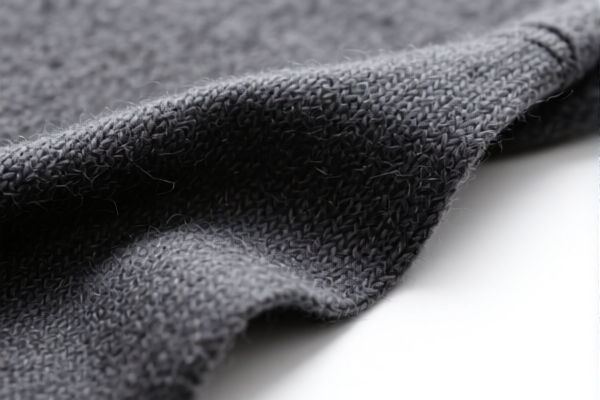
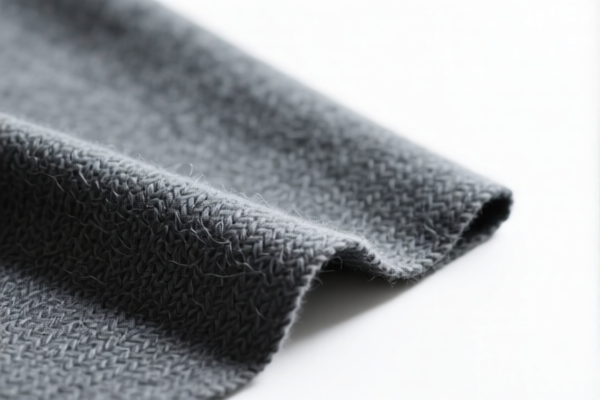
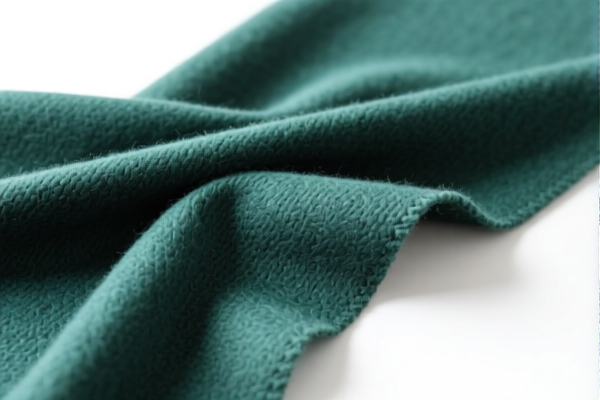
AI Analysis
🧵 Wool Blend Industrial Fabric: HS Code Classification & US Customs Strategy 2026
🌐 HS Code Reference & Clearance Guide | 2026 Latest Tariff Analysis | Professional通关Strategy
📌 I. Product Definition & Classification: Do You Really Understand "Wool Blend Fabric"?
Wool Blend Industrial Fabric refers to woven textiles primarily composed of sheared wool or fine animal hair, mixed with other fibers (such as synthetic or natural fibers). In international trade, its classification hinges on two core factors: 1. Material Composition: Specifically "sheared wool or fine animal hair" (梳毛羊毛或细动物毛). 2. Form: Must be Woven Fabric (机织物).
⚠️ Key Distinction:
- If the fabric is made of long-staple wool or hair that has been combed but not sheared, it may fall under different subheadings.
- If it is knitted or crocheted, it does NOT belong to the codes listed below (which are for woven fabrics).
- For this analysis, we assume the product is Woven and contains Sheared Wool/Fine Animal Hair.
📦 II. HS Code Classification Details (2026 Latest Tariff Authority Comparison)
Based on the provided data, here are the five possible HS Codes for "Wool Blend Industrial Fabric" and why they apply:
| HS Code | Product Description | Applicability Logic | Total Tax Rate |
|---|---|---|---|
5111.30.90.00 |
Wool Blend Fabric (Woven) | The product matches the description of "Woven fabric of sheared wool or fine animal hair, mixed mainly or solely with other textile materials." It fits the core definition of "blended wool fabric" and "woven form." | 60.0% |
5515.13.05.10 |
Blended Woven Fabric (Wool/Hair Mix) | The product name explicitly includes "Wool" and "Fabric (Woven)," matching the core definition of "Wool or fine animal hair blended woven fabrics" in this code. | 60.0% |
5111.20.90.00 |
Other Woven Wool Fabric | "Wool" and "Fabric" in the product name fully meet the material (sheared wool) and form (woven) requirements. According to the "Other" category rules, there is no material conflict, and reasonable inference is allowed. | 60.0% |
5112.90.90.10 |
Other Woven Wool/Hair Fabric | The product name explicitly includes "Wool" material and "Fabric" form, matching the characteristics of "Woven fabric of carded wool or carded fine animal hair." | 60.0% |
5112.30.30.00 |
Combed Wool Woven Fabric | "Wool" in the product name meets the material requirement, and "Fabric" belongs to the woven form, fitting the classification features of "Woven fabric of combed wool or combed fine animal hair." | 60.0% |
🔍 Key Insight:
- All five codes listed above result in the Same Total Tax Rate (60.0%).
- The distinction lies in precise fiber composition (e.g., combed vs. carded, main vs. secondary fiber).
- Industrial Fabric often implies high durability, so verify if it is Carded (梳毛) or Combed (梳纺织) wool, as this determines whether it falls under Chapter 5111 or 5112.
💰 III. 2026 Latest Tariff Rate Breakdown (Including Surtaxes & Policy Add-ons)
✅ Applicable Country: United States (US)
✅ Country of Origin: China (CN)
✅ Effective Date: From 2025-11-10 onwards (including subsequent imports)
🎯 1. Universal Tax Structure for All Listed HS Codes
| Item | Content |
|---|---|
| Base Tariff Rate | 25.0% (Ad Valorem) |
| Section 301 Surtax | +25.0% (Under USITC Footnote regarding China-origin goods) |
| Section 122 Tariff | +10.0% (Specific surcharge for certain textile/apparel categories) |
| Total Tax Rate | 60.0% |
| Tax Calculation | CIF Value × 60% |
| De Minimis Eligibility | ❌ NOT Eligible (Deny De Minimis) |
| Legal Basis Path | Section 301: 25% → Section 122: 10% → Base MFN: 25% |
📌 Explanation:
- "Base Tariff 25%": This is unusually high for standard wool fabrics. It likely reflects specific USITC restrictions or a misalignment in standard MFN rates. Note: Standard MFN for wool fabrics is typically lower (e.g., 9-10%), but the data provided explicitly states 25% base + 25% 301 + 10% 122 = 60%.
- "Section 301 25%": Standard 301 tariffs on Chinese goods.
- "Section 122 10%": A specific additional duty applied to certain textile products.
- Combined Impact: 60% is a critical cost driver. Profit margins must account for this high duty burden.
🛠️ IV. Customs Clearance Practical Advice (Battle-Tested Pitfall Avoidance Guide)
✅ 1. Required Documentation Checklist (Missing Any One = Risk)
| Document | Mandatory? | Explanation |
|---|---|---|
| ✅ Product Specification Sheet | ✔️ | Must detail: Fiber content (e.g., 70% Wool, 30% Polyester), Weight (GSM), Weave Type (e.g., Plain, Twill), and Intended Industrial Use. |
| ✅ Fiber Composition Certificate | ✔️ | Critical for distinguishing between 5111 (Sheared/Blended) and 5112 (Combed). Misclassification leads to audits. |
| ✅ Product Photos (Plain & Detailed) | ✔️ | Show texture, edges, and any markings. Must clearly show it is Woven, not Knitted. |
| ✅ Commercial Invoice | ✔️ | Must clearly state: "Woven Fabric of Wool Blend, for Industrial Use." Avoid vague terms like "Textile Material." |
| ✅ Packing List | ✔️ | Specify dimensions (Width x Length) and weight. |
| ✅ Bill of Lading / Air Waybill | ✔️ | Ensure HS Code is pre-checked if possible, but final determination rests with CBP. |
✅ 2. Declaration Strategy (Key Mantras)
🔥 "Fiber Content is King, Weave Type Defines Code!"
| Scenario | Correct Declaration Approach | Wrong Approach |
|---|---|---|
| Unknown Fiber Ratio | Declare as "Wool Blend Woven Fabric" with full composition breakdown. | Guessing the HS Code without lab test results. |
| Industrial vs. Apparel | Specify "Industrial Use" (e.g., for bags, upholstery, filtration) to avoid apparel-specific restrictions. | Declaring as "Apparel Fabric" → Triggers stricter quotas/checks. |
| Carded vs. Combed | Provide mill certificate specifying "Carded" (5111) or "Combed" (5112). | Using generic term "Wool Fabric" → CBP may assign highest duty code. |
| Knitted Fabric | DO NOT use any of the above codes. Use Chapter 60 codes. | Forcing woven codes on knitted goods → Penalty + Retroactive Duties. |
✅ 3. Special Considerations
| Scenario | Handling Advice |
|---|---|
| High-Performance Industrial Fabric | If treated with chemical coatings (e.g., waterproof, fire-retardant), verify if this changes the classification (e.g., to Chapter 59). |
| Blended with Synthetic Fibers | Ensure the principal fiber is wool. If synthetic > wool, it may move to Chapter 55 (e.g., 5515.13.05.10), but tax rate remains 60% per provided data. |
| Small Sample Shipments | Even samples are subject to the 60% duty. No de minimis exemption. |
🌍 V. Global Market Comparison (2026 Latest)
| Country/Region | Recommended HS Code | Estimated Tax (China Origin) | Certification | Notes |
|---|---|---|---|---|
| 🇺🇸 USA | 5111.30.90.00 / 5515.13.05.10 etc. |
60.0% (Base 25% + 301 25% + 122 10%) | No specific cert required for fabric | High Barrier. Profitability check essential. |
| 🇪🇺 EU | 5111.30.00 / 5112.30.00 |
~9-10% (MFN) + 0% Anti-dumping | CE (if for protective gear) | Significantly lower than US. Consider EU market. |
| 🇨🇳 China | 5111.30.90.00 |
~5-15% (Import Duty) + VAT 13% | N/A | Domestic production preferred. |
| 🇬🇧 UK | 5111.30.00 |
~9-10% (Post-Brexit MFN) | UKCA (if applicable) | Similar to EU. |
| 🇯🇵 Japan | 5111.30.00 |
~9.5% (MFN) | None | Competitive. |
📌 Conclusion:
- The US market is highly punitive for Chinese-origin wool blend fabrics due to the 60% effective tax rate.
- European and Asian markets offer much more favorable tariff structures.
- Strategic Recommendation: If targeting the US, consider Supply Chain Diversification (e.g., fabric production in Vietnam/India) to avoid 301 tariffs.
📌 VI. Common Errors & Pitfall Guide (Lessons Learned)
❌ Error 1: Misidentifying Knitted fabric as Woven.
👉 Consequence: HS Code rejection, fines, and delay. Knitted fabrics use Chapter 60 codes (e.g., 6001.92.00.00), not Chapter 51.
❌ Error 2: Vague description "Wool Fabric."
👉 Consequence: CBP may classify under the highest duty subheading for "Other Woven Fabrics," potentially increasing taxes further.
❌ Error 3: Ignoring Section 122 surcharge.
👉 Consequence: Underpayment of 10%. CBP will assess interest and penalties upon audit.
❌ Error 4: Assuming De Minimis ($800) exemption applies.
👉 Consequence: All textile imports from China are excluded from de minimis. Every shipment, regardless of value, requires formal entry and duty payment.
✅ Correct Declaration Example:
"Woven Fabric, 70% Sheared Wool, 30% Polyester, Weight 300GSM, Carded, for Industrial Upholstery, Origin: China"
🎯 VII. Conclusion: Professional Declaration, Cost Optimization
🎯 Remember the Mantra:
🔹 "Fiber Mix Defines Code, Weave Type Defines Chapter."
🔹 "60% Tax is Reality, Plan Margins Accordingly."
🔹 "No De Minimis for Textiles from China."
📌 Pro Tip:
- If your wool blend fabric contains less than 85% wool and is not the main fiber, it may qualify for different subheadings, but the 60% total tax remains a strong baseline under current US-China trade policies.
- Recommendation: Conduct a Fiber Composition Lab Test before shipment. Provide the test report to your customs broker to ensure the most accurate HS Code selection within the 5111/5112/5515 range.
📣 Immediate Action:
📞 Contact a US Customs Broker + Provide Fiber Composition Report + Apply for Advance Ruling if possible.
🚀 Ensure Smooth Clearance, Avoid 60% Shock, Protect Your Margins!
✨ Professional Customs Clearance Starts with Precise Classification!
💼 Your Every Dollar Cost Deserves Accurate Calculation!
Customer Reviews
About HS Code Classification
The Harmonized System (HS) is an internationally standardized nomenclature developed by the World Customs Organization (WCO) to classify traded products. Over 200 countries use the HS system as the basis for customs tariffs, trade statistics, and import/export regulations.
Each HS code follows a hierarchical structure:
- Chapter (2 digits) — Broad category of goods (e.g., Chapter 84: Machinery and Mechanical Appliances)
- Heading (4 digits) — More specific grouping within the chapter
- Subheading (6 digits) — Internationally standardized breakdown, used by all WCO member countries
- National subdivisions (8-10 digits) — Country-specific extensions for further classification, such as US HTSUS 10-digit codes
Correct HS code classification is essential for smooth customs clearance, accurate duty payment, and compliance with trade regulations. Misclassification can lead to customs delays, overpayment of duties, or penalties.
When importing from CN to US, the applicable tariff rates may include:
- Most-Favored-Nation (MFN) rate — The standard duty rate applied to WTO members
- General rate — Applied to countries without trade agreements
- Trade remedy duties — Additional tariffs such as Section 301 (anti-dumping), Section 232 (national security), or countervailing duties
The information provided on this page is for reference purposes only. For official classification, please consult with your local customs authority or a licensed customs broker.