Wool Fabric per Square Meter
CN → US| HS Code | Tariff Rate | Origin | Destination | Doc |
|---|---|---|---|---|
| 5111113000 | 45.0% | CN | US | Official Doc |
| 5111196060 | 60.0% | CN | US | Official Doc |
| 5112116030 | 60.0% | CN | US | Official Doc |
| 5112116060 | 60.0% | CN | US | Official Doc |
Product Images
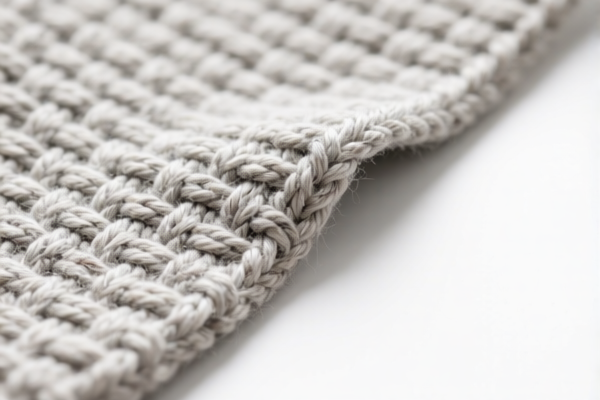
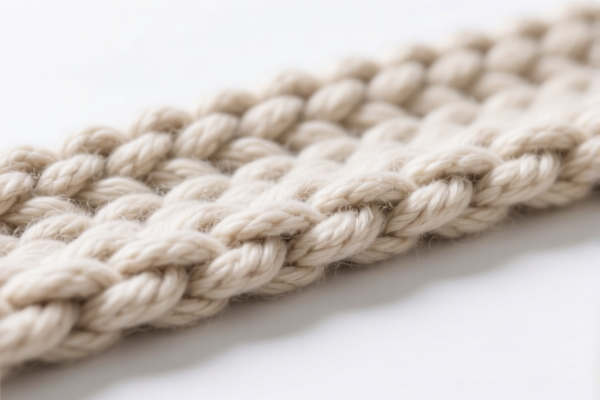
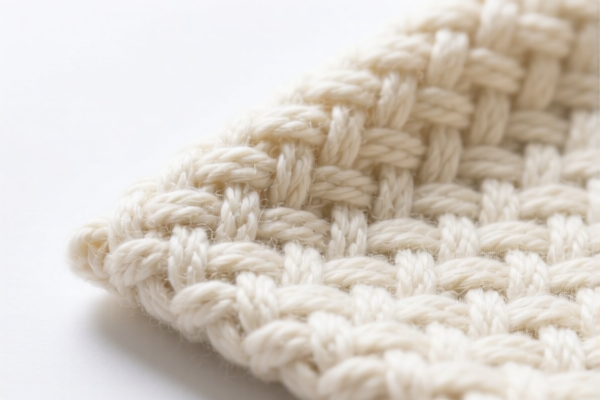
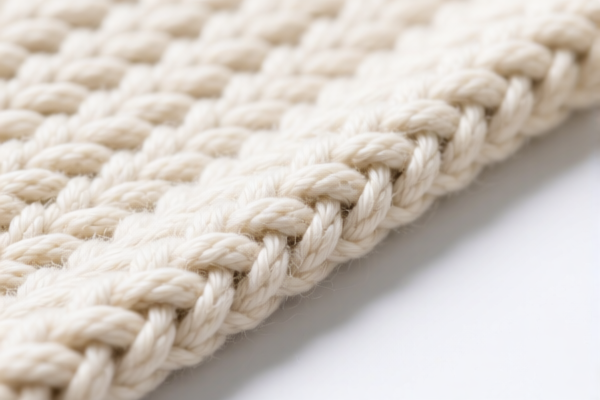
AI Analysis
🧶 Wool Fabric (Woven) – 100% Fine Animal Hair & Carded Wool
🌐 HS Code Reference & Clearance Guide | 2026 Latest Tariff Full Analysis | Professional Customs Strategy
📌 I. Product Definition & Classification: What Exactly Is "Wool Fabric"?
Woven fabrics made of wool are a critical material in high-end apparel, upholstery, and tailoring. In international trade, they are strictly categorized based on two main factors:
1. Processing Method: Carded (shorter fibers) vs. Combed (longer, smoother fibers).
2. Wool Content: Must contain 85% or more by weight of wool/fine animal hair to fall under this specific heading.
⚠️ Key Distinction Points:
- Carded Wool (5111): Used for heavier, rougher fabrics (coats, suits).
- Combed Wool (5112): Used for finer, smoother fabrics (luxury shirts, light suits).
- Weight Thresholds: <200g/m², <300g/m², and ≤400g/m² trigger different subheadings.
- Origin: All entries below assume China Origin under current trade policies.
📦 II. HS Code Classification Details (2026 Authoritative Comparison)
The following HS Codes are derived strictly from the provided data. All listed items contain ≥85% wool/fine animal hair.
| HS Code | Product Description | Key Features | Weight Limit | Special Condition |
|---|---|---|---|---|
5111.11.30.00 |
Woven fabrics of carded wool/fine animal hair (≥85%): Hand-woven, loom width <76 cm | Traditional hand-loom fabric | ≤ 300 g/m² | Hand-woven only |
5111.19.60.60 |
Woven fabrics of carded wool/fine animal hair (≥85%): Other | Machine-woven, standard industrial production | ≤ 400 g/m² | General commercial use |
5112.11.60.30 |
Woven fabrics of combed wool/fine animal hair (≥85%): Wholly/Partly fine animal hair | Luxury hair (cashmere/mohair blend) | ≤ 200 g/m² | High-end fiber content |
5112.11.60.60 |
Woven fabrics of combed wool/fine animal hair (≥85%): Other | Standard combed wool (non-fine animal hair dominant) | ≤ 200 g/m² | Standard wool fabric |
🔍 Critical Note:
- Carded (5111) vs. Combed (5112): Carded fibers are brushed but not aligned; Combed fibers are aligned and smoothed. This affects texture and price.
- Weight Matters: A fabric weighing 250g/m² falls under the <300g/m² rule (5111), but a fabric weighing 250g/m² of combed wool falls under the <200g/m²? No, it exceeds 200g/m². If combed wool fabric is 250g/m², it does not fit the ≤200g/m² subheadings listed above. Check higher weight categories for >200g/m² combed wool.
- Fine Animal Hair: Includes cashmere, mohair, alpaca, etc. If the fabric contains these, pay attention to5112.11.60.30.
💰 III. 2026 Latest Tariff Rate Details (Detailed Breakdown)
✅ Applicable Country: United States (US)
✅ Origin: China (CN)
✅ Effective Date: Current Policy (Note: Historical context shows 0% base for these specific wool subheadings under standard MFN, but verify for 2026 as trade dynamics shift).
🎯 1. 5111.11.30.00 – Hand-Woven Carded Wool Fabric
| Item | Detail |
|---|---|
| Base Tariff | 0.0% |
| Additional Tariffs | 0.0% |
| Total Tax Rate | 0.0% |
| Tax Breakdown | Base: 0.0% + Additional: 0.0% |
| De Minimis Eligibility | ❓ Check: While tariff is 0%, verify if Section 301/IEEPA applies. Based on provided data, tax is 0%. |
| Legal Basis | Specific wool subheading exclusions may apply. |
📌 Explanation:
- This is a low-tariff item for hand-woven goods.
- Caution: Even if the rate is 0%, customs may require proof of "hand-woven" status (manual loom width <76cm).
🎯 2. 5111.19.60.60 – Other Carded Wool Fabric (≤400g/m²)
| Item | Detail |
|---|---|
| Base Tariff | 0.0% |
| Additional Tariffs | 0.0% |
| Total Tax Rate | 0.0% |
| Tax Breakdown | Base: 0.0% + Additional: 0.0% |
| De Minimis Eligibility | ❓ Check: Subject to general wool import quotas or anti-dumping if applicable, but tax rate is 0% per data. |
| Legal Basis | General carded wool category. |
📌 Explanation:
- Standard machine-woven carded wool for suits/coats.
- Weight Limit: Must be ≤400g/m². Heavier fabrics fall under different codes (e.g., >400g/m²).
🎯 3. 5112.11.60.30 – Combed Wool with Fine Animal Hair (≤200g/m²)
| Item | Detail |
|---|---|
| Base Tariff | 0.0% |
| Additional Tariffs | 0.0% |
| Total Tax Rate | 0.0% |
| Tax Breakdown | Base: 0.0% + Additional: 0.0% |
| De Minimis Eligibility | ❓ Check: Likely eligible for low/no duty due to specific subheading. |
| Legal Basis | Specifically for "fine animal hair" (e.g., cashmere blends). |
📌 Explanation:
- Luxury Segment: Targeted at high-end fabrics.
- Content Requirement: Must be wholly or partly fine animal hair.
- Weight Limit: Strictly ≤200g/m² (lightweight, summer/spring fabrics).
🎯 4. 5112.11.60.60 – Other Combed Wool Fabric (≤200g/m²)
| Item | Detail |
|---|---|
| Base Tariff | 0.0% |
| Additional Tariffs | 0.0% |
| Total Tax Rate | 0.0% |
| Tax Breakdown | Base: 0.0% + Additional: 0.0% |
| De Minimis Eligibility | ❓ Check: Standard wool classification. |
| Legal Basis | General combed wool (non-fine animal hair dominant). |
📌 Explanation:
- Standard Segment: Regular wool suiting fabrics.
- Weight Limit: Strictly ≤200g/m².
- Distinction: Unlike5112.11.60.30, this does not require fine animal hair content.
🛠️ IV. Clearance Practical Advice (Avoid Pitfalls)
✅ 1. Documentation Checklist (Mandatory)
| Document | Required? | Explanation |
|---|---|---|
| ✅ Detailed Product Description | ✔️ | Must specify: Carded/Combed, Wool % (>85%), Weight (g/m²), Weaving Type. |
| ✅ Lab Test Report | ✔️ | Crucial: Must verify wool/fine animal hair content is ≥85%. |
| ✅ Hand-Woven Certificate | ✔️ | For 5111.11.30.00: Proof of manual loom width <76cm. |
| ✅ Commercial Invoice | ✔️ | Clearly state HS Code and "Woven Fabric of Wool". |
| ✅ Packing List | ✔️ | Include total weight and area to confirm g/m² calculation. |
✅ 2. Classification Logic (Key Mnemonic)
🔥 “Carded vs. Combed, Weight is King!”
| Condition | Correct HS Code |
|---|---|
| Carded + Hand-Woven + Width <76cm | 5111.11.30.00 |
| Carded + Machine-Woven + Weight ≤400g/m² | 5111.19.60.60 |
| Combed + Fine Hair + Weight ≤200g/m² | 5112.11.60.30 |
| Combed + Normal Wool + Weight ≤200g/m² | 5112.11.60.60 |
📌 Warning:
- If Combed wool fabric weighs 250g/m², it does NOT fit the ≤200g/m² codes (5112.11.60.30/60). You must look for higher weight subheadings (e.g., >200g/m²) not listed here.
- If Carded wool fabric weighs 350g/m², it fits5111.19.60.60(≤400g/m²). If it weighs 450g/m², it moves to a higher weight category.
✅ 3. Special Scenarios
| Scenario | Handling Advice |
|---|---|
| Blends with <85% Wool | DO NOT use these HS Codes. It will be reclassified to synthetic fiber blends (higher tax). |
| Knitted Wool Fabric | ERROR: These codes are for Woven fabrics. Knitted falls under Chapter 60 (e.g., 6103/6104 for garments, 6001-6006 for fabric). |
| Sample Shipments | Even for samples, provide a lab report proving ≥85% wool to avoid misclassification delays. |
| Dyeing/Printing Status | Specify if "Plain Dyed," "Printed," or "Unwashed." This may affect descriptive accuracy but not always HS Code unless specific subheadings exist. |
🌍 V. Global Market Comparison (2026 Snapshot)
| Market | Recommended HS Code | Estimated Tax | Notes |
|---|---|---|---|
| 🇺🇸 USA | 5111/5112 series |
0.0% | Base rate 0%. Verify Section 301 exemptions for wool. |
| 🇪🇺 EU | Similar Codes | ~4% - 6% | EU generally charges higher base rates for wool fabrics. |
| 🇨🇳 China (Import) | Same Codes | ~8% - 10% | China imports raw wool; finished fabric tariffs vary. |
| 🇯🇵 Japan | Similar Codes | ~6% - 12% | Japan has specific tariffs for fine animal hair. |
📌 Conclusion:
- USA offers 0% duty for these specific wool fabric categories (based on provided data).
- EU/Asia typically charge higher base rates.
- Always verify Anti-Dumping Duties if applicable to specific wool-producing regions.
📌 VI. Common Errors & Pitfalls
❌ Error 1: Claiming "Wool Fabric" without specifying Carded/Combed
👉 Result: Customs will ask for clarification, causing delays.
✅ Fix: Specify in description: "Carded Woven Wool Fabric, 85% Wool."
❌ Error 2: Misstating Weight (g/m²)
👉 Result: Incorrect HS Code selection (e.g., using ≤200g/m² code for 250g/m² fabric).
✅ Fix: Provide lab-measured GSM (Grams per Square Meter) on invoice.
❌ Error 3: Ignoring the 85% Rule
👉 Result: If wool content is 80%, it falls under synthetic blends, not pure wool.
✅ Fix: Provide a composition test report from an accredited lab (e.g., SGS, Intertek).
❌ Error 4: Confusing Knitted vs. Woven
👉 Result: Wrong chapter (Chapter 60 vs. 51).
✅ Fix: Check fabric structure. Woven = interlaced threads at right angles. Knitted = interlocking loops.
🎯 VII. Conclusion: Precision in Wool Classification
🎯 Key Takeaways:
1. Wool Content ≥85% is mandatory.
2. Weight Limits (200g, 300g, 400g) determine the exact subheading.
3. Processing Type (Carded/Combed) is the primary divider.
4. Tax Rate is 0.0% for these specific entries under current data.
🔹 “85% Wool, Carded/Combed, Weight Matters Zero!”
🔹 “HS Code Accuracy Saves Time and Money.”
📌 Pro Tip:
For hand-woven fabrics, ensure the loom width is explicitly stated as <76 cm in documentation. This is a strict requirement for 5111.11.30.00.
📣 Immediate Action:
📞 Provide a lab test report confirming wool content.
📝 Clearly state GSM (g/m²) and Carded/Combed status on all shipping documents.
🚀 Avoid misclassification to prevent customs holds.
✨ Professional Clearance Starts with Accurate Classification!
💼 Every thread counts in customs compliance.
Customer Reviews
About HS Code Classification
The Harmonized System (HS) is an internationally standardized nomenclature developed by the World Customs Organization (WCO) to classify traded products. Over 200 countries use the HS system as the basis for customs tariffs, trade statistics, and import/export regulations.
Each HS code follows a hierarchical structure:
- Chapter (2 digits) — Broad category of goods (e.g., Chapter 84: Machinery and Mechanical Appliances)
- Heading (4 digits) — More specific grouping within the chapter
- Subheading (6 digits) — Internationally standardized breakdown, used by all WCO member countries
- National subdivisions (8-10 digits) — Country-specific extensions for further classification, such as US HTSUS 10-digit codes
Correct HS code classification is essential for smooth customs clearance, accurate duty payment, and compliance with trade regulations. Misclassification can lead to customs delays, overpayment of duties, or penalties.
When importing from CN to US, the applicable tariff rates may include:
- Most-Favored-Nation (MFN) rate — The standard duty rate applied to WTO members
- General rate — Applied to countries without trade agreements
- Trade remedy duties — Additional tariffs such as Section 301 (anti-dumping), Section 232 (national security), or countervailing duties
The information provided on this page is for reference purposes only. For official classification, please consult with your local customs authority or a licensed customs broker.