Wool Pants
CN → US| HS Code | Tariff Rate | Origin | Destination | Doc |
|---|---|---|---|---|
| 6104290540 | 0.0% | CN | US | Official Doc |
| 6203416010 | 0.0% | CN | US | Official Doc |
| 6103411010 | 0.0% | CN | US | Official Doc |
| 6104610010 | 32.4% | CN | US | Official Doc |
| 6203413010 | 0.0% | CN | US | Official Doc |
Product Images
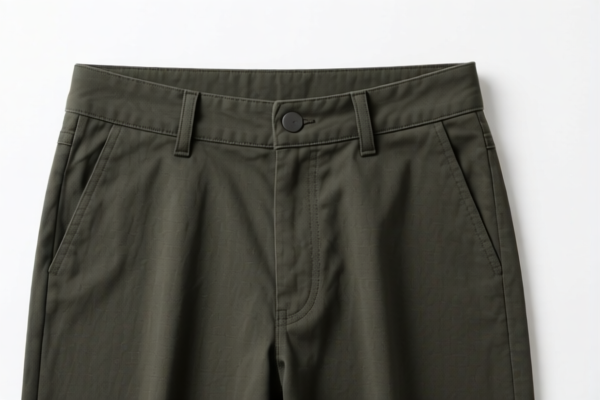
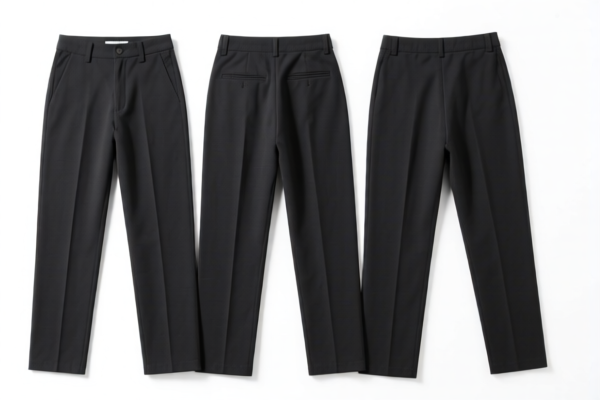
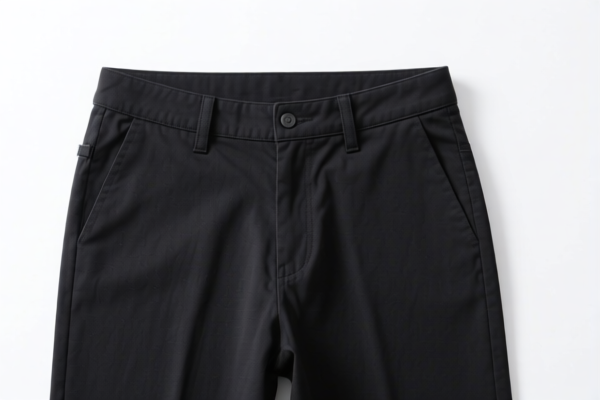

AI Analysis
👖 Wool Pants (Wool Trousers & Tights)
🌐 HS Code Reference & Customs Clearance Guide | 2026 Latest Tariff Breakdown | Strategic Import Strategies for US Market
📌 I. Product Definition & Classification: Do You Really Know "Wool Pants"?
Wool pants are a staple in international textile trade, but their classification depends entirely on two critical factors: Knitting vs. Non-Knitting and Gender Specificity.
In international trade, "Wool Pants" are not a single entity. They are split into distinct categories based on their manufacturing process:
Knitted Wool Pants (HS 6104/6103): Made by interlocking loops of yarn (e.g., jersey, ribbed knits). These are generally considered "tops and bottoms" of apparel.
Non-Knitted (Woven) Wool Pants (HS 6203/6204): Made by weaving threads (e.g., suit trousers, dress pants). These are often classified under "other made-up clothing."
⚠️ Key Distinction Point:
- If the fabric is Knitted (stretchy, looped structure) → Look at Chapter 61 (e.g.,6104.29,6104.61).
- If the fabric is Non-Knitted/Woven (structured, non-stretchy) → Look at Chapter 62 (e.g.,6203.41,6204.41).
- Gender Note:6103and6203are typically for Men's/Boys' garments, while6104and6204are for Women's/Girls' garments. However, some codes like6104.29and6203.41may have specific descriptions that need careful checking against the exact summary provided in your data.
📦 II. HS Code Classification Details (Based on Provided Data)
Below is the precise mapping for Wool Pants based on the provided <DATA>. Note that the summaries in the data contain some overlaps (e.g., "Men's" vs. "General"), so we must adhere strictly to the provided text.
| HS Code | Product Summary (From Data) | Manufacturing Type | Material | Total Tax Burden (US Import) |
|---|---|---|---|---|
6104.29.05.40 |
Wool pants, knitted, material is wool, form is long pants | Knitted | Wool | Base + 7.5% + 10% (See tax details below) |
6203.41.60.10 |
Wool pants, non-knitted, material is wool, form is long pants | Non-Knitted | Wool | 41.9¢/kg + 16.3% + 7.5% + 10% |
6103.41.10.10 |
Wool men's pants, knitted, material is wool, form is long pants | Knitted | Wool | 61.1¢/kg + 15.8% + 7.5% + 10% |
6104.61.00.10 |
Wool pants, knitted, material is wool, form is long pants | Knitted | Wool | 32.4% (All-inclusive rate) |
6203.41.30.10 |
Wool men's pants, non-knitted, material is wool, form is long pants | Non-Knitted | Wool | 41.9¢/kg + 16.3% + 7.5% + 10% |
🔍 Critical Observation:
- The tax structure varies significantly between Knitted and Non-Knitted items.
- Non-Knitted items (Chapters 62) often incur Specific Duties (¢/kg) plus Ad Valorem duties.
- Knitted items (Chapter 61) may have simpler percentage-based rates or mixed structures depending on the specific subheading.
- All items in the provided data include Section 301 Tariffs (7.5%) and Section 122 Tariffs (10%), indicating imports from China.
💰 III. 2026 Latest Tariff Rate Breakdown (Detailed Tax Clauses)
✅ Applicable Country: United States (US)
✅ Origin: China (CN) (Implied by 122 & 301 clauses)
✅ Effective Time: Current Trade War Rates Apply
🎯 1. 6104.29.05.40 & 6104.61.00.10 & 6103.41.10.10 —— Knitted Wool Pants
| Item | Content | Explanation |
|---|---|---|
| Base Tariff | Varies (See Tax Detail) | Determined by USITC Harmonized Tariff Schedule (HTS). For 6104.61.00.10, it appears to be part of the 32.4% total. |
| Section 301 Tariff (Additional) | +7.5% | Imposed on Chinese goods under US Trade Act Section 301. |
| Section 122 Tariff | +10% | Imposed under Section 122 of the Trade Act of 1962 (national defense/economic security). |
| Total Effective Rate | Varies | - 6104.61.00.10: 32.4% (All-inclusive)- 6103.41.10.10: 61.1¢/kg + 15.8% + 17.5% (Note: 17.5% = 7.5% + 10%)- 6104.29.05.40: Same structure as above likely. |
📌 Explanation:
- The 17.5% additional charge is the sum of 7.5% (Section 301) and 10% (Section 122).
- For6103.41.10.10and6104.29.05.40, the tax is a mixed duty: Specific (per kg) + Ad Valorem (percentage) + Additional Tariffs.
- De Minimis Exception: ❌ NOT APPLICABLE. Goods from China are generally excluded from the $800 de minimis exemption if they fall under these high-tariff codes and are subject to Section 301/122.
🎯 2. 6203.41.60.10 & 6203.41.30.10 —— Non-Knitted (Woven) Wool Pants
| Item | Content | Explanation |
|---|---|---|
| Base Tariff | 41.9¢/kg + 16.3% | A mixed duty structure common for woven wool trousers. |
| Section 301 Tariff (Additional) | +7.5% | Applied on the ad valorem portion. |
| Section 122 Tariff | +10% | Applied on the ad valorem portion. |
| Total Effective Rate | 41.9¢/kg + 16.3% + 17.5% | The 17.5% is added to the 16.3% base ad valorem rate. |
📌 Explanation:
- Woven wool pants face a heavier specific duty (41.9¢/kg) compared to some knitted counterparts.
- The ad valorem rate becomes 16.3% + 17.5% = 33.8%.
- Calculation Tip: Total Duty = (Weight in kg × 41.9¢) + (CIF Value × 33.8%).
🛠️ IV. Customs Clearance Practical Advice (Battle-Tested Pitfall Guide)
✅ 1. Essential Documentation Checklist (Non-Negotiable)
| Document | Required? | Purpose |
|---|---|---|
| ✅ Product Description | ✔️ | Must specify: "Wool Pants," "Knitted/Woven," "Men's/Women's," "100% Wool." |
| ✅ Fiber Content Label | ✔️ | Must match invoice. Mislabeling wool content can lead to fraud penalties. |
| ✅ Country of Origin | ✔️ | Must be marked "Made in China" to trigger/confirm Section 301/122 tariffs. |
| ✅ Commercial Invoice | ✔️ | Must declare CIF value clearly for percentage-based calculations. |
| ✅ Packing List | ✔️ | Must include Net Weight and Gross Weight (critical for the 41.9¢/kg specific duty). |
| ✅ Test Reports | ✔️ | Proof of fiber content (e.g., ASTM D276) to justify HS Code selection. |
✅ 2. Declaration Strategy (Key Mnemonics)
🔥 "Knit or Weave? Gender or General? Weight Counts!"
| Scenario | Correct Declaration | Pitfall to Avoid |
|---|---|---|
| Knitted Wool Pants | Use 6104 or 6103 series. | Do not declare as "Woven" → Incorrect HS Code. |
| Woven Wool Pants | Use 6203 or 6204 series. | Do not declare as "Knitted" → Incorrect HS Code. |
| Specific Duty Items | Ensure Weight is accurate. | Under-declaring weight → Penalty for undervaluation of specific duties. |
| Section 122/301 | Confirm China Origin. | Attempting to hide origin → Seizure & Fraud Charges. |
| De Minimis (Section 321) | ❌ Do Not Use for these codes. | Trying to ship via 800 exemption → Rejection by CBP for Chinese wool apparel. |
✅ 3. Special Handling for Mixed Duties
For codes like 6203.41.60.10 (41.9¢/kg + 16.3%):
1. Calculate Specific Duty: Multiply total net weight (kg) by $0.419.
2. Calculate Ad Valorem: Multiply CIF value by (16.3% + 7.5% + 10% = 33.8%).
3. Sum Them: Total Duty = Specific + Ad Valorem.
📌 Example: 100 kg of pants, CIF Value $1,000.
- Specific: 100 kg × $0.419 = $41.90
- Ad Valorem: $1,000 × 33.8% = $338.00
- Total Duty: $379.90
🌍 V. Global Market Comparison (2026 Outlook)
| Market | Recommended HS Code | Base Tariff | Additional Tariffs | Total Est. Cost |
|---|---|---|---|---|
| 🇺🇸 USA | 6203.41.60.10 / 6104.29.05.40 |
High (Mixed) | +17.5% (301+122) | Very High (33%+ Specifics) |
| 🇨🇳 China | 6103.41.10.10 (Import) |
10-15% | None | Moderate |
| 🇪🇺 EU | 6104.61.10 / 6203.41.30 |
12% | None | Moderate |
| 🇬🇧 UK | 6104.61.10 / 6203.41.30 |
12% | None | Moderate |
📌 Conclusion:
- The US market is the most expensive for wool pants from China due to the combined 17.5% additional tariffs.
- Woven (Non-Knitted) pants incur a per-kg fee, which can make high-weight, low-value items particularly expensive.
- Knitted pants may have lower base rates but still suffer the same additional tariffs.
📌 VI. Common Errors & Pitfall Guide (Lessons Learned)
❌ Error 1: Confusing "Knitted" with "Woven"
👉 Consequence: Wrong HS Code → Customs Hold & Rerouting.
Fix: Check fabric stretch and loop structure. Knit = Stretchy/Loopy. Woven = Structured/Flat.
❌ Error 2: Ignoring the Specific Duty (¢/kg)
👉 Consequence: Underpayment of duties → CPB Audit & Penalties.
Fix: Always weigh the shipment accurately. Do not rely on volumetric weight for duty calculation.
❌ Error 3: Assuming De Minimis (Section 321) Applies
👉 Consequence: Package seized for circumventing tariffs.
Fix: Wool apparel from China is not eligible for $800 exemption when Section 301/122 tariffs apply.
❌ Error 4: Vague Product Description
👉 Consequence: CBP assigns highest possible duty rate.
Fix: Use exact phrases from the data: "Wool pants, non-knitted, material is wool, form is long pants."
✅ Correct Declaration Example:
"Wool Men's Trousers, Knitted, 100% Wool, Long Pants, Model XYZ, Made in China"
→ HS Code:6103.41.10.10
🎯 VII. Conclusion: Precision Saves Profit!
🎯 Remember the Golden Rules:
🔹 "Knit vs. Weave decides the Chapter (61 vs 62)."
🔹 "China Origin triggers the 17.5% Penalty."
🔹 "Weight Matters for Woven Pants (¢/kg)."
🔹 "No De Minimis for Chinese Wool Apparel."
📌 Pro Tip:
If your wool pants are not from China (e.g., Made in Italy, Vietnam, or Peru), you can eliminate the 17.5% additional tariffs, reducing your total cost significantly.
🇮🇹 Italian Wool Pants: Likely 0-12% Total.
🇺🇸 US Import of Italian Wool Pants: Significant Savings!
📣 Immediate Action:
📞 Verify Fabric Structure (Knit/Woven)
📊 Calculate Total Duty (Including 17.5%)
📝 Declare Accurately to Avoid CBP Penalties
✨ Smart Importing Starts with Accurate Classification!
💼 Your Margin Depends on Your HS Code!
Customer Reviews
About HS Code Classification
The Harmonized System (HS) is an internationally standardized nomenclature developed by the World Customs Organization (WCO) to classify traded products. Over 200 countries use the HS system as the basis for customs tariffs, trade statistics, and import/export regulations.
Each HS code follows a hierarchical structure:
- Chapter (2 digits) — Broad category of goods (e.g., Chapter 84: Machinery and Mechanical Appliances)
- Heading (4 digits) — More specific grouping within the chapter
- Subheading (6 digits) — Internationally standardized breakdown, used by all WCO member countries
- National subdivisions (8-10 digits) — Country-specific extensions for further classification, such as US HTSUS 10-digit codes
Correct HS code classification is essential for smooth customs clearance, accurate duty payment, and compliance with trade regulations. Misclassification can lead to customs delays, overpayment of duties, or penalties.
When importing from CN to US, the applicable tariff rates may include:
- Most-Favored-Nation (MFN) rate — The standard duty rate applied to WTO members
- General rate — Applied to countries without trade agreements
- Trade remedy duties — Additional tariffs such as Section 301 (anti-dumping), Section 232 (national security), or countervailing duties
The information provided on this page is for reference purposes only. For official classification, please consult with your local customs authority or a licensed customs broker.