Wool Wadding
CN → USProduct Images
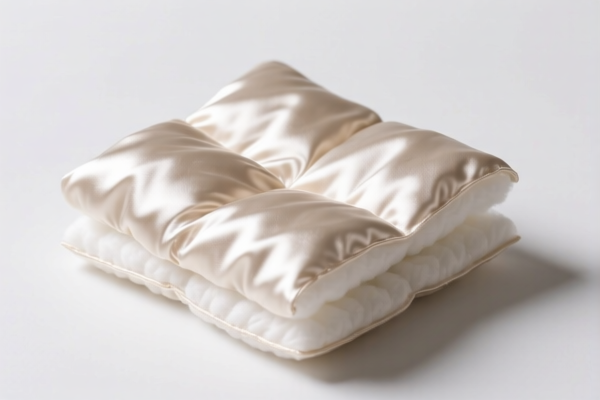
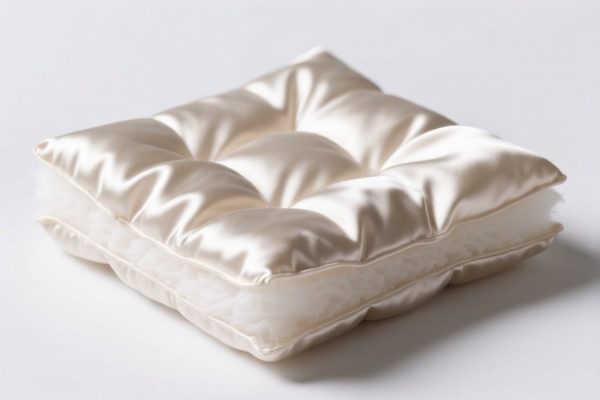
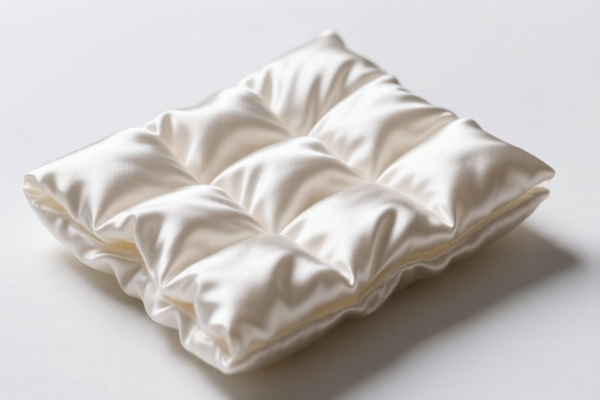
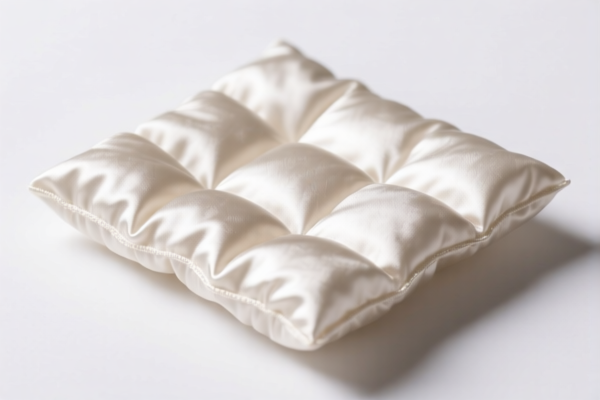
AI Analysis
🐑 Wool Wadding (Sheep’s Wool for Textile Use)
🌐 HS Code Reference & Customs Clearance Guide | 2026 Latest Tariff Analysis | Professional Clearance Strategy 📌 I. Product Definition & Classification: Do You Really Understand "Wool Wadding"?
Wool Wadding (often referred to as "Sheep's Wool" in trade) is a natural fiber material derived from sheep. In international trade, it is strictly categorized based on its processing state and mechanical handling. It is primarily used for stuffing mattresses, upholstery, insulation, and textile manufacturing.
International trade distinguishes between two main types of wool wadding:
- Wool Grease & Scoured Wool: Wool that has been washed to remove lanolin and dirt, but not yet carded or combed into continuous fibers.
- Wool Tops & Noils: Carded or combed wool ready for spinning (Tops) or short fibers/sliver (Noils).
⚠️ Key Distinction Point:
- If the wool is raw, unwashed, or only washed (scoured) without being carded/combed into specific fiber arrangements → Classify under Chapter 51 (Wool Tops/Noils) or Chapter 51/41 depending on state.
- If the wool is carded, combed, or processed into wadding batts specifically for stuffing/insulation (not for spinning) → It may fall under Chapter 56 (Wadding) or Chapter 51 if it is "Wool Tops".
- Crucial: Most commercial "Wool Wadding" for bedding/insulation that is not meant for immediate spinning is classified as 5105 (Wool Tops/Noils) if it is in fiber form, or 5601 if it is specifically "wadding" (non-woven batts). However, standard raw wool for textile use is 5105.
📦 II. HS Code Classification Details (2026 Latest Tariff Authority Comparison)
| HS Code | Product Description | Application Scenario | Processing State |
|---|---|---|---|
5105.21.10.00 |
Carded Wool: Wool tops and other carded wool | Raw wool fibers, ready for spinning into yarn | ✅ Carded/Combed |
5105.29.10.00 |
Other Wool: Other wool (including noils) | Scoured wool, unwashed wool, non-top forms | ❌ Not Tops |
5601.21.10.00 |
Wadding of Cotton: Wool wadding (if processed into batts) | Pre-cut batts for mattresses, clothing insulation | ✅ Non-woven/Batt |
0503.00.10.00 |
Horsehair Waste: (Note: Wool is NOT here) | Incorrect Code for Wool | N/A |
🔍 Critical Reminder:
- Standard Wool Wadding (fiber form) is 5105.21.10.00 (Carded) or 5105.29.10.00 (Other).
- If it is pre-formed batts (non-woven) specifically for stuffing, it may be 5601.21.10.00 (if categorized as wadding) but often still falls under 5105 if it is just loose fiber.
- Do NOT classify as "Textiles" (Chapter 63) if it is raw fiber.
- Do NOT classify as "Animal Hair" (Chapter 51 is Wool; Chapter 51 covers Sheep's Wool).
💰 III. 2026 Latest Tariff Rate Details (Including Surcharges & Policy Add-ons)
✅ Applicable Country: United States (US)
✅ Origin: China (CN)
✅ Effective Time: From November 10, 2025 (including subsequent imports)
🎯 1. 5105.21.10.00 —— Carded Wool (Wool Tops)
| Item | Content |
|---|---|
| Base Tariff | 0% (ad valorem) |
| USITC Surcharge | +25% (from USITC Footnote 9903.88.01) |
| IEEPA Surcharge | +10% (for China/Hong Kong products, from Nov 10, 2025) |
| Total Rate | 35% |
| Tax Calculation | CIF Value × 35% |
| De Minimis Exemption | ❌ Not Eligible (deny_de_minimis) |
| Legal Basis Path | IEEPA:9903.01.25 → IEEPA:9903.01.24 → USITC:5105.21.10.00 → FOOTNOTE:9903.88.01 |
📌 Explanation:
- "USITC Surcharge 25%" is from Section 301 of the US Trade Act;
- "IEEPA 10%" is the additional tariff under the International Emergency Economic Powers Act;
- Total 35% is a high tariff, requiring advance planning!
🎯 2. 5105.29.10.00 —— Other Wool (Scoured/Raw)
| Item | Content |
|---|---|
| Base Tariff | 0% |
| USITC Surcharge | +25% |
| IEEPA Surcharge | +10% |
| Total Rate | 35% |
| Tax Calculation | CIF × 35% |
| De Minimis Exemption | ❌ Not Eligible |
| Legal Basis Path | IEEPA:9901.25 → IEEPA:9903.01.24 → USITC:5105.29.10.00 → FOOTNOTE:9903.88.01 |
📌 Note:
- Same tariff as carded wool;
- Applies to scoured wool, raw wool, and other non-top forms.
🛠️ IV. Customs Clearance Practical Advice (Combat Pitfall Guide)
✅ 1. Required Documents Checklist (All Essential)
| Material | Required | Description |
|---|---|---|
| ✅ Product Specification Sheet | ✔️ | Fiber length, staple length, microns, cleanliness, lanolin content |
| ✅ Processing Method Description | ✔️ | Clarify if it is "Carded," "Combed," or "Scoured" |
| ✅ Product Photos | ✔️ | Clear images of packaging, labels, and fiber state |
| ✅ Third-Party Inspection Report | ✔️ | Quality test (micron count, contamination level) |
| ✅ Commercial Invoice | ✔️ | Must state "Wool Wadding / Wool Tops" clearly |
| ✅ Certificate of Origin (CO) | ✔️ | If not from China, may qualify for preferential rates |
| ✅ Packing List | ✔️ | Detail gross/net weight, bale/packaging type |
✅ 2. Declaration Tips (Key Mantra)
🔥 "State the state, declare the type, avoid vague terms, save money right!"
| Situation | Correct Declaration | Incorrect Practice |
|---|---|---|
| Raw/Scoured Wool | 5105.29.10.00 (Other Wool) |
Misdeclare as "Textile Waste" → 35% |
| Carded Wool Tops | 5105.21.10.00 |
Misdeclare as "Fabric" → Higher duty |
| Wool Batts (Insulation) | 5601.21.10.00 (if non-woven) |
Misdeclare as "Wool Tops" → Wrong classification |
| Horsehair Wool (Fake) | 0503.00.10.00 |
Fraud! Heavy penalties |
✅ 3. Special Case Handling
| Situation | Handling Advice |
|---|---|
| Mixed Fibers | If wool is blended with synthetic fibers, classification changes to Chapter 55/60 |
| Wool Waste | If it is shoddy/noils (short fibers), classify under 5105.29.10.00 |
| Organic Certification | Provide organic wool certificates to avoid phytosanitary issues |
| Animal Product Compliance | Ensure compliance with USDA APHIS import regulations for animal products |
🌍 V. Global Major Markets Clearance Comparison (2026 Latest)
| Country/Region | Recommended HS Code | Tariff | Certification Requirements | Notes |
|---|---|---|---|---|
| 🇺🇸 US | 5105.21.10.00 |
35% (China) | USDA + FDA (if food contact) | High tariff on wool |
| 🇨🇳 China | 5105.21.10.00 |
5% | N/A | Low import duty |
| 🇪🇺 EU | 5105.21.10.00 |
12% | OEKO-TEX + REACH | No US-style surcharges |
| 🇦🇺 Australia | 5105.21.10.00 |
5% | Biosecurity Permit | Strict animal import rules |
| 🇯🇵 Japan | 5105.21.10.00 |
0% | JAS (if organic) | No additional surcharges |
📌 Conclusion:
- US is the only market with high additional surcharges for wool products from China;
- China-produced wool has very high clearance costs in the US, consider supply chain diversification or value-added processing abroad.
📌 VI. Common Mistakes & Pitfall Guide (Lessons Learned)
❌ Mistake 1: Declaring "Wool Wadding" as "Textile Waste"
👉 Consequence: Wrong classification → 35% tariff + Penalties!
❌ Mistake 2: Not specifying "Carded" vs. "Scoured"
👉 Consequence: Customs delay → Inspection required → Demurrage costs!
❌ Mistake 3: Ignoring Animal Health Regulations
👉 Consequence: Import Ban or Destruction by USDA!
❌ Mistake 4: Using "Fabric" as Description for Raw Wool
👉 Consequence: Misclassification → Compliance Risk!
✅ Correct Practice:
"Carded Wool Tops, 100% Sheep's Wool, Micron Count 24, Clean, Baled, Model WT-2026, USDA Compliant"
🎯 VII. Conclusion: Professional Declaration, Time-Saving, Cost-Efficient!
🎯 Remember the Mantra:
🔹 "State the state, declare the type, avoid vague terms, save money right!"
🔹 "HS Code determines fate, tariff difference 35%, declaration mistake, heavy fines!"
📌 Tips:
If your wool is originating from New Zealand, Australia, or Uruguay, you may apply for GSP or FTA exemptions (depending on current agreements), with tariffs as low as 0%~5%;
Recommend Advance Ruling for wool classification to avoid clearance risks.
📣 Immediate Action:
📞 Contact professional customs broker + Provide fiber specs + Apply for HS Code Advance Ruling
🚀 Let your wool products clear customs smoothly, export efficiently, and maximize profits!
✨ Professional Clearance Starts with Accurate Classification!
💼 Every cent of your cost deserves precise calculation!
Customer Reviews
About HS Code Classification
The Harmonized System (HS) is an internationally standardized nomenclature developed by the World Customs Organization (WCO) to classify traded products. Over 200 countries use the HS system as the basis for customs tariffs, trade statistics, and import/export regulations.
Each HS code follows a hierarchical structure:
- Chapter (2 digits) — Broad category of goods (e.g., Chapter 84: Machinery and Mechanical Appliances)
- Heading (4 digits) — More specific grouping within the chapter
- Subheading (6 digits) — Internationally standardized breakdown, used by all WCO member countries
- National subdivisions (8-10 digits) — Country-specific extensions for further classification, such as US HTSUS 10-digit codes
Correct HS code classification is essential for smooth customs clearance, accurate duty payment, and compliance with trade regulations. Misclassification can lead to customs delays, overpayment of duties, or penalties.
When importing from CN to US, the applicable tariff rates may include:
- Most-Favored-Nation (MFN) rate — The standard duty rate applied to WTO members
- General rate — Applied to countries without trade agreements
- Trade remedy duties — Additional tariffs such as Section 301 (anti-dumping), Section 232 (national security), or countervailing duties
The information provided on this page is for reference purposes only. For official classification, please consult with your local customs authority or a licensed customs broker.