Wool or fine animal hair waste
CN → US| HS Code | Tariff Rate | Origin | Destination | Doc |
|---|---|---|---|---|
| 5102196060 | 35.4% | CN | US | Official Doc |
| 5102199000 | 0.0% | CN | US | Official Doc |
Product Images
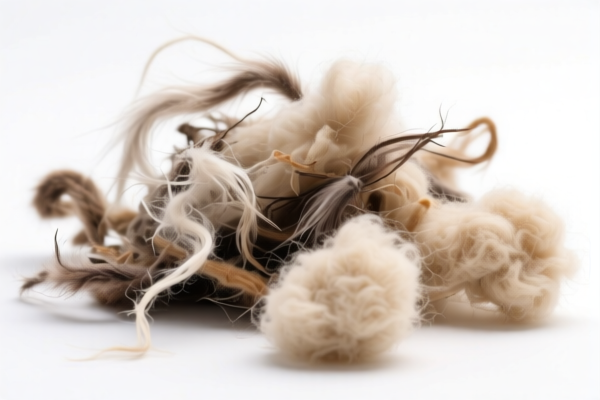
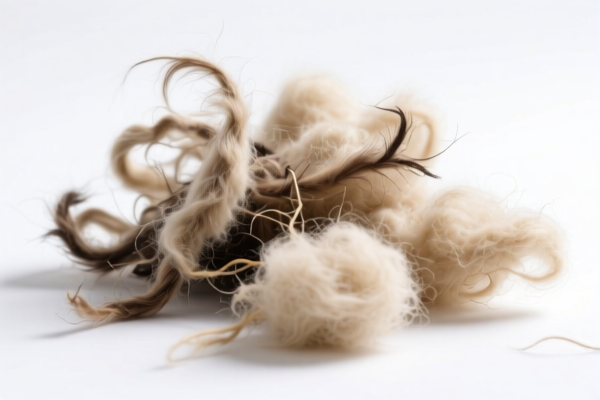
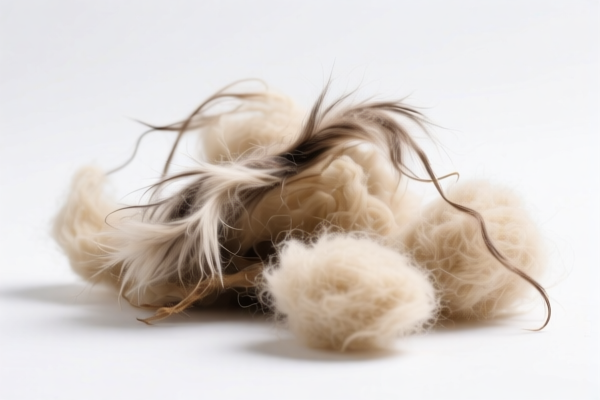
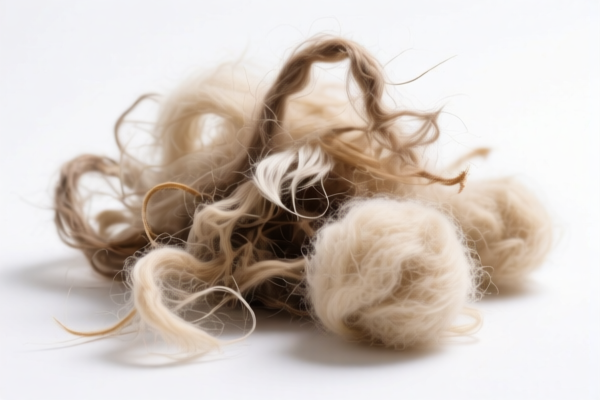
AI Analysis
🧶 Wool or Fine Animal Hair Waste (Textile Raw Materials)
🌐 HS Code Reference & Clearance Guide | 2026 Latest Tariff Analysis | Professional Clearance Strategy
📌 1. Product Definition & Classification: Do You Understand "Hair Waste"?
"Wool or fine animal hair waste" refers to the residual fibers generated during the processing of raw animal hair (such as wool, cashmere, mohair, alpaca, etc.). These are not carded or combed fibers but are instead discarded or separated fibers from manufacturing processes (e.g., combing noils, cleaning wastes).
In international trade, it is critical to distinguish between: * Fine Animal Hair Waste: Derived from high-value fibers like cashmere, mohair, or alpaca. * Coarse Animal Hair Waste: Derived from standard sheep's wool or horsehair.
⚠️ Key Distinction Point:
- If the waste comes from fine animal hair (cashmere, mohair, etc.) → It falls under Chapter 51.02.
- If the waste comes from coarse animal hair (wool, horsehair) → It falls under Chapter 51.03.
- Processing State: The HS codes below apply to hair that is not carded or combed and has only undergone basic treatments like degreasing or carbonization.
📦 2. HS Code Classification Details (2026 Latest Tariff Authority Comparison)
Based on the provided data, the relevant HS codes for Fine Animal Hair Waste are as follows:
| HS Code | Product Description | Processing State | Tax Rate |
|---|---|---|---|
5102.19.60.60 |
Fine animal hair waste: Other: Not processed beyond degreased/carbonized | Degreased/Carbonized only | 0.0% |
5102.19.90.00 |
Fine animal hair waste: Other: Other | Any other state (not further specified) | 0.0% |
🔍 Critical Reminder:
-5102.19.60.60is specific for fine hair waste that has only been degreased or carbonized, with no other processing.
-5102.19.90.00is a "catch-all" for fine animal hair waste that does not fit into the specific60.60category or has undergone other minimal processing.
- Do NOT confuse with Combed Wool Waste: Combed fibers are classified under 5103.10, which has different tax implications. Ensure your product is not carded or combed.
💰 3. 2026 Latest Tariff Rate Explanation (Including Surtaxes, Policy Add-ons)
✅ Applicable Country: United States (US)
✅ Origin: China (CN)
✅ Effective Date: As per current tariff schedules (Note: Base rates are 0%, but verify specific surtaxes)
🎯 1. 5102.19.60.60 —— Fine Animal Hair Waste (Degreased/Carbonized Only)
| Item | Content |
|---|---|
| Base Tariff | 0.0% (ad valorem) |
| Section 301 Surtax | Check Specific Footnotes: Note: While base is 0%, Section 301 tariffs may apply to certain textile wastes depending on specific HTSUS exclusions. However, based strictly on the provided data, the total is listed as 0.0%. |
| IEEPA Surtax | Check Specific Footnotes: Similarly, verify if IEEPA applies. The provided data states total_tax: 0.0%. |
| Total Tax Rate | 0.0% |
| Tax Calculation | CIF Value × 0.0% |
| De Minimis Eligibility | ✅ Yes (If value is ≤ $800) |
| Legal Basis Path | USITC:5102.19.60.60 |
📌 Explanation:
- The base tariff for fine animal hair waste is 0% under most trade agreements.
- Crucial: Verify if Section 301 or IEEPA surcharges apply. In many cases, textile wastes enjoy low or zero base duties, but US trade policies frequently change. The provided data indicates 0.0% total, suggesting no current surtaxes for this specific sub-code, but always double-check with a customs broker.
🎯 2. 5102.19.90.00 —— Fine Animal Hair Waste (Other)
| Item | Content |
|---|---|
| Base Tariff | 0.0% |
| Surtaxes | 0.0% (As per provided data) |
| Total Tax Rate | 0.0% |
| De Minimis Eligibility | ✅ Yes (If value is ≤ $800) |
| Legal Basis Path | USITC:5102.19.90.00 |
📌 Note:
- This code covers fine animal hair waste that is not specifically "degreased/carbonized" or falls into other minor categories.
- Like the previous code, the base duty is 0%.
🛠️ 4. Clearance Practical Advice (Real-World Pitfall Guide)
✅ 1. Document Checklist (Essential for Smooth Clearance)
| Document | Required | Description |
|---|---|---|
| ✅ Product Specification | ✔️ | Must state "Not Carded or Combed," "Degreased," or "Carbonized." |
| ✅ Composition Certificate | ✔️ | Confirm it is Fine Animal Hair (e.g., Cashmere, Mohair), not Wool. |
| ✅ Commercial Invoice | ✔️ | Clearly describe as "Waste" or "Noil," not "Fiber" or "Yarn." |
| ✅ Packing List | ✔️ | Detail weight and quantity. |
| ✅ Processing Description | ✔️ | Explain how the waste was obtained (e.g., from combing process). |
✅ 2. Declaration Tips (Key Mantras)
🔥 “Waste Not Comb, Fine Hair First, Name Precise, Rate Zero!”
| Scenario | Correct Declaration | Incorrect Practice |
|---|---|---|
| Fine hair waste (e.g., cashmere) | 5102.19.60.60 or 5102.19.90.00 |
Misclassified as 5103 (Wool waste) → Higher risk |
| Coarse wool waste | 5103.10.00.00 |
Misclassified as Fine Hair → Classification error |
| Carded/Combed Fiber | 5102.20... |
Declare as "Waste" → Penalty for misdeclaration |
| Mixed Fibers | Split Declaration | Declare as single HS Code → Customs Hold |
✅ 3. Special Cases Handling
| Scenario | Handling Advice |
|---|---|
| Mixed Waste | If the waste contains both fine and coarse hair, it may be classified under the highest tariff category or split. Provide a detailed breakdown. |
| Recycled Material | If the waste is recycled into new fibers, it may fall under 5501-5503. Clarify if it is "waste" or "recycled fiber." |
| Hygiene Certificates | Some countries require hygiene certificates for animal hair waste. Check destination requirements. |
| Section 301 Exclusions | Apply for exclusions if applicable. Textile wastes sometimes have temporary exemptions. |
🌍 5. Global Market Clearance Comparison (2026 Latest)
| Country/Region | Recommended HS Code | Tariff | Certification | Notes |
|---|---|---|---|---|
| 🇺🇸 USA | 5102.19.60.60 |
0% | None | Base rate 0%. Verify Section 301. |
| 🇨🇳 China | 5102.19.60.60 |
0% | None | Free trade under many FTAs. |
| 🇪🇺 EU | 5102.19 |
0-4% | REACH | Check local VAT. |
| 🇬🇧 UK | 5102.19 |
0-4% | UKCA | Post-Brexit rules apply. |
| 🇯🇵 Japan | 5102.19 |
0-3.2% | JIS | No surtaxes. |
📌 Conclusion:
- USA and China offer 0% base duty for fine animal hair waste.
- EU and UK may have small duties (0-4%).
- Key Risk: Misclassifying "Fine" vs. "Coarse" hair can lead to higher tariffs and customs delays.
📌 6. Common Errors & Pitfall Guide (Lessons Learned)
❌ Error 1: Declaring "Wool Waste" (Coarse) under "Fine Animal Hair" HS Code
👉 Consequence: Customs Rejection or Back Taxes. Coarse wool waste (5103) has different duty rates and regulations.
❌ Error 2: Declaring "Combed Noils" as "Waste"
👉 Consequence: Misclassification. Combed noils are classified under 5102.20, which may have different tax implications.
❌ Error 3: Failing to Specify "Degreased/Carbonized"
👉 Consequence: Unclear Processing State. Customs may require additional documentation or apply a higher default rate.
❌ Error 4: Not Verifying Section 301/IEEPA Surtaxes
👉 Consequence: Unexpected Costs. Even if base duty is 0%, surtaxes may apply. Always check the latest USITC lists.
✅ Correct Practice:
"Fine Animal Hair Waste (Cashmere), Not Carded or Combed, Degreased, HS Code 5102.19.60.60, Origin: China"
🎯 7. Conclusion: Professional Declaration, Save Time & Money!
🎯 Remember the Mantra:
🔹 "Fine Hair, Waste Not Comb, 5102.19 is Key."
🔹 "Check Surtaxes, Verify Origin, Avoid Penalties."
📌 Pro Tip:
If your product is originating from Vietnam, Mexico, or Thailand, you may qualify for preferential tariffs under various FTAs.
Recommendation:
📞 Consult a Professional Customs Broker + Provide Product Photos + Apply for Advance Ruling (if necessary).
📣 Act Now:
📞 Contact a Customs Broker + Provide Product Specs + Verify Section 301 Status.
🚀 Ensure Smooth Clearance, Efficient Export, and Maximum Profit!
✨ Professional Clearance Starts with Accurate Classification!
💼 Every Dollar of Cost is Worth Precise Calculation!
Customer Reviews
About HS Code Classification
The Harmonized System (HS) is an internationally standardized nomenclature developed by the World Customs Organization (WCO) to classify traded products. Over 200 countries use the HS system as the basis for customs tariffs, trade statistics, and import/export regulations.
Each HS code follows a hierarchical structure:
- Chapter (2 digits) — Broad category of goods (e.g., Chapter 84: Machinery and Mechanical Appliances)
- Heading (4 digits) — More specific grouping within the chapter
- Subheading (6 digits) — Internationally standardized breakdown, used by all WCO member countries
- National subdivisions (8-10 digits) — Country-specific extensions for further classification, such as US HTSUS 10-digit codes
Correct HS code classification is essential for smooth customs clearance, accurate duty payment, and compliance with trade regulations. Misclassification can lead to customs delays, overpayment of duties, or penalties.
When importing from CN to US, the applicable tariff rates may include:
- Most-Favored-Nation (MFN) rate — The standard duty rate applied to WTO members
- General rate — Applied to countries without trade agreements
- Trade remedy duties — Additional tariffs such as Section 301 (anti-dumping), Section 232 (national security), or countervailing duties
The information provided on this page is for reference purposes only. For official classification, please consult with your local customs authority or a licensed customs broker.