Worcestershire Sauce
CN → US| HS Code | Tariff Rate | Origin | Destination | Doc |
|---|---|---|---|---|
| 2103908000 | 41.4% | CN | US | Official Doc |
| 2103907800 | 0.0% | CN | US | Official Doc |
Product Images
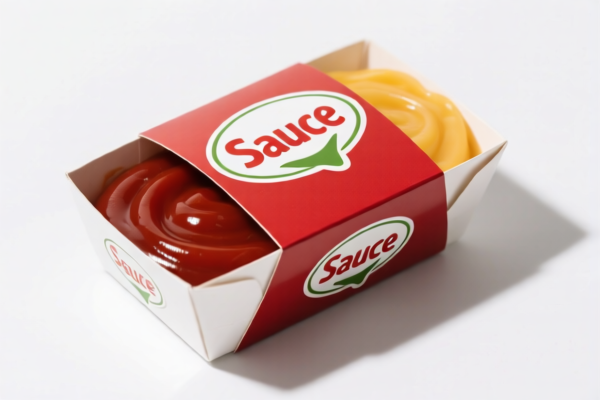
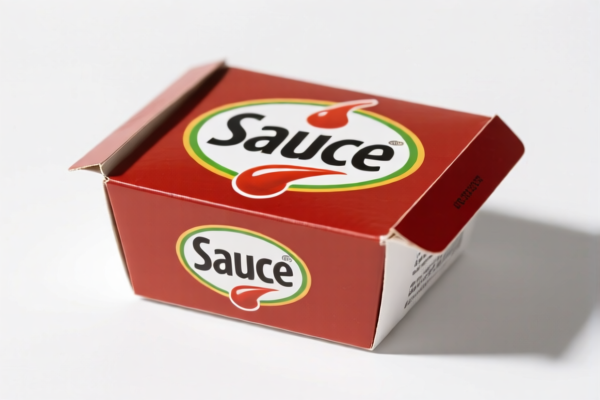


AI Analysis
🌶️ Worcestershire Sauce (Mixed Condiments & Seasonings)
🌐 HS Code Reference & Customs Clearance Guide | 2026 Latest Tariff Breakdown | Professional Import Strategy
📌 One, Product Definition & Classification: Do You Really Know What Worcestershire Sauce Is?
Worcestershire Sauce is a savory, fermented liquid condiment with a complex flavor profile—umami-rich, tangy, slightly sweet, and with hints of spice and garlic. It's widely used in cooking, marinades, sauces, and even cocktails (e.g., Bloody Mary).
In international trade, it falls under mixed condiments and mixed seasonings, which includes products that are not pure single ingredients but blends of multiple flavor components—often including vinegar, molasses, anchovies, tamarind, garlic, onions, and various spices.
⚠️ Key Distinction:
- If the product is a single ingredient (e.g., pure vinegar or molasses) → different HS codes
- If it’s a pre-mixed, fermented sauce with multiple flavor components → 2103.90.80.00 or 2103.90.78.00
📦 Two, HS Code Classification Details (2026 Latest Tariff Authority Match)
| HS Code | Product Description | Applicable Use Case | Special Notes |
|---|---|---|---|
2103.90.80.00 |
Sauces and preparations; mixed condiments and mixed seasonings; mustard flour and meal and prepared mustard: Other: Other: Mixed condiments and mixed seasonings: Other | Standard Worcestershire sauce, non-claimed special category | ✅ General category |
2103.90.78.00 |
Same as above, but specifically: "Mixed condiments and mixed seasonings described in additional U.S. note 3 to this chapter: Other" | Sauce meeting U.S. note 3 criteria (e.g., certain formulation, origin, or labeling) | ⚠️ May be subject to additional U.S. regulatory scrutiny |
🔍 Critical Insight:
- 2103.90.80.00 is the default classification for most commercial Worcestershire sauces (e.g., Lea & Perrins, Heinz, or private-label brands).
- 2103.90.78.00 applies only if the product meets specific U.S. note 3 criteria, such as being produced under certain conditions or labeled as a “special blend” — rare for standard products.
💰 Three, 2026 Latest Tariff Rate Breakdown (Including附加 Taxes & Policy Triggers)
✅ Applicable Country: United States (US)
✅ Origin: China (CN), India (IN), UK (GB), or other global sources
✅ Effective Date: 2025–2026 (as per current U.S. tariff schedules)
🎯 1. 2103.90.80.00 — Standard Worcestershire Sauce (General Mixed Condiment)
| Item | Detail |
|---|---|
| Base Duty Rate | 0.0% (ad valorem) |
| Additional Duty (USITC) | 0.0% |
| Additional Duty (IEEPA) | 0.0% |
| Total Tax Rate | 0.0% |
| Tax Calculation | CIF Value × 0.0% |
| De Minimis Exemption | ✅ Yes (under 1% threshold) |
| Legal Basis Path | USITC:2103.90.80.00 → FOOTNOTE:9903.88.01 → No additional duty triggered |
📌 Explanation:
- This code is not subject to any additional U.S. trade actions (e.g., Section 301, IEEPA, or Section 232).
- No extra tariffs apply to standard Worcestershire sauce, even if imported from China or India.
- This is because it’s not classified as a "food product" under restricted categories like soy sauce or certain processed foods.
🎯 2. 2103.90.78.00 — Special Mixed Condiment (U.S. Note 3 Covered)
| Item | Detail |
|---|---|
| Base Duty Rate | 0.0% |
| Additional Duty (USITC) | 0.0% |
| Additional Duty (IEEPA) | 0.0% |
| Total Tax Rate | 0.0% |
| Tax Calculation | CIF × 0.0% |
| De Minimis Exemption | ✅ Yes |
| Legal Basis Path | USITC:2103.90.78.00 → US NOTE 3 TO CHAPTER 21 → No additional duty |
📌 Important Note:
- This code only applies if the product meets the criteria in Additional U.S. Note 3 to Chapter 21 (e.g., specific formulation, labeling, or origin requirements).
- Most standard Worcestershire sauces do NOT qualify for this code.
- Even if it does, no additional tariffs are applied—the total remains 0.0%.
🛠️ Four, Customs Clearance Best Practices (Pro Tips to Avoid Delays)
✅ 1. Required Documentation (Must-Have Checklist)
| Document | Required? | Why It Matters |
|---|---|---|
| ✅ Commercial Invoice | ✔️ | Must clearly state: “Worcestershire Sauce, Mixed Condiment, 2103.90.80.00” |
| ✅ Product Labeling (in English) | ✔️ | Must include ingredients, net weight, country of origin |
| ✅ Certificate of Origin (CO) | ✔️ | Needed for preferential treatment (e.g., under USMCA, India-US FTA) |
| ✅ FDA Registration (if applicable) | ✔️ | Required for food products entering the U.S. |
| ✅ Lab Test Report (for allergens) | ✔️ | Anchovies, soy, gluten? Must be declared |
| ✅ Packing List | ✔️ | Shows total units, weight, and packaging type |
| ✅ Sample (if requested) | ✔️ | Customs may request for verification |
✅ 2.申报技巧(Key Pro Tips)
🔥 “Label Right, Code Right, Tax Zero — No Surprises!”
| Scenario | Correct HS Code | Common Mistake |
|---|---|---|
| Standard Worcestershire sauce (Lea & Perrins, etc.) | 2103.90.80.00 |
Misclassified as "vinegar" or "sauce" under 2103.90.10.00 |
| Sauce with special labeling (e.g., “U.S. Note 3 compliant”) | 2103.90.78.00 |
Overused — only if criteria met |
| Sauce with high sugar content (e.g., sweetened version) | Still 2103.90.80.00 |
Not subject to sugar tariff unless it’s a syrup |
| Sauce in bulk packaging (e.g., 5-gallon drums) | 2103.90.80.00 |
Must declare net content accurately |
✅ 3. Special Case Handling
| Situation | Recommended Action |
|---|---|
| Importing from China | Use 2103.90.80.00 — 0% tariff, no IEEPA/USITC extra |
| Importing from India | Same — 0% tariff, but ensure CO is valid |
| Private label or rebranded sauce | Must declare actual ingredients — no false claims |
| Sauce with non-traditional ingredients (e.g., vegan, no anchovies) | Still 2103.90.80.00 — but label must reflect vegan status |
| Custom formulation (e.g., low-sodium, organic) | Still eligible for 0% duty — no extra fees |
🌍 Five, Global Customs Comparison (2026 Update)
| Country/Region | Recommended HS Code | Tariff Rate | Certification Required | Notes |
|---|---|---|---|---|
| 🇺🇸 United States | 2103.90.80.00 |
0.0% | FDA, CO, Labeling | No extra tariffs |
| 🇨🇳 China | 2103.90.80.00 |
5% | CIQ, QS | No extra duties |
| 🇪🇺 European Union | 2103.90.80.00 |
0% (if CE) | CE, EU Food Safety | No additional tariffs |
| 🇦🇺 Australia | 2103.90.80.00 |
0% | ACCC, FSANZ | No extra fees |
| 🇯🇵 Japan | 2103.90.80.00 |
0% | JAS, MFDS | No special duties |
📌 Conclusion:
- The U.S. is the only major market with potential for complex classification, but Worcestershire sauce is clearly exempt from extra tariffs.
- No need to fear Section 301 or IEEPA — this product is not targeted.
📌 Six, Common Mistakes & Risk Warnings (Learn from Others’ Errors)
❌ Mistake 1: Declaring Worcestershire sauce as “vinegar” or “soy sauce”
👉 Result: Wrong HS code → delay, penalty, or seizure
❌ Mistake 2: Using “mixed sauce” without specifying “mixed condiment”
👉 Result: Customs may reclassify → higher risk of audit
❌ Mistake 3: Not declaring anchovy content (common allergen)
👉 Result: FDA warning, recall, or import ban
❌ Mistake 4: Claiming “U.S. Note 3” eligibility without proof
👉 Result: Audit, fines, or future scrutiny
✅ Best Practice:
Use the exact phrase:
“Worcestershire Sauce, Mixed Condiment, 2103.90.80.00, Contains Anchovies, Gluten-Free Option Available”
🎯 Seven, Final Verdict: Smart, Fast, and Tax-Free Import!
🎯 Remember the Rule:
🔹 “If it’s a fermented, mixed, savory sauce — it’s 2103.90.80.00”
🔹 “No extra tariffs, no IEEPA, no USITC — 0.0% all the way!”
🔹 “Label clearly, declare honestly, and ship stress-free!”
📌 Pro Tip:
If your sauce is vegan, gluten-free, or organic, highlight it on the label and invoice — it may qualify for faster clearance or market differentiation.
📣 Take Action Now:
📞 Contact a licensed U.S. customs broker + provide product sample & label
🚀 Apply for HS Code Pre-Ruling (Advance Ruling) if importing large volumes
💼 Ensure 100% compliance — avoid delays, penalties, or rejections!
✨ Smart Importing Starts with Accurate Classification!
💼 Your product, your profit — protect it with precision!
Customer Reviews
About HS Code Classification
The Harmonized System (HS) is an internationally standardized nomenclature developed by the World Customs Organization (WCO) to classify traded products. Over 200 countries use the HS system as the basis for customs tariffs, trade statistics, and import/export regulations.
Each HS code follows a hierarchical structure:
- Chapter (2 digits) — Broad category of goods (e.g., Chapter 84: Machinery and Mechanical Appliances)
- Heading (4 digits) — More specific grouping within the chapter
- Subheading (6 digits) — Internationally standardized breakdown, used by all WCO member countries
- National subdivisions (8-10 digits) — Country-specific extensions for further classification, such as US HTSUS 10-digit codes
Correct HS code classification is essential for smooth customs clearance, accurate duty payment, and compliance with trade regulations. Misclassification can lead to customs delays, overpayment of duties, or penalties.
When importing from CN to US, the applicable tariff rates may include:
- Most-Favored-Nation (MFN) rate — The standard duty rate applied to WTO members
- General rate — Applied to countries without trade agreements
- Trade remedy duties — Additional tariffs such as Section 301 (anti-dumping), Section 232 (national security), or countervailing duties
The information provided on this page is for reference purposes only. For official classification, please consult with your local customs authority or a licensed customs broker.