Wound Spray
CN → US| HS Code | Tariff Rate | Origin | Destination | Doc |
|---|---|---|---|---|
| 3005101000 | 10.0% | CN | US | Official Doc |
| 3005901000 | 10.0% | CN | US | Official Doc |
| 3004909244 | 10.0% | CN | US | Official Doc |
| 3307900000 | 40.4% | CN | US | Official Doc |
Product Images

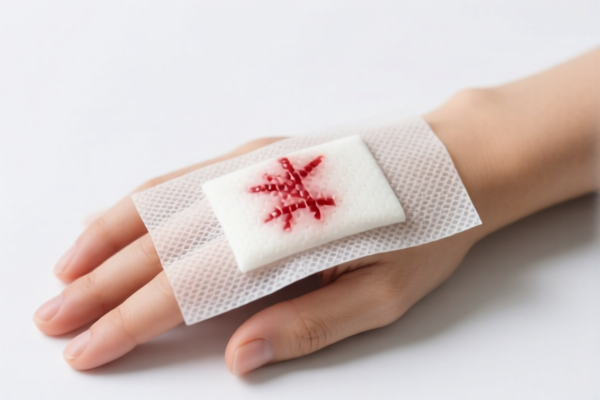
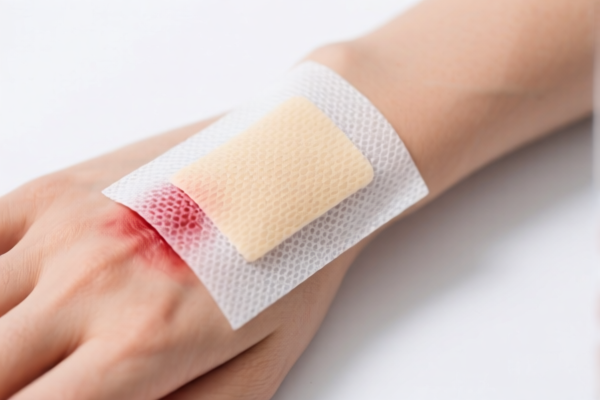
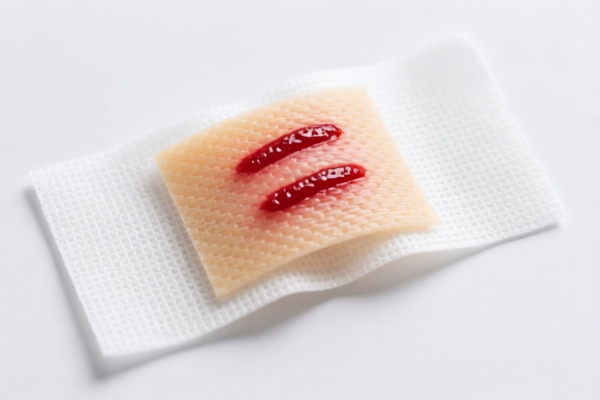
AI Analysis
🩹 Wound Spray (Medical/Hygiene Product)
🌐 HS Code Reference & Customs Clearance Guide | 2026 Latest Tariff Analysis | Professional Compliance Strategy
📌 Part 1: Product Definition & Classification – Do You Really Know "Wound Spray"?
Wound Spray is a topical preparation primarily used for the care, cleaning, or treatment of minor cuts, abrasions, and surgical wounds. In international trade, it is typically classified based on its primary function: * Pharmaceutical Product: If it contains active medicinal ingredients intended for therapeutic purposes (e.g., antiseptics, anesthetics, healing agents). * Dressing/敷料: If it functions primarily as a physical barrier, coating, or adhesive layer for wound coverage. * Cosmetic/Toiletry: If it is marketed for general hygiene or superficial skin care without therapeutic claims.
⚠️ Key Distinction Point:
- If the product has medicinal/therapeutic properties (kills bacteria, promotes healing) → It falls under Chapter 30 (Pharmaceuticals) or Chapter 30 (Dressings with Pharmaceutical Coating).
- If the product is for general hygiene/cleaning only (e.g., plain saline or mild antiseptic for general use) → It may fall under Chapter 33 (Perfumes/Cosmetics) or Chapter 38/32 (Miscellaneous Chemicals), but often still requires medical classification if intended for wounds.
📦 Part 2: HS Code Classification Details (2026 Latest Tariff Authority Comparison)
Based on the provided data, here are the four possible HS Codes for "Wound Spray" in the US market, along with their specific logic and tax implications.
| HS Code | Product Description | Application Logic | Tax Rate (China Origin) |
|---|---|---|---|
3005.10.10.00 |
Dressings, impregnated with pharmaceuticals or put up for retail sale for medical/surgical use | Matches "Wound Spray" by inferring its use for medical/surgical purposes. The spray form fits the "impregnated/coated" logic for wound coverage materials. | 10.0% |
3005.90.10.00 |
Other dressings, pads, etc., put up for retail sale | Infers that wound spray usually contains medicinal ingredients for medical use (wound treatment). Fits the "pharmaceutical-coated" logic with no material conflict. | 10.0% |
3004.90.92.44 |
Medicaments consisting of mixed or unmixed products | Matches via product name "Wound Spray" implying therapeutic use for wounds. Falls under "Dermatological Pharmaceuticals & Local Anesthetics." No material conflict. | 10.0% |
3307.90.00.00 |
Other perfumed or cosmetic preparations | Infers wound spray as a toiletry/medical care preparation. Fits "Other perfumes, cosmetics, or toilet preparations." Assumes material is liquid spray. | 40.4% |
🔍 Critical Reminder:
- Most Likely Classification:3005.10.10.00or3004.90.92.44(Both 10%) if the product has clear medical/therapeutic claims.
- Risk Classification:3307.90.00.00(40.4%) if the product is marketed as a cosmetic or general hygiene item without clear medical drug claims.
- Material Conflict Check: All options state "No Material Conflict," meaning the physical state (liquid spray) does not exclude any category, but the intended use determines the final code.
💰 Part 3: 2026 Latest Tariff Rate Details (Including Additional Taxes, Policy Surcharges)
✅ Applicable Country: United States (US)
✅ Country of Origin: China (CN)
✅ Effective Date: From November 10, 2025 (including subsequent imports)
🎯 1. 3005.10.10.00 —— Dressings, impregnated with pharmaceuticals (Medical)
| Item | Content |
|---|---|
| Base Tariff | 0.0% |
| Section 301 (Added Tariff) | 0.0% (Note: Specific footnote not listed in data, but base is 0) |
| IEEPA (122 Section) Tariff | +10.0% |
| Total Tariff Rate | 10.0% |
| Tax Calculation | CIF Value × 10.0% |
| De Minimis Exemption | ❌ Not Applicable (Standard for medical/pharma goods) |
| Legal Basis Path | IEEPA: 122 Section → USITC: 3005.10.10.00 |
📌 Explanation:
- This is the standard rate for medical dressings containing pharmaceutical agents.
- The 10% IEEPA tariff applies to Chinese-origin goods under this specific provision.
- No additional 301 tariff is listed for this specific subheading in the provided data, resulting in a relatively moderate 10% total duty.
🎯 2. 3005.90.10.00 —— Other Dressings (Medical)
| Item | Content |
|---|---|
| Base Tariff | 0.0% |
| Section 301 (Added Tariff) | 0.0% |
| IEEPA (122 Section) Tariff | +10.0% |
| Total Tariff Rate | 10.0% |
| Tax Calculation | CIF Value × 10.0% |
| De Minimis Exemption | ❌ Not Applicable |
| Legal Basis Path | IEEPA: 122 Section → USITC: 3005.90.10.00 |
📌 Note:
- Similar to3005.10.10.00, this code covers other medical dressings.
- The total tariff is also 10%.
- Classification depends on whether the spray is considered "impregnated" (3005.10) or "other" (3005.90).
🎯 3. 3004.90.92.44 —— Medicaments (Pharmaceutical)
| Item | Content |
|---|---|
| Base Tariff | 0.0% |
| Section 301 (Added Tariff) | 0.0% |
| IEEPA (122 Section) Tariff | +10.0% |
| Total Tariff Rate | 10.0% |
| Tax Calculation | CIF Value × 10.0% |
| De Minimis Exemption | ❌ Not Applicable |
| Legal Basis Path | IEEPA: 122 Section → USITC: 3004.90.92.44 |
📌 Interpretation:
- This code is for medicaments (drugs) not elsewhere specified.
- If the wound spray is clearly a drug (e.g., contains lidocaine, silver sulfadiazine, etc.), this is the correct code.
- Total tariff remains 10%.
🎯 4. 3307.90.00.00 —— Other Perfumed/Cosmetic Preparations (Hygiene/Non-Therapeutic)
| Item | Content |
|---|---|
| Base Tariff | 5.4% |
| Section 301 (Added Tariff) | +25.0% |
| IEEPA (122 Section) Tariff | +10.0% |
| Total Tariff Rate | 40.4% |
| Tax Calculation | CIF Value × 40.4% |
| De Minimis Exemption | ❌ Not Applicable |
| Legal Basis Path | IEEPA: 122 Section → USITC: 3307.90.00.00 → USITC Footnote 301: 25% |
📌 Warning:
- This is the highest risk classification.
- If Customs determines the product is not a medical drug/dressing but a cosmetic/toiletry (e.g., "antibacterial spray for general skin hygiene"), it falls here.
- Total Tax: 40.4% (5.4% Base + 25% Section 301 + 10% IEEPA).
- Why so high? Because it triggers both the 25% Section 301 tariff (common for many Chinese goods in Chapter 33) and the 10% IEEPA tariff.
🛠️ Part 4: Customs Clearance Practical Advice (Pitfall Avoidance Guide)
✅ 1. Preparation Checklist (Essential Documents)
| Document | Required | Explanation |
|---|---|---|
| ✅ Product Label & Marketing Material | ✔️ | Must clearly state intended use: "For Medical Use," "Antiseptic," or "Cosmetic." |
| ✅ Ingredient List (INCI) | ✔️ | Distinguish between medicinal ingredients (e.g., Chlorhexidine) vs. cosmetic bases. |
| ✅ Clinical/Pharmacological Data | ✔️ | To prove therapeutic effect if claiming 3004 or 3005. |
| ✅ FDA Registration (if applicable) | ✔️ | For medical devices/drugs, FDA clearance is often required for import. |
| ✅ Commercial Invoice | ✔️ | Describe as "Wound Care Spray, Pharmaceutical Grade" or "Antiseptic Solution." |
| ✅ Certificate of Origin (CO) | ✔️ | To verify China origin and apply correct IEEPA/301 tariffs. |
✅ 2. Declaration Strategy (Key Tips)
🔥 "Medical Claim = Lower Tax; Cosmetic Claim = Higher Tax!"
| Scenario | Correct Declaration | Risk |
|---|---|---|
| Product with Antiseptic/Medical Claim | 3005.10.10.00 or 3004.90.92.44 |
Safe (10%). Provide proof of therapeutic function. |
| Product for General Hygiene/No Medical Claim | 3307.90.00.00 |
High Cost (40.4%). Avoid medical claims if using this code. |
| Ambiguous Product | Pre-Ruling Application | Best Practice. Apply for Advance Ruling from CBP to confirm HS Code. |
📌 Critical Note:
- Do not use "Wound Spray" alone in the description.
- Use precise terms: "Pharmaceutical Wound Antiseptic Spray" vs. "General Skin Cleansing Spray."
- If the product contains active drugs, it must be declared under Chapter 30 (3004/3005). Misdeclaring as3307can lead to seizure and fines.
✅ 3. Special Circumstances
| Situation | Handling Advice |
|---|---|
| OEM/White Label | Ensure the brand owner provides the correct intended use documentation. |
| Combined Products (Spray + Bandage) | Declare as a set. If the spray is the primary function, use 3005. |
| Imported from Third Country | If re-exported from Vietnam/Malaysia, check for origin rules to avoid IEEPA/301 tariffs. |
| FDA-Regulated | Ensure FDA Prior Notice and Drug Listing are completed before shipment. |
🌍 Part 5: Global Market Comparison (2026 Latest)
| Country/Region | Recommended HS Code | Tariff (China Origin) | Certification | Notes |
|---|---|---|---|---|
| 🇺🇸 USA | 3005.10.10.00 or 3004.90.92.44 |
10% (IEEPA only) | FDA + NADA | High risk if misclassified as Cosmetic (40.4%). |
| 🇪🇺 EU | 3004.90 or 3005.90 |
0% - 6.5% | CE Mark (MedDev) | Varies by medical device classification. |
| 🇬🇧 UK | 3004.90 or 3005.90 |
0% - 6.5% | MHRA Registration | Post-Brexit rules apply. |
| 🇯🇵 Japan | 3004.90 or 3005.90 |
0% - 6% | PMDA Approval | Strict medical claim verification. |
📌 Conclusion:
- USA is the most tariff-sensitive market for this product due to the IEEPA 10% and potential 301 25% tariffs.
- Correct Classification is Critical: Getting it wrong from3005(10%) to3307(40.4%) can increase costs by 300%.
- China Origin: Always expect the 10% IEEPA tariff for medical goods from China.
📌 Part 6: Common Errors & Pitfall Guide (Lessons Learned)
❌ Error 1: Declaring a Medicinal Spray as 3307.90.00.00 (Cosmetic)
👉 Consequence: 40.4% Tax instead of 10%. Overpayment of ~30%. Also, FDA Non-Compliance risk.
❌ Error 2: Using "Wound Spray" without specifying Active Ingredients
👉 Consequence: Customs may hold the shipment for classification review, causing delays.
❌ Error 3: Ignoring IEEPA 122 Section Tariff
👉 Consequence: Underpayment of 10% on all Chapter 30/33 goods from China.
❌ Error 4: Mixing Medical Claims with Cosmetic Packaging
👉 Consequence: Customs may classify as Cosmetic (3307) if medical proof is weak, leading to higher tax.
✅ Correct Practice:
"Antiseptic Wound Spray, Contains Chlorhexidine 0.05%, For Medical Use, FDA Listed, Model XYZ"
🎯 Part 7: Conclusion – Professional Declaration Saves Money!
🎯 Remember the Golden Rule:
🔹 "Medical Use = 10% Tax; Cosmetic Use = 40.4% Tax."
🔹 "Declare Function, Not Just Form."
🔹 "IEEPA 10% Applies to All Chinese Origin Medical Goods."
📌 Pro Tip:
If your product has both medical and cosmetic uses, consider separate SKUs or apply for a CBP Advance Ruling.
For US Market, ensure FDA Registration is complete to avoid import bans.
📣 Immediate Action:
📞 Consult a Licensed Customs Broker
📄 Provide Ingredient List + Intended Use Statement
🚀 Ensure Compliance, Avoid Penalties, Maximize Profit!
✨ Professional Clearance Starts with Accurate Classification!
💼 Every Cent Saved is a Cent Earned!
Customer Reviews
About HS Code Classification
The Harmonized System (HS) is an internationally standardized nomenclature developed by the World Customs Organization (WCO) to classify traded products. Over 200 countries use the HS system as the basis for customs tariffs, trade statistics, and import/export regulations.
Each HS code follows a hierarchical structure:
- Chapter (2 digits) — Broad category of goods (e.g., Chapter 84: Machinery and Mechanical Appliances)
- Heading (4 digits) — More specific grouping within the chapter
- Subheading (6 digits) — Internationally standardized breakdown, used by all WCO member countries
- National subdivisions (8-10 digits) — Country-specific extensions for further classification, such as US HTSUS 10-digit codes
Correct HS code classification is essential for smooth customs clearance, accurate duty payment, and compliance with trade regulations. Misclassification can lead to customs delays, overpayment of duties, or penalties.
When importing from CN to US, the applicable tariff rates may include:
- Most-Favored-Nation (MFN) rate — The standard duty rate applied to WTO members
- General rate — Applied to countries without trade agreements
- Trade remedy duties — Additional tariffs such as Section 301 (anti-dumping), Section 232 (national security), or countervailing duties
The information provided on this page is for reference purposes only. For official classification, please consult with your local customs authority or a licensed customs broker.