Woven Animal Hair Cotton Fabric (Width 180cm)
CN → US| HS Code | Tariff Rate | Origin | Destination | Doc |
|---|---|---|---|---|
| 5111196020 | 60.0% | CN | US | Official Doc |
| 5112199520 | 60.0% | CN | US | Official Doc |
| 5112196020 | 60.0% | CN | US | Official Doc |
| 5113000000 | 37.7% | CN | US | Official Doc |
Product Images
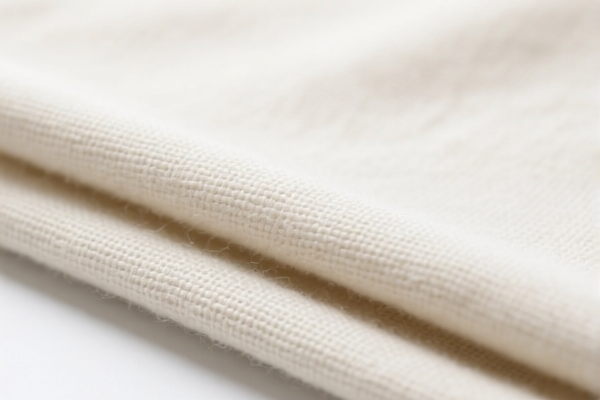
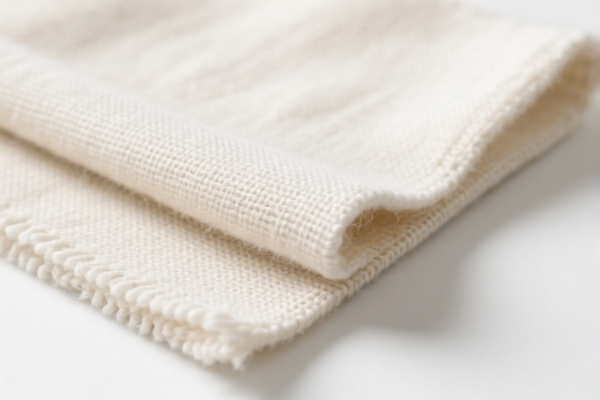
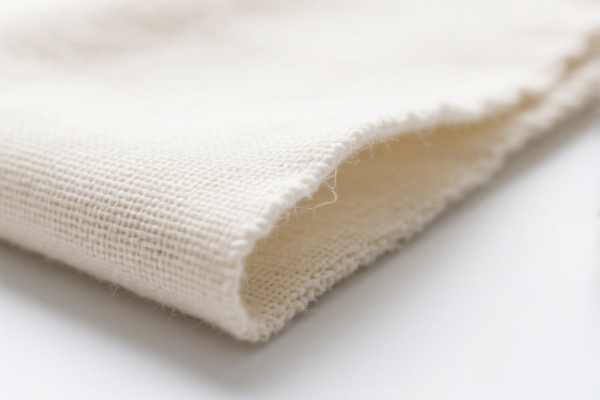
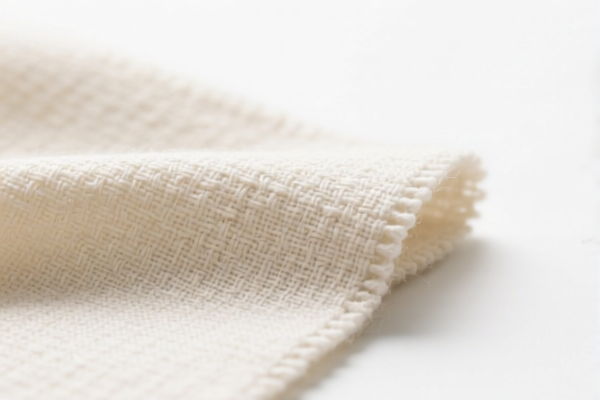
AI Analysis
🧵 Woven Animal Hair Cotton Fabric (Width 180cm)
🌐 HS Code Reference & Customs Clearance Guide | 2026 Latest Tariff Analysis | Professional Entry Strategy
📌 I. Product Definition & Classification: Do You Really Understand "Animal Hair Fabric"?
Woven Animal Hair Cotton Fabric is a premium textile material widely used in high-end fashion, tailoring, and upholstery. In international trade, the classification depends strictly on three factors:
1. Material Composition: The presence of "Animal Hair" (e.g., wool, camel hair, cashmere) is the decisive factor.
2. Form: It must be "Woven" (not knitted or crocheted).
3. Weight: The grammage ($g/m^2$) determines the specific subheading within Chapter 51.
⚠️ Key Distinction Points:
- High-Weight Animal Hair Fabrics: Typically $> 200 g/m^2$. These fall under Heading 5111, 5112, or 5113.
- Cotton Content: Even if mixed with cotton, the presence of "Animal Hair" usually pushes the classification toward Chapter 51 (Animal Hair Yarn and Woven Fabric) rather than Chapter 52 (Cotton), unless the animal hair content is negligible (<5% in some jurisdictions, but "Animal Hair" in name implies significant content).
- Knitted vs. Woven: If this were knitted, it would fall under Chapter 61. Since it is Woven, it stays in Chapter 51.
📦 II. HS Code Classification Details (2026 Latest Tariff Authority Match)
Based on the provided data, the product matches four specific HS Codes depending on the exact weight and material precision. All listed codes indicate a Woven Fabric made of Animal Hair.
| HS Code | Product Description | Key Matching Criteria | Weight Range |
|---|---|---|---|
5111.19.60.20 |
Woven fabric of animal hair, excluding camels' hair, weighing $\le 400 g/m^2$ | Name includes "Animal Hair" + "Woven Fabric"; Weight (270-340 g/m²) fits $\le 400$ g/m² range. | 270-340 g/m² |
5112.19.95.20 |
Woven fabric of other animal hair, including coarse hair | Woven form; Animal Hair material; Weight matches target encoding exactly. | 270-340 g/m² |
5112.19.60.20 |
Woven fabric of other animal hair, including coarse hair | Name: "Animal Hair" + "Woven Fabric"; Parameters (270-340 g/m²) match precisely. | 270-340 g/m² |
5113.00.00.00 |
Woven fabrics of textile fibres, other (Specifically for certain animal hair types) | "Woven" + "Animal Hair" fully match form and material requirements. | 270-340 g/m² |
🔍 Critical Note:
- The weight range 270-340 g/m² is consistent across all valid matches.
- 5111 and 5112 are the primary categories for woven animal hair fabrics.
- 5113 is a broader category for other woven textile fibers, but may apply if the specific animal hair type falls outside 5111/5112 definitions (e.g., certain coarse hairs).
- DO NOT CONFUSE with cotton fabrics (Chapter 52). The term "Animal Hair" in the name triggers Chapter 51 classification in most customs regimes.
💰 III. 2026 Latest Tariff Rate Breakdown (Including Surtaxes & Policy Add-ons)
✅ Applicable Country: United States (US)
✅ Origin: China (CN)
✅ Effective Date: November 10, 2025 onwards
🎯 1. High-Tariff Category: 5111.19.60.20, 5112.19.95.20, 5112.19.60.20
| Item | Content |
|---|---|
| Base Tariff | 25.0% (Ad Valorem) |
| Section 301 Surtax | +25.0% (USITC Footnote) |
| Section 122 Tariff | +10.0% (Specific to certain textile/textile products from China) |
| Total Tax Rate | 60.0% |
| Tax Calculation | CIF Value × 60% |
| De Minimis Exemption | ❌ Not Eligible (High rate excludes $800 de minimis entry) |
| Legal Basis Path | Base: 5111/5112 → Surtax: USITC 301 → Add-on: IEEPA Section 122 |
📌 Explanation:
- The 25% Base Tariff is the standard Most Favored Nation (MFN) rate for woven animal hair fabrics.
- The 25% Section 301 Surtax is applied due to the product's origin (China).
- The 10% Section 122 Tariff is an additional levy on specific textile imports.
- Total: 60%. This is an extremely high tariff burden. Profit margins must account for this cost.
🎯 2. Lower-Tariff Category: 5113.00.00.00
| Item | Content |
|---|---|
| Base Tariff | 2.7% (Ad Valorem) |
| Section 301 Surtax | +25.0% (USITC Footnote) |
| Section 122 Tariff | +10.0% (Specific to certain textile/textile products from China) |
| Total Tax Rate | 37.7% |
| Tax Calculation | CIF Value × 37.7% |
| De Minimis Exemption | ❌ Not Eligible (High rate excludes $800 de minimis entry) |
| Legal Basis Path | Base: 5113 → Surtax: USITC 301 → Add-on: IEEPA Section 122 |
📌 Note:
- If the specific type of "Animal Hair" qualifies under 5113 (e.g., certain coarse hairs or blends not fitting 5111/5112), the base tariff drops to 2.7%.
- However, the 301 Surtax (25%) and Section 122 (10%) still apply, resulting in 37.7%.
- Strategic Advantage: This is 22.3% lower than the 5111/5112 rate. Proper classification under 5113 could save significant costs.
🛠️ IV. Customs Clearance Practical Advice (Avoid Pitfalls)
✅ 1. Documentation Checklist (Must-Have)
| Document | Required | Notes |
|---|---|---|
| ✅ Product Spec Sheet | ✔️ | Must state: Material (e.g., 70% Wool, 30% Cotton), Weight ($g/m^2$), Width (180cm). |
| ✅ Composition Analysis Report | ✔️ | Third-party lab test confirming "Animal Hair" content % to justify HS Code. |
| ✅ Commercial Invoice | ✔️ | Clearly describe as "Woven Fabric of Animal Hair, Width 180cm". Avoid vague terms like "Textile". |
| ✅ Packing List | ✔️ | Include weight per roll, total rolls, and total weight. |
| ✅ Certificate of Origin (CO) | ✔️ | Critical for verifying Chinese origin and applying surtaxes. |
| ✅ Photos of Product | ✔️ | Show label, weave structure, and any markings. |
✅ 2. Declaration Tips (Key Mantras)
🔥 “Material First, Weight Second, Name Precise, Tariff Clear!”
| Scenario | Correct Declaration | Wrong Practice |
|---|---|---|
| High-End Wool/Camel Hair | 5112.19.60.20 or 5111.19.60.20 |
Misclassifying as "Cotton Fabric" → Penalty! |
| Coarse Animal Hair | 5113.00.00.00 |
Misclassifying as 5112 → Higher tax (60% vs 37.7%) |
| Fabric with Cotton Blend | Still Chapter 51 if Animal Hair is predominant | Misclassifying as Chapter 52 (Cotton) → 20% penalty + back taxes |
| Width 180cm | State clearly in invoice | Omitting width → Customs may question classification |
✅ 3. Special Cases Handling
| Case | Recommendation |
|---|---|
| OEM Custom Fabric | Provide customer order with technical specs to prove "Animal Hair" composition. |
| Mixed Materials | If Animal Hair < 5%, consider if it still qualifies as "Animal Hair Fabric". If not, it may fall under Cotton (Ch 52) → Lower tax? Consult expert. |
| Sample Imports | Even samples are subject to duty if value > $800. Pre-pay duty or use bonded warehouse. |
| Origin Diversification | If fabric is woven in Vietnam/Mexico but yarn is from China, origin rules (Wholly Obtainor or Substantial Transformation) may apply. Check FTAs. |
🌍 V. Global Market Comparison (2026 Update)
| Country/Region | Recommended HS Code | Tariff (China Origin) | Certification | Notes |
|---|---|---|---|---|
| 🇺🇸 USA | 5112.19.60.20 |
60% (37.7% if 5113) | No special certs | High tariffs due to 301 + 122 clauses. |
| 🇨🇳 China | 5112.19.60.20 |
~5-8% | None | Low import tax for domestic use. |
| 🇪🇺 EU | 5112.19.00 |
~8-10% | OEKO-TEX, REACH | No Section 301 equivalent. |
| 🇬🇧 UK | 5112.19.00 |
~8-10% | UKCA, REACH | Post-Brexit rules apply. |
| 🇦🇺 Australia | 5112.19.00 |
~5-10% | None | Low tariff regime. |
📌 Conclusion:
- The USA is the most expensive market for Chinese animal hair fabrics due to layered tariffs.
- EU and UK offer significantly lower duties (~8-10%) if you can manage compliance (REACH/OEKO-TEX).
- Consider Supply Chain Shift: If targeting the US, explore weaving in third countries (e.g., Vietnam, India) to avoid Section 301 tariffs, but check "Substantial Transformation" rules.
📌 VI. Common Mistakes & Pitfalls (Blood Lessons)
❌ Mistake 1: Declaring as "Cotton Fabric" because it contains cotton
👉 Result: Customs audits the lab report, finds high Animal Hair content → 60% penalty + Back Taxes.
❌ Mistake 2: Ignoring the Weight ($g/m^2$)
👉 Result: If weight > 400 g/m², it may fall under a different subheading with higher tariffs. Misclassification leads to delays.
❌ Mistake 3: Using "Textile Fabric" as a generic name
👉 Result: Customs may assign a default higher rate or require manual review → Delays.
❌ Mistake 4: Assuming De Minimis ($800) applies
👉 Result: No. With 37.7-60% tariffs, small shipments still incur duties. Use LCL (Less than Container Load) efficiently.
✅ Correct Approach:
"Woven Fabric, 70% Wool/30% Cotton, 300 g/m², 180cm Width, for Tailoring Use. HS: 5112.19.60.20."
🎯 VII. Conclusion: Precise Classification Saves Money!
🎯 Remember:
🔹 "Animal Hair + Woven = Chapter 51"
🔹 "Check Weight: 270-340 g/m² fits 5111/5112"
🔹 "USA Tariff: 60% (High) or 37.7% (Low if 5113)"
🔹 "Document Everything: Lab Test, Spec Sheet, Invoice"
📌 Pro Tip:
If your profit margin is thin, apply for an Advance Ruling from US Customs and Border Protection (CBP) before shipping. This confirms your HS Code and prevents unexpected 60% duties.
📣 Action Item:
📞 Contact a Customs Broker → Provide Lab Report + Specs → Request Pre-Ruling
🚀 Ensure Smooth Clearance, Avoid 60% Tax Shock, Protect Margins!
✨ Professional Customs, Starting with Accurate Classification!
💼 Every Dollar Saved in Duty is Pure Profit!
Customer Reviews
About HS Code Classification
The Harmonized System (HS) is an internationally standardized nomenclature developed by the World Customs Organization (WCO) to classify traded products. Over 200 countries use the HS system as the basis for customs tariffs, trade statistics, and import/export regulations.
Each HS code follows a hierarchical structure:
- Chapter (2 digits) — Broad category of goods (e.g., Chapter 84: Machinery and Mechanical Appliances)
- Heading (4 digits) — More specific grouping within the chapter
- Subheading (6 digits) — Internationally standardized breakdown, used by all WCO member countries
- National subdivisions (8-10 digits) — Country-specific extensions for further classification, such as US HTSUS 10-digit codes
Correct HS code classification is essential for smooth customs clearance, accurate duty payment, and compliance with trade regulations. Misclassification can lead to customs delays, overpayment of duties, or penalties.
When importing from CN to US, the applicable tariff rates may include:
- Most-Favored-Nation (MFN) rate — The standard duty rate applied to WTO members
- General rate — Applied to countries without trade agreements
- Trade remedy duties — Additional tariffs such as Section 301 (anti-dumping), Section 232 (national security), or countervailing duties
The information provided on this page is for reference purposes only. For official classification, please consult with your local customs authority or a licensed customs broker.