Woven Bag Accessories
CN → USProduct Images
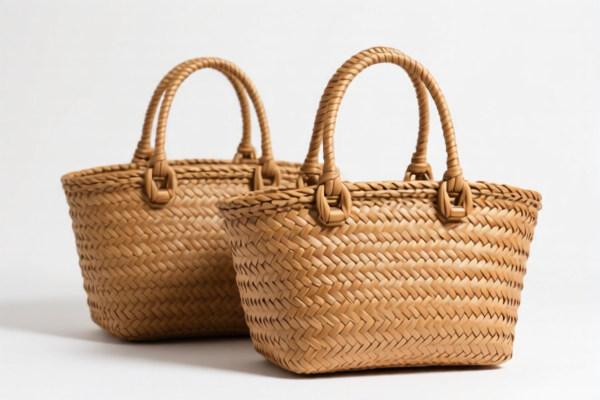

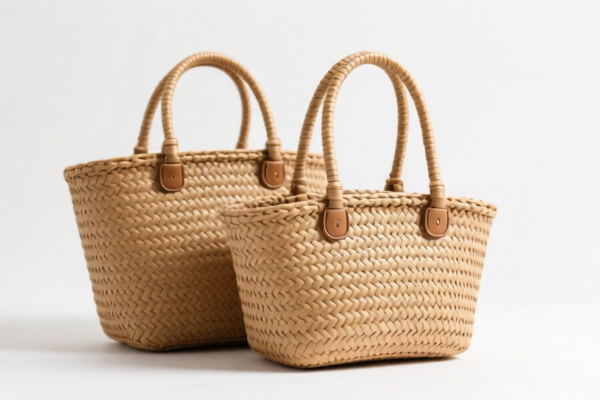
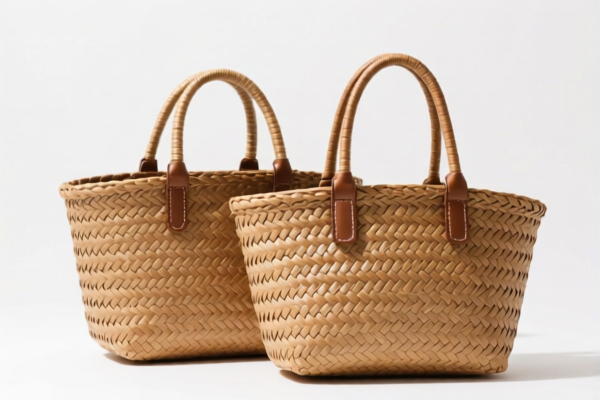
AI Analysis
🛍️ Woven Bag Accessories (Sacks & Bags of Plastics or Textile Materials)
🌐 HS Code Reference & Clearance Guide | 2026 Latest Tariff Analysis | Professional Clearance Strategy
📌 I. Product Definition & Classification: What Exactly Are "Woven Bag Accessories"?
In international trade, "Woven Bag Accessories" is a broad term that requires precise classification based on the material, construction, and specific components being imported. These are not just generic items but specialized components for industrial packaging, agriculture, or construction.
The classification primarily falls under Chapter 63 (Other made up textile articles) or Chapter 39 (Plastics), depending on whether the bag itself is textile-based or plastic-based.
Key Distinctions: * Woven Polypropylene (PP) Bags: Common for cement, feed, and fertilizer. * Woven Fabric Bags (Textile): Made from jute, cotton, or synthetic fibers. * Loops/Handles/Sewing Threads: Often considered "accessories" or "parts" depending on whether they are classified as "made up articles" or "parts."
⚠️ Critical Classification Point:
- If the item is a finished bag (even if empty) → It is a "Sack or Bag."
- If the item is loops, handles, or sewing threads sold separately → They may be classified as "Parts" or "Other Textile Articles."
- Do not classify simple woven rolls of fabric as "bags" if they are not yet made up.
📦 II. HS Code Classification Details (2026 Latest Tariff Authority Comparison)
| HS Code | Product Description | Application Scenario | Material Type |
|---|---|---|---|
6305.33.19.00 |
Sacks and bags, of polyethylene or polypropylene strip, n.e.s. | Industrial PP woven bags (e.g., for cement, sand) | Plastic/Polymer |
6305.39.29.00 |
Sacks and bags, of textile materials, n.e.s. | Jute bags, cotton woven sacks, composite bags | Textile/Fiber |
6307.90.98.15 |
Other made up textile articles (includes loops/handles if not part of a bag) | Separate PP loops, fabric handles, sewing threads | Textile/Accessory |
3923.29.00.20 |
Sacks and bags, of plastics, other | Less common plastic woven bags not covered by 6305 | Plastic |
5407.42.00.00 |
Woven fabric of synthetic filaments (if importing fabric rolls, not bags) | Raw woven material before bag making | Fabric/Raw |
🔍 Key Reminder:
-6305is the most common chapter for imported "woven bags."
- If importing loops, handles, or straps separately, they often fall under6307.90(Other made up articles) or specific textile chapters, not under bag headings.
- Composite bags (e.g., paper inside, plastic outside) are often classified by the outermost layer or by specific rules in Chapter 63.
💰 III. 2026 Latest Tariff Rate Details (Including Additional Taxes & Policy Add-ons)
✅ Applicable Country: United States (US)
✅ Country of Origin: China (CN)
✅ Effective Date: November 10, 2025 onwards (for subsequent imports)
🎯 1. 6305.33.19.00 —— Sacks/Bags of Polyethylene/Polypropylene (PP)
| Item | Content |
|---|---|
| Base Rate | 3.2% (ad valorem) |
| USITC Additional Tax | +25% (Section 301 Duty) |
| IEEPA Additional Tax | +10% (China/HK products, effective Nov 2025) |
| Total Rate | 38.2% |
| Tax Calculation | CIF Value × 38.2% |
| De Minimis Eligibility | ❌ Not Eligible (deny_de_minimis) |
| Legal Basis Path | IEEPA:9903.01.25 → IEEPA:9903.01.24 → USITC:6305.33.19.00 → FOOTNOTE:9903.88.01 |
📌 Explanation:
- PP woven bags are heavily taxed due to their strategic importance in industrial packaging.
- The 38.2% total rate is significant and must be factored into your FOB/CIF pricing.
- No de minimis exemption: Even small shipments (under $800) are subject to this duty.
🎯 2. 6305.39.29.00 —— Sacks/Bags of Textile Materials (Jute/Cotton)
| Item | Content |
|---|---|
| Base Rate | 3.5% (ad valorem) |
| USITC Additional Tax | +25% (Section 301 Duty) |
| IEEPA Additional Tax | +10% (China/HK products, effective Nov 2025) |
| Total Rate | 38.5% |
| Tax Calculation | CIF Value × 38.5% |
| De Minimis Eligibility | ❌ Not Eligible (deny_de_minimis) |
| Legal Basis Path | IEEPA:9901.25 → IEEPA:9903.01.24 → USITC:6305.39.29.00 → FOOTNOTE:9903.88.01 |
📌 Note:
- Jute and cotton woven bags are also subject to the same high additional duties.
- Even if the bag is made from "natural" fibers, if it is woven and used for industrial purposes, it often falls under this high-duty category when sourced from China.
🎯 3. 6307.90.98.15 —— Other Made Up Textile Articles (Loops, Handles)
| Item | Content |
|---|---|
| Base Rate | 7.5% (ad valorem) |
| USITC Additional Tax | +25% (Section 301 Duty) |
| IEEPA Additional Tax | +10% (China/HK products, effective Nov 2025) |
| Total Rate | 42.5% |
| Tax Calculation | CIF Value × 42.5% |
| De Minimis Eligibility | ❌ Not Eligible (deny_de_minimis) |
| Legal Basis Path | IEEPA:9903.01.25 → IEEPA:9903.01.24 → USITC:6307.90.98.15 → FOOTNOTE:9903.88.01 |
📌 Warning:
- Loops and handles are often mistakenly classified as "parts of bags" with lower duties, but US customs often classifies them as "other made up articles" with higher base rates.
- 42.5% is one of the highest rates for textile accessories. Double-check if these can be bundled or classified differently.
🛠️ IV. Clearance Practical Advice (实战避坑指南)
✅ 1. Preparation Checklist (No Documents Missing)
| Document | Mandatory? | Description |
|---|---|---|
| ✅ Product Specification Sheet | ✔️ | Includes material (PP/Jute/Cotton), dimensions, weight capacity |
| ✅ Photos of Product & Label | ✔️ | Clear view of woven texture, loops, handles, and any brand marks |
| ✅ Commercial Invoice | ✔️ | Must specify "Woven Bag" or "Textile Accessory" clearly, not just "Bag" |
| ✅ Packing List | ✔️ | Must list net/gross weight and quantity |
| ✅ Certificate of Origin (CO) | ✔️ | Required to prove origin; helps in tariff calculation |
| ✅ FCC/CE/RoHS (if applicable) | ❌ | Usually not required for simple woven bags, but check if they have electronic components (e.g., RFID tags) |
✅ 2. Declaration Tips (Key Mantra)
🔥 “Material First, Use Second, Loops Separate, Tax Drops!”
| Scenario | Correct Declaration | Incorrect Practice |
|---|---|---|
| PP Woven Bags | 6305.33.19.00 |
Misclassified as "Plastic Bags" (Ch 39) → Higher tax |
| Jute Bags | 6305.39.29.00 |
Misclassified as "Paper Bags" → Wrong Chapter |
| Loops/Handles | 6307.90.98.15 |
Bundled with bags as "1 item" → Customs may split and tax both |
| Fabric Rolls | 5407.42.00.00 |
Declared as "Finished Bags" → Incorrect |
✅ 3. Special Case Handling
| Situation | Handling Advice |
|---|---|
| OEM Custom Bags | Provide design drawings and customer PO to prove they are custom-made, not generic. |
| Bags with Lining | If lined with plastic or fabric, declare based on the outermost layer or composite rules in Chapter 63. |
| Composite Bags (Paper+Plastic) | Often classified under 6305 if the outer layer is plastic/textile. Provide layer-by-layer breakdown. |
| Small Sample Shipments | Even for samples, the 38-42% duty applies. Do not use "Gift" or "Free Sample" to evade duty. |
🌍 V. Global Market Clearance Comparison (2026 Latest)
| Country/Region | Recommended HS Code | Duty Rate (China Origin) | Certification Requirement | Notes |
|---|---|---|---|---|
| 🇺🇸 USA | 6305.33.19.00 |
38.2% | No specific cert. | High tariff due to Section 301 + IEEPA. |
| 🇨🇳 China | 6305.33.19.00 |
10% | None | Lower duty, no additional taxes. |
| 🇪🇺 EU | 6305.33 |
6.5% | REACH (if plastic additives) | Standard MFN rate. |
| 🇦🇺 Australia | 6305.33.00.00 |
5% | No specific cert. | Low duty, GST applies. |
| 🇯🇵 Japan | 6305.33 |
15.0% | No specific cert. | Higher base rate, no additional taxes. |
📌 Conclusion:
- USA is the most expensive market for Chinese woven bags due to the 38.2% combined duty.
- EU, Australia, and China offer much lower rates.
- Consider supply chain diversification (e.g., sourcing from Vietnam or India) to avoid US Section 301 and IEEPA tariffs if exporting to the US.
📌 VI. Common Errors & Pitfalls Guide (Lessons Learned)
❌ Error 1: Declaring "Woven Bags" as "Plastic Packaging" (Chapter 39)
👉 Consequence: Wrong HS Code → Customs Audit + Penalty. PP woven bags are textile/plastic composites under Chapter 63.
❌ Error 2: Not separating Loops/Handles from Bags in Declaration
👉 Consequence: If declared as one item, customs may split them. Loops (6307) have a 42.5% duty vs. Bags (6305) at 38.2%. Misclassification leads to underpayment and back taxes.
❌ Error 3: Ignoring the "Made Up" vs. "Fabric" distinction
👉 Consequence: Declaring woven fabric rolls as "finished bags" is false declaration. Must declare as Fabric (5407 or 5513) if not yet made into bags.
❌ Error 4: Assuming De Minimis ($800) applies to Woven Bags
👉 Consequence: Denied. Woven bags are explicitly excluded from de minimis under IEEPA. Even small shipments are taxed.
✅ Correct Declaration Example:
"PP Woven Polypropylene Sacks, 50kg Capacity, Unlined, For Industrial Packaging, Model XYZ, 10,000 PCS"
🎯 VII. Conclusion: Precise Classification for Cost Control
🎯 Remember the Mantra:
🔹 "PP Bags 38%, Jute 38.5%, Loops 42.5%. Split items, avoid penalties!"
🔹 "No De Minimis, No Free Pass. Factor 40% duty into your FOB price!"
📌 Pro Tip:
If your bags are shipped from Vietnam, Indonesia, or Thailand, you may qualify for lower or zero IEEPA/Section 301 duties. Consider transshipment or third-country sourcing for US-bound orders.
Apply for Advance Rulings if your product structure is complex (e.g., composite materials).
📣 Take Action Now:
📞 Contact a licensed customs broker + Provide product photos + Request HS Code Advance Ruling
🚀 Clear customs smoothly, control costs, and boost your profit margins!
✨ Professional clearance starts with accurate classification!
💼 Every dollar saved on duty is pure profit!
Customer Reviews
About HS Code Classification
The Harmonized System (HS) is an internationally standardized nomenclature developed by the World Customs Organization (WCO) to classify traded products. Over 200 countries use the HS system as the basis for customs tariffs, trade statistics, and import/export regulations.
Each HS code follows a hierarchical structure:
- Chapter (2 digits) — Broad category of goods (e.g., Chapter 84: Machinery and Mechanical Appliances)
- Heading (4 digits) — More specific grouping within the chapter
- Subheading (6 digits) — Internationally standardized breakdown, used by all WCO member countries
- National subdivisions (8-10 digits) — Country-specific extensions for further classification, such as US HTSUS 10-digit codes
Correct HS code classification is essential for smooth customs clearance, accurate duty payment, and compliance with trade regulations. Misclassification can lead to customs delays, overpayment of duties, or penalties.
When importing from CN to US, the applicable tariff rates may include:
- Most-Favored-Nation (MFN) rate — The standard duty rate applied to WTO members
- General rate — Applied to countries without trade agreements
- Trade remedy duties — Additional tariffs such as Section 301 (anti-dumping), Section 232 (national security), or countervailing duties
The information provided on this page is for reference purposes only. For official classification, please consult with your local customs authority or a licensed customs broker.