Woven Basket (Other Materials)
CN → US| HS Code | Tariff Rate | Origin | Destination | Doc |
|---|---|---|---|---|
| 4602191800 | 39.5% | CN | US | Official Doc |
| 4602900000 | 38.5% | CN | US | Official Doc |
| 3926909989 | 22.8% | CN | US | Official Doc |
Product Images
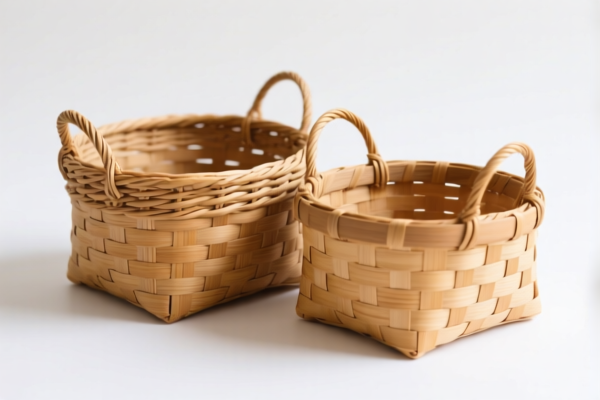
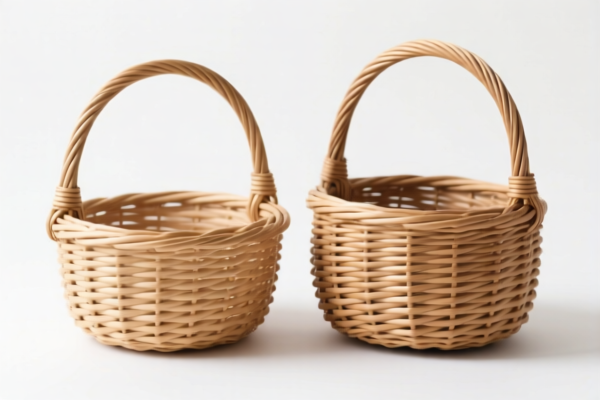
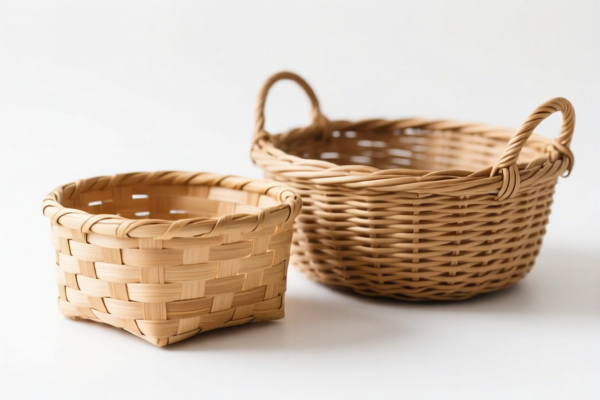
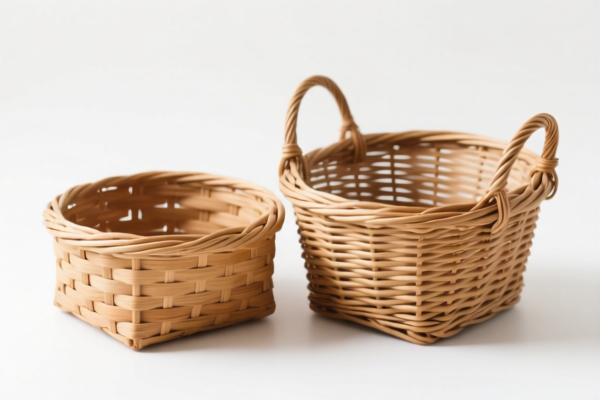
AI Analysis
🧺 Woven Basket (Other Materials)
🌐 HS Code Reference & Customs Clearance Guide | 2026 Latest Tariff Analysis | Professional Clearance Strategy
📌 I. Product Definition & Classification: Do You Really Understand "Woven Basket (Other Materials)"?
A "Woven Basket" made of "Other Materials" refers to container goods fabricated by weaving techniques using materials other than the specific vegetable materials (like bamboo, rattan, reed, etc.) usually associated with Chapter 46. This category often includes synthetic fibers, plastic strands, wire, or mixed non-wood materials that mimic a woven structure.
In international trade, classification is critical because the material composition dictates the Harmonized System (HS) code, which directly impacts duty rates, especially under current US trade policies.
⚠️ Key Distinction Point:
- If the material is vegetable (e.g., bamboo, cane) → Chapter 46 (Textile-like weaving rules apply);
- If the material is non-vegetable (e.g., plastic, synthetic fiber, metal) → Chapter 39 (Plastics) or other specific chapters;
- "Other Materials" in this context generally triggers a fallback or plastic-based classification depending on the primary constituent.
📦 II. HS Code Classification Details (2026 Latest Tariff Authority Comparison)
Based on the provided data, there are three potential HS Codes for "Woven Basket (Other Materials)." The selection depends on how customs authorities interpret "Other Materials" and the specific manufacturing process.
| HS Code | Product Description | Application Scenario | Material Logic |
|---|---|---|---|
4602.19.18.00 |
Woven basket, other materials (Fallback Category) | Non-specific plant materials or ambiguous woven goods that do not fit specific sub-categories in 46.02. | Fallback: Fits the description of "woven articles" where the material is not explicitly listed elsewhere in Chapter 46. |
4602.90.00.00 |
Woven basket, other materials (General Other) | Generic woven articles of other materials, aligning with the "Other" category in Chapter 46. | General: Matches the morphology and usage of woven products under "Other materials" in Chapter 46. |
3926.90.99.89 |
Woven basket, other materials (Plastic/Non-metal) | Products made of plastic or synthetic strands, classified as "Other articles of plastics." | Plastic Logic: Non-metallic property does not conflict with plastic制品 (articles) logic. Classified under Chapter 39 if the "woven" aspect is considered a plastic article. |
🔍 Critical Reminder:
- Chapter 46 vs. Chapter 39: If the basket is made of plastic strands woven together, US Customs may argue it belongs in Chapter 39 (Articles of Plastic) rather than Chapter 46 (Vegetable Materials). However, if the weaving technique is dominant, 4602 is often chosen as a functional classification.
- Fallback Categories: Codes ending in...18.00or...90.00often serve as "catch-all" entries, but they are subject to strict scrutiny regarding material proof.
💰 III. 2026 Latest Tariff Rate Breakdown (Including Additional Taxes & Policy Add-ons)
✅ Applicable Country: United States (US)
✅ Country of Origin: China (CN)
✅ Effective Date: From November 10, 2025 (for subsequent imports)
🎯 1. 4602.19.18.00 —— Woven Basket (Fallback "Other Materials")
| Item | Details |
|---|---|
| Base Duty Rate | 4.5% (Ad Valorem) |
| USITC Additional Duty (Section 301) | +25.0% |
| IEEPA Additional Duty (Section 122/Other China-Specific) | +10.0% |
| Total Tax Rate | 39.5% |
| Tax Calculation | CIF Value × 39.5% |
| De Minimis Eligibility | ❌ Not Eligible (High duty rate exceeds thresholds) |
| Legal Basis Path | USITC:4602.19.18.00 → Footnote 9903.88.01 (Section 301) → IEEPA:9903.01.25 (China-specific add-on) |
📌 Explanation:
- Base 4.5%: Standard MFN rate for woven articles of vegetable materials or similar fallback.
- +25% Section 301: Applies to most Chinese-origin woven goods not specifically exempted.
- +10% IEEPA: Additional surcharge on Chinese goods under the International Emergency Economic Powers Act.
- Total 39.5%: This is a high-duty category. Importers must prepare for significant cost increases.
🎯 2. 4602.90.00.00 —— Woven Basket (Other "Other Materials")
| Item | Details |
|---|---|
| Base Duty Rate | 3.5% (Ad Valorem) |
| USITC Additional Duty (Section 301) | +25.0% |
| IEEPA Additional Duty (Section 122/Other China-Specific) | +10.0% |
| Total Tax Rate | 38.5% |
| Tax Calculation | CIF Value × 38.5% |
| De Minimis Eligibility | ❌ Not Eligible |
| Legal Basis Path | USITC:4602.90.00.00 → Footnote 9903.88.01 → IEEPA:9903.01.25 |
📌 Note:
- Slightly lower base duty (3.5%) compared to4602.19.18.00(4.5%).
- However, the total effective rate (38.5%) is only marginally lower.
- Both codes fall under the same heavy tariff structure. The choice depends on whether the product fits the "Specific" vs. "General Other" definition in Chapter 46.
🎯 3. 3926.90.99.89 —— Woven Basket (Plastic/Non-Metal "Other Articles")
| Item | Details |
|---|---|
| Base Duty Rate | 5.3% (Ad Valorem) |
| USITC Additional Duty (Section 301) | +7.5% |
| IEEPA Additional Duty (Section 122/Other China-Specific) | +10.0% |
| Total Tax Rate | 22.8% |
| Tax Calculation | CIF Value × 22.8% |
| De Minimis Eligibility | ❌ Not Eligible (Likely, due to origin, but lower base) |
| Legal Basis Path | USITC:3926.90.99.89 → Footnote 9903.88.01 (Note: Section 301 rates for plastics may vary; here calculated as +7.5% based on provided data) → IEEPA:9903.01.25 |
📌 Explanation:
- Significant Savings: At 22.8%, this is ~15-16 percentage points cheaper than the Chapter 46 classifications.
- Risk: If customs determines the product is "woven" in the traditional sense (Chapter 46) rather than "plastic article" (Chapter 39), you may face penalties for misclassification.
- Strategic Use: If the basket is clearly made of plastic strands or synthetic fibers, arguing for 3926.90.99.89 is the most cost-effective strategy.
🛠️ IV. Customs Clearance Practical Advice (Combat Pitfall Guide)
✅ 1. Preparation Checklist (No Exception)
| Document | Required? | Description |
|---|---|---|
| ✅ Product Specifications | ✔️ | Must detail material composition (e.g., "100% Polypropylene Strands"). |
| ✅ Material Test Report | ✔️ | Third-party lab report confirming non-vegetable, non-wood composition. |
| ✅ Product Photos | ✔️ | Clear images showing weave pattern, material texture (plastic sheen vs. natural fiber). |
| ✅ Commercial Invoice | ✔️ | Accurately describe as "Woven Plastic Basket" or "Synthetic Fiber Basket" to support Chapter 39. |
| ✅ Packing List | ✔️ | Detail weights and dimensions. |
| ✅ Certificate of Origin | ✔️ | Mandatory for Section 301 and IEEPA duty assessment. |
✅ 2. Declaration Tactics (Key Mantra)
🔥 “Material First, Function Second, Chapter 39 Saves Money, Chapter 46 Costs More!”
| Scenario | Correct Declaration | Wrong Practice |
|---|---|---|
| Basket made of Plastic Strands | 3926.90.99.89 |
Misdeclare as 4602.19.18.00 → +16.7% extra tax! |
| Basket made of Bamboo/Rattan | 4602.19.18.00 or 4602.90.00.00 |
Misdeclare as Plastic → Penalty for Fraud! |
| Mixed Material (e.g., Plastic base with Bamboo handle) | Analyze primary character. Usually follows the base material. | Vague description "Woven Basket" → Customs Detention & Re-evaluation |
| "Other Materials" (Ambiguous) | Provide Material Safety Data Sheet (MSDS) or composition proof. | Guessing HS Code → High Risk of Audit |
✅ 3. Special Case Handling
| Situation | Handling Advice |
|---|---|
| OEM Custom Baskets | Provide design drawings showing material specs. If it’s plastic, insist on Chapter 39. |
| Plastic "Woven" Look | Even if it looks like wicker, if it’s extruded plastic, it’s a plastic article (3926). |
| Wood-Plastic Composite (WPC) | If >50% plastic by weight/volume, argue for Chapter 39. If >50% wood, Chapter 46 or 44. |
| Small De Minimis Shipments | Be aware that high tariffs (22.8% - 39.5%) usually disqualify goods from de minimis (Section 321) duty-free entry if the total duty is significant, though rules vary. Check current CBP guidance. |
🌍 V. Global Market Comparison (2026 Latest)
| Country/Region | Recommended HS Code | Total Duty (China Origin) | Notes |
|---|---|---|---|
| 🇺🇸 USA | 3926.90.99.89 |
22.8% | Cheapest option if plastic. 4602 codes hit 38.5-39.5%. |
| 🇨🇳 China | 3926.90.99.89 |
~5-7% | Import duty lower, but no Section 301. |
| 🇪🇺 EU | 4602.11 or 3926.90 |
~6.5% | EU does not have Section 301. VAT applies separately. |
| 🇦🇺 Australia | 4602.19 |
~5% | Low tariff, no major trade war surcharges. |
📌 Conclusion:
- USA is the most expensive market due to Section 301 and IEEPA tariffs.
- Chapter 39 (3926) offers the best cost optimization for plastic-based woven baskets.
- Chapter 46 (4602) is the default for traditional/natural woven goods, but carries a heavier tax burden.
📌 VI. Common Errors & Pitfalls (Blood & Tears Lessons)
❌ Error 1: Calling a plastic basket "Wicker Basket" to look premium.
👉 Consequence: Customs may reclassify to Chapter 39. If you claimed Chapter 46, you paid less upfront? No, Chapter 39 is cheaper here. Wait, if you claim Chapter 46 but it’s plastic, you risk fraud charges for misdescription. If you claim Chapter 39 but it’s bamboo, you risk penalties for undervaluing duties (since 4602 has higher total tax).
Correction: Always declare the true material.
❌ Error 2: Ignoring the "Other Materials" ambiguity.
👉 Consequence: Customs examiners will inspect. If you can’t prove it’s plastic, they may force it into 4602.19.18.00 (39.5%).
Correction: Have lab tests ready to prove material composition.
❌ Error 3: Assuming "Woven" automatically means Chapter 46.
👉 Consequence: Missed opportunity to save ~16% in taxes by using Chapter 39.
Correction: For plastic/synthetic, Chapter 39 is often the correct technical classification for "Articles of Plastic."
✅ Correct Approach:
"Woven Basket, Made of Polypropylene (PP) Strands, Plastic, for Household Storage, No Wooden Parts."
➡️ Supports3926.90.99.89(22.8% Tax).
🎯 VII. Conclusion: Professional Declaration, Save Money, Avoid Risks!
🎯 Remember the Mantra:
🔹 "Plastic Woven? Go Chapter 39! Save 16 Points!
Natural Woven? Chapter 46. Pay 39%.
Ambiguous? Test It! Don’t Guess!"
🔹 "HS Code Determines Profit. 16% Difference is Pure Margin."
📌 Pro Tip:
If your baskets are originating from Vietnam, Mexico, or Thailand, you may be exempt from IEEPA and Section 301 tariffs.
- Total Duty could drop to ~5-10%.
- Consider supply chain diversification if volume is high.
- Apply for Advance Rulings to confirm the HS Code before shipment.
📣 Immediate Action:
📞 Contact a professional customs broker + Provide Material Composition Reports + Apply for HS Code Pre-ruling
🚀 Let your woven baskets clear smoothly, maximize profit, and expand globally!
✨ Professional Clearance Starts with Accurate Classification!
💼 Every dollar of duty saved is pure profit!
Customer Reviews
About HS Code Classification
The Harmonized System (HS) is an internationally standardized nomenclature developed by the World Customs Organization (WCO) to classify traded products. Over 200 countries use the HS system as the basis for customs tariffs, trade statistics, and import/export regulations.
Each HS code follows a hierarchical structure:
- Chapter (2 digits) — Broad category of goods (e.g., Chapter 84: Machinery and Mechanical Appliances)
- Heading (4 digits) — More specific grouping within the chapter
- Subheading (6 digits) — Internationally standardized breakdown, used by all WCO member countries
- National subdivisions (8-10 digits) — Country-specific extensions for further classification, such as US HTSUS 10-digit codes
Correct HS code classification is essential for smooth customs clearance, accurate duty payment, and compliance with trade regulations. Misclassification can lead to customs delays, overpayment of duties, or penalties.
When importing from CN to US, the applicable tariff rates may include:
- Most-Favored-Nation (MFN) rate — The standard duty rate applied to WTO members
- General rate — Applied to countries without trade agreements
- Trade remedy duties — Additional tariffs such as Section 301 (anti-dumping), Section 232 (national security), or countervailing duties
The information provided on this page is for reference purposes only. For official classification, please consult with your local customs authority or a licensed customs broker.