Woven Baskets (Other Materials)
CN → US| HS Code | Tariff Rate | Origin | Destination | Doc |
|---|---|---|---|---|
| 4602900000 | 38.5% | CN | US | Official Doc |
| 4602191800 | 39.5% | CN | US | Official Doc |
| 3926909989 | 22.8% | CN | US | Official Doc |
Product Images
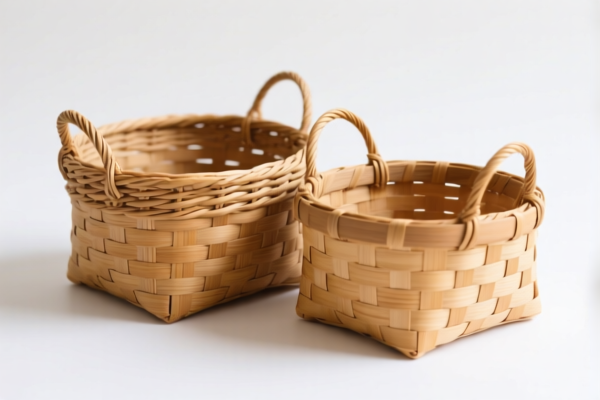
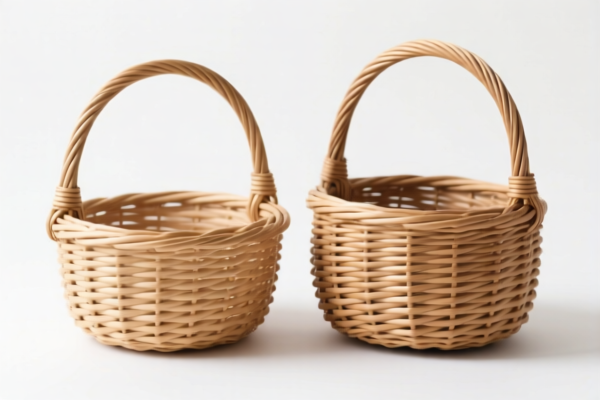
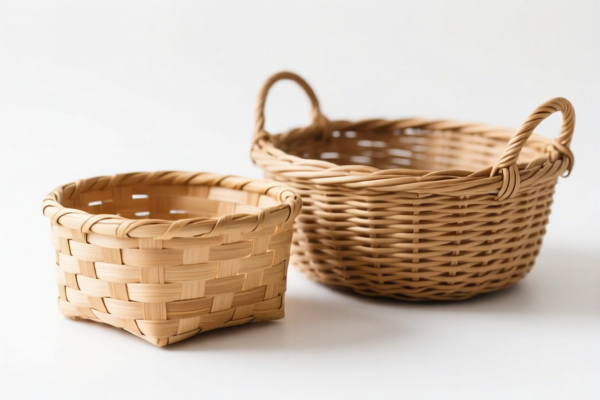
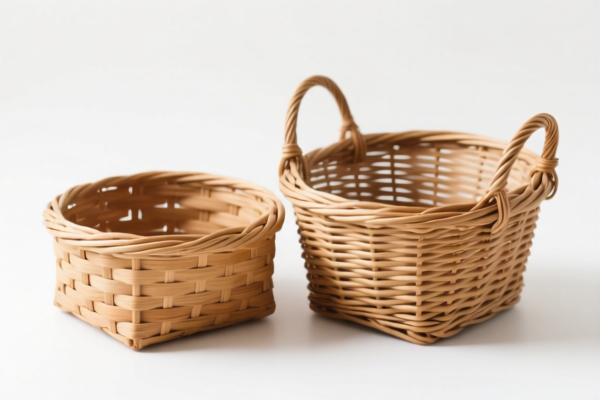
AI Analysis
🧺 Woven Baskets (Other Materials)
🌐 HS Code Reference & Customs Clearance Guide | 2026 Latest Tariff Analysis | Professional Clearance Strategy
📌 Part I: Product Definition & Classification: Do You Really Understand "Woven Baskets"?
Woven baskets are among the most common consumer goods in global trade, but their classification depends heavily on the material composition and functional design. In international trade, "Woven Baskets" are not a single category. They are split based on whether they are made from vegetable plaiting materials (natural fibers like bamboo, rattan, straw) or other materials (such as plastics, metal wires, or synthetic ropes).
Key Distinction Points: * Vegetable Materials (Natural): If the basket is made directly from plaiting materials (e.g., bamboo strips, reed, rattan) or articles of Heading 4601, it falls under Chapter 46. These often enjoy 0% tariffs (subject to specific sub-headings). * Other Materials (Plastic/Metal/Composite): If the basket is made from plastic, metal, or other non-vegetable plaiting materials, it generally falls under Chapter 73 (Iron/Steel) or Chapter 39 (Plastics). These categories often attract higher duties and Section 301/IEEPA additional tariffs if originating from China.
⚠️ Critical Classification Logic:
- Is it made of vegetable fibers (bamboo/rattan)? → Look at 4602.19 or 4602.90.
- Is it a metal wire basket (e.g., for laundry, storage, or handbags)? → Look at 7326.90.
- Is it a plastic basket or a plastic bag/basket hybrid? → Look at 3926.90.
📦 Part II: HS Code Classification Matrix (2026 Latest Tariff Alignment)
| HS Code | Product Description | Material Type | Typical Application |
|---|---|---|---|
4602.19.18.00 |
Baskets & bags of vegetable materials, other than wickerwork | Vegetable Fibers (Natural) | Eco-friendly shopping bags, natural fiber storage baskets |
4602.90.00.00 |
Basketwork articles of vegetable materials, not elsewhere specified | Vegetable Fibers (Natural) | Decorative baskets, general wickerware not fitting specific bag codes |
7326.90.35.00 |
Articles of iron or steel: Pouches, purses, wallets | Metal/Steel | Wire baskets, metal storage bins, metal handbags/purses |
7326.90.86.88 |
Other articles of iron or steel: Other | Metal/Steel | General steel baskets, industrial wire containers, complex metal woven items |
3926.90.35.00 |
Plastic articles: Beads, bugles, spangles, not strung/set | Plastic | Note: This code is for decorative plastic beads/spangles, NOT baskets. See below. |
3926.90.99.89 |
Plastic articles: Other | Plastic | Plastic woven baskets, plastic bags structured as baskets, general plastic woven containers |
🔍 Important Correction on Plastic Codes:
The user input mentions "Woven Baskets (Other Materials)." If the material is plastic,3926.90.35.00is incorrect for baskets (it is for beads/spangles). The correct code for general plastic woven articles is usually3926.90.99.89.
If the basket is metal/steel,7326.90is the correct chapter.
If the basket is natural vegetable fiber,4602is the correct chapter.
💰 Part III: 2026 Latest Tariff Rate Details (Including Additional Taxes)
✅ Scope: Based on the provided
DATAconstraints.
✅ Origin: Assumed China (CN) due to presence of Section 301/IEEPA-like surcharges in the data.
✅ Market: Implied US Market (based on "Section 301" and "IEEPA" style surcharges in the source data).
🎯 1. Natural Fiber Baskets (Vegetable Materials)
A. 4602.19.18.00 – Baskets & Bags of Vegetable Materials
- Description: Baskets and bags made of vegetable materials, other than wickerwork.
- Base Tariff: 0.0%
- Additional Tariff (Section 301/IEEPA): 0.0%
- Note: The data explicitly states "Steel, Aluminum, Copper products surcharge: 50%" does not apply here, and no specific footnote tax is listed for this natural fiber code.
- Total Tax Rate: 0.0%
- Analysis: This is the most tax-efficient classification. If your basket is made of bamboo, rattan, or straw, it likely enjoys duty-free entry into the US, provided it is not lined with plastic in a way that changes its essential character.
B. 4602.90.00.00 – Other Wickerwork Articles
- Description: Other articles of wickerwork/basketwork not elsewhere specified.
- Base Tariff: 3.5%
- Additional Tariff (Section 301): 25.0%
- Data Source: "Base Tariff: 3.5%, Additional Tariff: 25.0%"
- Total Tax Rate: 28.5%
- Analysis: This applies to general wicker baskets. The 25% surcharge is significant. Ensure the product is clearly defined as "vegetable material" to avoid being misclassified as plastic or metal.
🎯 2. Metal/Steel Baskets (Iron or Steel Articles)
A. 7326.90.35.00 – Pouches, Purse, Wallets of Steel
- Description: Articles of iron or steel: Pouches, purses, wallets.
- Base Tariff: 0.0%
- Additional Tariff (Steel/Aluminum/Copper Surcharge): 50.0%
- Data Source: "Steel, Aluminum, Copper products surcharge: 50%"
- Note: Even though the base tariff is 0%, the 50% surcharge for steel products applies.
- Total Tax Rate: 50.0%
- Analysis: High tariff. This code is often used for wire handbags, metal mesh shopping bags, or steel purses. If your "basket" is a steel wire bag, this is the likely code. Do not underestimate the 50% steel surcharge.
B. 7326.90.86.88 – Other Steel Articles
- Description: Other articles of iron or steel: Other.
- Base Tariff: 2.9%
- Additional Tariff (Section 301): 25.0%
- Additional Tariff (Steel/Aluminum/Copper Surcharge): 50.0%
- Data Source: "Steel, Aluminum, Copper products surcharge: 50%" is explicitly listed in the tax_detail.
- Calculation: The data shows
total_tax: 77.9%. This implies: 2.9% (Base) + 25.0% (Section 301) + 50.0% (Steel Surcharge) = 77.9%.
- Total Tax Rate: 77.9%
- Analysis: This is the highest risk category. It applies to general steel baskets, industrial wire containers, or complex steel woven items that do not fit the "purse/wallet" category. Cost impact is severe.
🎯 3. Plastic Baskets (Plastic Articles)
A. 3926.90.99.89 – Other Plastic Articles
- Description: Other articles of plastics and articles of other materials of headings 3901 to 3914: Other.
- Base Tariff: 5.3%
- Additional Tariff (Section 301): 7.5%
- Data Source: "Base Tariff: 5.3%, Additional Tariff: 7.5%"
- Total Tax Rate: 12.8%
- Analysis: Moderate tariff. Plastic woven baskets (e.g., laundry baskets, storage crates made of PP/PE) fall here. Note that the steel surcharge does not apply.
B. 3926.90.35.00 – Plastic Beads/Spangles (NOT Baskets)
- Description: Beads, bugles, and spangles, not strung.
- Total Tax Rate: 0.0%
- Analysis: ⚠️ WARNING: Do not classify baskets under this code. This is for decorative components. Misclassification here is a high-risk error that can lead to customs audits. Only use if you are shipping raw plastic beads for basket decoration, not the basket itself.
🛠️ Part IV: Customs Clearance Practical Advice
✅ 1. Material Verification Checklist (Critical!)
| Material | Likely HS Code | Total Tax | Action Item |
|---|---|---|---|
| Bamboo/Rattan/Straw | 4602.19.18.00 |
0% | Provide material certificate confirming natural vegetable origin. Avoid plastic liners. |
| Wicker/General Natural | 4602.90.00.00 |
28.5% | Confirm it is not "lined" with plastic. If lined, it may shift to Chapter 42 or 39. |
| Steel Wire Bag/Purse | 7326.90.35.00 |
50% | Confirm product function. If it's a handbag, this code is correct. High cost. |
| General Steel Basket | 7326.90.86.88 |
77.9% | High Risk. Consider redesigning with plastic or natural fibers to reduce tariff. |
| Plastic Woven Basket | 3926.90.99.89 |
12.8% | Standard plastic. Ensure it's not "metal-plated" plastic, which might trigger steel surcharges. |
✅ 2. Declaration Best Practices
🔥 "Material is King, Function is Queen!"
-
For Natural Baskets:
- Correct Name: "Handwoven Bamboo Storage Basket"
- Avoid: "Wicker Basket" (if it's actually bamboo) or "Plastic Basket" (if it's natural).
- Supporting Docs: Photos showing fiber texture, no plastic coating.
-
For Steel Baskets:
- Correct Name: "Steel Wire Shopping Trolley" or "Steel Mesh Laundry Basket"
- Avoid: Calling it a "Bag" if it's rigid, or vice versa.
- Supporting Docs: Specs showing steel gauge, welding details.
-
For Plastic Baskets:
- Correct Name: "PP Woven Storage Basket"
- Avoid: Calling it "Steel" if it has a metallic look.
✅ 3. Cost Optimization Strategies
- Switch to Natural Materials: If cost is a major factor, switching from Steel (
77.9%) to Bamboo (0%) can save 77.9% of the duty cost. - Avoid "Other Steel Articles": If your steel basket can be classified as a "Purse/Wallet" (e.g., a soft wire handbag), you might drop from 77.9% to 50%. However, this is a fine line and requires strict functional justification.
- Plastic is Mid-Range: At 12.8%, plastic is the most stable middle ground. Ensure the plastic content is >90% to avoid being classified as a "Composite Article" which might trigger higher rules.
🌍 Part V: Global Market Comparison (Inferred from Data)
| Region | Likely HS Code for Natural Basket | Likely HS Code for Steel Basket | Estimated Total Duty (China Origin) |
|---|---|---|---|
| 🇺🇸 USA | 4602.19.18.00 (0%) / 4602.90.00.00 (28.5%) |
7326.90.86.88 (77.9%) / 7326.90.35.00 (50%) |
0% - 77.9% |
| 🇪🇺 EU | Generally 0-5% (FET rules) | Generally 4.5-6.5% | Lower than US |
| 🇨🇳 China | Generally 5-10% | Generally 5-6% | Lower than US |
📌 Conclusion:
The US market has the most extreme tariff differentiation.
- Natural Fiber = Best for US Market (0% or 28.5%).
- Steel = Worst for US Market (50% or 77.9%).
- Plastic = Moderate for US Market (12.8%).
📌 Part VI: Common Mistakes & Pitfalls
❌ Mistake 1: Calling a Bamboo Basket "Wickerwork" and misclassifying it under 4602.90.00.00 (28.5%) when it should be 4602.19.18.00 (0%).
👉 Fix: Be specific in the product name: "Bamboo" vs "Wicker".
❌ Mistake 2: Classifying a Steel Basket under 7326.90.86.88 (77.9%) when it is actually a "Purse/Handbag" (7326.90.35.00, 50%).
👉 Fix: Review the function. If it’s carried by hand with a strap, it’s a purse. If it’s a rigid storage container, it’s a basket.
❌ Mistake 3: Using 3926.90.35.00 for Plastic Baskets.
👉 Fix: This code is for beads. Use 3926.90.99.89 instead.
🎯 Part VII: Final Recommendation
🎯 For Maximum Profit:
Use Natural Vegetable Materials (Bamboo/Rattan).
- HS Code:4602.19.18.00
- Total Duty: 0%
- Strategy: Market as "Eco-Friendly," "Biodegradable," and "Natural."
🎯 For Durability (if Steel is required):
Optimize for
7326.90.35.00(50%) if possible by designing as a "Wire Purse/Tote" rather than a rigid basket. Avoid7326.90.86.88(77.9%) at all costs if alternatives exist.
🎯 For Balance:
Use Plastic (12.8%). It offers a good compromise between cost, durability, and tariff.
✨ Professional Clearance Starts with Precise Classification!
💼 Your Bottom Line Depends on Your HS Code!
Customer Reviews
About HS Code Classification
The Harmonized System (HS) is an internationally standardized nomenclature developed by the World Customs Organization (WCO) to classify traded products. Over 200 countries use the HS system as the basis for customs tariffs, trade statistics, and import/export regulations.
Each HS code follows a hierarchical structure:
- Chapter (2 digits) — Broad category of goods (e.g., Chapter 84: Machinery and Mechanical Appliances)
- Heading (4 digits) — More specific grouping within the chapter
- Subheading (6 digits) — Internationally standardized breakdown, used by all WCO member countries
- National subdivisions (8-10 digits) — Country-specific extensions for further classification, such as US HTSUS 10-digit codes
Correct HS code classification is essential for smooth customs clearance, accurate duty payment, and compliance with trade regulations. Misclassification can lead to customs delays, overpayment of duties, or penalties.
When importing from CN to US, the applicable tariff rates may include:
- Most-Favored-Nation (MFN) rate — The standard duty rate applied to WTO members
- General rate — Applied to countries without trade agreements
- Trade remedy duties — Additional tariffs such as Section 301 (anti-dumping), Section 232 (national security), or countervailing duties
The information provided on this page is for reference purposes only. For official classification, please consult with your local customs authority or a licensed customs broker.