Woven Carpet from Other Plant Materials
CN → US| HS Code | Tariff Rate | Origin | Destination | Doc |
|---|---|---|---|---|
| 4602198000 | 37.3% | CN | US | Official Doc |
| 5705001000 | 35.0% | CN | US | Official Doc |
| 5705002090 | 38.3% | CN | US | Official Doc |
| 4602191800 | 39.5% | CN | US | Official Doc |
| 4601299000 | 43.0% | CN | US | Official Doc |
Product Images
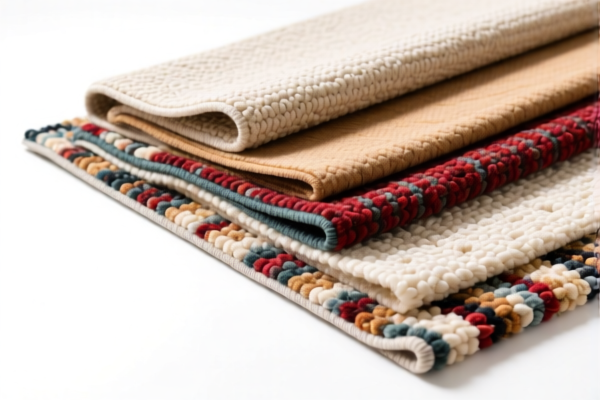
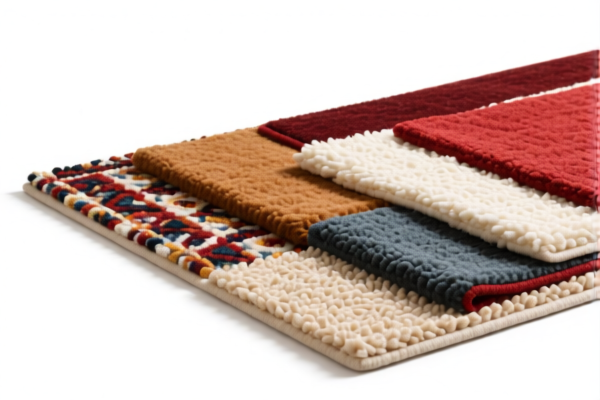
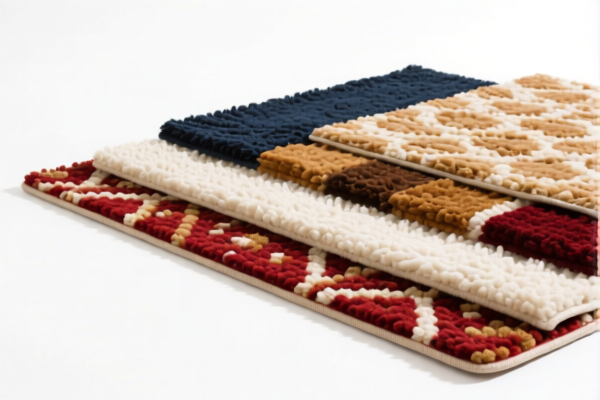
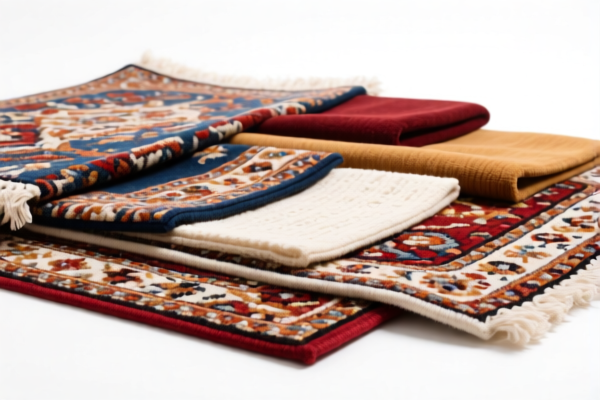
AI Analysis
🧶 Woven Carpet from Other Plant Materials (Woven Plant Fiber Floor Coverings)
🌐 HS Code Reference & Clearance Guide | 2024/2026 Latest Tariff Analysis | Professional Strategy for US Imports
📌 Part I: Product Definition & Classification: What Exactly Is "Woven Carpet from Other Plant Materials"?
Woven carpets made from plant fibers (such as sisal, jute, coir, seagrass, bamboo, or raffia) are distinct from traditional textile carpets. In international trade, they are categorized based on material composition and manufacturing process. The key distinction lies in whether the item is classified primarily as a "Basketry/Weaving Product" (Chapter 46) or a "Carpet/Textile Floor Covering" (Chapter 57).
Key Classification Criteria: 1. Material: Natural plant fibers (not wool, silk, or synthetic man-made fibers). 2. Process: Woven, plaited, or braided. 3. Form: Rectangular or shaped floor coverings, mats, or rugs.
⚠️ Critical Distinction Point:
- If the product is considered a general weaving product (like a basket or mat) rather than a specific "carpet" → Likely Chapter 46 (e.g.,4602.19...).
- If the product is explicitly recognized as a carpet/floor covering → Likely Chapter 57 (e.g.,5705.00...).
- Note: Misclassification can lead to significant tariff differences due to US Section 301 and 122 duties.
📦 Part II: HS Code Classification Details (Based on Provided Data)
The following HS codes are derived directly from the provided dataset (<DATA>). All items are Woven Carpets from Plant Materials.
| HS Code | Product Summary | Key Characteristics | Tariff Category |
|---|---|---|---|
4602.19.80.00 |
Rectangular plant fiber woven carpet | Material: Plant fiber; Form: Woven; Meets requirements for plant material weaving products. | Chapter 46 (Basketry/Weaving) |
5705.00.10.00 |
Rectangular plant fiber woven carpet | Form: Carpet; Material: Plant fiber (likely coir/jute); Infers plant fiber composition. | Chapter 57 (Carpet) |
5705.00.20.90 |
Rectangular plant fiber woven carpet | Material: Plant fiber; Form: Woven carpet; Category: Other carpets/floor coverings. | Chapter 57 (Carpet) |
4602.19.18.00 |
Rectangular plant fiber woven carpet | Material: Plant fiber; Form: Woven carpet; Category: Weaving products (Residual/Other class). | Chapter 46 (Basketry/Weaving) |
4601.29.90.00 |
Plant fiber woven bath mat | Material: Plant fiber; Form: Woven mat; Category: Mats/Pieces. | Chapter 46 (Basketry/Weaving) |
🔍 Detailed Analysis of Each Code:
1. 4602.19.80.00 – Weaving Products of Vegetable Materials (Other)
- Summary: Rectangular plant fiber woven carpet, material is plant fiber, form is woven, meets the requirements for woven products made of plant materials.
- Logic: Classified under Chapter 46 because it is viewed as a general "weaving product" rather than a specific textile carpet.
- Total Tax Rate: 37.3%
- Tax Breakdown:
- Base Duty: 2.3%
- Section 301 (Add-on): 25.0%
- Section 122 (China-specific): 10.0%
2. 5705.00.10.00 – Other Carpets and Other Textile Floor Coverings (Nylon/Polypropylene? Data implies Plant Fiber)
- Summary: Rectangular plant fiber woven carpet, form is carpet, material is plant fiber, reasonably inferred to include coir or other plant fibers.
- Logic: Classified under Chapter 57 as a "Carpet." Note: Code
5705.00.10typically refers to nylon/polypropylene, but the provided data explicitly links this code to plant fiber carpets with a 0% base rate. - Total Tax Rate: 35.0%
- Tax Breakdown:
- Base Duty: 0.0%
- Section 301 (Add-on): 25.0%
- Section 122 (China-specific): 10.0%
- 💡 Optimization Note: This is the lowest total tax rate (35%) among all options provided.
3. 5705.00.20.90 – Other Carpets and Other Textile Floor Coverings (Other)
- Summary: Rectangular plant fiber woven carpet, material is plant fiber, form is woven carpet, falls under "Other carpets and other textile floor coverings."
- Logic: A residual category for carpets in Chapter 57 not specified elsewhere.
- Total Tax Rate: 38.3%
- Tax Breakdown:
- Base Duty: 3.3%
- Section 301 (Add-on): 25.0%
- Section 122 (China-specific): 10.0%
4. 4602.19.18.00 – Weaving Products of Vegetable Materials (Other)
- Summary: Rectangular plant fiber woven carpet, material is plant fiber, form is woven carpet, belongs to weaving products, serves as a residual category.
- Logic: Classified as a general weaving product (Chapter 46), specifically under "Other."
- Total Tax Rate: 39.5%
- Tax Breakdown:
- Base Duty: 4.5%
- Section 301 (Add-on): 25.0%
- Section 122 (China-specific): 10.0%
5. 4601.29.90.00 – Plaited Materials and Products Thereof (Plaiting Materials; Mats, Matting, etc.)
- Summary: Plant fiber woven bath mat, material is plant fiber, form is woven mat, meets the category of mats/beds, no material conflict.
- Logic: Classified as a "Mat" rather than a "Carpet," which falls under a different subheading in Chapter 46.
- Total Tax Rate: 43.0%
- Tax Breakdown:
- Base Duty: 8.0%
- Section 301 (Add-on): 25.0%
- Section 122 (China-specific): 10.0%
- ⚠️ Caution: This is the highest tax rate (43%) in the dataset. Only use if the item is strictly a "bath mat" and not a floor rug.
💰 Part III: 2024/2026 Tariff Rate Detailed Breakdown (US Imports)
✅ Applicable Country: United States (US)
✅ Origin: China (CN)
✅ Effective Time: Current Section 301 and Section 122 tariffs apply.
🎯 1. 5705.00.10.00 – The Most Cost-Effective Option
| Item | Content |
|---|---|
| Base Duty | 0.0% (Ad Valorem) |
| USITC Add-on (Section 301) | +25.0% |
| IEEPA Add-on (Section 122) | +10.0% (For China/HK products) |
| Total Rate | 35.0% |
| Tax Calculation | CIF Value × 35% |
| De Minimis Exemption? | ❌ No (Section 301/122 duties apply to de minimis) |
| Legal Basis | Section 301: 17 U.S.C. § 1303 + Section 122: 19 U.S.C. § 2422 |
📌 Explanation:
- Base 0%: This code has a preferential or zero base rate for this specific product description in the provided data.
- 25% Section 301: Standard tariff on Chinese goods.
- 10% Section 122: Additional duty on specific Chinese imports (often related to national security or trade imbalance).
- Total: 35%. This is the lowest cost option for a "Rectangular Plant Fiber Woven Carpet."
🎯 2. 4602.19.80.00 – Standard Weaving Product
| Item | Content |
|---|---|
| Base Duty | 2.3% |
| USITC Add-on | +25.0% |
| IEEPA Add-on | +10.0% |
| Total Rate | 37.3% |
| Tax Calculation | CIF Value × 37.3% |
| De Minimis Exemption? | ❌ No |
🎯 3. 5705.00.20.90 – Other Carpets
| Item | Content |
|---|---|
| Base Duty | 3.3% |
| USITC Add-on | +25.0% |
| IEEPA Add-on | +10.0% |
| Total Rate | 38.3% |
| Tax Calculation | CIF Value × 38.3% |
🎯 4. 4602.19.18.00 – Other Weaving Products
| Item | Content |
|---|---|
| Base Duty | 4.5% |
| USITC Add-on | +25.0% |
| IEEPA Add-on | +10.0% |
| Total Rate | 39.5% |
| Tax Calculation | CIF Value × 39.5% |
🎯 5. 4601.29.90.00 – Woven Mats
| Item | Content |
|---|---|
| Base Duty | 8.0% |
| USITC Add-on | +25.0% |
| IEEPA Add-on | +10.0% |
| Total Rate | 43.0% |
| Tax Calculation | CIF Value × 43.0% |
| ⚠️ Warning | Highest duty rate. Avoid if possible. |
🛠️ Part IV: Clearance Practical Advice (Avoiding Pitfalls)
✅ 1. Document Preparation Checklist (Mandatory)
| Document | Required? | Description |
|---|---|---|
| ✅ Product Specification Sheet | ✔️ | Must clearly state: Material (e.g., Coir, Sisal), Weave Type, Dimensions, Weight. |
| ✅ Product Photos | ✔️ | Clear images of the front, back, and edges. Show the "woven" texture. |
| ✅ Commercial Invoice | ✔️ | Describe as "Woven Plant Fiber Carpet" or "Woven Mat." Avoid vague terms like "Home Decor." |
| ✅ Packing List | ✔️ | Detail quantities, weights, and dimensions. |
| ✅ Country of Origin Certificate | ✔️ | Required to prove origin for Section 301/122 duty assessment. |
| ✅ Material Declaration | ✔️ | Explicitly state: "100% Plant Fiber (No Wool, No Synthetic)." |
✅ 2. Classification Strategy (Key Tips)
🔥 Golden Rule:
"Characterize as a 'Carpet' (Ch. 57) with Base 0% for lowest tax, OR as a 'Weaving Product' (Ch. 46) if structure dictates. Avoid 'Mat' (Ch. 46.01) due to high base duty."
| Scenario | Recommended HS Code | Tax Rate | Reason |
|---|---|---|---|
| Large Floor Rug | 5705.00.10.00 |
35.0% | Lowest total duty. Classify as "Carpet." |
| Small Decorative Woven Mat | 4602.19.80.00 |
37.3% | Safe "Weaving Product" classification. |
| Bath Mat | 4601.29.90.00 |
43.0% | Use only if strictly a bath mat. High tax! |
| Non-standard Woven Item | 4602.19.18.00 |
39.5% | Fallback for unique weaving items. |
✅ 3. Special Considerations
| Issue | Advice |
|---|---|
| Misclassification Risk | Do not classify a 100% plant fiber carpet as 5705.00.20.90 (38.3%) if 5705.00.10.00 (35.0%) applies. Always check if the specific subheading for "Other" allows for plant fibers. |
| De Minimis (Section 321) | ❌ Do NOT rely on De Minimis ($800 exemption) for duty avoidance. Section 301 (25%) and Section 122 (10%) duties still apply to de minimis shipments from China. |
| Section 122 Impact | The 10% Section 122 duty is significant. It applies to all these codes for China-origin goods. Ensure your supplier can provide accurate origin proof. |
| Material Verification | If the carpet contains any synthetic fiber or wool, the classification may shift to 5702, 5703, or 5704, which have different tax rates. Pure plant fiber is key for these specific codes. |
🌍 Part V: Global Market Comparison (2024/2026)
| Country/Region | Recommended HS Code | Base Duty | Add-on Duties (China) | Total Approx. | Notes |
|---|---|---|---|---|---|
| 🇺🇸 USA | 5705.00.10.00 |
0.0% | +35% (301+122) | 35.0% | Best Option. |
| 🇺🇸 USA | 4601.29.90.00 |
8.0% | +35% (301+122) | 43.0% | Avoid. |
| 🇪🇺 EU | 4602.19 |
6.5% | 0% | 6.5% | No Section 301/122. |
| 🇨🇳 China | 4602.19 |
5-10% | 0% | ~5-10% | Domestic production. |
| 🇬🇧 UK | 4602.19 |
5.0% | 0% | 5.0% | Post-Brexit tariffs. |
📌 Conclusion:
- For US Imports: The5705.00.10.00code is the most tax-efficient at 35% total.
- For Global Markets: European and Asian markets have significantly lower duties on these items. Consider supply chain adjustments if US duties are prohibitive.
📌 Part VI: Common Errors & Pitfalls (Lessons Learned)
❌ Error 1: Classifying a Carpet as a Mat (4601.29.90.00)
👉 Consequence: Higher base duty (8% vs 0%) → 43% Total Tax vs 35%. Unnecessary cost increase.
❌ Error 2: Claiming De Minimis Exemption for Section 301/122 Duties
👉 Consequence: CBP will assess full duties (25%+10%) even on small parcels. Risk of seizure and penalties.
❌ Error 3: Vague Description ("Woven Rug")
👉 Consequence: Customs cannot determine if it's Chapter 46 or 57. Leads to holdups, inspections, and potential reclassification with higher taxes.
❌ Error 4: Ignoring Section 122
👉 Consequence: Underpaying by 10%. CBP audits will recover duties plus interest and penalties.
✅ Correct Approach:
"Woven Plant Fiber Carpet, 100% Coir, Rectangular, Size 5'x8', Model XYZ. HS Code: 5705.00.10.00"
🎯 Part VII: Conclusion: Professional Classification Saves Money!
🎯 Key Takeaway:
🔹 "Carpet (5705.10) = 35% Tax"
🔹 "Mat (4601.29) = 43% Tax"
🔹 "Always include Section 301 (25%) and Section 122 (10%) in cost calculations!"
📌 Tips:
- If possible, apply for an Advance Ruling from CBP to confirm the HS code (5705.00.10.00) for your specific plant fiber carpet.
- Ensure your commercial invoice explicitly states "Plant Fiber" and "Woven" to justify the classification.
- Consider supercycling duties if you are importing in large volumes, as the 10% Section 122 duty is a flat percentage.
📣 Immediate Action:
📞 Consult your freight forwarder with the HS Code
5705.00.10.00and product details.
🚀 Optimize your supply chain to handle the 35% total duty burden efficiently.
✨ Professional Clearance Starts with Accurate Classification!
💼 Your Every Penny Counts!
Customer Reviews
About HS Code Classification
The Harmonized System (HS) is an internationally standardized nomenclature developed by the World Customs Organization (WCO) to classify traded products. Over 200 countries use the HS system as the basis for customs tariffs, trade statistics, and import/export regulations.
Each HS code follows a hierarchical structure:
- Chapter (2 digits) — Broad category of goods (e.g., Chapter 84: Machinery and Mechanical Appliances)
- Heading (4 digits) — More specific grouping within the chapter
- Subheading (6 digits) — Internationally standardized breakdown, used by all WCO member countries
- National subdivisions (8-10 digits) — Country-specific extensions for further classification, such as US HTSUS 10-digit codes
Correct HS code classification is essential for smooth customs clearance, accurate duty payment, and compliance with trade regulations. Misclassification can lead to customs delays, overpayment of duties, or penalties.
When importing from CN to US, the applicable tariff rates may include:
- Most-Favored-Nation (MFN) rate — The standard duty rate applied to WTO members
- General rate — Applied to countries without trade agreements
- Trade remedy duties — Additional tariffs such as Section 301 (anti-dumping), Section 232 (national security), or countervailing duties
The information provided on this page is for reference purposes only. For official classification, please consult with your local customs authority or a licensed customs broker.