Woven Fabric of Man Made Fibres
CN → US| HS Code | Tariff Rate | Origin | Destination | Doc |
|---|---|---|---|---|
| 5407912010 | 49.9% | CN | US | Official Doc |
| 3921901100 | 39.2% | CN | US | Official Doc |
| 3921901500 | 41.5% | CN | US | Official Doc |
| 5407922010 | 49.9% | CN | US | Official Doc |
| 5407912090 | 49.9% | CN | US | Official Doc |
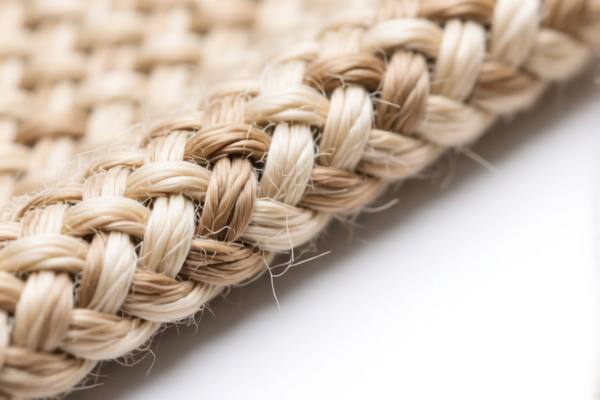
Product Images


AI Analysis
🧵 Woven Fabric of Man-Made Fibres (Artificial & Synthetic)
🌐 HS Code Reference & Customs Clearance Guide | 2026 Latest Tariff Analysis | Professional Level Clearance Strategy
📌 I. Product Definition & Classification: Do You Really Understand "Woven Fabric of Man-Made Fibres"?
In international trade, "Woven Fabric of Man-Made Fibres" is a broad category that includes both Artificial Filaments (like Rayon/Viscose) and Synthetic Filaments (like Polyester/Nylon). The correct HS Code classification depends heavily on: 1. Fiber Type: Is it artificial (regenerated) or synthetic? 2. Composition: What is the percentage of man-made fibers versus other materials (e.g., plastics)? 3. Form: Is it a pure woven fabric or a composite material?
⚠️ Critical Distinction:
- If the fabric is purely man-made filament (e.g., 100% Rayon or Polyester) → Falls under Chapter 54 (5407.xxxx).
- If the fabric contains high plastic content or is classified as a composite material due to weight/usage → May fall under Chapter 39 (3921.xxxx).
📦 II. HS Code Classification Details (2026 Latest Tariff Authority Comparison)
| HS Code | Product Description | Applicable Scenario | Tax Rate (Total) |
|---|---|---|---|
| 5407.91.20.10 | Woven fabric of artificial filament yarn, classified under this specific subheading | Pure artificial filament fabric (e.g., Rayon) | 49.9% |
| 3921.90.11.00 | Other plates, sheets, film, foil, and strip of plastics, containing a high proportion of plastic components | Fabric treated/impregnated with high plastic content, falling under "other" categories | 39.2% |
| 3921.90.15.00 | Woven fabric of man-made filaments, where the weight of artificial fibers exceeds other single fibers | Specific classification for fabrics where artificial fiber weight dominates other single fibers | 41.5% |
| 5407.92.20.10 | Woven fabric of synthetic filament yarn, categorized under other subheadings (catch-all for synthetics) | Pure synthetic filament fabric (e.g., Polyester, Nylon) | 49.9% |
| 5407.91.20.90 | Woven fabric of man-made filaments, material and form fully meet classification criteria | Standard synthetic/artificial woven fabric without specific exclusions | 49.9% |
🔍 Key Reminder:
- 5407.xxxx codes apply to standard woven fabrics made from man-made filaments (both artificial and synthetic).
- 3921.xxxx codes apply when the fabric is considered a plastic product due to high plastic content or specific composite nature.
- Tax rates vary significantly (39.2% – 49.9%), so precise classification is crucial to avoid overpayment or penalties.
💰 III. 2026 Latest Tariff Rate Details (Including Surtaxes & Policy Add-ons)
✅ Applicable Country: United States (US)
✅ Origin: China (CN)
✅ Effective Date: From November 10, 2025 (including subsequent imports)
🎯 1. 5407.91.20.10 & 5407.92.20.10 & 5407.91.20.90 —— Woven Fabrics of Man-Made Filaments
| Item | Content |
|---|---|
| Basic Tariff Rate | 14.9% (ad valorem) |
| Surtax (Section 301) | +25% (from USITC Footnote related to Section 301) |
| 122-Clause Tariff | +10% (Section 122 surtax on certain textile/apparel imports) |
| Total Tax Rate | 49.9% |
| Tax Calculation | CIF Value × 49.9% |
| De Minimis Exemption | ❌ Not Eligible (deny_de_minimis) |
| Legal Basis Path | Base Tariff: 14.9% → Section 301: 25.0% → Section 122: 10.0% |
📌 Explanation:
- "Basic Tariff 14.9%": Standard MFN (Most Favored Nation) tariff for woven synthetic/artificial fabrics.
- "Surtax 25%": Applied under Section 301 of the Trade Act for Chinese-origin goods.
- "122-Clause Tariff 10%": Specific surtax for certain textile and apparel products.
- Total 49.9%: This is a very high tariff rate, making cost planning essential.
🎯 2. 3921.90.11.00 —— Plastics-Containing Woven Fabric
| Item | Content |
|---|---|
| Basic Tariff Rate | 4.2% (ad valorem) |
| Surtax (Section 301) | +25% |
| 122-Clause Tariff | +10% |
| Total Tax Rate | 39.2% |
| Tax Calculation | CIF Value × 39.2% |
| De Minimis Exemption | ❌ Not Eligible (deny_de_minimis) |
| Legal Basis Path | Base Tariff: 4.2% → Section 301: 25.0% → Section 122: 10.0% |
📌 Note:
- This code has a lower total rate (39.2%) compared to standard woven fabrics (49.9%) due to a lower basic tariff (4.2% vs. 14.9%).
- However, it only applies if the fabric is classified as a plastic product (e.g., coated, impregnated, or composite with high plastic weight).
🎯 3. 3921.90.15.00 —— Artificial Fiber-Weight-Dominant Fabric
| Item | Content |
|---|---|
| Basic Tariff Rate | 6.5% (ad valorem) |
| Surtax (Section 301) | +25% |
| 122-Clause Tariff | +10% |
| Total Tax Rate | 41.5% |
| Tax Calculation | CIF Value × 41.5% |
| De Minimis Exemption | ❌ Not Eligible (deny_de_minimis) |
| Legal Basis Path | Base Tariff: 6.5% → Section 301: 25.0% → Section 122: 10.0% |
📌 Note:
- This code applies when artificial fibers (not synthetic) make up the majority of the weight compared to other single fibers.
- It offers a mid-range rate (41.5%), better than pure synthetic fabrics but worse than plastic-containing fabrics.
🛠️ IV. Customs Clearance Practical Advice (Battlefield Pit-avoidance Guide)
✅ 1. Required Documents Checklist (Missing Items = Delay)
| Document | Required | Explanation |
|---|---|---|
| ✅ Product Specification Sheet | ✔️ | Must include fiber type (Artificial vs. Synthetic), composition %, weave type, and weight per square meter. |
| ✅ Fiber Composition Report | ✔️ | Third-party lab report confirming % of man-made vs. other fibers. Critical for distinguishing 5407 vs. 3921. |
| ✅ Product Photos (including label) | ✔️ | Clear images showing texture, label, and any coatings or laminations. |
| ✅ Commercial Invoice | ✔️ | Must explicitly state "Woven Fabric of Man-Made Fibres" and HS Code. |
| ✅ Packing List | ✔️ | Details net/gross weight and dimensions to verify CIF value. |
| ✅ Certificate of Origin (CO) | ✔️ | If not originating from China, may qualify for lower rates. |
✅ 2. Declaration Tips (Key Mantra)
🔥 "Fiber Type Determines Code, Plastic Content Changes Rate, Name Precision Saves Money!"
| Scenario | Correct Declaration | Incorrect Action |
|---|---|---|
| Pure Synthetic Fabric (e.g., 100% Polyester) | 5407.92.20.10 or 5407.91.20.90 |
Misclassified as plastic → 39.2% (if eligible) or penalty |
| High Plastic Content Fabric (e.g., PVC-coated) | 3921.90.11.00 |
Declared as plain fabric → 49.9% |
| Artical Fiber Dominant Fabric | 3921.90.15.00 |
Declared as general fabric → 49.9% |
| Mixed Fabric (Artificial + Synthetic) | Check weight % | Incorrect classification → Audit risk |
✅ 3. Special Case Handling
| Situation | Handling Advice |
|---|---|
| OEM Custom Fabric | Provide design drawings and fiber content specs to avoid misclassification. |
| Coated/Laminated Fabric | If coating makes it a "plastic product," consider 3921.xxxx codes. |
| Sample vs. Bulk | Ensure samples match bulk composition exactly; discrepancies lead to audits. |
| Origin Marking | Clearly mark "Made in China" if applicable; mislabeling can trigger penalties. |
🌍 V. Global Market Clearance Comparison (2026 Latest)
| Country/Region | Recommended HS Code | Tariff | Certification Requirements | Notes |
|---|---|---|---|---|
| 🇺🇸 USA | 5407.92.20.10 / 3921.90.11.00 |
39.2% - 49.9% (China-origin) | None (but documentation key) | High tariffs due to Section 301 & 122. |
| 🇨🇳 China | 5407.xxxx |
5-8% | None | No surtaxes. |
| 🇪🇺 EU | 5407.xxxx |
6.5-8% | REACH (chemicals) | No Section 301/122 surtaxes. |
| 🇦🇺 Australia | 5407.xxxx |
5% | None | Low tariffs. |
| 🇯🇵 Japan | 5407.xxxx |
3-4% | FSC (if applicable) | Low tariffs. |
📌 Conclusion:
- The US is the only major market with heavy surtaxes (up to 49.9%) for Chinese-origin man-made fiber fabrics.
- European and Asian markets have significantly lower tariffs, making them more cost-effective for exporters.
- Strategic Recommendation: If exporting to the US, consider supply chain diversification (e.g., sourcing from Vietnam or India) to avoid surtaxes, or optimize classification to3921.xxxxif feasible.
📌 VI. Common Errors & Pitfall Avoidance (Lessons from Experience)
❌ Mistake 1: Classifying a plastic-coated fabric as a standard woven fabric (5407.xxxx).
👉 Consequence: Paying 49.9% instead of 39.2% → Overpayment of 10.7%!
❌ Mistake 2: Declaring synthetic fabric as artificial fiber fabric (5407.91.xxxx vs. 5407.92.xxxx).
👉 Consequence: While both have 49.9% total tax, misclassification can lead to customs audits and delays.
❌ Mistake 3: Ignoring fiber composition reports.
👉 Consequence: Customs may reclassify the goods, leading to back taxes and fines.
❌ Mistake 4: Using vague names like "Fabric" or "Textile" on invoices.
👉 Consequence: Customs may request additional information → Clearance delays of 1-2 weeks.
✅ Correct Approach:
"Woven Fabric, 100% Polyester Filament, Plain Weave, Weight: 150 GSM, Dyeing: Yarn Dyed, Model: XYZ, For Garment Manufacturing"
🎯 VII. Conclusion: Precise Classification, Cost Optimization, Efficiency!
🎯 Remember the Mantra:
🔹 "Fiber Type First, Plastic Content Second, Name Precision Third!"
🔹 "HS Code Dictates Tax, Rate Difference Matters, Declaration Error Costs Big!"
📌 Pro Tip:
If your fabric originates from Vietnam, India, or Bangladesh, you may qualify for lower tariffs in the US.
Consider Applying for a Pre-Ruling (Advance Ruling) with US Customs (CBP) to confirm the correct HS Code and avoid surprises.
📣 Immediate Action:
📞 Contact a Professional Customs Broker + Provide Product Specs + Request HS Code Pre-Ruling
🚀 Let Your Fabric Clear Smoothly, Cross Borders Efficiently, and Profits Soar!
✨ Professional Clearance Starts with Precise Classification!
💼 Every Cent of Cost Deserves Exact Calculation!
Customer Reviews
About HS Code Classification
The Harmonized System (HS) is an internationally standardized nomenclature developed by the World Customs Organization (WCO) to classify traded products. Over 200 countries use the HS system as the basis for customs tariffs, trade statistics, and import/export regulations.
Each HS code follows a hierarchical structure:
- Chapter (2 digits) — Broad category of goods (e.g., Chapter 84: Machinery and Mechanical Appliances)
- Heading (4 digits) — More specific grouping within the chapter
- Subheading (6 digits) — Internationally standardized breakdown, used by all WCO member countries
- National subdivisions (8-10 digits) — Country-specific extensions for further classification, such as US HTSUS 10-digit codes
Correct HS code classification is essential for smooth customs clearance, accurate duty payment, and compliance with trade regulations. Misclassification can lead to customs delays, overpayment of duties, or penalties.
When importing from CN to US, the applicable tariff rates may include:
- Most-Favored-Nation (MFN) rate — The standard duty rate applied to WTO members
- General rate — Applied to countries without trade agreements
- Trade remedy duties — Additional tariffs such as Section 301 (anti-dumping), Section 232 (national security), or countervailing duties
The information provided on this page is for reference purposes only. For official classification, please consult with your local customs authority or a licensed customs broker.