Woven Filter Screen
CN → US| HS Code | Tariff Rate | Origin | Destination | Doc |
|---|---|---|---|---|
| 8421990140 | 35.0% | CN | US | Official Doc |
| 5911400100 | 43.0% | CN | US | Official Doc |
| 5911900040 | 38.8% | CN | US | Official Doc |
Product Images
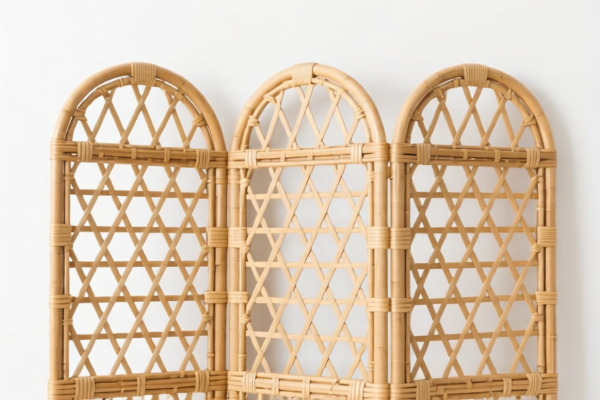
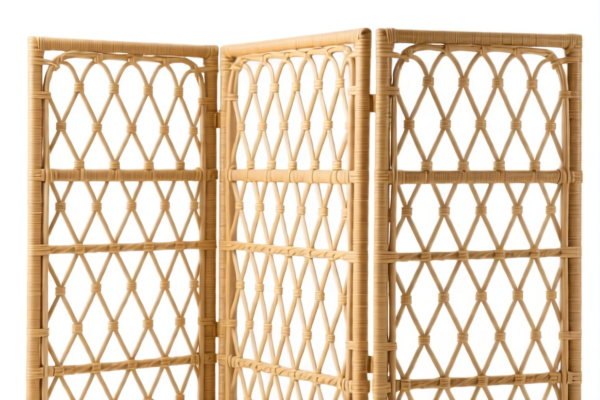
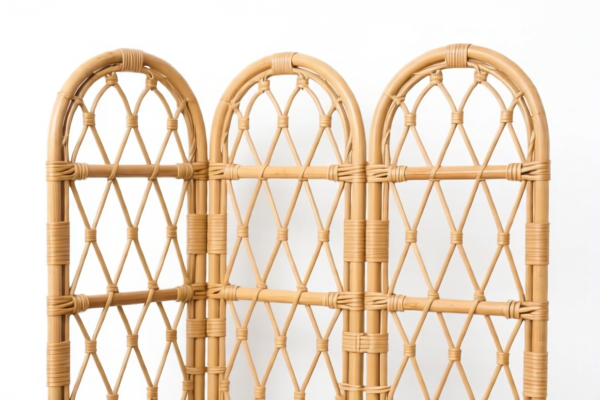
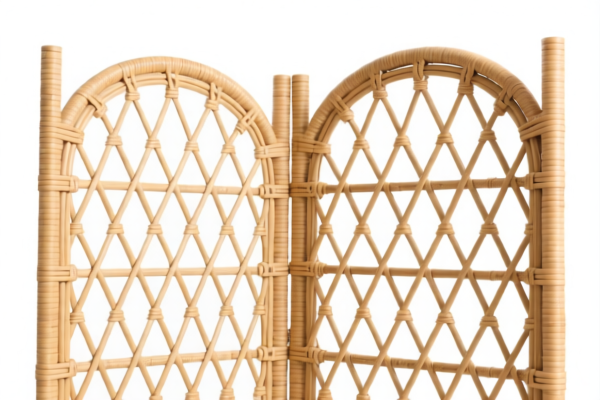
AI Analysis
🧵 Woven Filter Screen (Filter Fabric/Mesh)
🌐 HS Code Reference & Customs Clearance Guide | 2026 Latest Tariff Analysis | Professional Entry Strategy
📌 I. Product Definition: What Exactly is a "Woven Filter Screen"?
A Woven Filter Screen is a critical industrial component used for filtration, separation, or purification processes. It is not a finished appliance but a part or material used within machinery (e.g., water purifiers, industrial filters).
In international trade, classification depends heavily on its function and material structure: * As a Part of Machinery: If it is specifically designed for use in water filtration/purification machines. * As Textile Fabric: If it is classified primarily as a textile article (filter cloth/sieve cloth) regardless of specific machine integration.
⚠️ Key Distinction Point:
- If the screen is a specific component for water purification machinery →归类 to 8421 (Machinery Parts).
- If the screen is a general textile fabric used for filtration → 归类 to 5911 (Textile Articles for Technical Uses).
📦 II. HS Code Classification Details (2026 Latest Tariff Authority)
| HS Code | Product Description | Application Scenario | Material/Structure Logic |
|---|---|---|---|
8421.99.01.40 |
Parts suitable for use solely or principally with machinery for filtering or purifying liquids (e.g., water). | Water filtration systems, purifiers, specific mechanical components. | Mechanical Part: Woven sheet matched to machinery parts; no material conflict. |
5911.40.01.00 |
Textile fabrics (filter cloth or sieve cloth), of a kind used in machinery or for technical uses. | Industrial filtration, general-purpose filter cloths, sieve fabrics. | Textile Form: Fits the definition of "Filter Cloth" or "Sieve Cloth". |
5911.90.00.40 |
Other textile products and articles (e.g., dress blocks, doulles), of a kind used solely or principally for technical uses. | Industrial fillers, technical textiles, general woven filter materials. | Woven Form: Fits "Woven Fabric" logic consistent with industrial fillers/materials; no material conflict. |
🔍 Key Reminder:
- 8421.99.01.40 is for specific machinery parts (e.g., water filter units).
- 5911.40.01.00 is for textile filter cloths/sieves with a clear textile function.
- 5911.90.00.40 is a catch-all for other technical woven textiles not fitting the specific "filter cloth" definition of 5911.40.
💰 III. 2026 Latest Tariff Rate Breakdown (Including Surtaxes & Policy Add-ons)
✅ Applicable Country: United States (US)
✅ Origin: China (CN)
✅ Effective Date: 2025 Nov 10 onwards (including subsequent imports)
🎯 1. 8421.99.01.40 —— Parts for Water Filtering/Purifying Machinery
| Item | Content |
|---|---|
| Base Tariff | 0.0% |
| USITC Surcharge | +25.0% (Section 301) |
| Section 122 Surcharge | +10.0% (Specific policy add-on) |
| Total Rate | 35.0% |
| Tax Calculation | CIF Value × 35% |
| De Minimis Exemption? | ❌ No (High tariff rate disqualifies from de minimis) |
| Legal Path | Base: 0% → 301: 25% → 122: 10% |
📌 Explanation:
- This code carries a 35% total tax burden.
- The 25% is the standard Section 301 tariff on Chinese mechanical parts.
- The 10% is an additional Section 122 surcharge (if applicable to specific import batches/conditions).
- No base tariff, but the surtaxes make it expensive.
🎯 2. 5911.40.01.00 —— Textile Filter Cloth / Sieve Cloth
| Item | Content |
|---|---|
| Base Tariff | 8.0% |
| USITC Surcharge | +25.0% (Section 301) |
| Section 122 Surcharge | +10.0% |
| Total Rate | 43.0% |
| Tax Calculation | CIF Value × 43% |
| De Minimis Exemption? | ❌ No |
| Legal Path | Base: 8% → 301: 25% → 122: 10% |
📌 Explanation:
- This is the highest tax scenario (43%).
- The 8% base tariff applies because it is classified as a textile product.
- Plus the 25% Section 301 and 10% Section 122 surcharges.
- Critical: Classifying as "Textile Filter Cloth" increases costs compared to "Machinery Part" in some cases due to the base rate.
🎯 3. 5911.90.00.40 —— Other Technical Woven Textiles
| Item | Content |
|---|---|
| Base Tariff | 3.8% |
| USITC Surcharge | +25.0% (Section 301) |
| Section 122 Surcharge | +10.0% |
| Total Rate | 38.8% |
| Tax Calculation | CIF Value × 38.8% |
| De Minimis Exemption? | ❌ No |
| Legal Path | Base: 3.8% → 301: 25% → 122: 10% |
📌 Explanation:
- This code offers a middle-ground tax rate (38.8%).
- The base tariff is lower than5911.40(3.8% vs 8.0%), but higher than8421(0%).
- Suitable when the product is a woven technical textile but doesn't strictly fit the "filter cloth/sieve" definition of 5911.40.
🛠️ IV. Customs Clearance Practical Advice (Real-World Pitfall Guide)
✅ 1. Documentation Checklist (Must-Haves)
| Document | Required | Description |
|---|---|---|
| ✅ Product Spec Sheet | ✔️ | Material (polyester, nylon, steel?), mesh size, pore size, width, length. |
| ✅ Intended Use Statement | ✔️ | Explicitly state: "For use in water purification machinery" OR "General industrial filtration". |
| ✅ Product Photos | ✔️ | Show the woven texture, edges, and any branding/model numbers. |
| ✅ Commercial Invoice | ✔️ | Accurate description: "Woven Filter Screen for Water Purifier" vs "Textile Filter Cloth". |
| ✅ Packing List | ✔️ | Weight and dimensions. |
✅ 2. Declaration Tips (Critical Mnemonic)
🔥 "Machine Part = 0% Base; Textile Cloth = 8% Base; Woven Misc = 3.8% Base"
| Scenario | Correct HS Code | Wrong Declaration | Consequence |
|---|---|---|---|
| Screen specifically for Water Purifier | 8421.99.01.40 (35%) |
Declared as "Textile Cloth" → 5911.40.01.00 |
Overpay: 35% vs 43% |
| General Industrial Filter Cloth | 5911.40.01.00 (43%) |
Declared as "Machinery Part" → 8421.99.01.40 |
Risk: Customs may reject if not machine-specific; may force reclassification. |
| Other Woven Technical Fabric | 5911.90.00.40 (38.8%) |
Declared as "Cotton Cloth" | Risk: Wrong base tariff, potential penalties. |
✅ 3. Special Situation Handling
| Situation | Handling Advice |
|---|---|
| OEM Custom Filter | Provide customer order + design specs. Specify exact machinery compatibility for 8421 classification. |
| Mixed Shipments | If shipping both "parts" and "general textiles", declare separately. Do not lump them. |
| Material Change | Steel mesh vs. Nylon mesh? Both can fall under these codes, but textile codes (5911) require textile material. Steel might fall under 7318 or 8421 depending on form. Check material conflict. |
| "No Material Conflict" Clause | The data notes "No material conflict" for these codes. Ensure the material (e.g., polyester) is compatible with the "Textile" classification if using 5911. |
🌍 V. Global Market Comparison (2026 Latest)
| Country/Region | Recommended HS Code | Tariff Rate (China Origin) | Certification/Notes |
|---|---|---|---|
| 🇺🇸 USA | 8421.99.01.40 |
35% | Section 301 + 122 Surcharges apply. |
| 🇺🇸 USA | 5911.40.01.00 |
43% | Highest burden due to 8% base. |
| 🇨🇳 China | 8421.99.01.40 |
0-5% (varies) | No Section 301/122. |
| 🇪🇺 EU | 8421.99.90 |
0-2.7% | No surtaxes. |
| 🇦🇺 Australia | 8421.29.90 |
5% | No surtaxes. |
📌 Conclusion:
- USA is the most expensive market due to layered surtaxes (301 + 122).
- Choosing8421.99.01.40saves 7.2% vs5911.40.01.00(35% vs 43%).
- Choose5911.90.00.40(38.8%) if the product doesn't fit the strict "filter cloth" definition of 5911.40 but is a technical woven textile.
📌 VI. Common Errors & Pitfall Guide (Lessons Learned)
❌ Error 1: Declaring a water filter part as general textile cloth (5911.40.01.00).
👉 Consequence: You pay 43% instead of 35%. Overpayment of 8% on the tax base.
❌ Error 2: Declaring general industrial sieve cloth as machine part (8421.99.01.40).
👉 Consequence: Customs may flag it as "incorrect classification" if it's not exclusively for one machine. May lead to delays or forced reclassification to 5911 (higher tax).
❌ Error 3: Ignoring Section 122.
👉 Consequence: The data explicitly lists 10% Section 122. Forgetting this leads to underpayment and penalties.
✅ Correct Approach:
"If it's for a water purifier → 8421.99.01.40 (35%).
If it's general textile filter cloth → 5911.40.01.00 (43%).
If it's other technical woven textile → 5911.90.00.40 (38.8%)."
🎯 VII. Conclusion: Precision Saves Money!
🎯 Remember the Tax Hierarchy:
🔹 Lowest Risk/Rate:
8421.99.01.40(35%) → Best if applicable.
🔹 Middle Ground:5911.90.00.40(38.8%) → Good for general textiles.
🔹 Highest Rate:5911.40.01.00(43%) → Avoid if possible due to 8% base.
📌 Pro Tip:
If your woven screen is custom-made for a specific machine, insist on
8421.99.01.40to save 7.2% in taxes.
If it is bulk textile fabric, check if5911.90.00.40(38.8%) is more accurate than5911.40(43%).
📣 Action Required:
📞 Confirm Product Use: Is it for a specific machine or general textile?
📄 Provide Specs: Mesh size, material, dimensions.
🚀 Optimize HS Code: Choose8421.99.01.40if possible to minimize tax burden.
✨ Professional Customs Clearance Starts with Accurate Classification!
💼 Your Profit Margin Depends on These 7-8% Differences!
Customer Reviews
About HS Code Classification
The Harmonized System (HS) is an internationally standardized nomenclature developed by the World Customs Organization (WCO) to classify traded products. Over 200 countries use the HS system as the basis for customs tariffs, trade statistics, and import/export regulations.
Each HS code follows a hierarchical structure:
- Chapter (2 digits) — Broad category of goods (e.g., Chapter 84: Machinery and Mechanical Appliances)
- Heading (4 digits) — More specific grouping within the chapter
- Subheading (6 digits) — Internationally standardized breakdown, used by all WCO member countries
- National subdivisions (8-10 digits) — Country-specific extensions for further classification, such as US HTSUS 10-digit codes
Correct HS code classification is essential for smooth customs clearance, accurate duty payment, and compliance with trade regulations. Misclassification can lead to customs delays, overpayment of duties, or penalties.
When importing from CN to US, the applicable tariff rates may include:
- Most-Favored-Nation (MFN) rate — The standard duty rate applied to WTO members
- General rate — Applied to countries without trade agreements
- Trade remedy duties — Additional tariffs such as Section 301 (anti-dumping), Section 232 (national security), or countervailing duties
The information provided on this page is for reference purposes only. For official classification, please consult with your local customs authority or a licensed customs broker.