Woven Fruit Basket
CN → US| HS Code | Tariff Rate | Origin | Destination | Doc |
|---|---|---|---|---|
| 4602110700 | 35.0% | CN | US | Official Doc |
| 3923109000 | 38.0% | CN | US | Official Doc |
| 7323999030 | 88.4% | CN | US | Official Doc |
| 7323999080 | 88.4% | CN | US | Official Doc |
| 4602110900 | 45.0% | CN | US | Official Doc |
Product Images

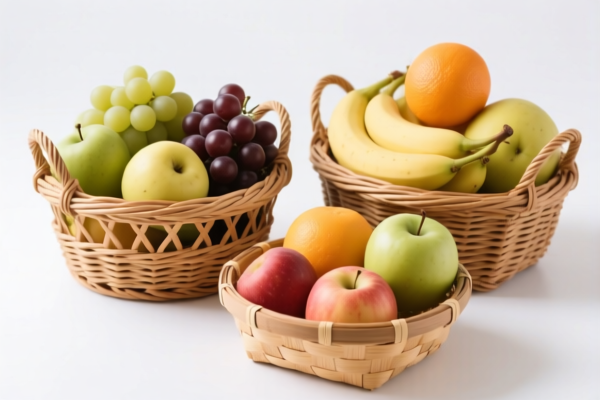
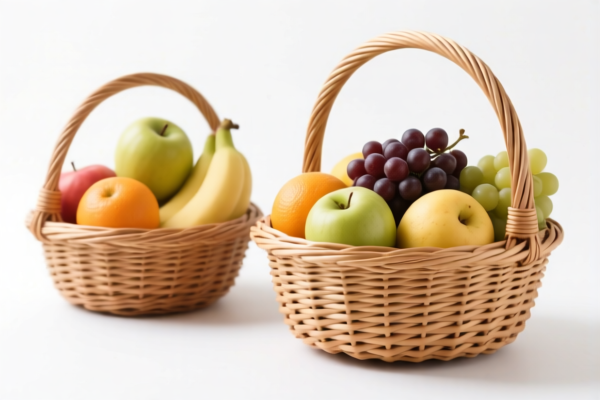
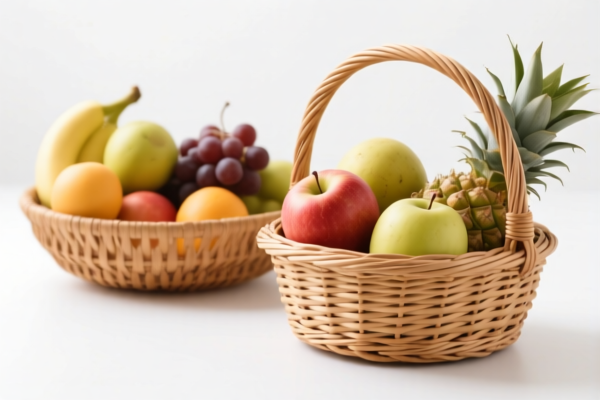
AI Analysis
🧺 Woven Fruit Basket (Fruit Basket)
🌐 HS Code Reference & Customs Clearance Guide | 2026 Latest Tariff Analysis | Professional Entry Strategy
📌 I. Product Definition & Classification: Do You Really Know What You Are Importing?
A Woven Fruit Basket is a container primarily used for displaying or storing fruits. In international trade, its classification hinges critically on material composition and structural form. Since the name "Woven Fruit Basket" does not explicitly state the material, customs authorities will rely on reasonable inference based on common sense and market norms.
There are two primary material pathways: 1. Vegetable Materials (Bamboo, Willow, Rattan, etc.): The most traditional and common interpretation of "woven." 2. Plastic or Metal: If the "woven" appearance is imitated via molded plastic or constructed from metal wire.
⚠️ Key Distinction:
- If made of natural plant fibers (bamboo, willow) → Classified under Chapter 46 (Wrought Plaiting Materials).
- If made of Plastic (even if woven-look) → Classified under Chapter 39 (Plastics).
- If made of Iron/Steel (wire basket) → Classified under Chapter 73 (Articles of Iron or Steel).
📦 II. HS Code Classification Details (2026 Latest Tariff Authority Comparison)
Based on the provided data, here are the four most likely HS Code classifications for a "Woven Fruit Basket," ranging from vegetable materials to metals and plastics.
| HS Code | Product Description | Material Inference | Application Scenario |
|---|---|---|---|
4602.11.07.00 |
Baskets and other made-up plaiting materials, of bamboo, willow, or similar materials of a vegetable nature... | Bamboo/Willow/Plant Fiber | Traditional woven baskets, eco-friendly products. |
4602.11.09.00 |
Other baskets and other made-up plaiting materials, of bamboo, willow, or similar materials of a vegetable nature... | Other Vegetable Fiber | Basket materials not specifically listed in '07', still plant-based. |
3923.10.90.00 |
Articles for the conveyance or packing of goods, of plastics: Boxes, cases, crates and similar articles | Plastic | Plastic "woven" look, durable, lightweight, household storage. |
3923.90.00.80 |
Other articles for the conveyance or packing of goods, of plastics | Plastic | Plastic packing supplies not fitting specific box/crate definitions. |
7323.99.90.30 |
Table, kitchen or other household articles and parts thereof, of iron or steel; toilet articles... | Iron/Steel | Metal wire baskets, often found in kitchens or pantries. |
7323.99.90.80 |
Other table, kitchen, or other household articles and parts thereof, of iron or steel | Iron/Steel | General metal household ware, not specifically toilet articles. |
🔍 Key Reminder:
- Vegetable Material (Ch. 46): If the product feels natural, flexible, and is clearly woven from stalks or fibers, it likely falls here.
- Plastic (Ch. 39): If the product is rigid, smooth, or has a synthetic sheen despite a "woven" pattern, it is plastic.
- Metal (Ch. 73): If the product is rigid, metallic, and made of welded or twisted wire, it is metal.
- No Material Specified? Customs will use "Reasonable Material Inference." If the product is ambiguous, authorities may default to the most common household variant (often plastic or metal for durable goods, or bamboo for traditional goods).
💰 III. 2026 Latest Tariff Rate Details (Including Surcharges & Policy Add-ons)
✅ Applicable Country: United States (US)
✅ Country of Origin: China (CN)
✅ Effective Date: November 10, 2025 onwards (including subsequent imports)
🎯 1. 4602.11.07.00 & 4602.11.09.00 —— Baskets of Bamboo/Willow/Plant Fibers
A. HS Code 4602.11.07.00
| Item | Details |
|------|---------|
| Base Duty Rate | 0.0% |
| Section 301 Additional Duty | 25.0% |
| IEEPA Section 122 Duty | 10.0% |
| Total Duty Rate | 35.0% |
| Tax Calculation | CIF Value × 35% |
| De Minimis Exemption | ❌ Not Eligible (High total rate triggers scrutiny) |
B. HS Code 4602.11.09.00
| Item | Details |
|------|---------|
| Base Duty Rate | 10.0% |
| Section 301 Additional Duty | 25.0% |
| IEEPA Section 122 Duty | 10.0% |
| Total Duty Rate | 45.0% |
| Tax Calculation | CIF Value × 45% |
| De Minimis Exemption | ❌ Not Eligible |
📌 Explanation:
- For bamboo/willow baskets, the base rate is low (0-10%), but the Section 301 (25%) and IEEPA (10%) surcharges apply strictly to Chinese-origin goods.
- Total cost impact: 35% to 45%. This is a moderate-to-high tariff burden for natural fiber products.
🎯 2. 3923.10.90.00 & 3923.90.00.80 —— Plastic Packaging/Baskets
A. HS Code 3923.10.90.00
| Item | Details |
|------|---------|
| Base Duty Rate | 3.0% |
| Section 301 Additional Duty | 25.0% |
| IEEPA Section 122 Duty | 10.0% |
| Total Duty Rate | 38.0% |
| Tax Calculation | CIF Value × 38% |
| De Minimis Exemption | ❌ Not Eligible |
B. HS Code 3923.90.00.80
| Item | Details |
|------|---------|
| Base Duty Rate | 3.0% |
| Section 301 Additional Duty | 25.0% |
| IEEPA Section 122 Duty | 10.0% |
| Total Duty Rate | 38.0% |
| Tax Calculation | CIF Value × 38% |
| De Minimis Exemption | ❌ Not Eligible |
📌 Explanation:
- Plastic baskets are classified under "packing/conveyance articles."
- The base rate is low (3%), but the 25% Section 301 and 10% IEEPA surcharges push the total to 38%.
- Comparison: Slightly lower than the worst-case bamboo basket (45%), but higher than the best-case bamboo basket (35%).
🎯 3. 7323.99.90.30 & 7323.99.90.80 —— Iron/Steel Household Articles
A. HS Code 7323.99.90.30
| Item | Details |
|------|---------|
| Base Duty Rate | 3.4% |
| Section 301 Additional Duty | 25.0% |
| IEEPA Section 122 Duty | 10.0% |
| Steel/Aluminum/Copper Additional Duty | 50.0% (Specific to steel products) |
| Total Duty Rate | 88.4% |
| Tax Calculation | CIF Value × 88.4% |
| De Minimis Exemption | ❌ Not Eligible |
B. HS Code 7323.99.90.80
| Item | Details |
|------|---------|
| Base Duty Rate | 3.4% |
| Section 301 Additional Duty | 25.0% |
| IEEPA Section 122 Duty | 10.0% |
| Steel/Aluminum/Copper Additional Duty | 50.0% (Specific to steel products) |
| Total Duty Rate | 88.4% |
| Tax Calculation | CIF Value × 88.4% |
| De Minimis Exemption | ❌ Not Eligible |
📌 Explanation:
- CRITICAL WARNING: If your "woven" basket is actually made of iron or steel wire, the tariffs are extremely high.
- In addition to the standard 25% (Section 301) and 10% (IEEPA), there is an additional 50% tariff specifically levied on steel, aluminum, and copper articles.
- Total: 88.4%. This makes metal fruit baskets prohibitively expensive for US import from China.
🛠️ IV. Customs Clearance Practical Advice (Combat Pitfall Guide)
✅ 1. Preparation Checklist (Missing Items = Delays)
| Document | Required | Purpose |
|---|---|---|
| ✅ Product Photos | ✔️ | Show the weave pattern, material texture (natural vs. synthetic vs. metallic). |
| ✅ Material Composition Statement | ✔️ | Explicitly state: "100% Bamboo," "PP Plastic," or "Steel Wire." Ambiguity leads to worst-case classification. |
| ✅ Commercial Invoice | ✔️ | Describe accurately: "Bamboo Woven Fruit Basket" vs. "Plastic Woven-Style Basket." |
| ✅ Packing List | ✔️ | Weight and dimensions to verify HS code logic (heavy = metal, light = plastic/plant). |
| ✅ Origin Certificate (CO) | ✔️ | To confirm China origin for surcharge calculation. |
✅ 2. Declaration Strategy (Key Mantras)
🔥 “Material First, Form Second, Name Specific, Tax Avoided!”
| Scenario | Correct Declaration | Wrong Practice | Consequence |
|---|---|---|---|
| Natural Bamboo/Willow | “Bamboo Woven Fruit Basket” → 4602.11.07.00 |
Misdeclare as Plastic → 3923 |
Risk of misclassification penalty; tax diff 3% vs 35-45%. |
| Plastic Lookalike | “Plastic Woven-Style Fruit Basket” → 3923.10.90.00 |
Misdeclare as Bamboo → 4602 |
High Risk: Customs will test material. If plastic, they may impose fines for wrong HS. |
| Metal Wire Basket | “Steel Wire Fruit Basket” → 7323.99.90.30 |
Do NOT declare! | 88.4% Tax destroys profit margin. Consider sourcing from non-China origin or different material. |
| Mixed Materials | Specify dominant material or ask for pre-ruling | “Woven Basket” (Vague) | Customs uses Adverse Inference: Likely to pick the highest tax or most restrictive code. |
✅ 3. Special Case Handling
| Situation | Advice |
|---|---|
| Ambiguous Material | If the product is a blend (e.g., bamboo frame + plastic handle), declare the essential character material. Provide detailed breakdown. |
| High-Value Metal Baskets | Avoid Importing from China. The 88.4% tax is unsustainable. Source from Vietnam, Mexico, or Thailand if possible to avoid Section 301/IEEPA. |
| Pre-Ruling (Advance Ruling) | Strongly recommended for new suppliers. Submit photos and material specs to CBP to get a binding HS code decision. |
🌍 V. Global Market Comparison (2026 Latest)
| Country/Region | Recommended HS Code | Estimated Duty (China Origin) | Remarks |
|---|---|---|---|
| 🇺🇸 USA | 4602.11.07.00 / 3923.10.90.00 / 7323.99.90.30 |
35% - 88.4% | Highest cost market due to 301 & IEEPA surcharges. |
| 🇨🇳 China | Same HS Codes | 0% - 10% (Import Duty) | Low base duty, but no US surcharges. |
| 🇪🇺 EU | 4602.11 / 3923 / 7323 | 0% - 6% | No Section 301/IEEPA equivalent. Much cheaper. |
| 🇨🇦 Canada | Same HS Codes | 0% - 5% | No aggressive surcharges. Favorable. |
| 🇦🇺 Australia | Same HS Codes | 5% | Moderate. No additional 301-style tariffs. |
📌 Conclusion:
- USA is the only major market imposing these specific high surcharges on Chinese woven/household goods.
- Metal baskets (7323) are unviable for US import from China due to the 88.4% effective rate.
- Bamboo/Plastic baskets are viable but costly (35-45%). Margins must be carefully calculated.
📌 VI. Common Mistakes & Pitfalls (Lessons Learned)
❌ Mistake 1: Assuming "Woven" means Bamboo
👉 Reality: Many "woven" baskets are plastic. Misclassifying plastic as bamboo (35%) vs. correct plastic (38%) is small, but misclassifying metal as bamboo (88.4% vs 35%) is a catastrophic fine. Always verify material!
❌ Mistake 2: Ignoring the "Steel/Copper/Aluminum" 50% Surcharge
👉 Reality: If your basket is metal, you face 88.4%, not just 25%. Many importers lose money because they forgot this specific steel tariff.
❌ Mistake 3: Vague Description "Woven Basket"
👉 Reality: Customs officers will choose the code that maximizes revenue or fits the most ambiguous category. Provide explicit material (e.g., "100% Polypropylene") to control classification.
🎯 VII. Conclusion: Professional Declaration, Cost Control, Efficiency!
🎯 Remember the Mantra:
🔹 "Material Dictates Code, Code Dictates Tax."
🔹 "Metal Baskets = 88.4% Tax (Run Away!)"
🔹 "Bamboo/Plastic = 35-45% Tax (Manage Margins!)"
🔹 "Be Specific, Avoid Penalties!"
📌 Pro Tip:
If you are importing metal wire baskets, consider sourcing from countries not subject to Section 301 (e.g., Vietnam, Indonesia) to avoid the 25% + 10% + 50% triad. For bamboo/plastic, the 35-45% tax is manageable with proper margin planning.
📣 Immediate Action:
📞 Verify Material: Get a supplier declaration of material composition.
📄 Apply for Advance Ruling: If uncertain, submit to CBP for a binding decision.
📉 Calculate Landed Cost: Include 35-88.4% duty in your pricing model.
✨ Professional Customs Clearance Starts with Accurate Classification!
💼 Every Percent of Tax Saved is Pure Profit!
Customer Reviews
About HS Code Classification
The Harmonized System (HS) is an internationally standardized nomenclature developed by the World Customs Organization (WCO) to classify traded products. Over 200 countries use the HS system as the basis for customs tariffs, trade statistics, and import/export regulations.
Each HS code follows a hierarchical structure:
- Chapter (2 digits) — Broad category of goods (e.g., Chapter 84: Machinery and Mechanical Appliances)
- Heading (4 digits) — More specific grouping within the chapter
- Subheading (6 digits) — Internationally standardized breakdown, used by all WCO member countries
- National subdivisions (8-10 digits) — Country-specific extensions for further classification, such as US HTSUS 10-digit codes
Correct HS code classification is essential for smooth customs clearance, accurate duty payment, and compliance with trade regulations. Misclassification can lead to customs delays, overpayment of duties, or penalties.
When importing from CN to US, the applicable tariff rates may include:
- Most-Favored-Nation (MFN) rate — The standard duty rate applied to WTO members
- General rate — Applied to countries without trade agreements
- Trade remedy duties — Additional tariffs such as Section 301 (anti-dumping), Section 232 (national security), or countervailing duties
The information provided on this page is for reference purposes only. For official classification, please consult with your local customs authority or a licensed customs broker.