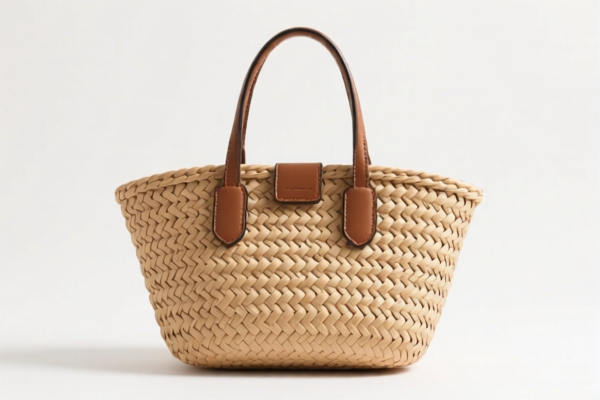
Woven Handbag
CN → US| HS Code | Tariff Rate | Origin | Destination | Doc |
|---|---|---|---|---|
| 4602192920 | 40.3% | CN | US | Official Doc |
| 4602112100 | 41.2% | CN | US | Official Doc |
| 4202224020 | 42.4% | CN | US | Official Doc |
| 4202228980 | 52.6% | CN | US | Official Doc |
Product Images

AI Analysis
👜 Woven Handbags: The Ultimate 2026 HS Code & Duty Guide
🌐 HS Code Classification & Tariff Strategy | 2026 China-US Trade Tariff Breakdown | Professional Customs Clearance
📌 I. Product Definition & Classification: What Makes a "Woven Handbag"?
Woven handbags are among the most versatile fashion accessories, widely used in retail, travel, and daily life. However, in international trade, their classification depends heavily on material composition and weaving technique. They fall primarily under two HS Code chapters:
1. Chapter 46: Woven Matting & Basketry (Plant Materials)
- Includes handbags made from bamboo, rattan, cane, straw, or other natural plant fibers.
- Key Feature: 100% or predominantly plant-based woven materials.
2. Chapter 42: Articles of Leather; Travelling Goods, Handbags
- Includes handbags made from synthetic or textile woven materials (e.g., polypropylene, polyester, jute blends).
- Key Feature: Not primarily natural plant fibers; may include synthetic textiles.
⚠️ Critical Distinction:
- If made from bamboo, rattan, cane, or straw → Chapter 46 (e.g., 4602.11 / 4602.19)
- If made from synthetic/textile woven materials → Chapter 42 (e.g., 4202.22)
- Misclassification can lead to significant duty overpayment or penalties.
📦 II. HS Code Classification Details (2026 Tariff Authority)
| HS Code | Product Description | Material Type | Typical Use Case |
|---|---|---|---|
4602.19.29.20 |
Woven handbags, plant material woven products | Bamboo, rattan, cane, straw | Eco-friendly fashion, beach bags |
4602.11.21.00 |
Woven handbags, bamboo, rattan or other plant materials | Bamboo, rattan, cane | Traditional basketry, artisan crafts |
4202.22.40.20 |
Woven handbags, made of woven materials | Synthetic/textile (e.g., polypropylene) | Retail, promotional, lightweight bags |
4202.22.89.80 |
Woven handbags, made of other textile materials | Mixed/textile blends (non-synthetic) | Luxury, fashion, artisanal textile bags |
🔍 Key Insight:
- Chapter 46 applies to natural plant fibers (bamboo, rattan, cane).
- Chapter 42 applies to textile or synthetic woven materials.
- Duty rates vary significantly based on material, ranging from 40.3% to 52.6%.
💰 III. 2026 Latest Tariff Rate Breakdown (US Import from China)
✅ Applicable Country: United States (US)
✅ Country of Origin: China (CN)
✅ Effective Date: As per current US tariff schedules (2025-2026)
🎯 1. 4602.19.29.20 —— Woven Handbags (Plant Material)
| Item | Details |
|---|---|
| Base Tariff | 5.3% |
| Section 301 Added Duty | +25.0% |
| Section 122 Tariff | +10.0% |
| Total Duty Rate | 40.3% |
| Duty Calculation | CIF Value × 40.3% |
| De Minimis Exemption | ❌ Not eligible |
| Legal Reference | Section 301: 4602.19.29.20 → Section 122: 4602.19.29.20 |
📌 Explanation:
- The 5.3% is the base Most Favored Nation (MFN) rate.
- The 25% comes from Section 301 (China-specific added duty).
- The 10% is a Section 122 tariff targeting specific woven products.
- Total: 40.3% → High duty impact on plant-based woven bags.
🎯 2. 4602.11.21.00 —— Woven Handbags (Bamboo, Rattan, Plant)
| Item | Details |
|---|---|
| Base Tariff | 6.2% |
| Section 301 Added Duty | +25.0% |
| Section 122 Tariff | +10.0% |
| Total Duty Rate | 41.2% |
| Duty Calculation | CIF Value × 41.2% |
| De Minimis Exemption | ❌ Not eligible |
| Legal Reference | Section 301: 4602.11.21.00 → Section 122: 4602.11.21.00 |
📌 Note:
- Slightly higher base rate than4602.19.29.20due to material specificity.
- Same Section 301 + 122 structure → 41.2% total.
🎯 3. 4202.22.40.20 —— Woven Handbags (Woven Materials)
| Item | Details |
|---|---|
| Base Tariff | 7.4% |
| Section 301 Added Duty | +25.0% |
| Section 122 Tariff | +10.0% |
| Total Duty Rate | 42.4% |
| Duty Calculation | CIF Value × 42.4% |
| De Minimis Exemption | ❌ Not eligible |
| Legal Reference | Section 301: 4202.22.40.20 → Section 122: 4202.22.40.20 |
📌 Explanation:
- Applies to synthetic/textile woven bags.
- Still subject to Section 301 + 122 → 42.4% total.
🎯 4. 4202.22.89.80 —— Woven Handbags (Other Textile Materials)
| Item | Details |
|---|---|
| Base Tariff | 17.6% |
| Section 301 Added Duty | +25.0% |
| Section 122 Tariff | +10.0% |
| Total Duty Rate | 52.6% |
| Duty Calculation | CIF Value × 52.6% |
| De Minimis Exemption | ❌ Not eligible |
| Legal Reference | Section 301: 4202.22.89.80 → Section 122: 4202.22.89.80 |
📌 Warning:
- Highest duty rate (52.6%) among all woven handbag types.
- Due to higher base tariff (17.6%), this classification is cost-intensive.
🛠️ IV. Customs Clearance Best Practices (Avoid Costly Mistakes)
✅ 1. Documentation Checklist (Mandatory)
| Document | Required | Purpose |
|---|---|---|
| ✅ Product Specification Sheet | ✔️ | Detail material composition, weave type, dimensions |
| ✅ Material Certificate | ✔️ | Verify plant vs. textile origin |
| ✅ Product Photos (Label, Tag, Interior) | ✔️ | Confirm material and construction |
| ✅ Commercial Invoice | ✔️ | Clearly state HS Code and duty applicability |
| ✅ Packing List | ✔️ | Ensure no拆分 (splitting) of components |
| ✅ Country of Origin Certificate (CO) | ✔️ | If applicable for preferential treatment |
| ✅ Test Reports (FCC, RoHS, etc.) | ✔️ | For synthetic materials |
✅ 2. Declaration Tips (Golden Rules)
🔥 “Material Dictates HS Code: Plant → 46, Textile → 42. Don’t Guess – Know Your Weave!”
| Scenario | Correct HS Code | Risk if Wrong |
|---|---|---|
| Bamboo/Rattan bag | 4602.11.21.00 or 4602.19.29.20 |
Misclassified as textile → 52.6% |
| Synthetic woven bag | 4202.22.40.20 |
Misclassified as plant → 40.3% |
| Mixed plant + textile | Usually 4202.22.89.80 |
High risk of 52.6% duty |
| "Handbag" without material detail | ❌ Avoid | Customs may reclassify → penalties |
✅ 3. Special Handling Cases
| Situation | Recommendation |
|---|---|
| OEM Custom Handbags | Provide design specs + material certs |
| Bamboo + Fabric Trim | Declare as 4202.22.89.80 if fabric dominates |
| Recycled Material Bags | Still subject to same duties unless certified under eco-exemption |
| Sample Bags | Still require full documentation; no automatic exemption |
🌍 V. Global Market Comparison (2026 Tariff Snapshot)
| Country/Region | Recommended HS Code | Tariff (China) | Certification Required | Notes |
|---|---|---|---|---|
| 🇺🇸 USA | 4602.19.29.20 / 4202.22.40.20 |
40.3% – 52.6% | FDA (if food contact), RoHS | Highest tariffs globally |
| 🇪🇺 EU | 4602.19 / 4202.22 |
0–5% (if FTA) | CE, REACH | Lower duties, stricter safety |
| 🇯🇵 Japan | 4602.11 / 4202.22 |
0–10% | PSE | Low base tariff, minimal Section 301 |
| 🇨🇦 Canada | 4602.19 / 4202.22 |
0–12% | CSAR | Moderate tariffs |
| 🇦🇺 Australia | 4602.19 / 4202.22 |
0–5% | APEC | Very low tariffs |
📌 Takeaway:
- USA has the highest tariffs due to Section 301 + 122.
- EU and Japan offer lower duties if materials meet FTA standards.
- Consider alternative sourcing (Vietnam, Thailand) to avoid high China tariffs.
📌 VI. Common Mistakes & Lessons Learned
❌ Mistake 1: Declaring bamboo bags as "textile" → 52.6% duty
👉 Fix: Use 4602.11.21.00 or 4602.19.29.20 with material proof.
❌ Mistake 2: Failing to disclose weave type → Customs reclassification
👉 Fix: Always specify "woven bamboo" or "woven synthetic".
❌ Mistake 3: Splitting handbag + accessory → Higher total duty
👉 Fix: Declare as complete set under single HS Code.
❌ Mistake 4: Ignoring Section 122 → Unexpected 10% surcharge
👉 Fix: Check all 3 duty components: Base + Section 301 + Section 122.
✅ Best Practice:
"Woven Handbag, 100% Bamboo, Size 30x40cm, Model XYZ, Made in China, HS Code 4602.19.29.20"
🎯 VII. Conclusion: Precision Classification = Cost Savings!
🎯 Remember:
🔹 “Material First, Then HS Code: Plant = 46, Textile = 42”
🔹 “Section 301 + 122 = +35% on top of base rate – don’t skip them!”
🔹 “Wrong Code = Wrong Duty = Lost Profit!”
📌 Pro Tip:
If your handbags are produced in Vietnam, Thailand, or Mexico, you may qualify for Section 301/122 exemptions, reducing duty to 0–15%.
Recommendation: Apply for Advance Ruling from US Customs to lock in correct HS Code before shipping.
📣 Next Steps:
📞 Contact a licensed customs broker + Provide material specs + Request HS Code Pre-Ruling
🚀 Ensure smooth clearance, lower duties, and maximized profit margins!
✨ Accurate Classification = Your First Step to Global Success!
💼 Every Duty Dollar Counts – Get It Right!
Customer Reviews
About HS Code Classification
The Harmonized System (HS) is an internationally standardized nomenclature developed by the World Customs Organization (WCO) to classify traded products. Over 200 countries use the HS system as the basis for customs tariffs, trade statistics, and import/export regulations.
Each HS code follows a hierarchical structure:
- Chapter (2 digits) — Broad category of goods (e.g., Chapter 84: Machinery and Mechanical Appliances)
- Heading (4 digits) — More specific grouping within the chapter
- Subheading (6 digits) — Internationally standardized breakdown, used by all WCO member countries
- National subdivisions (8-10 digits) — Country-specific extensions for further classification, such as US HTSUS 10-digit codes
Correct HS code classification is essential for smooth customs clearance, accurate duty payment, and compliance with trade regulations. Misclassification can lead to customs delays, overpayment of duties, or penalties.
When importing from CN to US, the applicable tariff rates may include:
- Most-Favored-Nation (MFN) rate — The standard duty rate applied to WTO members
- General rate — Applied to countries without trade agreements
- Trade remedy duties — Additional tariffs such as Section 301 (anti-dumping), Section 232 (national security), or countervailing duties
The information provided on this page is for reference purposes only. For official classification, please consult with your local customs authority or a licensed customs broker.