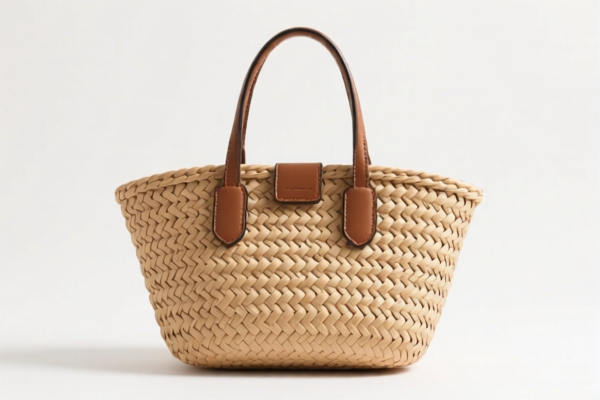
Woven Handbag with Magnetic Clasp
CN → US| HS Code | Tariff Rate | Origin | Destination | Doc |
|---|---|---|---|---|
| 4602112100 | 41.2% | CN | US | Official Doc |
| 4602192920 | 40.3% | CN | US | Official Doc |
| 4202224020 | 42.4% | CN | US | Official Doc |
| 4202228980 | 52.6% | CN | US | Official Doc |
Product Images


AI Analysis
👜 Woven Handbag with Magnetic Clasp (Classification & Taxation Guide)
🌐 HS Code Reference & Clearance Strategy | 2026 Tax Code Analysis | Premium Import Strategy
📌 I. Product Definition & Classification: What Defines a "Woven Handbag"?
A Woven Handbag with a Magnetic Clasp is a portable accessory used for carrying personal items, characterized by its distinctive manufacturing method and closure mechanism. In international trade, classification hinges strictly on the raw material composition of the weaving. The presence of a "magnetic clasp" is a minor functional detail that does not alter the fundamental classification but confirms its status as a finished "handbag."
Core Distinction: * Plant Material Weaving (Bamboo, Rattan, Wicker): Falls under Chapter 46 (Wickerwork). * General Textile Weaving (Cotton, Polyester, Synthetic): Falls under Chapter 42 (Leather Goods/Travel Goods).
⚠️ Critical Classification Point:
- If the body is made of Bamboo, Rattan, or Reed → Must declare under 4602. - If the body is made of Textiles, Felt, or other woven materials → Must declare under 4202. - Note: The magnetic clasp does not change the material category; it is considered an accessory.
📦 II. HS Code Classification Details (2026 Latest Tariff Schedule)
Based on the specific material composition of the woven handbag, here are the precise HS Codes and their corresponding tax structures for US imports from China:
| HS Code | Product Description | Material Composition | Tax Rate (Total) |
|---|---|---|---|
| 4602.11.21.00 | Bamboo/Rattan Handbags | Woven from Bamboo, Rattan, or similar plant materials | 41.2% |
| 4602.19.29.20 | Other Plant Material Bags | Woven from other plant materials (e.g., Water Hyacinth, Palm) | 40.3% |
| 4202.22.40.20 | Textile Woven Handbags | Made of woven textiles (non-metallic, non-leather) | 42.4% |
| 4202.22.89.80 | Other Textile Handbags | Made of "other textile materials" (complex blends, non-standard) | 52.6% |
🔍 Deep Dive on Classification Logic:
- 4602 Series: Reserved strictly for goods made of wicker, basketry, or plant fibers. If the bag is "woven bamboo," this is the mandatory path. - 4202 Series: Covers all other handbags not made of leather or wicker. - 4202.22.40.20: Typically for standard woven fabrics (e.g., canvas, straw-like synthetic). - 4202.22.89.80: The "catch-all" for other textile materials, often carrying the highest duty due to lack of specific tariff preference.
💰 III. 2026 Tariff Rate Deep Dive (Detailed Breakdown)
✅ Applicable Market: United States (US)
✅ Origin: China (CN)
✅ Effective Date: Includes all current and future importations under Section 301 & Section 122.
🎯 1. Plant Material Handbags (HS Codes: 4602.11.21.00 & 4602.19.29.20)
| Tax Component | 4602.11.21.00 (Bamboo/Rattan) | 4602.19.29.20 (Other Plant) |
|---|---|---|
| Base Duty | 6.2% | 5.3% |
| Section 301 Add-on | +25.0% (Trade War Tariff) | +25.0% (Trade War Tariff) |
| Section 122 Add-on | +10.0% (Section 122 Specific) | +10.0% (Section 122 Specific) |
| Total Effective Tax | 41.2% | 40.3% |
| Calculation | CIF Value × 41.2% | CIF Value × 40.3% |
| De Minimis Exemption | ❌ NO | ❌ NO |
📌 Interpretation:
- The Base Duty is relatively low (5-6%) because these are natural fibers. - However, the 25% Section 301 tariff applies to almost all Chinese wicker goods. - The 10% Section 122 tariff is a specific punitive measure on certain Chinese categories, adding significant cost. - Result: Despite natural materials, the total tax burden is ~41%.
🎯 2. Textile Woven Handbags (HS Codes: 4202.22.40.20 & 4202.22.89.80)
| Tax Component | 4202.22.40.20 (Standard Textile) | 4202.22.89.80 (Other Textile) |
|---|---|---|
| Base Duty | 7.4% | 17.6% |
| Section 301 Add-on | +25.0% | +25.0% |
| Section 122 Add-on | +10.0% | +10.0% |
| Total Effective Tax | 42.4% | 52.6% |
| Calculation | CIF Value × 42.4% | CIF Value × 52.6% |
| De Minimis Exemption | ❌ NO | ❌ NO |
📌 Interpretation:
- 4202.22.89.80 is the most expensive category. The base duty is already 17.6% (likely due to specific synthetic blends or lack of preferential status), making the total 52.6%. - 4202.22.40.20 is slightly better at 42.4%, but still heavily taxed due to the 301 and 122 clauses. - Conclusion: For textile bags, the choice of sub-category can save or cost you 10% of the goods' value in pure tax.
🛠️ IV. Customs Clearance Practical Advice (Avoid Pitfalls)
✅ 1. Preparation Checklist (Mandatory)
| Document | Requirement | Purpose |
|---|---|---|
| Material Composition Statement | ✔️ Critical | Must explicitly state: "100% Bamboo," "Woven Rattan," or "Woven Polyester." This determines 4602 vs. 4202. |
| Product Photos | ✔️ Critical | High-res images showing the weave texture and the magnetic clasp. |
| Bill of Materials (BOM) | ✔️ | Detailed list of all components (Clasp, lining, threads). |
| Commercial Invoice | ✔️ | Must match the HS Code description exactly. |
| Origin Certificate (CO) | ✔️ | Proof of "Made in China" (Note: No MFN preference for these codes). |
✅ 2. Declaration Strategy (The "Golden Rules")
🔥 "Material First, Clasp Second, Description Precise!"
| Scenario | Correct Declaration | Incorrect Declaration | Consequence |
|---|---|---|---|
| Bamboo Bag with Clasp | HS 4602.11.21.00 | HS 4202.22.40.20 (Textile) | Risk: Misclassification, potential audit, duty underpayment penalties. |
| Synthetic Woven Bag | HS 4202.22.40.20 | HS 4202.22.89.80 | Risk: Overpaying 10% tax. |
| Mixed Material Bag | Analyze "Principal Material" | Guessing the code | Risk: Customs holds cargo for "Material Verification." |
✅ 3. Special Handling for "Magnetic Clasp"
- Do not list the magnetic clasp as a separate item in the declaration unless it is sold separately.
- The clasp is considered an integral part of the handbag.
- Warning: If the clasp contains rare earth metals (e.g., Neodymium), ensure the declaration does not trigger Section 122 restrictions on specific electronic or metal components, though for standard handbag clasps, it is usually treated as a standard accessory.
🌍 V. Global Market Comparison (2026 Context)
| Region | Typical Duty (Base) | Add-ons | Total Est. | Strategy |
|---|---|---|---|---|
| 🇺🇸 USA | 5.3% - 17.6% | +35% (301+122) | 40.3% - 52.6% | High Risk. Requires strict material proof. |
| 🇪🇺 EU | 12% | None | 12% | Lower. No Section 301/122 equivalent. |
| 🇨🇳 China | 0% | None | 0% | Domestic trade only. |
| 🇲🇽 Mexico | Varies | Depends on FTA | Variable | Potential. If re-exported from US, complex rules apply. |
📌 Conclusion: The US market is the most expensive due to the叠加 (stacking) of Base Tariffs + Section 301 + Section 122.
📌 VI. Common Pitfalls & Solutions
❌ Pitfall 1: Misidentifying "Straw" vs. "Textile"
👉 Action: If the bag looks like straw but is made of plastic fibers (Polypropylene), it is 4202, not 4602. This changes the tax from ~41% to ~52.6%.
✅ Fix: Always run a burn test or lab analysis on the material.
❌ Pitfall 2: Ignoring the "Section 122" Clause
👉 Action: Assume the 301 tariff covers everything.
✅ Fix: Remember, Section 122 adds an extra 10% on top of the 301 for these specific codes. Total is 35%+Base, not just 25%+Base.
❌ Pitfall 3: Vague Descriptions
👉 Action: Listing simply "Handbag" on the invoice.
✅ Fix: Use "Woven Bamboo Handbag with Magnetic Clasp" or "Woven Synthetic Textile Handbag." Specificity prevents customs delays.
🎯 VII. Final Strategy: Cost Reduction & Compliance
🚀 Key Takeaway:
The Magnetic Clasp does not save you taxes. The Material dictates your fate. - Bamboo/Rattan = 41.2% (Best of the worst) - Textile (Standard) = 42.4% - Textile (Other) = 52.6% (Avoid if possible)
Action Plan for Importers: 1. Verify Material: Confirm 100% plant vs. textile composition. 2. Select Correct HS Code: Do not guess; use the 4602 vs. 4202 decision tree. 3. Budget for 40%+: Factor in the total tax (Base + 301 + 122) into your pricing model. 4. Avoid Section 122 Traps: If possible, consider sourcing from non-China countries (Vietnam, Thailand) to bypass the 301/122 stack, though Section 301 often applies globally to the final destination.
✨ Professional Customs Clearance Starts with Precision!
💼 Every 1% of tax misclassification costs thousands in lost profit.
📞 Consult a Licensed Customs Broker before shipping!
Customer Reviews
About HS Code Classification
The Harmonized System (HS) is an internationally standardized nomenclature developed by the World Customs Organization (WCO) to classify traded products. Over 200 countries use the HS system as the basis for customs tariffs, trade statistics, and import/export regulations.
Each HS code follows a hierarchical structure:
- Chapter (2 digits) — Broad category of goods (e.g., Chapter 84: Machinery and Mechanical Appliances)
- Heading (4 digits) — More specific grouping within the chapter
- Subheading (6 digits) — Internationally standardized breakdown, used by all WCO member countries
- National subdivisions (8-10 digits) — Country-specific extensions for further classification, such as US HTSUS 10-digit codes
Correct HS code classification is essential for smooth customs clearance, accurate duty payment, and compliance with trade regulations. Misclassification can lead to customs delays, overpayment of duties, or penalties.
When importing from CN to US, the applicable tariff rates may include:
- Most-Favored-Nation (MFN) rate — The standard duty rate applied to WTO members
- General rate — Applied to countries without trade agreements
- Trade remedy duties — Additional tariffs such as Section 301 (anti-dumping), Section 232 (national security), or countervailing duties
The information provided on this page is for reference purposes only. For official classification, please consult with your local customs authority or a licensed customs broker.