Woven Inner Pocket
CN → US| HS Code | Tariff Rate | Origin | Destination | Doc |
|---|---|---|---|---|
| 6307909891 | 24.5% | CN | US | Official Doc |
| 6307908940 | 17.0% | CN | US | Official Doc |
| 4202923900 | 52.6% | CN | US | Official Doc |
Product Images
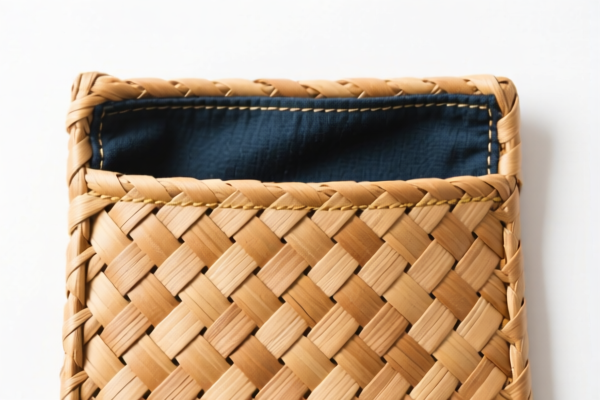
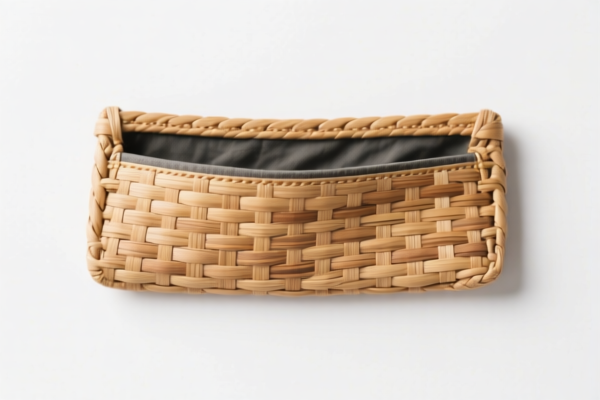
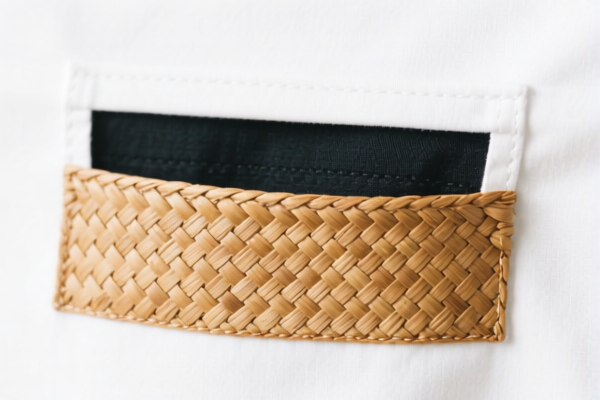

AI Analysis
👜 Woven Handbag with Inner Pocket (编织手提包,带内隔层)
🌐 HS Code Reference & Customs Clearance Guide | 2026 Latest Tariff Analysis | Professional Entry Strategy
📌 I. Product Definition: What Exactly Is a "Woven Handbag with Inner Pocket"?
A "Woven Handbag with Inner Pocket" is a textile-based accessory designed for personal carry. In international trade, its classification hinges on two critical factors: 1. Material: The outer surface is woven (textiles, synthetic fibers, cotton, etc.). 2. Structure: It includes interior compartments/pockets (lining, dividers), distinguishing it from simple pouches.
⚠️ Key Distinction:
- Is it a finished article (bag with structure, lining, pockets)? → Likely Chapter 63 or 4202.
- Is it a specific type of bag (travel, sports, formal)? → May fall under 4202.
- The presence of an inner pocket suggests a higher level of manufacturing, often pushing it towards Chapter 42 (Articles of apparel and accessory) if it fits the definition of a "bag," or Chapter 63 (Other made-up articles) if it’s considered a general textile accessory.
📦 II. HS Code Classification Details (2026 Latest Tariff Authority Match)
Based on the provided <DATA>, here are the three possible classifications and their rationale:
| HS Code | Product Description | Rationale for Classification | Total Tax Rate |
|---|---|---|---|
| 6307.90.98.91 | Woven handbag with inner pocket, classified as "Other made-up articles." Material inferred as textile or fiber. | This code falls under Chapter 63 (Other made-up textile articles). It is used when the bag does not fit neatly into specific bag categories in Chapter 42 (e.g., if it's a casual tote or general-purpose woven bag without specific "travel" or "sports" designation). | 24.5% |
| 6307.90.89.40 | Woven handbag with inner pocket, classified as "Other articles." Material is mostly cotton, linen, or synthetic fiber. | Also under Chapter 63, but a different subheading. This is often used for specific textile compositions (e.g., pure cotton/linen weaves) that don't meet the stricter criteria of the .91 subcategory. Note the lower tariff due to different trade policy treatment. | 17.0% |
| 4202.92.39.00 | Woven handbag with inner pocket,形态 as a bag, material is woven, purpose fits travel or sports bag characteristics. | This code falls under Chapter 42 (Articles of leather or similar materials; travel goods, handbags). Even if made of woven textile, if it is recognized as a "handbag" or "travel bag," it goes here. This is the most premium classification but carries the highest tariff due to Section 301 and 122 tariffs on bags. | 52.6% |
🔍 Critical Note:
- The choice between 6307 (Chapter 63) and 4202 (Chapter 42) is the most critical decision for your customs clearance.
- Chapter 63 codes are generally for "made-up" textile items that are not specifically named as "bags" in Chapter 42.
- Chapter 42 codes are for "articles of apparel and accessory" specifically defined as bags (e.g., handbags, travel bags). If your product is clearly a handbag, U.S. Customs may insist on 4202, leading to a much higher tax.
💰 III. 2026 Latest Tariff Rate Breakdown (Including Additional Taxes & Policies)
✅ Applicable Country: United States (US)
✅ Origin: China (CN)
✅ Effective Date: From 2025 onwards (including subsequent imports)
🎯 1. 6307.90.98.91 —— Other Made-Up Textile Articles
| Item | Detail |
|---|---|
| Base Tariff | 7.0% |
| Section 301 Additional Tariff | 7.5% |
| Section 122 Tariff | 10.0% |
| Total Tax Rate | 24.5% |
| Tax Calculation | CIF Value × 24.5% |
| De Minimis Exemption | ❌ Not Applicable (Section 301 and 122 taxes typically negate the $800 de minimis exemption for certain Chinese goods, depending on specific enforcement; verify current CBP guidance). |
| Legal Basis Path | USITC:6307.90.98.91 → Section 301: Footnote 9903.88.01 → Section 122: IEEPA |
📌 Explanation:
- The 7.5% is the Section 301 tariff on specific textile articles.
- The 10% is the Section 122 tariff (often applied to certain consumer goods).
- Total 24.5% is moderate but significant for high-volume shipments.
🎯 2. 6307.90.89.40 —— Other Textile Articles (Cotton/Linen/Synthetic)
| Item | Detail |
|---|---|
| Base Tariff | 7.0% |
| Section 301 Additional Tariff | 0.0% |
| Section 122 Tariff | 10.0% |
| Total Tax Rate | 17.0% |
| Tax Calculation | CIF Value × 17.0% |
| De Minimis Exemption | ❌ Not Applicable (Section 122 applies). |
| Legal Basis Path | USITC:6307.90.89.40 → Section 122: IEEPA |
📌 Explanation:
- This is the most cost-effective classification if your product qualifies.
- The 0% Section 301 rate is a key advantage.
- The 10% Section 122 still applies, making the total 17%.
🎯 3. 4202.92.39.00 —— Travel/Handbags (Woven Material)
| Item | Detail |
|---|---|
| Base Tariff | 17.6% |
| Section 301 Additional Tariff | 25.0% |
| Section 122 Tariff | 10.0% |
| Total Tax Rate | 52.6% |
| Tax Calculation | CIF Value × 52.6% |
| De Minimis Exemption | ❌ Not Applicable |
| Legal Basis Path | USITC:4202.92.39.00 → Section 301: Footnote 9903.88.01 → Section 122: IEEPA |
📌 Explanation:
- This is the highest risk classification.
- Base 17.6% + 25% (Section 301) + 10% (Section 122) = 52.6%.
- This rate applies because bags are a targeted category for U.S. trade policy.
- Avoid this if possible unless your product strictly fits the "travel bag" definition in Chapter 42.
🛠️ IV. Customs Clearance Practical Advice (Risk Mitigation Guide)
✅ 1. Preparation Checklist (Non-Negotiable)
| Document | Required? | Note |
|---|---|---|
| ✅ Product Specifications | ✔️ | Clearly state "Woven," "Inner Pocket," "Material Composition" (e.g., 100% Cotton, Polyester Blend). |
| ✅ Product Photos | ✔️ | Show the bag from multiple angles, including a clear shot of the inner pocket/compartment. |
| ✅ Material Swatch/Composition Report | ✔️ | Critical for determining if it falls under 6307.90.98.91 (textile) vs. 4202 (bag). |
| ✅ Commercial Invoice | ✔️ | Must clearly describe the item as "Woven Handbag with Inner Pocket" and specify HS Code. |
| ✅ Packing List | ✔️ | Detail quantity, weight, and dimensions. |
✅ 2. Classification Strategy (Key Decision)
| Scenario | Recommended HS Code | Reason |
|---|---|---|
| Casual Tote, Fashion Accessory | 6307.90.98.91 or 6307.90.89.40 | Classify as "made-up textile article," not a "bag." Focus on material (woven textile). |
| Formal Handbag, Structured, Lined | 4202.92.39.00 | If it is clearly a "handbag" with structure, lining, and hardware, U.S. Customs may require Chapter 42. |
| Travel/Sports Woven Bag | 4202.92.39.00 | If used for travel, sports, or has specific "bag" features (straps, zippers, compartments for valuables). |
🔥 Golden Rule:
"If it looks like a bag but you want lower tax, argue it’s a 'textile article.' If it’s clearly a handbag, accept the higher tax."
✅ 3. Common Pitfalls & Avoidance
❌ Pitfall 1: Misclassifying a structured handbag as a "textile pouch" (6307) to save tax.
👉 Consequence: U.S. Customs may reclassify it as 4202, resulting in back taxes + penalties + interest.
👉 Avoidance: Only use 6307 if the product is truly a general-purpose woven bag (e.g., a market tote, a casual sling bag without rigid structure).
❌ Pitfall 2: Ignoring the Section 122 Tariff.
👉 Consequence: All three HS codes include a 10% Section 122 tariff for Chinese origin.
👉 Avoidance: Factor this 10% into your pricing model regardless of the base or Section 301 rate.
❌ Pitfall 3: Incorrect material description.
👉 Consequence: If you claim "synthetic" but it’s "natural fiber," you may be misclassified.
👉 Avoidance: Provide accurate material composition (e.g., "100% Cotton Woven Fabric").
🌍 V. Global Market Comparison (2026 Update)
| Country/Region | Recommended HS Code | Tariff (China Origin) | Certification | Notes |
|---|---|---|---|---|
| 🇺🇸 USA | 6307.90.89.40 | 17.0% (Best Case) | No specific | High risk of reclassification to 4202 (52.6%). |
| 🇺🇸 USA | 4202.92.39.00 | 52.6% (Risk) | No specific | Avoid unless product strictly fits "bag" definition. |
| 🇨🇳 China | 6307.90.98.91 | 5% - 10% | No specific | Lower tax for domestic export. |
| 🇪🇺 EU | 4202.92.39.00 | 0% - 4% | CE/RoHS (if applicable) | EU generally favors 4202 for bags. |
| 🇬🇧 UK | 4202.92.39.00 | 0% - 4% | No specific | Post-Brexit, similar to EU. |
📌 Conclusion:
- The U.S. market is the most challenging due to Section 301 and 122 tariffs.
- Target 6307.90.89.40 for the lowest risk and cost.
- Ensure your product’s description and photos support this classification.
📌 VI. Final Recommendations
✅ Action Plan
- Product Review: Does your bag have a rigid structure, specific "handbag" features, or is it a general woven tote?
- Classification Decision:
- If general woven bag → Use 6307.90.89.40 (17.0% total).
- If formal handbag/travel bag → Use 4202.92.39.00 (52.6% total).
- Documentation: Ensure your commercial invoice explicitly states "Woven Handbag with Inner Pocket" and includes material composition.
- Pre-Ruling: If unsure, apply for a Customs Ruling from U.S. CBP to get a definitive classification before shipping.
🎯 Remember:
"Classification determines cost. Choose wisely, document accurately, and avoid reclassification penalties!"
📣 Next Steps:
📞 Consult a Customs Broker: To confirm if your specific product design fits 6307.90.89.40.
📄 Prepare Documentation: Gather material specs, photos, and invoices.
🚀 Ship with Confidence: Use the correct HS Code to minimize tax and ensure smooth clearance.
✨ Smart Customs, Higher Profits!
💼 Your product’s success starts with accurate classification.
Customer Reviews
About HS Code Classification
The Harmonized System (HS) is an internationally standardized nomenclature developed by the World Customs Organization (WCO) to classify traded products. Over 200 countries use the HS system as the basis for customs tariffs, trade statistics, and import/export regulations.
Each HS code follows a hierarchical structure:
- Chapter (2 digits) — Broad category of goods (e.g., Chapter 84: Machinery and Mechanical Appliances)
- Heading (4 digits) — More specific grouping within the chapter
- Subheading (6 digits) — Internationally standardized breakdown, used by all WCO member countries
- National subdivisions (8-10 digits) — Country-specific extensions for further classification, such as US HTSUS 10-digit codes
Correct HS code classification is essential for smooth customs clearance, accurate duty payment, and compliance with trade regulations. Misclassification can lead to customs delays, overpayment of duties, or penalties.
When importing from CN to US, the applicable tariff rates may include:
- Most-Favored-Nation (MFN) rate — The standard duty rate applied to WTO members
- General rate — Applied to countries without trade agreements
- Trade remedy duties — Additional tariffs such as Section 301 (anti-dumping), Section 232 (national security), or countervailing duties
The information provided on this page is for reference purposes only. For official classification, please consult with your local customs authority or a licensed customs broker.