Woven Magnetic Clutch Handbag
CN → USProduct Images
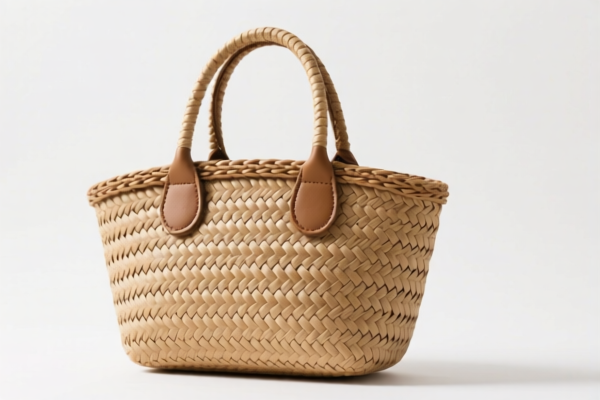
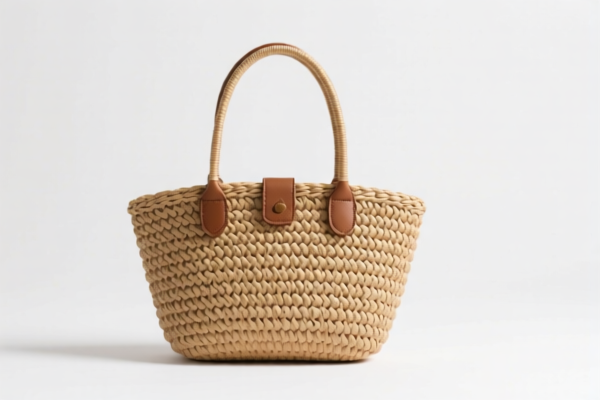
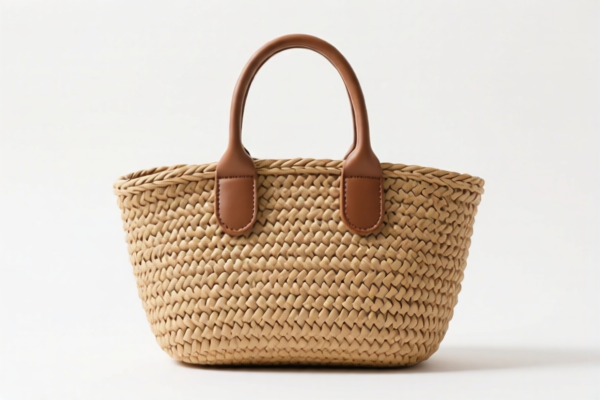
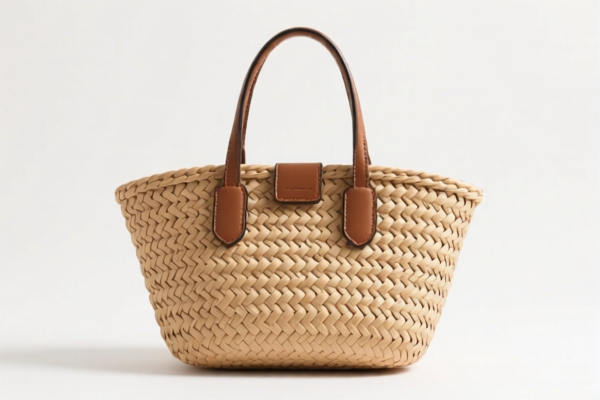
AI Analysis
👜 Woven Magnetic Clutch Handbag (Fashion Accessories)
🌐 HS Code Reference & Customs Clearance Guide | 2026 Latest Tariff Analysis | Professional Entry Strategy
📌 I. Product Definition & Classification: Do You Know What a "Woven Clutch" Really Is?
A Woven Magnetic Clutch Handbag is a small, handheld purse characterized by a structured or semi-structured body made from woven materials (such as straw, leather strips, synthetic fibers, or metal mesh) and secured by a magnetic closure, without a separate strap.
In international trade, classification depends heavily on the primary material of the outer surface and the method of manufacture:
1. By Material Category: * Leather/Leather Components: If the outer surface is leather (including woven leather strips), it falls under Chapter 42. * Textile/Fabric: If the weaving is done with textile materials (cotton, synthetic fibers, raffia, straw), it generally falls under Chapter 42 (as articles of leather or other materials) or Chapter 63 (other made-up articles), but usually Chapter 42 prevails for handbags with stiffened bodies. * Plastic/Rubber: Less common for "woven" styles, but if the base is woven plastic film, it may fall under Chapter 39.
2. By Function: * Clutch/Evening Bag: Designed for formal or casual evening use. * Day Clutch: Designed for daily use, often with internal compartments.
⚠️ Key Distinction Point:
- If the bag is made of woven leather strips, it is classified as a Leather Handbag (Chapter 42).
- If it is made of natural fibers (straw, rattan, grass) and woven, it may still be classified under Chapter 42 if it has a stiffened body, or Chapter 46 if it is unstructured. However, most structured fashion clutches fall under 4202.
- If it is purely textile fabric (not woven strips but fabric with woven pattern), it is still typically 4202 because it is a handbag.
📦 II. HS Code Classification Details (2026 Latest Tariff Authority Comparison)
| HS Code | Product Description | Applicable Scenario | Material Basis |
|---|---|---|---|
4202.22.95 |
Handbags with outer surface of leather or composition leather | Woven leather strip clutches, leather mesh clutches | ✅ Leather |
4202.22.90 |
Other handbags with outer surface of leather or composition leather | Standard leather clutches, non-woven leather bags | ✅ Leather |
4202.32.90 |
Articles of a kind normally carried in pocket or handbag (wallets, clutch pouches) | Unstructured woven pouches, cosmetic cases, key wallets | ✅ Any Material (usually textile/plastic) |
4202.32.95 |
Same as above, but with outer surface of leather | Leather clutch pouches (smaller, less structure) | ✅ Leather |
6307.90.98 |
Other made-up articles (if not considered a "handbag") | Very loose, non-stiffened textile bags not meeting handbag definition | ❌ Rare (only if not a "bag") |
4202.92.00 |
Other articles with outer surface of plastics or textile materials | Large woven tote bags (often classified here if too large for pocket) | ✅ Textile/Plastic |
🔍 Critical Note:
- Most "Woven Magnetic Clutches" sold as fashion accessories are classified under4202.22.95(if leather) or4202.32.90(if non-leather, small, and unstructured).
- If the clutch has a stiffened body (common in evening clutches) and is made of textile or plastic, many customs authorities still classify it under4202.22.90or4202.92.00depending on size and structure.
- Recommendation: For structured woven clutches, use4202.22.95(leather) or4202.22.90(non-leather, if considered leather-like). For soft, unstructured woven pouches, use4202.32.90.
💰 III. 2026 Latest Tariff Rate Details (Including Additional Duties)
✅ Applicable Country: United States (US)
✅ Origin: China (CN)
✅ Effective Date: November 10, 2025 (and onwards)
🎯 1. 4202.22.95 —— Handbags, Leather, Woven Clutch
| Item | Content |
|---|---|
| Base Tariff | 10% (ad valorem) |
| USITC Additional Duty | +25% (Section 301) |
| IEEPA Additional Duty | +10% (China/HK products, effective Nov 10, 2025) |
| Total Tariff | 45% |
| Tax Calculation | CIF Value × 45% |
| De Minimis Eligibility | ❌ No (deny_de_minimis) |
| Legal Basis Path | IEEPA:9903.01.25 → IEEPA:9903.01.24 → USITC:4202.22.95 → FOOTNOTE:9903.88.01 |
📌 Explanation:
- Handbags are considered "consumer goods" and are subject to full Section 301 tariffs.
- The 10% base rate is standard for leather handbags.
- With 25% (Section 301) and 10% (IEEPA), the total is 45%. This is a high tariff category.
🎯 2. 4202.32.90 —— Small Clutch Pouches (Non-Leather)
| Item | Content |
|---|---|
| Base Tariff | 10% |
| USITC Additional Duty | +25% |
| IEEPA Additional Duty | +10% |
| Total Tariff | 45% |
| Tax Calculation | CIF Value × 45% |
| De Minimis Eligibility | ❌ No |
| Legal Basis Path | IEEPA:9903.01.25 → IEEPA:9903.01.24 → USITC:4202.32.90 |
📌 Note:
- Even if the bag is made of woven synthetic fibers or fabric, if it is small (pocket/hand size), it falls under 4202.32.
- The tariff remains 45% for Chinese origin.
🎯 3. 4202.92.00 —— Other Handbags (Textile/Plastic, Large/Structured)
| Item | Content |
|---|---|
| Base Tariff | 10% |
| USITC Additional Duty | +25% |
| IEEPA Additional Duty | +10% |
| Total Tariff | 45% |
| Tax Calculation | CIF Value × 45% |
| De Minimis Eligibility | ❌ No |
📌 Note:
- If the woven clutch is large (e.g., oversized evening bag), it may fall here.
- Tariff is still 45%.
🛠️ IV. Customs Clearance Practical Advice (Battle-Tested Pitfall Guide)
✅ 1. Required Documentation Checklist
| Document | Mandatory | Description |
|---|---|---|
| ✅ Product Specification Sheet | ✔️ | Include material (e.g., "woven leather," "synthetic raffia"), dimensions, closure type |
| ✅ Material Composition Declaration | ✔️ | Specify % of leather, textile, plastic, etc. |
| ✅ Product Photos (Front/Back/Inside/Label) | ✔️ | Must show weaving style and magnetic closure |
| ✅ Commercial Invoice | ✔️ | Clearly state "Woven Magnetic Clutch Handbag" |
| ✅ Packing List | ✔️ | Include items per box |
| ✅ Certificate of Origin (CO) | ✔️ | If non-Chinese, for potential duty reduction |
✅ 2. Declaration Tips (Key Rules)
🔥 "Material Defines Code, Structure Defines Sub-code, Name Must Be Precise!"
| Scenario | Correct Declaration | Error to Avoid |
|---|---|---|
| Woven Leather Clutch | 4202.22.95 "Leather Handbag" |
Misclassify as textile → Risk of audit |
| Woven Synthetic/Fabric Clutch | 4202.32.90 or 4202.22.90 |
Call it "Purse" if it’s structured → May change code |
| Small Woven Pouch (No Structure) | 4202.32.90 "Clutch Pouch" |
Call it "Handbag" if too small → May trigger scrutiny |
| Mixed Material (Leather Trim + Textile Body) | 4202.22.95 (if leather is essential feature) |
Misclassify as 4202.92 → Wrong tariff |
📌 Tip:
- If the bag is structured (has a base or lining that holds shape), classify as Handbag (4202.22/23).
- If it is soft and unstructured (like a pouch), classify as Clutch Pouch (4202.32).
✅ 3. Special Cases
| Case | Handling Advice |
|---|---|
| OEM Custom Clutches | Provide design specs to prove material composition |
| Eco-Friendly Woven Bags | No special tariff benefit in US, but may qualify for marketing claims |
| Samples for Promotion | If value < $800, may qualify for de minimis only if NOT from China (China is excluded from de minimis since 2020) |
| Leather vs. Faux Leather | Must distinguish clearly. Faux leather is "composition leather" or "textile/plastic" |
🌍 V. Global Market Comparison (2026 Latest)
| Country/Region | Recommended HS Code | Tariff (China Origin) | Certification | Notes |
|---|---|---|---|---|
| 🇺🇸 USA | 4202.22.95 / 4202.32.90 |
45% | FTC Labeling | High tariff, no de minimis for China |
| 🇨🇳 China | 4202.22.95 |
10% (MFN) | N/A | Import duty for foreign brands |
| 🇪🇺 EU | 4202.22 / 4202.32 |
12% | CE (if applicable) | No additional Section 301 tariffs |
| 🇬🇧 UK | 4202.22 |
12% | UKCA | Post-Brexit rules apply |
| 🇦🇺 Australia | 4202.22 |
5% | N/A | Low tariff, no major surcharges |
| 🇯🇵 Japan | 4202.22 |
18% | N/A | Moderate tariff |
📌 Conclusion:
- USA is the most expensive market for woven handbags due to 45% total tariffs.
- EU and Japan have moderate tariffs (12-18%) but no extra surcharges.
- Australia offers the lowest entry cost (5%) for fashion accessories.
📌 VI. Common Errors & Pitfall Guide (Lessons Learned)
❌ Error 1: Classifying a structured woven clutch as "Textile Pouch" (6307)
👉 Consequence: Incorrect code, potential penalties, and delayed clearance.
❌ Error 2: Using "Bag" generically without specifying material
👉 Consequence: Customs may assess higher duties or require reclassification.
❌ Error 3: Ignoring the "De Minimis" exclusion for China
👉 Consequence: Even small packages (e.g., $50) are subject to 45% duty + processing fees.
❌ Error 4: Misidentifying "Composition Leather" as "Natural Leather"
👉 Consequence: Different HS codes may apply, leading to duty differences.
✅ Correct Approach:
"Woven Leather Magnetic Clutch, 100% Leather Outer, Lining Polyester, Magnetic Closure, Model XYZ"
🎯 VII. Conclusion: Precision in Classification Saves Money!
🎯 Remember:
🔹 "Structured = Handbag (4202.22), Soft = Pouch (4202.32)"
🔹 "China Origin = 45% Duty, Plan Accordingly!"
🔹 "Material Declaration is Key to Avoid Audits!"
📌 Pro Tip:
If your woven clutch is produced in Vietnam, Mexico, or Thailand, you may qualify for lower tariffs or IEEPA exemptions.
Recommend applying for an Advance Ruling to confirm classification before bulk shipping.
📣 Action Step:
📞 Contact a licensed customs broker + Provide material specs + Apply for HS Code Ruling
🚀 Ensure Smooth Clearance, Minimize Duties, Maximize Profit!
✨ Professional Classification Starts Here!
💼 Every Dollar Saved on Tariffs is Pure Profit!
Customer Reviews
About HS Code Classification
The Harmonized System (HS) is an internationally standardized nomenclature developed by the World Customs Organization (WCO) to classify traded products. Over 200 countries use the HS system as the basis for customs tariffs, trade statistics, and import/export regulations.
Each HS code follows a hierarchical structure:
- Chapter (2 digits) — Broad category of goods (e.g., Chapter 84: Machinery and Mechanical Appliances)
- Heading (4 digits) — More specific grouping within the chapter
- Subheading (6 digits) — Internationally standardized breakdown, used by all WCO member countries
- National subdivisions (8-10 digits) — Country-specific extensions for further classification, such as US HTSUS 10-digit codes
Correct HS code classification is essential for smooth customs clearance, accurate duty payment, and compliance with trade regulations. Misclassification can lead to customs delays, overpayment of duties, or penalties.
When importing from CN to US, the applicable tariff rates may include:
- Most-Favored-Nation (MFN) rate — The standard duty rate applied to WTO members
- General rate — Applied to countries without trade agreements
- Trade remedy duties — Additional tariffs such as Section 301 (anti-dumping), Section 232 (national security), or countervailing duties
The information provided on this page is for reference purposes only. For official classification, please consult with your local customs authority or a licensed customs broker.