Woven Mats and Matting of Other Materials
CN → US| HS Code | Tariff Rate | Origin | Destination | Doc |
|---|---|---|---|---|
| 4601942000 | 41.6% | CN | US | Official Doc |
| 4601944000 | 35.0% | CN | US | Official Doc |
Product Images
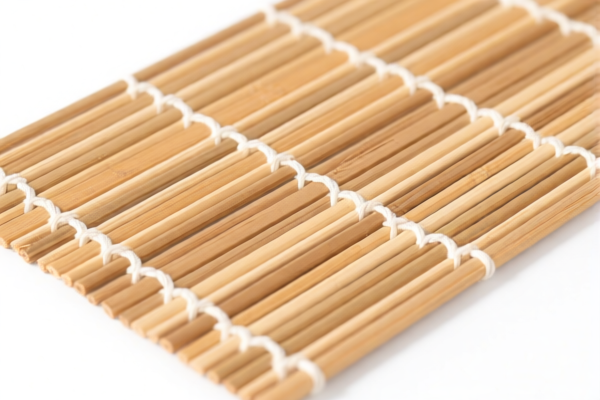
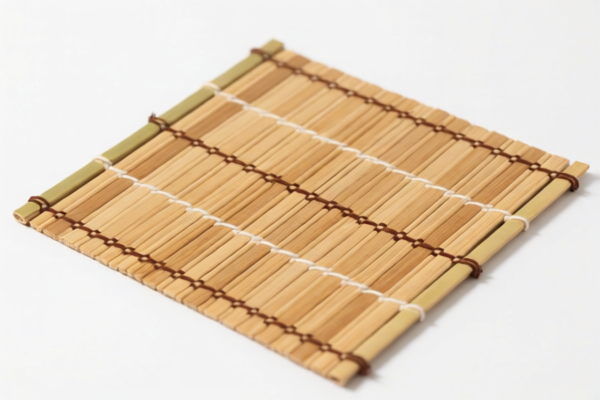
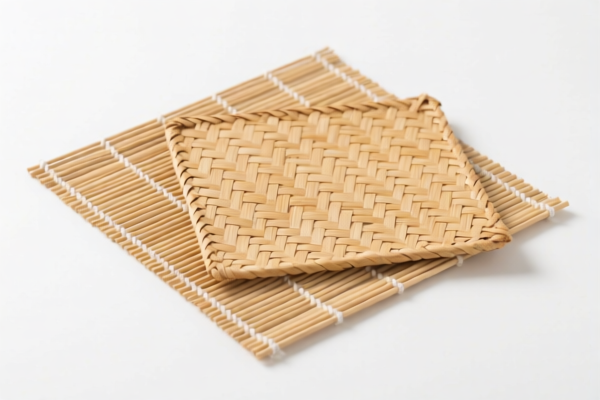
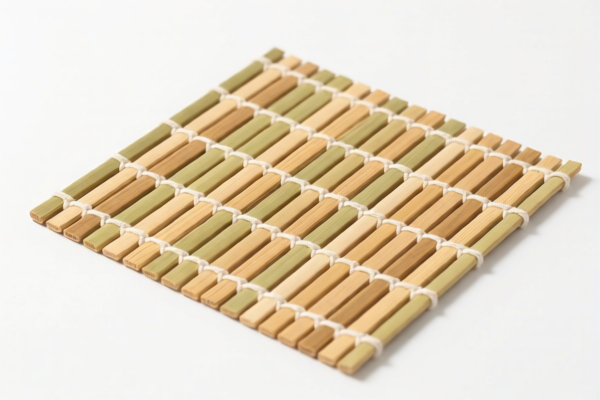
AI Analysis
🧺 Woven Mats & Matting of Other Materials
🌐 HS Code Reference & Customs Clearance Guide | 2026 Latest Tariff Analysis | Professional Clearance Strategy
📌 I. Product Definition and Classification: Do You Really Understand "Woven Mats"?
Woven mats and matting are versatile goods made from plaiting materials, bound together in parallel strands or woven in sheet form. They range from simple floor coverings to decorative screens. In international trade, the classification depends heavily on the material composition and whether they are finished articles.
Based on the provided <DATA>, we focus on "Other vegetable materials", specifically distinguishing between Willow/Wood and Other Vegetable Materials.
⚠️ Key Distinction Point:
- If the matting is made of Willow or Wood →归类 to 4601.94.20.00
- If the matting is made of Other Vegetable Materials (e.g., rattan, bamboo, straw, reeds other than willow/wood) → 归类 to 4601.94.40.00
📦 II. HS Code Classification Details (2026 Latest Tariff Authority Comparison)
| HS Code | Product Description | Applicable Scenario | Material Type |
|---|---|---|---|
4601.94.20.00 |
Plaids and similar products of plaiting materials... Of willow or wood | Willow weaving, wooden slat mats, wicker-style woven sheets | ✅ Willow or Wood |
4601.94.40.00 |
Plaids and similar products of plaiting materials... Of other vegetable materials | Rattan mats, bamboo weavings, straw plaiting, reed screens, seagrass mats | ✅ Other Vegetables |
🔍 Critical Reminder:
- Willow (柳条) and Wood (木材) are treated separately due to their specific harvesting and processing standards.
- "Other vegetable materials" is a catch-all for natural fibers like bamboo, rattan, straw, sisal, coir, etc., excluding willow/wood.
- Both codes fall under Chapter 46: Articles of straw, of osier or other plaiting materials.
💰 III. 2026 Latest Tariff Rate Details (Including Additional Taxes & Policy Surcharges)
✅ Applicable Country: United States (US)
✅ Origin: China (CN) (Note: Based on typical trade context; adjust if origin differs)
✅ Effective Date: Current trade policies apply
🎯 1. 4601.94.20.00 —— Mats of Willow or Wood
| Item | Content |
|---|---|
| Basic Tariff | 0.0% |
| Section 301 Additional Tariff | 0.0% |
| Total Tax Rate | 0.0% |
| Tax Calculation | CIF Value × 0% = $0 |
| De Minimis Eligibility | ✅ Applicable (if under $800 for Section 321) |
| Legal Basis Path | HTSUS:4601.94.20.00 → No major Section 301 footnotes apply |
📌 Explanation:
- Willow and wood weaving products from China currently enjoy 0% total tariff.
- This is a low-risk, low-cost category for importers.
- No special anti-dumping or countervailing duties are currently applied to this specific subheading.
🎯 2. 4601.94.40.00 —— Mats of Other Vegetable Materials
| Item | Content |
|---|---|
| Basic Tariff | 0.0% |
| Section 301 Additional Tariff | 25.0% |
| Total Tax Rate | 25.0% |
| Tax Calculation | CIF Value × 25% |
| De Minimis Eligibility | ❌ Not Applicable (Section 301 goods are generally excluded from de minimis) |
| Legal Basis Path | HTSUS:4601.94.40.00 → Footnote 1 to Subchapter III, Chapter 99 |
📌 Note:
- Despite the basic tariff being 0%, the 25% Section 301 surcharge applies to most "other vegetable materials" from China.
- This includes common items like rattan furniture mats, bamboo placemats, straw baskets, etc.
- Total cost increase: 25% must be factored into pricing strategies.
🛠️ IV. Customs Clearance Practical Advice (Combat Pitfall Guide)
✅ 1. Required Documentation Checklist (None Can Be Missing)
| Document | Must Provide | Description |
|---|---|---|
| ✅ Product Description | ✔️ | Must specify material (e.g., "100% Rattan" not just "Matting") |
| ✅ Material Composition Breakdown | ✔️ | Critical for distinguishing between Willow/Wood vs. Other Vegetables |
| ✅ Product Photos | ✔️ | Show texture, weave pattern, and any finished structure |
| ✅ Commercial Invoice | ✔️ | Clearly state HS Code and country of origin |
| ✅ Packing List | ✔️ | Detail weight and dimensions for duty calculation |
| ✅ Fiber Identification Report | ✔️ | Optional but recommended to prove material type if disputed |
✅ 2. Declaration Tips (Key Mantras)
🔥 “Material Determines Code, Willow is Free, Others Pay 25%!”
| Scenario | Correct Declaration | Incorrect Approach |
|---|---|---|
| Mat made of Willow | 4601.94.20.00 |
Misdeclare as "Other Vegetable" → 25% Tax |
| Mat made of Bamboo/Rattan | 4601.94.40.00 |
Misdeclare as "Willow" → 25% Tax + Penalty |
| Mixed Material Mat | Consult expert | Assume 0% → High Risk of Audit |
| Finished Article (e.g., Screen) | Still 4601.xx |
Declare as "Furniture" → Wrong Chapter (94) |
✅ 3. Special Cases Handling
| Situation | Handling Advice |
|---|---|
| Mixed Materials | If >50% is willow, argue for 4601.94.20.00; else, default to 4601.94.40.00. Provide lab test if necessary. |
| Finished Screens/Mats | Even if assembled into screens, they remain in Chapter 46 if made of plaiting materials. Do not move to Chapter 94 (Furniture). |
| Import from Vietnam/Thailand | Check for FTAs. If origin is not China, Section 301 may not apply. Apply for Preferential Tariff if applicable. |
| Small Samples (De Minimis) | For 4601.94.20.00 (Willow), you may use Section 321 de minimis. For 4601.94.40.00, do not use de minimis due to 25% surcharge. |
🌍 V. Global Market Comparison (2026 Latest)
| Country/Region | Recommended HS Code | Tariff (China Origin) | Notes |
|---|---|---|---|
| 🇺🇸 USA | 4601.94.20.00 |
0% | Willow/Wood is duty-free |
| 🇺🇸 USA | 4601.94.40.00 |
25% | Other Vegetables face Section 301 |
| 🇪🇺 EU | 4601.94.20.00 |
0% | Generally low tariffs on natural fiber products |
| 🇪🇺 EU | 4601.94.40.00 |
0% | No Section 301 equivalent |
| 🇨🇳 China | 4601.94.20.00 |
0% | Import duty |
| 🇨🇳 China | 4601.94.40.00 |
0% | Import duty |
📌 Conclusion:
- USA is the only major market with a significant tariff split between Willow/Wood and Other Vegetables.
- EU and China do not impose this differentiation for these codes.
- Strategy for US Market: If possible, source or manufacture willow-based mats to save 25%.
📌 VI. Common Mistakes & Pitfall Guide (Lessons Learned)
❌ Mistake 1: Calling "Bamboo Mats" Willow Mats
👉 Consequence: Customs inspection reveals non-willow material → 25% Backtax + Penalty.
❌ Mistake 2: Declaring "Woven Screen" as Furniture (HS 9403)
👉 Consequence: Chapter 46 is specific for plaiting materials. Misclassification leads to incorrect duty rate and delays.
❌ Mistake 3: Ignoring Section 301 for "Other Vegetable Materials"
👉 Consequence: Assume 0% because basic tariff is 0% → Surprise 25% Bill at Customs.
❌ Mistake 4: Using De Minimis for Section 301 Goods
👉 Consequence: CBP rejects de minimis entry for goods subject to additional duties → Entry Rejection & Storage Fees.
✅ Correct Approach:
“Woven Mat, 100% Willow, Decorative Screen, Model W100, Origin: China”
→ HS: 4601.94.20.00 → 0% Tax“Woven Mat, 100% Rattan, Floor Matting, Model R200, Origin: China”
→ HS: 4601.94.40.00 → 25% Tax
🎯 VII. Conclusion: Precision Classification Saves Money!
🎯 Remember the Mantra:
🔹 “Willow is Free, Others Pay 25%!”
🔹 “Material is King, Code is Queen!”
🔹 “Don’t Risk 25%, Verify the Fiber!”
📌 Pro Tip:
If your product contains mixed materials, conduct a material analysis before shipping. For US imports, the 25% savings can be significant for large volumes. Consider pre-classification rulings with CBP if the material is ambiguous.
📣 Immediate Action:
📞 Contact a Customs Broker + Provide Material Specs + Verify HS Code
🚀 Clear Customs Smoothly, Avoid 25% Surprise, Maximize Profit!
✨ Professional Clearance Starts with Accurate Classification!
💼 Every Dollar of Tariff Saved is Pure Profit!
Customer Reviews
About HS Code Classification
The Harmonized System (HS) is an internationally standardized nomenclature developed by the World Customs Organization (WCO) to classify traded products. Over 200 countries use the HS system as the basis for customs tariffs, trade statistics, and import/export regulations.
Each HS code follows a hierarchical structure:
- Chapter (2 digits) — Broad category of goods (e.g., Chapter 84: Machinery and Mechanical Appliances)
- Heading (4 digits) — More specific grouping within the chapter
- Subheading (6 digits) — Internationally standardized breakdown, used by all WCO member countries
- National subdivisions (8-10 digits) — Country-specific extensions for further classification, such as US HTSUS 10-digit codes
Correct HS code classification is essential for smooth customs clearance, accurate duty payment, and compliance with trade regulations. Misclassification can lead to customs delays, overpayment of duties, or penalties.
When importing from CN to US, the applicable tariff rates may include:
- Most-Favored-Nation (MFN) rate — The standard duty rate applied to WTO members
- General rate — Applied to countries without trade agreements
- Trade remedy duties — Additional tariffs such as Section 301 (anti-dumping), Section 232 (national security), or countervailing duties
The information provided on this page is for reference purposes only. For official classification, please consult with your local customs authority or a licensed customs broker.