Woven Mats of Plaiting Materials
CN → US| HS Code | Tariff Rate | Origin | Destination | Doc |
|---|---|---|---|---|
| 6304993500 | 28.8% | CN | US | Official Doc |
| 6304992500 | 28.8% | CN | US | Official Doc |
| 4602198000 | 37.3% | CN | US | Official Doc |
| 4602900000 | 38.5% | CN | US | Official Doc |
Product Images
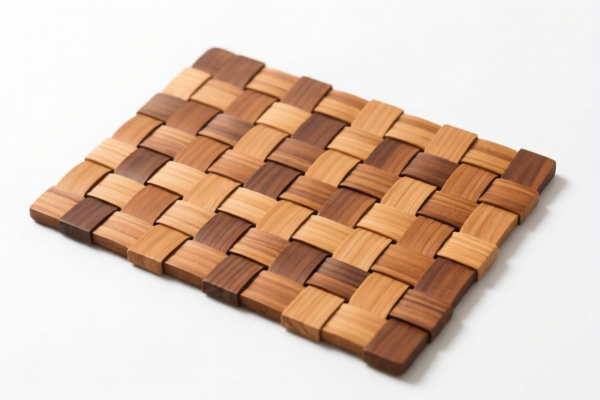
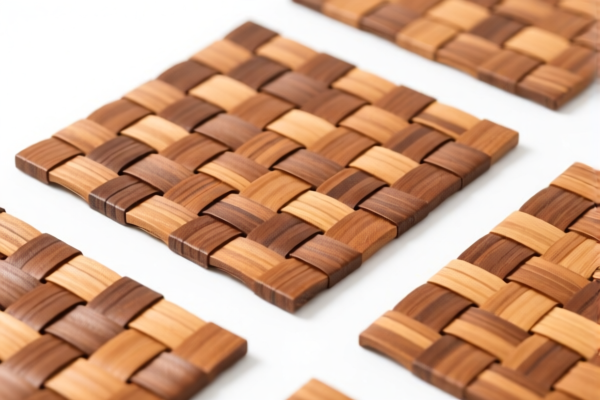
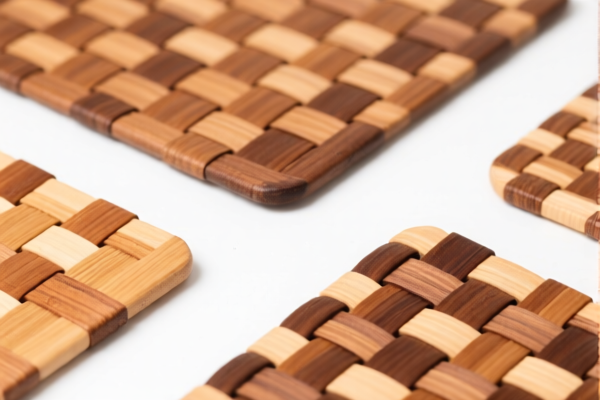
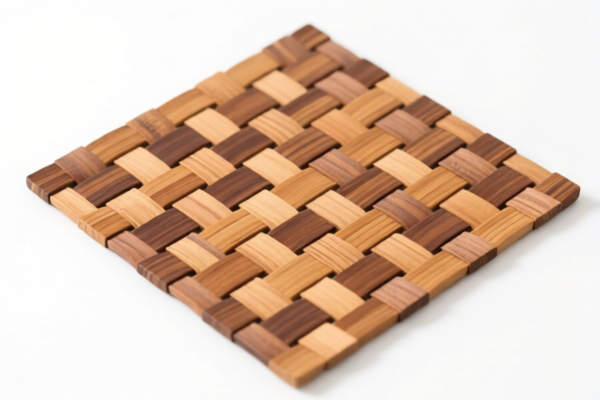
AI Analysis
🧺 Woven Mats of Plaiting Materials
🌐 HS Code Reference & Customs Clearance Guide | 2024/2025 Latest Tariff Analysis | Professional Strategy for Importers
📌 I. Product Definition & Classification: Do You Really Know "Woven Mats"?
Woven Mats of Plaiting Materials are household, decorative, or industrial items crafted from natural fibers (such as rattan, bamboo, jute, straw, or loofah) or synthetic plaiting materials. They are typically formed by weaving, braiding, or plaiting strips or strips-like materials.
In international trade, these items are primarily classified under Chapter 46 (Articles of Plaiting Materials) and Chapter 63 (Other Made-Up Textile Articles). The key distinction lies in whether the article is made directly to shape from the plaiting materials or if it is a "made-up" article that falls under textile provisions.
⚠️ Key Classification Point:
- If the mat is basketwork, wickerwork, or directly shaped from plaiting materials (e.g., woven rattan mat, bamboo mat) → Chapter 46
- If the mat is a furnishing article made from textile fibers (e.g., jute wall hanging, textile floor mat not strictly "basketwork") → Chapter 63
- Crucial Distinction: "Basketwork" (Heading 4602) vs. "Furnishing Articles" (Heading 6304). Misclassification can lead to significant tariff differences.
📦 II. HS Code Classification Details (Latest Tariff Concordance)
| HS Code | Product Description | Application Scenario | Material Type | Tax Rate (Total) |
|---|---|---|---|---|
4602.19.80.00 |
Other basketwork/wickerwork made directly to shape from plaiting materials | Woven rattan trays, bamboo mats, straw mats (not floor coverings per se, but shaped articles) | Vegetable/Natural Plaiting Materials | 0.0% |
4602.90.00.00 |
Other basketwork/wickerwork (Not made directly to shape or other) | Loose woven mats, unshaped plaited goods, loofah articles | Various Plaiting Materials | 28.5% |
6304.99.35.00 |
Other furnishing articles, not knitted/crocheted, of vegetable fibers (other than jute) | Decorative textile mats, wall hangings made of non-jute vegetable fibers | Vegetable Fibers (e.g., sisal, coir) | 0.0% |
6304.99.25.00 |
Wall hangings of jute | Jute wall hangings, decorative jute mats classified as furnishing | Jute | 0.0% |
🔍 Critical Note:
-4602.19.80.00is for shaped basketwork/wickerwork (e.g., baskets, trays, mats formed into a specific shape during weaving).
-4602.90.00.00catches other articles in Chapter 46, including loofah articles or mats not considered "made directly to shape" as basketwork. This carries a HIGH tariff of 28.5%.
-6304codes apply if the item is considered a "furnishing article" rather than "basketwork." Note that jute wall hangings (6304.99.25.00) and other vegetable fiber furnishing articles (6304.99.35.00) have 0% total tax.
💰 III. 2024/2025 Latest Tariff Rate Breakdown (Including Surcharges)
✅ Applicable Country: United States (US)
✅ Origin: China (CN)
✅ Effective Time: Based on current USITC data (2024/2025 context)
🎯 1. 4602.19.80.00 —— Basketwork/Wickerwork (Other, made directly to shape)
| Item | Content |
|---|---|
| Base Tariff Rate | 0% (ad valorem) |
| Section 301 Surtax | 0.0% |
| Total Tax Rate | 0.0% |
| Tax Calculation | CIF Value × 0.0% = $0 |
| De Minimis Eligibility | ✅ Yes (if applicable under current de minimis rules) |
| Legal Basis | USITC Tariff Schedule, Heading 4602 |
📌 Explanation:
- This category is highly favorable. Woven mats that are made directly to shape (e.g., rigid woven baskets, shaped rattan trays) are taxed at 0%.
- No Section 301 surcharge applies to this specific subheading.
- Strategy: Ensure the product is described and constructed as "made directly to shape" from plaiting materials.
🎯 2. 4602.90.00.00 —— Other Basketwork/Loofah Articles
| Item | Content |
|---|---|
| Base Tariff Rate | 3.5% |
| Section 301 Surtax | 25.0% |
| Total Tax Rate | 28.5% |
| Tax Calculation | CIF Value × 28.5% |
| De Minimis Eligibility | ❌ No (High risk of audit if declared under de minimis) |
| Legal Basis | USITC Tariff Schedule, Heading 4602, Section 301 Footnotes |
📌 Warning:
- This code attracts a 28.5% total tax.
- The 25% Section 301 surcharge is critical.
- Avoid this code if your product can reasonably be classified under4602.19or Chapter 63.
🎯 3. 6304.99.35.00 —— Other Furnishing Articles (Vegetable Fibers, Other)
| Item | Content |
|---|---|
| Base Tariff Rate | 0.0% |
| Section 301 Surtax | 0.0% |
| Total Tax Rate | 0.0% |
| Tax Calculation | CIF Value × 0.0% = $0 |
| De Minimis Eligibility | ✅ Yes |
| Legal Basis | USITC Tariff Schedule, Heading 6304 |
📌 Note:
- If the mat is classified as a "furnishing article" (e.g., decorative wall mat, non-floor covering textile mat) made of vegetable fibers (other than jute), it enjoys 0% total tax.
- This applies to materials like sisal, coir, etc., if not considered "basketwork."
🎯 4. 6304.99.25.00 —— Wall Hangings of Jute
| Item | Content |
|---|---|
| Base Tariff Rate | 0.0% |
| Section 301 Surtax | 0.0% |
| Total Tax Rate | 0.0% |
| Tax Calculation | CIF Value × 0.0% = $0 |
| De Minimis Eligibility | ✅ Yes |
| Legal Basis | USITC Tariff Schedule, Heading 6304 |
📌 Note:
- Jute wall hangings or decorative jute mats classified as "furnishing articles" (not basketwork) are 0% taxed.
- Do not classify jute mats as "basketwork" (4602) if they are more accurately described as "furnishing articles" (e.g., wall hangings, soft mats).
🛠️ IV. Customs Clearance Practical Advice (Real-World Pitfall Guide)
✅ 1. Required Documentation Checklist (Non-Negotiable)
| Document | Required? | Description |
|---|---|---|
| ✅ Product Specifications | ✔️ | Material composition (e.g., 100% Rattan, Jute, Sisal), weaving technique |
| ✅ Product Photos | ✔️ | Clear images of front, back, edges, and any labels. Show "made-to-shape" rigidity vs. flexibility. |
| ✅ Commercial Invoice | ✔️ | Accurate description: "Woven Rattan Mat, Made Directly to Shape" vs. "Jute Wall Hanging" |
| ✅ Packing List | ✔️ | Quantity, weight, dimensions |
| ✅ Certificate of Origin | ✔️ | If claiming preferential treatment (though not applicable here for US/China) |
| ✅ Material Declaration | ✔️ | Specify if natural fibers (vegetable) or synthetic |
✅ 2. Classification Strategy (Key Mnemonic)
🔥 "Shape Matters: Rigid = 4602.19 (0%), Loose/Other = 4602.90 (28.5%), Textile/Furnishing = 6304 (0%)"
| Scenario | Correct HS Code | Incorrect Code | Consequence |
|---|---|---|---|
| Rigid woven basket/mat, made to shape | 4602.19.80.00 |
4602.90.00.00 |
Avoid 28.5% tax! |
| Loose jute mat, not shaped | 6304.99.25.00 (if wall hanging) or 4602.90.00.00 |
4602.19.80.00 |
Misclassification risk |
| Jute wall hanging | 6304.99.25.00 |
4602.90.00.00 |
Avoid 28.5% tax! |
| Sisal/coir decorative mat | 6304.99.35.00 |
4602.90.00.00 |
Avoid 28.5% tax! |
| Loofah scrubber/mats | 4602.90.00.00 |
6304.99.35.00 |
Must pay 28.5% |
📌 Important:
- Basketwork (Chapter 46) is defined as articles made directly to shape from plaiting materials.
- Furnishing Articles (Chapter 63) include wall hangings, tablecloths, etc., made of textile materials.
- Loofah is explicitly listed under4602.90.00.00, so loofah products cannot be classified under Chapter 63 for tax avoidance.
✅ 3. Special Case Handling
| Situation | Recommendation |
|---|---|
| Mixed Materials | If a mat has a fabric backing or non-plaiting material, consult a customs broker. May fall under Chapter 63 or 59. |
| Floor Mats vs. Wall Hangings | Floor mats are often classified under 5702/5703. However, if made of plaiting materials, they may fall under 4602. Clarify use: "Floor Mat" vs. "Wall Hanging" can change classification. |
| Jute Products | Jute is a textile fiber. If woven into a mat, it might be 4602. If it's a wall hanging, it's 6304. Be precise in description. |
| Loofah Products | Always 4602.90.00.00. No tax optimization possible here. |
🌍 V. Global Market Comparison (2024/2025)
| Country/Region | Recommended HS Code | Tariff | Notes |
|---|---|---|---|
| 🇺🇸 USA | 4602.19.80.00 |
0% | Ideal for shaped basketwork. Avoid 4602.90. |
| 🇨🇳 China | 4602.19.80.00 |
~10-15% | Import tax applies. Check latest PRC tariff. |
| 🇪🇺 EU | 4602.19 |
~4-6% | Common External Tariff. No surcharges. |
| 🇬🇧 UK | 4602.19 |
~4-6% | Post-Brexit tariff. |
| 🇯🇵 Japan | 4602.19 |
~0-5% | Favorable for handicrafts. |
📌 Conclusion:
- USA is the most critical market due to Section 301 surcharges.
- Zero tariff in the US for4602.19.80.00and6304.99.*.
- 28.5% tariff for4602.90.00.00is a major cost driver.
📌 VI. Common Mistakes & Pitfall Guide (Lessons Learned)
❌ Mistake 1: Classifying all woven mats as 4602.90.00.00
👉 Result: Paying 28.5% tax unnecessarily.
👉 Fix: If the mat is made directly to shape, use 4602.19.80.00 (0%).
❌ Mistake 2: Classifying jute wall hangings as "basketwork"
👉 Result: Risk of audit. Better to use 6304.99.25.00 (0%) if it's a wall hanging.
👉 Fix: Describe as "Jute Wall Hanging, Furnishing Article" for Chapter 63.
❌ Mistake 3: Ignoring "Loofah" specificity
👉 Result: Loofah articles are explicitly 4602.90.00.00 (28.5%). No exception.
👉 Fix: Accept the 28.5% tariff or find alternative materials.
❌ Mistake 4: Vague product descriptions
👉 Result: Customs delays, re-classification, and penalties.
👉 Fix: Use precise terms: "Woven Rattan Tray, Made to Shape" or "Jute Wall Hanging."
✅ Best Practice:
"Woven Rattan Place Mats, Made Directly to Shape, Vegetable Fiber, Natural Color" →
4602.19.80.00(0%)
"Jute Wall Hanging, Decorative, Textile Material" →6304.99.25.00(0%)
🎯 VII. Conclusion: Smart Classification, Lower Costs!
🎯 Key Takeaways:
🔹 "Shape it right: Shaped = 0%, Unshaped = 28.5%, Textile = 0%"
🔹 "Jute Wall Hanging? Use 6304! Loofah? Pay 28.5%!"
🔹 "HS Code is king: One digit difference can save you 28.5%!"
📌 Pro Tip:
If your woven mats are shaped (e.g., baskets, trays, rigid mats), always aim for 4602.19.80.00. If they are flexible textiles (e.g., wall hangings, soft mats), consider 6304.99.*. Avoid 4602.90.00.00 unless necessary (e.g., loofah).
📣 Immediate Action:
📞 Consult a licensed customs broker for a Pre-Ruling (Binding Ruling) on your specific product.
📸 Provide high-quality photos and material details.
🚀 Save up to 28.5% on your US import duties!
✨ Professional Customs Clearance Starts with Accurate Classification!
💼 Every Dollar Saved in Tariffs is Pure Profit!
Customer Reviews
About HS Code Classification
The Harmonized System (HS) is an internationally standardized nomenclature developed by the World Customs Organization (WCO) to classify traded products. Over 200 countries use the HS system as the basis for customs tariffs, trade statistics, and import/export regulations.
Each HS code follows a hierarchical structure:
- Chapter (2 digits) — Broad category of goods (e.g., Chapter 84: Machinery and Mechanical Appliances)
- Heading (4 digits) — More specific grouping within the chapter
- Subheading (6 digits) — Internationally standardized breakdown, used by all WCO member countries
- National subdivisions (8-10 digits) — Country-specific extensions for further classification, such as US HTSUS 10-digit codes
Correct HS code classification is essential for smooth customs clearance, accurate duty payment, and compliance with trade regulations. Misclassification can lead to customs delays, overpayment of duties, or penalties.
When importing from CN to US, the applicable tariff rates may include:
- Most-Favored-Nation (MFN) rate — The standard duty rate applied to WTO members
- General rate — Applied to countries without trade agreements
- Trade remedy duties — Additional tariffs such as Section 301 (anti-dumping), Section 232 (national security), or countervailing duties
The information provided on this page is for reference purposes only. For official classification, please consult with your local customs authority or a licensed customs broker.