Woven Raffia Basket
CN → US| HS Code | Tariff Rate | Origin | Destination | Doc |
|---|---|---|---|---|
| 4602191800 | 39.5% | CN | US | Official Doc |
| 4602198000 | 37.3% | CN | US | Official Doc |
| 4601990500 | 37.7% | CN | US | Official Doc |
| 4601999000 | 38.3% | CN | US | Official Doc |
| 3926909989 | 22.8% | CN | US | Official Doc |
Product Images
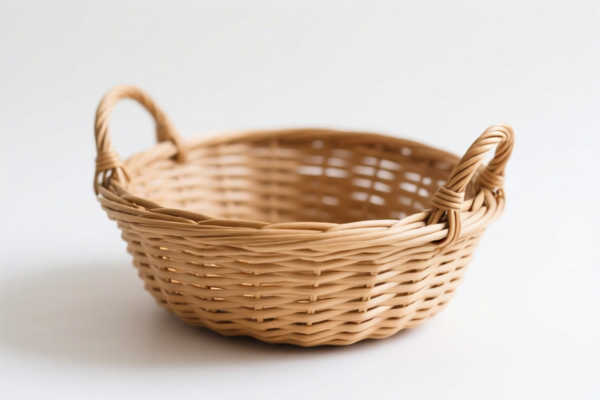
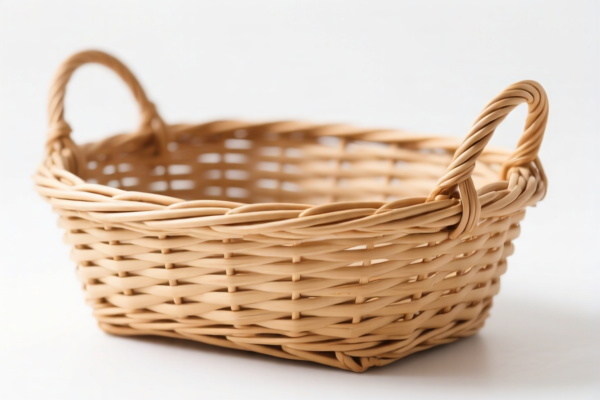
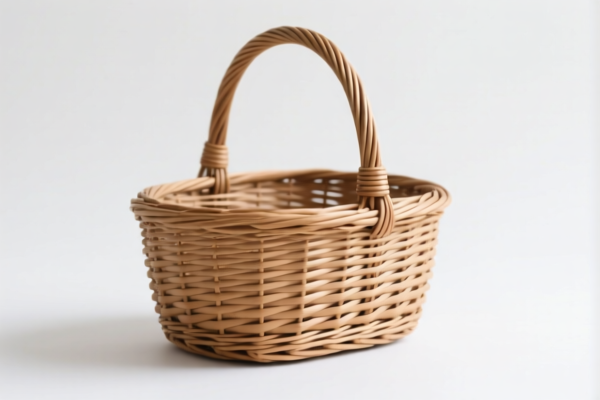
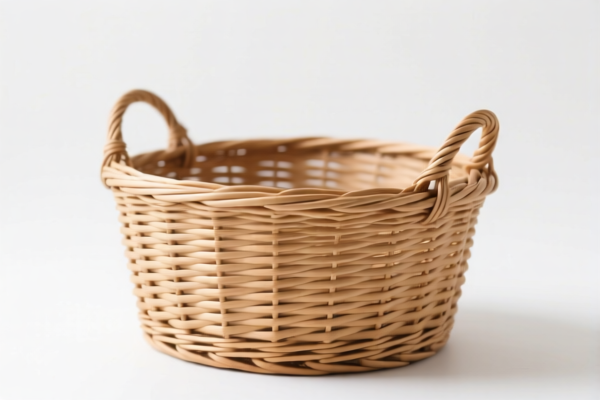
AI Analysis
🧺 Woven Raffia Basket (拉菲草编织篮)
🌐 HS Code Reference & Customs Clearance Guide | 2026 Latest Tariff Analysis | Professional Clearance Strategy
📌 I. Product Definition & Classification: Do You Truly Understand "Woven Raffia Baskets"?
Woven Raffia Baskets are artisanal or mass-produced containers made from Raffia fibers (a natural plant material derived from palm trees). In international trade, the classification hinges on two key factors: 1. Material: Natural vegetable materials (Raffia is a plant fiber). 2. Form: Whether it is a "braid/plaiting material" (unfinished or semi-finished) or a finished "basket/bag/article."
⚠️ Key Distinction Point: - If the item is a finished container (basket, bag, or article) made of woven raffia → It falls under Chapter 46 (Plaiting Materials; Basketweaving Products). - If the item is simply a braid or plait used for further processing → It falls under HS 4601. - ❌ Misclassification Risk: Do not classify as plastic/synthetic waste or general accessories unless it lacks the specific "plaiting material" characteristic entirely.
📦 II. HS Code Classification Details (2026 Latest Tariff Authority Mapping)
Based on the provided data, here are the 5 potential HS Codes for Woven Raffia Baskets, ranging from high-cost finished goods to lower-cost "other" categories.
| HS Code | Product Description | Logic for Classification | Total Tax Rate |
|---|---|---|---|
4602.19.18.00 |
Baskets and Other Woven Goods, of Plaiting Materials, Other, Other | The item is a finished basket/bag made of vegetable materials (Raffia). This is the most common classification for finished woven baskets. | 39.5% |
4602.19.80.00 |
Baskets and Other Woven Goods, of Plaiting Materials, Other, Other | Similar to above, but a different sub-category for finished woven articles. Often used for specific types of baskets not covered in .18. | 37.3% |
4601.99.05.00 |
Plaiting Materials in the Form of Braid or Plaits... Other | Classifies the raffia as a plait/braid rather than a finished basket. Used if the "basket" is considered a semi-finished plaiting material. | 37.7% |
4601.99.90.00 |
Plaiting Materials in the Form of Braid or Plaits... Other | Another sub-category for other plaiting materials/braids made of vegetable materials. | 38.3% |
3926.90.99.89 |
Other Articles of Plastics and Articles of Other Materials of Chapter 39 | ⚠️ Rare/Bottom-Category: Only used if the basket is NOT primarily classified as a "plaiting product" but as a "general article" under plastics or miscellaneous materials. Note: Raffia is plant-based, so this is less accurate than Chapter 46, but appears in the data as a fallback. | 22.8% |
🔍 Critical Insight: - Chapter 46 (4602.19 / 4601.99) is the correct chapter for natural plant fibers like Raffia. - Chapter 39 (3926.90) is generally for plastics or synthetic materials. Using this for natural Raffia is risky and may lead to customs disputes unless the basket contains significant synthetic components. - The difference between
.18/.80(Finished Baskets) and.99(Braids/Plaits) depends on whether the item is ready-to-use (basket) or semi-processed (braid).
💰 III. 2026 Latest Tariff Rate Breakdown (Including Surcharges)
✅ Applicable Country: USA (US)
✅ Origin: China (CN)
✅ Effective Date: November 10, 2025 onwards
🎯 1. 4602.19.18.00 & 4602.19.80.00 —— Finished Woven Baskets (Most Common)
| Item | Content |
|---|---|
| Base Tariff | 4.5% (for .18) / 2.3% (for .80) |
| Section 301 Surcharge | +25.0% |
| Section 122 Surcharge | +10.0% |
| Total Tax Rate | 39.5% (for .18) / 37.3% (for .80) |
| Calculation | CIF Value × Total Rate |
| De Minimis Exemption | ❌ NO (Denied for these codes) |
| Legal Path | USITC:4602.19 → Section 301: Footnote 9903.88.01 → IEEPA:9903.01.25 |
📌 Explanation: - Section 301 (25%): Applies to most Chinese-made goods, including woven baskets. - Section 122 (10%): Additional surcharge applicable to specific goods. - Base Tariff: Low (2.3%-4.5%), but surcharges dominate the cost. - Total Cost: High. A $100 basket incurs ~$37.30–$39.50 in taxes.
🎯 2. 4601.99.05.00 & 4601.99.90.00 —— Plaiting Materials/Braids
| Item | Content |
|---|---|
| Base Tariff | 2.7% (for .05) / 3.3% (for .90) |
| Section 301 Surcharge | +25.0% |
| Section 122 Surcharge | +10.0% |
| Total Tax Rate | 37.7% (for .05) / 38.3% (for .90) |
| Calculation | CIF Value × Total Rate |
| De Minimis Exemption | ❌ NO |
| Legal Path | USITC:4601.99 → Section 301 → Section 122 |
📌 Note: - Similar to finished baskets, these incur 25% + 10% surcharges. - The base tariff is slightly lower than some finished basket codes, but the total tax remains high (~38%).
🎯 3. 3926.90.99.89 —— Other Articles (Fallback Category)
| Item | Content |
|---|---|
| Base Tariff | 5.3% |
| Section 301 Surcharge | +7.5% |
| Section 122 Surcharge | +10.0% |
| Total Tax Rate | 22.8% |
| Calculation | CIF Value × 22.8% |
| De Minimis Exemption | ❌ NO |
| Legal Path | USITC:3926.90 → Section 301 (Footnote 9903.88.01) → Section 122 |
📌 Warning: - This has the lowest total tax (22.8%). - However, Raffia is a plant fiber, not plastic. Classifying it here is legally questionable and may trigger customs audits, penalties, or reclassification to Chapter 46 with back taxes. - Only use this if the basket contains significant synthetic/plastic components that change its primary character.
🛠️ IV. Customs Clearance Practical Advice (Real-World Pitfall Guide)
✅ 1. Required Documentation Checklist (Mandatory)
| Document | Required? | Notes |
|---|---|---|
| ✅ Product Specification Sheet | ✔️ | Must detail material composition (100% Raffia? Mixed?). |
| ✅ Product Photos | ✔️ | Clear images showing woven structure, handles, and finished form. |
| ✅ Commercial Invoice | ✔️ | Clearly state: "Woven Raffia Basket, Vegetable Fiber, Finished Good." |
| ✅ Packing List | ✔️ | Weight, dimensions, and quantity. |
| ✅ Material Certificate | ✔️ | Proof that Raffia is a natural plant fiber (not plastic imitations). |
| ✅ Third-Party Lab Test | ⚠️ Optional | If challenged, prove natural fiber content to avoid Chapter 39 misclassification. |
✅ 2. Declaration Strategy (Key Mantra)
🔥 "Natural Fiber = Chapter 46, Not Plastic! Declare Form & Material Clearly!"
| Scenario | Correct Declaration | Risk of Wrong Declaration |
|---|---|---|
| Finished Basket | 4602.19.18.00 or 4602.19.80.00 |
If misclassified as plastic (3926), risk of penalty + back taxes. |
| Raffia Braid/Roll | 4601.99.05.00 or 4601.99.90.00 |
If declared as finished basket, may face scrutiny for being "unfinished." |
| Mixed Material Basket | Analyze dominant material | If >50% plastic, Chapter 39 might apply, but must justify. |
| Small Gift/De Minimis | ❌ Not Eligible | High tariffs deny de minimis exemption for these HS codes. |
✅ 3. Special Circumstances Handling
| Situation | Handling Advice |
|---|---|
| Raffia + Plastic Handles | If plastic handles are minor, still Chapter 46. If major, may shift to Chapter 39. Consult customs broker. |
| Painted/Lacquered Raffia | Still Chapter 46. Painting does not change the fundamental material classification. |
| OEM Custom Baskets | Provide design files and material specs to prove natural fiber content. |
| Dispute on Section 122 | Ensure your broker applies the correct surcharge. Some brokers may miss the 10% if not flagged. |
🌍 V. Global Market Clearance Comparison (2026 Latest)
| Country/Region | Recommended HS Code | Tariff Rate (China Origin) | Certification | Notes |
|---|---|---|---|---|
| 🇺🇸 USA | 4602.19.18.00 |
39.5% | None specific | High tariffs due to Sec 301 + 122. |
| 🇨🇳 China | 4602.19.18.00 |
5-10% (Import Duty) | None | Low import duty for foreign goods into China. |
| 🇪🇺 EU | 4602.19 |
0-6.5% | CE (if applicable) | No Section 301-style surcharges. |
| 🇬🇧 UK | 4602.19 |
0-6.5% | UKCA (if applicable) | Post-Brexit tariffs may apply. |
| 🇯🇵 Japan | 4602.19 |
0-8% | None | Favorable for natural fiber products. |
📌 Conclusion: - USA is the most expensive market due to Section 301 (25%) + Section 122 (10%). - EU/UK/Japan offer significantly lower tariff barriers for natural woven products. - Strategy: If targeting the US, price accordingly. If cost-sensitive, consider markets with lower surcharges.
📌 VI. Common Errors & Pitfall Guide (Blood & Tears Lessons)
❌ Error 1: Classifying Raffia Baskets as Plastic Baskets (3926) to save tax.
👉 Consequence: Customs detects natural fiber → Reclassification + Penalties + Back Taxes + Audit Risk.
❌ Error 2: Failing to pay Section 122 (10%) surcharge.
👉 Consequence: Underpayment → Release Delay + Interest + Possible Seizure.
❌ Error 3: Claiming De Minimis Exemption for shipments under $800.
👉 Consequence: Denied. These HS codes are explicitly excluded from de minimis treatment when subject to Section 301/122 surcharges.
❌ Error 4: Vague Description: "Woven Basket."
👉 Consequence: Customs cannot determine material → Query + Delay + Potential Misclassification.
✅ Correct Practice:
"Finished Woven Basket, Made of Natural Raffia Palm Fiber, Vegetable Material, For Household Storage, Model XYZ"
🎯 VII. Conclusion: Precision Classification Saves Money!
🎯 Remember the Mantra:
🔹 "Raffia is Plant, Not Plastic! Chapter 46 is Correct!"
🔹 "USA Tariffs are High: 39.5% is the Norm!"
🔹 "Don't Skip Section 122: 10% Must Be Paid!"
📌 Pro Tip:
If your basket is imported from Vietnam, Malaysia, or Thailand, you may qualify for preferential tariffs (lower or 0% under USMCA or ASEAN agreements).
Always apply for Pre-Ruling if unsure about material composition to avoid clearance delays.
📣 Immediate Action:
📞 Contact a licensed customs broker.
📤 Provide clear photos and material specs.
🚀 Ensure Compliance, Avoid Delays, Maximize Profit!
✨ Professional Clearance Starts with Accurate Classification!
💼 Every Dollar of Tax Saved is Pure Profit!
Customer Reviews
About HS Code Classification
The Harmonized System (HS) is an internationally standardized nomenclature developed by the World Customs Organization (WCO) to classify traded products. Over 200 countries use the HS system as the basis for customs tariffs, trade statistics, and import/export regulations.
Each HS code follows a hierarchical structure:
- Chapter (2 digits) — Broad category of goods (e.g., Chapter 84: Machinery and Mechanical Appliances)
- Heading (4 digits) — More specific grouping within the chapter
- Subheading (6 digits) — Internationally standardized breakdown, used by all WCO member countries
- National subdivisions (8-10 digits) — Country-specific extensions for further classification, such as US HTSUS 10-digit codes
Correct HS code classification is essential for smooth customs clearance, accurate duty payment, and compliance with trade regulations. Misclassification can lead to customs delays, overpayment of duties, or penalties.
When importing from CN to US, the applicable tariff rates may include:
- Most-Favored-Nation (MFN) rate — The standard duty rate applied to WTO members
- General rate — Applied to countries without trade agreements
- Trade remedy duties — Additional tariffs such as Section 301 (anti-dumping), Section 232 (national security), or countervailing duties
The information provided on this page is for reference purposes only. For official classification, please consult with your local customs authority or a licensed customs broker.