Woven Rattan Carpet
CN → US| HS Code | Tariff Rate | Origin | Destination | Doc |
|---|---|---|---|---|
| 5705002090 | 38.3% | CN | US | Official Doc |
| 4602124500 | 41.6% | CN | US | Official Doc |
| 4602123500 | 10.0% | CN | US | Official Doc |
| 4601228000 | 35.0% | CN | US | Official Doc |
| 4601224000 | 38.3% | CN | US | Official Doc |
Product Images
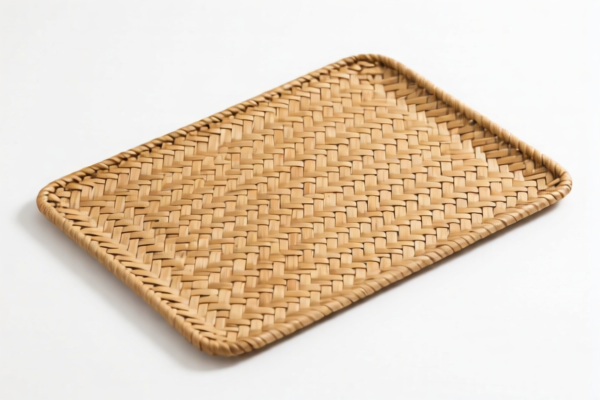
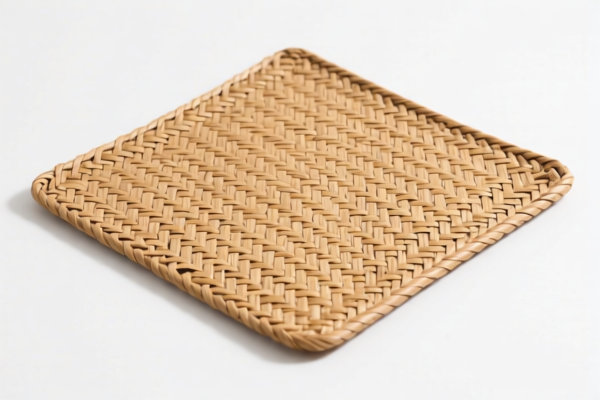
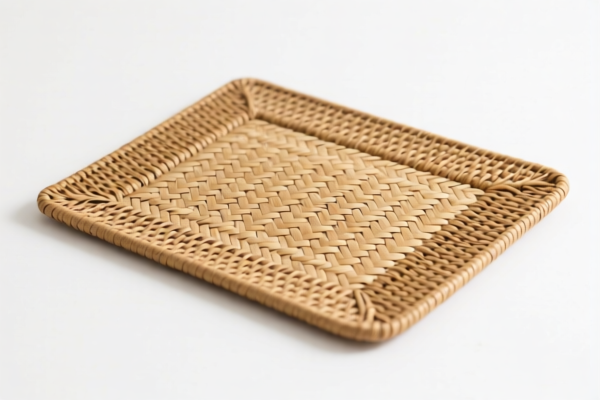
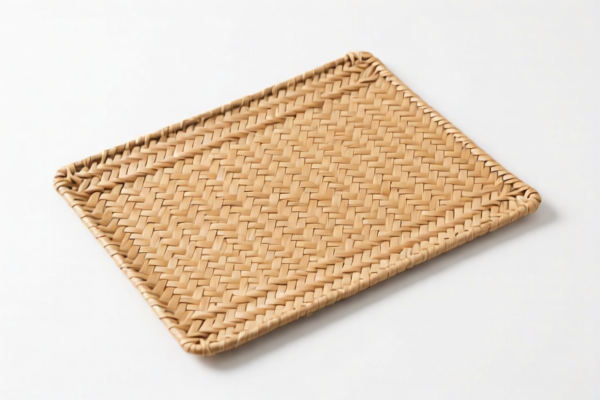
AI Analysis
🌿 Woven Rattan Carpet (藤编地毯)
🌐 HS Code Reference & Customs Clearance Guide | 2026 Latest Tariff Analysis | Professional Clearance Strategy
📌 I. Product Definition & Classification: What Exactly Is a "Rattan Carpet"?
"Woven Rattan Carpet" is a broad term in international trade that can refer to several different product types depending on its structure, usage, and manufacturing method. In customs classification, the key distinction lies in whether the item is classified as a floor covering (carpet/rug) or a woven article/seat mat.
Two Main Categories:
-
Floor Coverings (Textile/Carpet Type):
- Items primarily used for decoration or comfort on floors.
- May be made of natural fibers (rattan) but treated or structured like a textile rug.
- Key Indicator: If it has a backing similar to textiles or is intended primarily as a "rug," it may fall under Chapter 57.
-
Woven Articles (Basketry/Plaiting Type):
- Items made by plaiting, weaving, or braiding rattan strips, reeds, or similar materials.
- Includes mats, mats for floors, and other woven goods.
- Key Indicator: If it is a rigid or semi-rigid mat made purely of woven natural rattan strips without textile backing, it falls under Chapter 46.
⚠️ Critical Distinction Point:
- If the product is a flexible floor mat made of woven natural rattan without textile backing → Chapter 46 (Woven articles).
- If the product is a carpet-like rug with a textile-like structure or backing → Chapter 57 (Carpet/Floor Coverings).
- Misclassification can lead to significant tariff differences (from 10% to 41.6%).
📦 II. HS Code Classification Details (2026 Latest Tariff Authority Comparison)
| HS Code | Product Description | Application Scenario | Structure/Backing |
|---|---|---|---|
5705.00.20.90 |
Other carpets and other textile floor coverings | Decorative rugs, carpet-like mats with textile feel | ✅ Likely has textile-like structure |
4602.12.45.00 |
Woven articles of rattan (Basketry products) | Traditional rattan mats, rigid floor mats | ✅ Purely woven, no textile backing |
4602.12.35.00 |
Woven materials of rattan (Plaiting materials) | Raw woven sheets, unprocessed mats | ✅ Unprocessed woven rattan |
4601.22.80.00 |
Mats and matting of vegetable plaiting materials | Ground laying materials, coarse floor mats | ✅ Vegetable material, plaited |
4601.22.40.00 |
Mats and matting of vegetable plaiting materials | Specific rattan mats, often with specific widths/lengths | ✅ Vegetable material, plaited |
🔍 Key Reminder:
- Chapter 46 covers "Articles of basketware, wickerwork, bamboo, rattan, etc." These are woven products.
- Chapter 57 covers "Carpeting and other floor coverings of textile materials." If the rattan carpet is considered a "textile floor covering" (e.g., if it mimics textile structure), it goes here.
- Most pure rattan mats are classified under Chapter 46, not Chapter 57.
💰 III. 2026 Latest Tariff Rate Details (Including Surcharge, Policy Surcharge)
✅ Applicable Country: United States (US)
✅ Origin: China (CN)
✅ Effective Date: November 10, 2025 onwards (for subsequent imports)
🎯 1. 5705.00.20.90 —— Other Carpets and Textile Floor Coverings
| Item | Content |
|---|---|
| Base Rate | 3.3% (ad valorem) |
| USITC Surcharge | +25% (from USITC Footnote 9903.88.01) |
| IEEPA Surcharge | +10% (against China/HK products, from Nov 10, 2025) |
| Total Rate | 38.3% |
| Tax Calculation | CIF Value × 38.3% |
| De Minimis Exemption? | ❌ No (deny_de_minimis) |
| Legal Basis Path | IEEPA:9903.01.25 → IEEPA:9903.01.24 → USITC:5705.00.20.90 → FOOTNOTE:9903.88.01 |
📌 Explanation:
- "USITC Surcharge 25%": From Section 301 of the US Trade Act;
- "IEEPA 10%": Additional tariff against China under the International Emergency Economic Powers Act;
- Total 38.3%: High tariff for "carpet-like" rattan products.
🎯 2. 4602.12.45.00 —— Woven Rattan Articles (Basketry)
| Item | Content |
|---|---|
| Base Rate | 6.6% (ad valorem) |
| USITC Surcharge | +25% |
| IEEPA Surcharge | +10% |
| Total Rate | 41.6% |
| Tax Calculation | CIF Value × 41.6% |
| De Minimis Exemption? | ❌ No |
| Legal Basis Path | IEEPA:9903.01.25 → IEEPA:9903.01.24 → USITC:4602.12.45.00 → FOOTNOTE:9903.88.01 |
📌 Note:
- This is the highest tariff among the options.
- Applies to finished woven rattan products like mats.
- Even though it's "woven," the base rate is higher (6.6% vs 3.3% or 0%), leading to a higher total.
🎯 3. 4602.12.35.00 —— Woven Rattan Materials (Plaiting)
| Item | Content |
|---|---|
| Base Rate | 0.0% |
| USITC Surcharge | 0.0% |
| IEEPA Surcharge | +10% |
| Total Rate | 10.0% |
| Tax Calculation | CIF Value × 10.0% |
| De Minimis Exemption? | ❌ No |
| Legal Basis Path | IEEPA:9903.01.25 → IEEPA:9903.01.24 → USITC:4602.12.35.00 |
📌 Crucial Insight:
- Lowest Total Rate!
- Applies to unprocessed or semi-processed woven rattan materials (e.g., raw plaited sheets, mats not finished as consumer goods).
- If your "carpet" can be described as a raw woven mat rather than a finished "basketry article," this code offers significant savings.
🎯 4. 4601.22.80.00 —— Mats and Matting of Vegetable Plaiting Materials
| Item | Content |
|---|---|
| Base Rate | 0.0% |
| USITC Surcharge | +25% |
| IEEPA Surcharge | +10% |
| Total Rate | 35.0% |
| Tax Calculation | CIF Value × 35.0% |
| De Minimis Exemption? | ❌ No |
| Legal Basis Path | IEEPA:9903.01.25 → IEEPA:9903.01.24 → USITC:4601.22.80.00 → FOOTNOTE:9903.88.01 |
📌 Explanation:
- Base rate is 0%, but the 25% surcharge applies.
- Used for mats made of vegetable materials (rattan is a vegetable material).
- Lower than 4602.12.45.00 but higher than 4602.12.35.00.
🎯 5. 4601.22.40.00 —— Mats and Matting of Vegetable Plaiting Materials (Specific)
| Item | Content |
|---|---|
| Base Rate | 3.3% |
| USITC Surcharge | +25% |
| IEEPA Surcharge | +10% |
| Total Rate | 38.3% |
| Tax Calculation | CIF Value × 38.3% |
| De Minimis Exemption? | ❌ No |
| Legal Basis Path | IEEPA:9903.01.25 → IEEPA:9903.01.24 → USITC:4601.22.40.00 → FOOTNOTE:9903.88.01 |
📌 Note:
- Similar to 4601.22.80.00 but with a higher base rate (3.3%).
- Specific subcategory of vegetable plaiting mats.
🛠️ IV. Customs Clearance Practical Advice (Real-World Pitfall Avoidance Guide)
✅ 1. Prepare Documentation Checklist (All Required)
| Document | Required | Description |
|---|---|---|
| ✅ Product Specification Sheet | ✔️ | Dimensions, thickness, material composition (100% rattan? mixed?), backing material |
| ✅ Product Photos | ✔️ | Clear images of top, bottom, and side view. Show weave structure. |
| ✅ Commercial Invoice | ✔️ | Describe as "Woven Ratan Mat" or "Rattan Floor Covering" carefully. Avoid "Carpet" if not textile. |
| ✅ Packing List | ✔️ | Details of units, weight, dimensions |
| ✅ Certificate of Origin (CO) | ✔️ | If not China-origin, may qualify for lower rates |
| ✅ Third-Party Test Report | ✔️ | If applicable (e.g., formaldehyde, durability) |
✅ 2. Declaration Tips (Key Mantra)
🔥 "Describe Material, Not Use! Weave Structure, Not Function!"
| Situation | Correct Declaration | Wrong Practice |
|---|---|---|
| Pure woven rattan mat | "Woven Rattan Mat, Natural Material, No Textile Backing" | Call it "Rattan Carpet" → May be pushed to 5705 (38.3%) or 4602.12.45 (41.6%) |
| Rattan mat with fabric backing | "Textile Floor Covering with Rattan Design" | Try to hide backing → Risk of penalty |
| Raw woven rattan sheet | "Woven Rattan Plaiting Material" | Call it "Finished Carpet" → Miss 10% rate |
| Finished decorative mat | "Woven Rattan Article (Basketry)" | Vague term "Mat" → Unclear classification |
✅ 3. Special Case Handling
| Situation | Handling Advice |
|---|---|
| Is it a "Carpet" or "Mat"? | If it’s flexible, decorative, and resembles a rug → Consider 5705.00.20.90. If it’s a rigid plaited mat → 4602 or 4601. |
| Can it be classified as Raw Material? | If the product is sold as a semi-finished woven sheet, use 4602.12.35.00 (10%). Provide invoices showing it’s not a finished consumer good. |
| Mixed Materials? | If rattan is mixed with textile fibers, it may be classified as a textile product (Chapter 57). |
| Customs Audit Risk | Provide clear photos showing the weave structure. If it looks like a basket, it’s Chapter 46. If it looks like a rug, it’s Chapter 57. |
🌍 V. Global Main Market Clearance Comparison (2026 Latest)
| Country/Region | Recommended HS Code | Tariff | Certification | Notes |
|---|---|---|---|---|
| 🇺🇸 USA | 4602.12.35.00 |
10% | None | Lowest rate if classified as raw material. If finished, expect 35%-41.6%. |
| 🇨🇳 China | 4602.12.35.00 |
~0-5% | None | Lower tariffs for woven goods. |
| 🇪🇺 EU | 4601.22 or 4602.12 |
0-4% | CE (if applicable) | Generally lower tariffs for natural fiber products. |
| 🇬🇧 UK | 4601.22 or 4602.12 |
0-5% | UKCA | Similar to EU. |
| 🇦🇺 Australia | 4601.22 or 4602.12 |
0-5% | RCMA | Low tariffs. |
📌 Conclusion:
- USA is the most critical market for tariff planning due to high surcharges.
- China-origin rattan mats face 10%-41.6% depending on classification.
- European/Australian markets are more favorable with lower tariffs.
📌 VI. Common Mistakes & Pitfall Guide (Blood & Tears Lessons)
❌ Mistake 1: Calling it "Rattan Carpet" and declaring as 5705.00.20.90
👉 Consequence: 38.3% tariff. If it’s actually a woven mat, you might have been eligible for 10% (4602.12.35.00).
❌ Mistake 2: Calling it "Woven Rattan Mat" but declaring as 4602.12.45.00
👉 Consequence: 41.6% tariff. If it’s a raw woven sheet, you missed the 10% rate.
❌ Mistake 3: Not providing photos showing the weave structure
👉 Consequence: Customs may classify it as "Other" or "Carpet" (higher rate) due to ambiguity.
❌ Mistake 4: Hiding the fact that it’s a finished product
👉 Consequence: If declared as "raw material" but customs finds finished goods, it’s considered fraud → Penalty + Back Taxes.
✅ Correct Approach:
"Woven Rattan Mat, Natural Rattan, Plaited Structure, No Textile Backing"
OR
"Woven Rattan Plaiting Material, Semi-Finished, For Further Processing" (if applicable)
🎯 VII. Conclusion: Professional Declaration Saves Money!
🎯 Remember the Mantra:
🔹 "Raw Material = 10%, Finished Mat = 35-41%, Carpet-like = 38%!"
🔹 "Describe Structure, Not Just Function!"
🔹 "Photos Are Key! Show the Weave!"
📌 Pro Tip:
If your product is a finished decorative mat, try to justify classification under 4602.12.35.00 by emphasizing it’s a woven material rather than a finished basketry article. Consult with a customs broker to see if this argument holds with CBP.
For raw woven sheets, explicitly declare as "Woven Rattan Material" to get the 10% rate.
📣 Immediate Action:
📞 Contact a professional customs broker
📸 Provide clear photos of the weave structure
📄 Apply for a Binding Ruling if possible to lock in the 10% rate for raw materials.
🚀 Clearance Smoothly, Profit Maximized!
✨ Professional Clearance Starts with Accurate Classification!
💼 Every Percent Counts in International Trade!
Customer Reviews
About HS Code Classification
The Harmonized System (HS) is an internationally standardized nomenclature developed by the World Customs Organization (WCO) to classify traded products. Over 200 countries use the HS system as the basis for customs tariffs, trade statistics, and import/export regulations.
Each HS code follows a hierarchical structure:
- Chapter (2 digits) — Broad category of goods (e.g., Chapter 84: Machinery and Mechanical Appliances)
- Heading (4 digits) — More specific grouping within the chapter
- Subheading (6 digits) — Internationally standardized breakdown, used by all WCO member countries
- National subdivisions (8-10 digits) — Country-specific extensions for further classification, such as US HTSUS 10-digit codes
Correct HS code classification is essential for smooth customs clearance, accurate duty payment, and compliance with trade regulations. Misclassification can lead to customs delays, overpayment of duties, or penalties.
When importing from CN to US, the applicable tariff rates may include:
- Most-Favored-Nation (MFN) rate — The standard duty rate applied to WTO members
- General rate — Applied to countries without trade agreements
- Trade remedy duties — Additional tariffs such as Section 301 (anti-dumping), Section 232 (national security), or countervailing duties
The information provided on this page is for reference purposes only. For official classification, please consult with your local customs authority or a licensed customs broker.