Woven Rattan Decoration
CN → US| HS Code | Tariff Rate | Origin | Destination | Doc |
|---|---|---|---|---|
| 4421919880 | 38.3% | CN | US | Official Doc |
| 9703900000 | 17.5% | CN | US | Official Doc |
| 9703100000 | 17.5% | CN | US | Official Doc |
| 4602124500 | 41.6% | CN | US | Official Doc |
| 4421999880 | 38.3% | CN | US | Official Doc |
Product Images
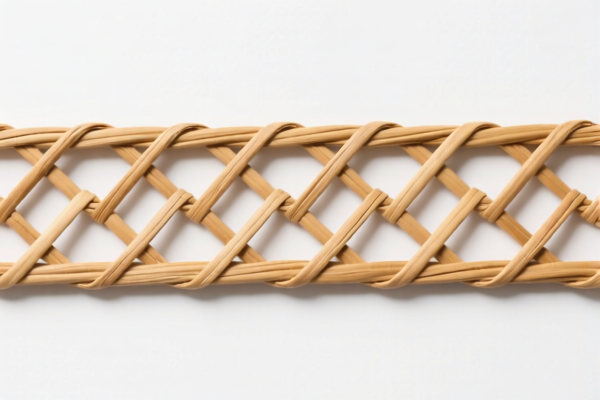



AI Analysis
🌿 Woven Rattan Decoration (藤条装饰品)
🌐 HS Code Reference & Customs Clearance Guide | 2026 Latest Tariff Analysis | Professional Clearance Strategy
📌 1. Product Definition: What Exactly is "Woven Rattan Decoration"?
Rattan decorations, typically made from natural plant fibers, occupy a complex position in international trade classification. They can be interpreted in two primary ways depending on their manufacturing process and artistic nature:
- Plastic Wood/Composite Items (Chapter 44): If the rattan is processed into strips, woven into mats, or used as a structural decorative element for furniture/interiors, it falls under wood/plant fiber products.
- Statues/Sculptures (Chapter 97): If the rattan is twisted, sculpted, or crafted into an artistic form (like a statue, figurine, or abstract art), it may qualify as an artistic sculpture.
- Woven Articles (Chapter 46): If the primary characteristic is the weaving technique using rattan strips (similar to baskets or mats), it may fall under vegetable material woven articles.
⚠️ Key Distinction Point:
- If it’s a structural decorative panel or furniture accessory → Chapter 44
- If it’s an artistic sculpture/statue → Chapter 97
- If it’s a woven mat/panel → Chapter 46
📦 2. HS Code Classification Details (2026 Latest Tariff Authority Comparison)
Based on the provided data, here are the possible HS Codes and their corresponding tax implications for imports into the US from China.
| HS Code | Product Description | Applicable Scenario | Tax Rate (Total) |
|---|---|---|---|
4421.91.98.80 |
Other wooden articles; Rattan classified as plant fiber wood product for decorative use | Decorative panels, rattan trim, non-specific decorative wooden items | 38.3% |
9703.90.00.00 |
Artworks: Sculptures/statues of any material (including rattan) – Other category | Rattan sculptures, artistic statues, abstract art pieces | 17.5% |
9703.10.00.00 |
Artworks: Sculptures/statues – Original sculptures/statues | Original artistic rattan sculptures, handcrafted art pieces | 17.5% |
4602.12.45.00 |
Woven articles of vegetable materials – Rattan weaving | Woven rattan mats, baskets, woven decorative panels | 41.6% |
4421.99.98.80 |
Other wooden articles – Rattan as wooden fiber product | General wooden/rattan decorative items, fallback classification for wood fibers | 38.3% |
🔍 Key Reminder:
- Artistic vs. Functional: If the item is clearly an art piece (sculpture),9703.xxxxis highly preferred due to lower tariffs.
- Woven vs. Assembled: If it’s primarily woven (like a basket or mat),4602.xxxxapplies, but it has the highest tax rate.
- Fallback Category: If the item doesn’t fit specific subcategories,4421.99.98.80is used, but it carries a high tax burden.
💰 3. Detailed Tariff Rate Breakdown (2026 Latest)
✅ Applicable Country: United States (US)
✅ Origin: China (CN)
✅ Effective Date: 2025-11-10 onwards (including subsequent imports)
🎯 1. 9703.10.00.00 & 9703.90.00.00 – Sculptures/Statues (Rattan Art)
| Item | Content |
|---|---|
| Base Tariff | 0.0% |
| USITC Supplementary Tax | +7.5% |
| IEEPA Supplementary Tax | +10% |
| Total Tax Rate | 17.5% |
| Tax Calculation | CIF Value × 17.5% |
| De Minimis Exemption | ❌ Not Eligible |
| Legal Basis Path | IEEPA:9903.01.25 → USITC:9703.10.00.00 / 9703.90.00.00 → FOOTNOTE:9903.88.01 |
📌 Explanation:
- Although the base tariff is 0%, the USITC supplementary tax (7.5%) and IEEPA tax (10%) still apply.
- This is the most cost-effective classification if the item can be proven to be an artistic sculpture.
- Key Advantage: Lower tax burden compared to other categories.
🎯 2. 4421.91.98.80 & 4421.99.98.80 – Wooden/Plant Fiber Decorative Items
| Item | Content |
|---|---|
| Base Tariff | 3.3% |
| USITC Supplementary Tax | +25.0% |
| IEEPA Supplementary Tax | +10% |
| Total Tax Rate | 38.3% |
| Tax Calculation | CIF Value × 38.3% |
| De Minimis Exemption | ❌ Not Eligible |
| Legal Basis Path | IEEPA:9903.01.25 → USITC:4421.91.98.80 / 4421.99.98.80 → FOOTNOTE:9903.88.01 |
📌 Explanation:
- Higher Base Tariff (3.3%) plus 25% USITC tax results in a significant cost increase.
- This classification applies if the rattan is treated as wood/plant fiber for decorative purposes (e.g., rattan wall panels, decorative trim).
- Risk: Misclassifying a sculpture as a "wooden article" leads to 20.8% extra tax.
🎯 3. 4602.12.45.00 – Woven Vegetable Material Articles
| Item | Content |
|---|---|
| Base Tariff | 6.6% |
| USITC Supplementary Tax | +25.0% |
| IEEPA Supplementary Tax | +10% |
| Total Tax Rate | 41.6% |
| Tax Calculation | CIF Value × 41.6% |
| De Minimis Exemption | ❌ Not Eligible |
| Legal Basis Path | IEEPA:9903.01.25 → USITC:4602.12.45.00 → FOOTNOTE:9903.88.01 |
📌 Explanation:
- This is the highest tax category among the options.
- Applies only if the product is primarily a woven article (e.g., rattan basket, woven mat).
- Warning: Avoid this classification unless the product is clearly a woven item and not a sculpture or wooden decoration.
🛠️ 4. Customs Clearance Practical Advice (Avoiding Pitfalls)
✅ 1. Documentation Checklist (Essential)
| Document | Required | Notes |
|---|---|---|
| ✅ Product Specification Sheet | ✔️ | Include material (100% natural rattan), dimensions, weight, and usage. |
| ✅ Product Photos | ✔️ | Clearly show the artistic/sculptural nature if claiming Chapter 97. |
| ✅ Artist/Craftsman Statement | ✔️ | If claiming 9703, provide a statement confirming the item is an original artistic sculpture. |
| ✅ Commercial Invoice | ✔️ | Describe as "Rattan Sculpture, Artistic Decoration" not "Woven Mat" or "Wooden Panel". |
| ✅ Packing List | ✔️ | List items clearly to avoid being deemed as "parts" or "accessories". |
| ✅ Third-Party Inspection Report | ✔️ | Confirm material composition (natural rattan vs. plastic composite). |
✅ 2. Declaration Strategy (Key Tips)
🔥 "Art First, Weave Second, Wood Last, Save Taxes with Care!"
| Situation | Correct Declaration | Wrong Approach |
|---|---|---|
| Artistic Rattan Sculpture | 9703.10.00.00 or 9703.90.00.00 |
Misdeclare as "Wooden Decoration" → 38.3% |
| Rattan Wall Panel | 4421.91.98.80 |
Misdeclare as "Sculpture" → Risk of rejection |
| Rattan Basket/Mat | 4602.12.45.00 |
Misdeclare as "Sculpture" → High audit risk |
| Mixed Use (Decor + Functional) | 4421.99.98.80 |
Split declaration → Higher total tax |
✅ 3. Special Scenarios
| Situation | Handling Advice |
|---|---|
| OEM Art Pieces | Provide design drawings + artist certificate to support 9703 classification. |
| Pre-Assembled Kits | If rattan strips are shipped unassembled, they may be classified under 4421 (wood parts) → Higher Tax. |
| Plastic-Coated Rattan | If coated with plastic, it may not qualify as natural rattan → Could be reclassified under Chapter 39 (Plastics) → Different Tax. |
| Mixed Materials | If rattan is combined with metal/wood, classify based on essential character → Likely 4421 or 4602. |
🌍 5. Global Market Comparison (2026 Latest)
| Country/Region | Recommended HS Code | Tariff | Notes |
|---|---|---|---|
| 🇺🇸 USA | 9703.10.00.00 |
17.5% | Best for artistic sculptures. |
| 🇨🇳 China | 9703.10.00.00 |
~5-10% | No USITC/IEEPA taxes. |
| 🇪🇺 EU | 9703.10.00.00 |
0% (if CE certified) | No additional taxes. |
| 🇬🇧 UK | 9703.10.00.00 |
5% | Post-Brexit tariff applies. |
| 🇦🇺 Australia | 9703.10.00.00 |
5% | No additional taxes. |
📌 Conclusion:
- USA has the highest tariff complexity due to USITC and IEEPA taxes.
- Chapter 97 (Sculptures) is the most tax-efficient option for rattan decorations in the US.
- Chapter 44 and 46 carry high penalties due to 25% USITC tax.
📌 6. Common Mistakes & Pitfalls (Lessons Learned)
❌ Mistake 1: Declaring a rattan sculpture as "Wooden Decoration" (4421)
👉 Consequence: Pay 38.3% instead of 17.5% → 20.8% extra cost.
❌ Mistake 2: Declaring a woven mat as "Sculpture" (9703)
👉 Consequence: Customs rejection, delayed clearance, or reclassification → Penalties + Delays.
❌ Mistake 3: Using vague terms like "Rattan Item" in the invoice
👉 Consequence: Customs ambiguity → High audit risk → Possible 41.6% tax.
❌ Mistake 4: Ignoring the artistic nature of the product
👉 Consequence: Missed opportunity for lower tariff under 9703.
✅ Correct Approach:
"Handcrafted Rattan Sculpture, Original Art Piece, Decorative Statue, Model XYZ, 100% Natural Rattan"
🎯 7. Conclusion: Smart Classification, Cost Savings, Smooth Clearance!
🎯 Key Takeaways:
🔹 "Art Wins, Weave Costs, Wood Sits in the Middle!"
🔹 "HS Code Determines Tax, 17.5% vs. 41.6% is a Huge Difference!"
🔹 "Always Provide Artistic Proof for Chapter 97!"
📌 Pro Tip:
If your rattan decoration is original art, apply for an Advance Ruling from US Customs to confirm 9703 classification.
If it’s a mass-produced decorative panel, prepare for 38.3% tax under 4421.
📣 Immediate Action:
📞 Consult with a customs broker + Provide product photos + Request Advance Ruling for
9703
🚀 Ensure smooth clearance, avoid penalties, and maximize profit margins!
✨ Professional clearance starts with accurate classification!
💼 Every dollar of tax saved is pure profit!
Customer Reviews
About HS Code Classification
The Harmonized System (HS) is an internationally standardized nomenclature developed by the World Customs Organization (WCO) to classify traded products. Over 200 countries use the HS system as the basis for customs tariffs, trade statistics, and import/export regulations.
Each HS code follows a hierarchical structure:
- Chapter (2 digits) — Broad category of goods (e.g., Chapter 84: Machinery and Mechanical Appliances)
- Heading (4 digits) — More specific grouping within the chapter
- Subheading (6 digits) — Internationally standardized breakdown, used by all WCO member countries
- National subdivisions (8-10 digits) — Country-specific extensions for further classification, such as US HTSUS 10-digit codes
Correct HS code classification is essential for smooth customs clearance, accurate duty payment, and compliance with trade regulations. Misclassification can lead to customs delays, overpayment of duties, or penalties.
When importing from CN to US, the applicable tariff rates may include:
- Most-Favored-Nation (MFN) rate — The standard duty rate applied to WTO members
- General rate — Applied to countries without trade agreements
- Trade remedy duties — Additional tariffs such as Section 301 (anti-dumping), Section 232 (national security), or countervailing duties
The information provided on this page is for reference purposes only. For official classification, please consult with your local customs authority or a licensed customs broker.