Woven Rattan Rug
CN → US| HS Code | Tariff Rate | Origin | Destination | Doc |
|---|---|---|---|---|
| 4601228000 | 35.0% | CN | US | Official Doc |
| 4601224000 | 38.3% | CN | US | Official Doc |
| 5705002090 | 38.3% | CN | US | Official Doc |
| 4602124500 | 41.6% | CN | US | Official Doc |
| 4602123500 | 10.0% | CN | US | Official Doc |
Product Images
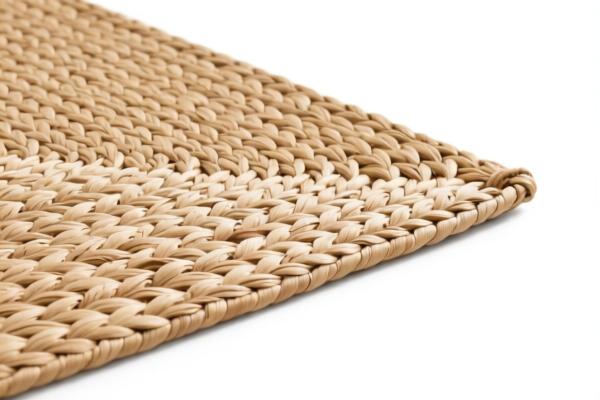
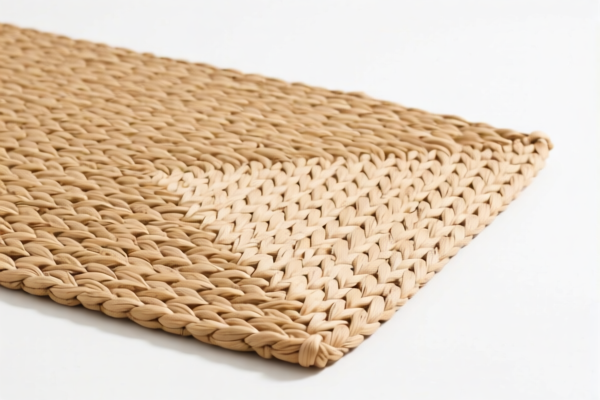
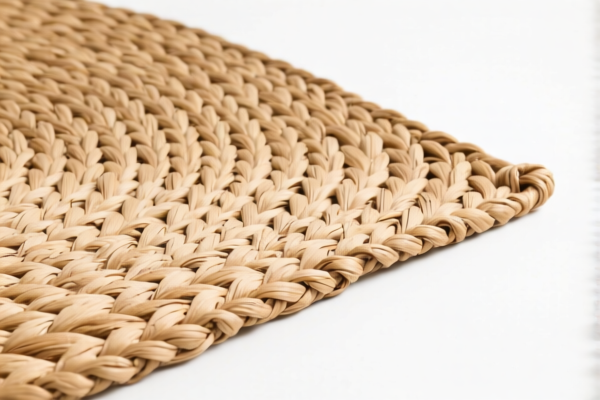
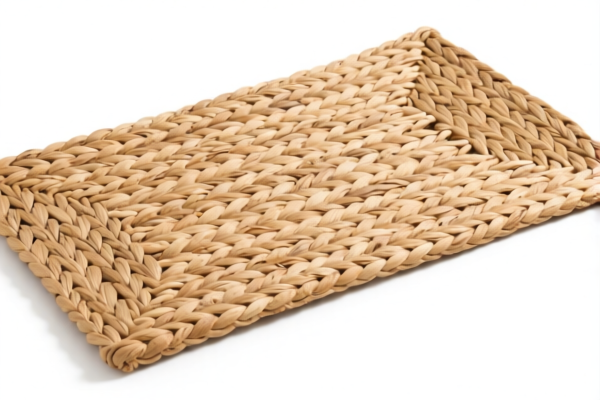
AI Analysis
🧶 Woven Rattan Rug (藤编制地毯)
🌐 HS Code Reference & Customs Clearance Guide | 2026 Latest Tariff Analysis | Professional Clearance Strategy 📌 I. Product Definition & Classification: What Exactly is a "Woven Rattan Rug"?
Woven rattan rugs fall under Chapter 46 (Plaiting materials; basketwork and wickerwork articles) or Chapter 57 (Carpets and other floor coverings), depending on their specific construction, material composition, and intended use. In international trade, the classification hinges on whether the item is primarily considered a "woven article" (Chapter 46) or a "carpet/floor covering" (Chapter 57).
Key Distinction Criteria: * Wickerwork/Basketware Nature (Chapter 46): If the rug is made of plaited rattan strips, often used as decorative mats, heavy-duty floor mats, or woven crafts, it typically falls under 4601 (Plaiting materials) or 4602 (Basketwork articles). * Carpet/Floor Covering Nature (Chapter 57): If the product is explicitly manufactured as a textile-like floor covering, using rattan fibers or blends treated as textile materials, it may fall under 5705 (Other carpets and floor coverings).
⚠️ Critical Differentiator:
- If it’s a heavy, structured woven mat made of thick rattan strips → Chapter 46
- If it’s a flexible, carpet-like floor covering resembling textile rugs but made of natural fibers → Chapter 57
- Misclassification Risk: Declaring a rigid wicker mat as a "carpet" (5705) may trigger disputes; declaring a soft fiber rug as "basketwork" (4601) may also be rejected.
📦 II. HS Code Classification Details (2026 Latest Tariff Authority Comparison)
| HS Code | Product Description | Application Scenario | Tax Rate (Total) | Tax Detail Breakdown |
|---|---|---|---|---|
4601.22.80.00 |
Woven rattan rugs, material: rattan strips, use: floor covering/carpet | General household rugs, decorative floor mats made of solid rattan strips | 35.0% | Base: 0.0% Section 301: 25.0% Section 122: 10.0% |
4601.22.40.00 |
Woven rattan rugs, material: rattan, form: mats/netting | Flexible mats, net-like woven floor coverings | 38.3% | Base: 3.3% Section 301: 25.0% Section 122: 10.0% |
5705.00.20.90 |
Woven rattan rugs, material: rattan (textile/fiber type), form: carpet | Carpet-like floor coverings using rattan fibers treated as textiles | 38.3% | Base: 3.3% Section 301: 25.0% Section 122: 10.0% |
4602.12.45.00 |
Woven rattan rugs, material: rattan, form: woven articles | Structured woven products, baskets, or rigid floor items made of rattan | 41.6% | Base: 6.6% Section 301: 25.0% Section 122: 10.0% |
4602.12.35.00 |
Woven rattan rugs, material: rattan, form: woven articles | Specific woven rattan articles eligible for lower Section 122 duty | 10.0% | Base: 0.0% Section 301: 0.0% Section 122: 10.0% |
🔍 Key Reminder:
- HS Code4602.12.35.00offers the lowest total tax rate (10%), but it applies only to specific "woven articles" that do not incur Section 301 duties. Verify if your product’s specific form and material processing qualify for this subheading. - HS Codes4601.22.80.00and4601.22.40.00are common for "mats" and "plaited materials." The difference in base duty (0% vs 3.3%) affects the total rate. - HS Code5705.00.20.90treats the rattan as a "textile/fiber" material. This is often used for softer, more carpet-like products. - HS Code4602.12.45.00has the highest base duty (6.6%), leading to a 41.6% total rate. This is typically for rigid or complex woven structures.
💰 III. 2026 Latest Tariff Rate Breakdown (Including Additional Taxes & Policy Surcharges)
✅ Applicable Country: United States (US)
✅ Origin: China (CN)
✅ Effective Time: Ongoing (Section 301 & Section 122 rules apply)
🎯 1. 4601.22.80.00 —— Woven Rattan Rug (Plaited Material, 0% Base)
| Item | Content |
|---|---|
| Base Tariff | 0% (ad valorem) |
| Section 301 Additional Duty | +25.0% |
| Section 122 Duty | +10.0% |
| Total Tariff | 35.0% |
| Tax Calculation | CIF Value × 35% |
| De Minimis Eligibility | ❌ No (Denied) |
| Legal Basis Path | USITC:4601.22.80.00 → SECTION_301:9903.01.25 → SECTION_122:10.0% |
📌 Explanation:
- This code classifies rattan as "plaiting materials." The base duty is 0%, but Section 301 adds 25%, and Section 122 adds 10%. - Total 35% is a significant cost. Ensure the product is indeed a "plaited material" and not a rigid "basketware" article.
🎯 2. 4601.22.40.00 —— Woven Rattan Rug (Mats/Netting, 3.3% Base)
| Item | Content |
|---|---|
| Base Tariff | 3.3% |
| Section 301 Additional Duty | +25.0% |
| Section 122 Duty | +10.0% |
| Total Tariff | 38.3% |
| Tax Calculation | CIF Value × 38.3% |
| De Minimis Eligibility | ❌ No |
| Legal Basis Path | USITC:4601.22.40.00 → SECTION_301:9903.01.25 → SECTION_122:10.0% |
📌 Note:
- The 3.3% base duty increases the total cost. This code is for "mats" or "netting" made of rattan. - If your product is a flexible mat, this code is likely applicable.
🎯 3. 5705.00.20.90 —— Woven Rattan Rug (Textile/Fiber Type, 3.3% Base)
| Item | Content |
|---|---|
| Base Tariff | 3.3% |
| Section 301 Additional Duty | +25.0% |
| Section 122 Duty | +10.0% |
| Total Tariff | 38.3% |
| Tax Calculation | CIF Value × 38.3% |
| De Minimis Eligibility | ❌ No |
| Legal Basis Path | USITC:5705.00.20.90 → SECTION_301:9903.01.25 → SECTION_122:10.0% |
📌 Note:
- This code treats the rattan as a "carpet" made of fiber/textile material. - Use this only if the product is explicitly manufactured and marketed as a "carpet" with textile-like properties.
🎯 4. 4602.12.45.00 —— Woven Rattan Rug (Woven Articles, 6.6% Base)
| Item | Content |
|---|---|
| Base Tariff | 6.6% |
| Section 301 Additional Duty | +25.0% |
| Section 122 Duty | +10.0% |
| Total Tariff | 41.6% |
| Tax Calculation | CIF Value × 41.6% |
| De Minimis Eligibility | ❌ No |
| Legal Basis Path | USITC:4602.12.45.00 → SECTION_301:9903.01.25 → SECTION_122:10.0% |
📌 Note:
- This is the highest tax rate among the options. It applies to "basketwork articles" (Chapter 46, Heading 4602). - Avoid this code unless your product is clearly a rigid or complex woven item, not a simple rug/mat.
🎯 5. 4602.12.35.00 —— Woven Rattan Rug (Woven Articles, 0% Base)
| Item | Content |
|---|---|
| Base Tariff | 0.0% |
| Section 301 Additional Duty | 0.0% |
| Section 122 Duty | +10.0% |
| Total Tariff | 10.0% |
| Tax Calculation | CIF Value × 10.0% |
| De Minimis Eligibility | ❌ No (Check specific exclusion lists) |
| Legal Basis Path | USITC:4602.12.35.00 → SECTION_122:10.0% |
📌 Strategic Insight:
- This is the most cost-effective code. It has NO Section 301 duty (25%) and 0% Base Duty. - However, it is highly specific to certain "woven articles" under 4602.12.35. You must prove your product fits this exact subheading description. - Warning: Misclassifying a standard rug into this code to avoid 25% Section 301 duty can lead to severe penalties, audits, and back-taxes. Only use if your product’s material and form strictly match the legal definition of 4602.12.35.00.
🛠️ IV. Customs Clearance Practical Advice (Battle-Tested Pitfall Guide)
✅ 1. Preparation Checklist (Non-Negotiable)
| Document | Required | Notes |
|---|---|---|
| ✅ Product Specifications | ✔️ | Must detail material (100% natural rattan?), weave type, dimensions, weight. |
| ✅ Photos | ✔️ | Clear images of the rug’s texture, edges, and packaging. Differentiate between "mat" and "carpet." |
| ✅ Commercial Invoice | ✔️ | Clearly state: "Woven Rattan Rug," "Floor Covering," or "Plaited Material." Avoid vague terms like "Home Decor." |
| ✅ Packing List | ✔️ | Show net/gross weight. Critical for calculating ad valorem duties. |
| ✅ Origin Certificate | ✔️ | Proof of China origin is mandatory for applying Section 301 & 122 rules. |
| ✅ Material Test Report | ✔️ | If claiming "textile/fiber" (5705), provide lab reports on fiber composition. |
✅ 2. Declaration Strategy (Key Mantra)
🔥 “Form Determines Code, Material Determines Duty, Accuracy Saves Money!”
| Scenario | Recommended HS Code | Pitfall to Avoid |
|---|---|---|
| Standard Rattan Mat/Rug | 4601.22.80.00 (35%) or 4601.22.40.00 (38.3%) |
Don’t declare as "carpet" (5705) if it’s rigid plaiting. |
| Soft, Carpet-Like Rattan | 5705.00.20.90 (38.3%) |
Don’t use this if it’s clearly a wicker basket structure. |
| Rigid/Woven Basket Item | 4602.12.45.00 (41.6%) |
Only if it’s not a floor mat. High cost! |
| Specific Woven Article (Low Duty) | 4602.12.35.00 (10%) |
High Risk. Only use if you have legal confirmation it fits this subheading. |
✅ 3. Special Cases
| Case | Handling Advice |
|---|---|
| Mixed Materials | If the rug has a fabric backing or synthetic blend, it may shift to Chapter 57 or 63. Get pre-classification ruling. |
| OEM/Private Label | Ensure the supplier’s invoice matches your import declaration. Discrepancies cause delays. |
| Low-Value Shipments | Section 122 and 301 duties often do not apply to de minimis shipments under $800, but this changes frequently. Check current CBP rules. |
| Origin Transshipment | If rattan is processed in Vietnam/Thailand but originates in China, Section 301 may still apply. Provenance is key. |
🌍 V. Global Market Comparison (2026 Latest)
| Country/Region | Recommended HS Code | Approx. Tariff (China Origin) | Certification | Notes |
|---|---|---|---|---|
| 🇺🇸 USA | 4601.22.80.00 |
35.0% (Total) | None specific | Section 301 & 122 apply. High cost. |
| 🇪🇺 EU | 4601.22.80.00 |
4.5% (Typical) | None | No Section 301/122. Much lower cost. |
| 🇨🇳 China | 4601.22.80.00 |
0% (Import Duty) | CCC (if applicable) | Re-export hub opportunity. |
| 🇬🇧 UK | 4601.22.80.00 |
4.5% (Typical) | UKCA | Post-Brexit rules. |
| 🇯🇵 Japan | 4601.22.80.00 |
5.0% (Typical) | None | Low tariff environment. |
📌 Conclusion:
- USA is the most expensive market due to Section 301 and 122 duties.
- EU, UK, and Japan offer significantly lower tariffs (~4-5%), making them more attractive for cost-sensitive exports.
- Consider supply chain diversification if shipping primarily to the US.
📌 VI. Common Mistakes & Pitfall Guide (Blood-Teachings)
❌ Mistake 1: Declaring a rigid rattan mat as a "carpet" (5705) to avoid higher duties.
👉 Consequence: Customs rejects the declaration, delays shipment, imposes fines for misclassification.
❌ Mistake 2: Using 4602.12.35.00 (10%) for a standard rug without legal justification.
👉 Consequence: Audit, back-taxes of ~25-30%, potential fraud charges.
❌ Mistake 3: Ignoring Section 122 duties.
👉 Consequence: Underpayment of 10%. CBP will collect with interest.
❌ Mistake 4: Vague product description ("Home Decor Item").
👉 Consequence: Customs assigns the highest possible duty rate automatically.
✅ Correct Approach:
"Woven Rattan Floor Mat, 100% Natural Rattan, Plaited Construction, 5ft x 7ft, Made in China."
🎯 VII. Conclusion: Precision Classification, Cost Optimization!
🎯 Remember the Mantra:
🔹 "Rattan is Chapter 46, Carpet is Chapter 57. Choose wisely, save thousands!"
🔹 "Section 301 adds 25%, Section 122 adds 10%. Check every decimal!"
🔹 "Low Duty Code 4602.12.35 is a trap if misused. Only use if legally valid."
📌 Pro Tip:
- For US imports, always calculate the total landed cost including 35-41% duties.
- Consider Value-Added Tax (VAT) implications in other markets.
- If possible, negotiate FOB terms to understand your true cost base.
📣 Immediate Action:
📞 Consult a licensed customs broker for Pre-Classification Ruling if unsure.
📸 Provide high-res photos and detailed specs to your supplier and broker.
🚀 Clear your rattan rugs smoothly, minimize tariffs, maximize profit!
✨ Professional Clearance Starts with Accurate Classification!
💼 Every Percentage Point Matters in International Trade!
Customer Reviews
About HS Code Classification
The Harmonized System (HS) is an internationally standardized nomenclature developed by the World Customs Organization (WCO) to classify traded products. Over 200 countries use the HS system as the basis for customs tariffs, trade statistics, and import/export regulations.
Each HS code follows a hierarchical structure:
- Chapter (2 digits) — Broad category of goods (e.g., Chapter 84: Machinery and Mechanical Appliances)
- Heading (4 digits) — More specific grouping within the chapter
- Subheading (6 digits) — Internationally standardized breakdown, used by all WCO member countries
- National subdivisions (8-10 digits) — Country-specific extensions for further classification, such as US HTSUS 10-digit codes
Correct HS code classification is essential for smooth customs clearance, accurate duty payment, and compliance with trade regulations. Misclassification can lead to customs delays, overpayment of duties, or penalties.
When importing from CN to US, the applicable tariff rates may include:
- Most-Favored-Nation (MFN) rate — The standard duty rate applied to WTO members
- General rate — Applied to countries without trade agreements
- Trade remedy duties — Additional tariffs such as Section 301 (anti-dumping), Section 232 (national security), or countervailing duties
The information provided on this page is for reference purposes only. For official classification, please consult with your local customs authority or a licensed customs broker.