Woven Rattan Shopping Bag
CN → US| HS Code | Tariff Rate | Origin | Destination | Doc |
|---|---|---|---|---|
| 4602121600 | 40.0% | CN | US | Official Doc |
| 4602122500 | 53.0% | CN | US | Official Doc |
Product Images
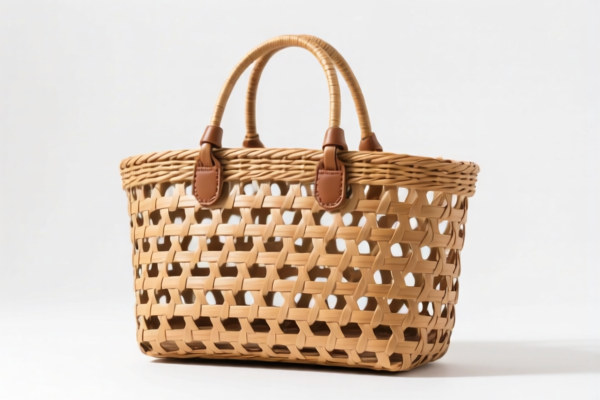
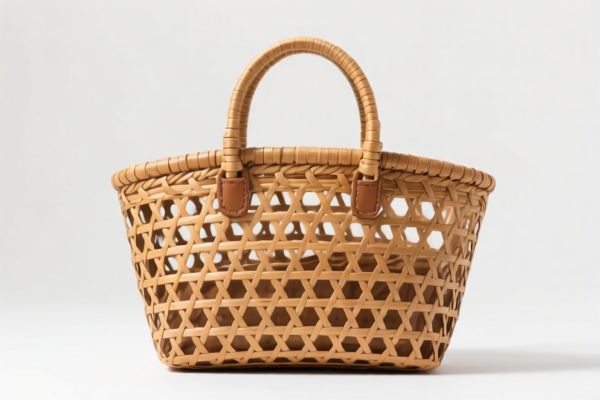
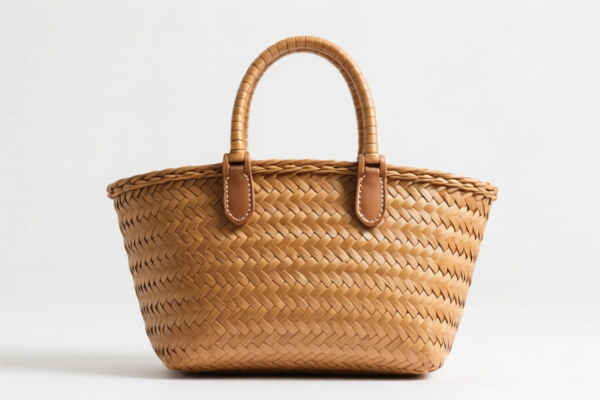
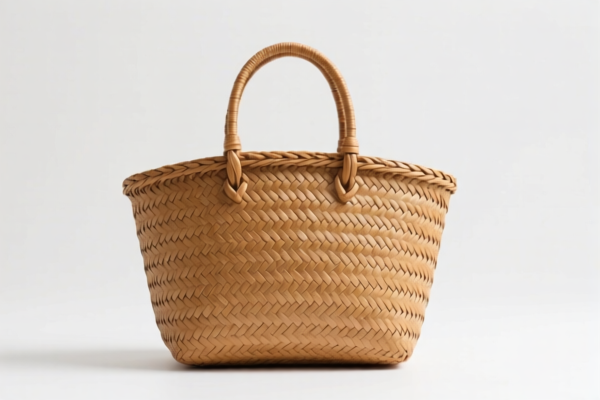
AI Analysis
🛍️ Woven Rattan Shopping Bag (Rattan Bags)
🌐 HS Code Reference & Customs Clearance Guide | 2026 Latest Tariff Analysis | Professional Entry Strategy
📌 1. Product Definition & Classification: Do You Know Your "Rattan Bag"?
A Woven Rattan Shopping Bag is a container made from plaited rattan materials, designed for carrying goods. In international trade, rattan bags are categorized based on their function and structure, which directly determines their HS Code and, crucially, their tariff burden.
Key Distinction: * Luggage/Handbags (0% Duty): If the bag is designed specifically for personal use, such as fashion handbags, tote bags with straps, or flat goods (like wallets/pouches), it falls under the "Luggage, handbags" category. * Other Baskets/Bags (30% Duty): If the bag is a general-purpose basket, crate, or storage container without specific fashion/luggage features (like handles for shoulder/carrying), it falls under "Other baskets and bags."
⚠️ Critical Classification Point:
- Fashion/Personal Use: Has handles, zippers, or specific shapes for carrying personal items → 4602.12.25.00 (0% Tax)
- General Storage/Utility: General baskets, crates, or non-fashionable bags → 4602.12.16.00 (30% Tax)
📦 2. HS Code Classification Details (2026 Latest Tariff Authority)
| HS Code | Product Description | Applicable Scenario | Tax Rate |
|---|---|---|---|
4602.12.25.00 |
Luggage, handbags and flatgoods, whether or not lined (Other) | Shopping bags, totes, handbags, fashion bags made of rattan. Designed for personal carry. | 0.0% |
4602.12.16.00 |
Other baskets and bags, whether or not lined | Storage baskets, utility crates, general woven bags not classified as luggage/handbags. | 30.0% |
🔍 Key Reminder:
- If your "Shopping Bag" has fashion elements (straps, decorative linings, specific brand styling) and is marketed as hand luggage or a handbag, it should be classified under 4602.12.25.00.
- If it is a simple woven basket used for grocery carrying without fashion attributes, it may be classified under 4602.12.16.00.
- Misclassification Risk: Declaring a simple storage basket as a "handbag" to avoid the 30% tariff can lead to customs penalties. Conversely, declaring a fashion bag as a "basket" leads to overpayment of taxes.
💰 3. 2026 Latest Tariff Rate Breakdown (Detailed Tax Clauses)
✅ Applicable Country: United States (US)
✅ Origin: China (CN)
✅ Effective Date: Current rates as per 2026 data
🎯 1. 4602.12.25.00 — Rattan Handbags & Luggage (Fashion/Personal Use)
| Item | Detail |
|---|---|
| Base Tariff | 0.0% |
| Additional Duty (Section 301/IEEPA) | 0.0% |
| Total Tariff Rate | 0.0% |
| Tax Calculation | No duty levied on CIF value |
| De Minimis Eligibility | ❌ Not Applicable (Physical goods, but no additional tax) |
| Legal Basis | HTSUS 4602.12.25.00 |
📌 Explanation:
- Rattan handbags, luggage, and flatgoods are currently exempt from additional Section 301 tariffs.
- This is a highly advantageous classification for fashion-oriented rattan products.
- Ensure your product description emphasizes "Handbag," "Tote Bag," or "Luggage" rather than "Basket."
🎯 2. 4602.12.16.00 — Other Rattan Baskets & Bags (General/Utility Use)
| Item | Detail |
|---|---|
| Base Tariff | 5.0% |
| Additional Duty (Section 301/IEEPA) | 25.0% |
| Total Tariff Rate | 30.0% |
| Tax Calculation | CIF Value × 30% |
| De Minimis Eligibility | ❌ Not Eligible (High tax rate denies de minimis exemption) |
| Legal Basis | HTSUS 4602.12.16.00 + Section 301 Footnote |
📌 Explanation:
- Rattan baskets and general bags are subject to the full Section 301 tariff.
- Total tax is 30%, which significantly impacts profitability.
- This rate applies to basic utility baskets, picnic baskets, or generic woven bags not designed as fashion items.
🛠️ 4. Customs Clearance Practical Advice (Real-World Pitfall Guide)
✅ 1. Documentation Checklist (All Required)
| Document | Required | Notes |
|---|---|---|
| ✅ Product Photos | ✔️ | Clear images showing handles, lining, zippers, and overall shape. |
| ✅ Commercial Invoice | ✔️ | Explicitly describe as "Rattan Handbag" or "Fashion Shopping Bag", NOT "Basket." |
| ✅ Packing List | ✔️ | List items clearly as bags, not containers. |
| ✅ Material Composition | ✔️ | Confirm 100% vegetable material (Rattan) for HTS 4602. |
| ✅ Lining/Trim Details | ✔️ | If lined with fabric or leather, mention it to support "Handbag" classification. |
✅ 2. Classification Strategy (Critical Tips)
🔥 “Design is Destiny: Handbag vs. Basket!”
| Scenario | Correct HS Code | Tax | Why? |
|---|---|---|---|
| Rattan Tote with Fabric Lining & Leather Handles | 4602.12.25.00 |
0% | Designed as a fashion handbag/shopping bag. |
| Rattan Basket with Rope Handles (No Lining) | 4602.12.16.00 |
30% | Generic storage basket; lacks fashion handbag features. |
| Rattan Bag for Picnic (with Lid) | 4602.12.16.00 |
30% | Considered a basket/container, not luggage. |
| Rattan Clutch or Wallet | 4602.12.25.00 |
0% | Classified as "flatgoods" or luggage accessory. |
📌 Key Strategy:
- If you are selling a shopping bag, ensure it has fashionable elements (straps, decorative hardware, branded lining) to qualify for 4602.12.25.00 (0%).
- Avoid using terms like "Basket," "Crate," or "Container" in your product title if you aim for the 0% rate. Use "Bag," "Tote," "Handbag," or "Shopping Satchel."
✅ 3. Special Considerations
| Situation | Handling Advice |
|---|---|
| Mixed Materials | If the bag is mostly rattan but has significant plastic/metal parts, it may still be 4602 if rattan is the principal material. |
| Packaging | Do not declare "Rattan Basket" for customs. Use "Rattan Shopping Bag" if it is a fashion item. |
| Origin Marking | Clearly mark "Made in China" on the product or packaging to avoid origin disputes. |
| Pre-Ruling | For large shipments, consider applying for an Advance Ruling from CBP to confirm 0% classification. |
🌍 5. Global Market Comparison (2026)
| Country/Region | Recommended HS Code | Tariff (China Origin) | Notes |
|---|---|---|---|
| 🇺🇸 USA | 4602.12.25.00 |
0.0% | Best Option: Classify as Handbag/Luggage. |
| 🇺🇸 USA | 4602.12.16.00 |
30.0% | Avoid: Generic baskets face high tariffs. |
| 🇪🇺 EU | 4602.12 |
Varies (0-5%) | Generally lower tariffs; focus on origin. |
| 🇬🇧 UK | 4602.12 |
Varies (0-5%) | Post-Brexit rules apply; check UK Tariff. |
| 🇨🇦 Canada | 4602.12 |
0% - 5% | Generally favorable for rattan goods. |
📌 Conclusion:
- USA is the key market: The difference between 0% and 30% is massive.
- Design matters: To enjoy 0% duty in the US, ensure your "Shopping Bag" has handbag characteristics.
- Marketing Alignment: Your product listing, invoice, and physical design must align to support the "Handbag" classification.
📌 6. Common Mistakes & Pitfalls (Lessons Learned)
❌ Mistake 1: Declaring a fashion rattan tote as a "Basket"
👉 Consequence: Paying 30% instead of 0%.
👉 Fix: Use "Handbag" or "Tote Bag" in declaration.
❌ Mistake 2: Declaring a simple storage basket as a "Handbag"
👉 Consequence: Customs may reject the classification, impose penalties, or demand back taxes + interest.
👉 Fix: Only classify as handbag if it has fashionable design elements.
❌ Mistake 3: Ignoring Lining/Handles
👉 Consequence: Lack of evidence to support "Handbag" status.
👉 Fix: Provide photos showing handles, zippers, or branded lining.
✅ Correct Declaration Example:
"Women’s Fashion Rattan Tote Bag, Hand-Loomed, with Leather Handles and Fabric Lining, for Personal Use"
✅ HS Code:4602.12.25.00
✅ Tax: 0%
🎯 7. Conclusion: Smart Classification Saves Money!
🎯 Remember the Rule:
🔹 "If it looks like a Handbag, Call it a Handbag (0% Tax)!"
🔹 "If it looks like a Basket, It’s a Basket (30% Tax)!"
🔹 "Design Drives Duty: Fashion Features = 0% Duty!"
📌 Pro Tip:
- For shopping bags, add fashion elements (straps, logos, linings) to ensure they qualify as Handbags/Luggage.
- Always keep product photos and design sketches ready for customs inspection.
- Consider Advance Ruling if shipping large volumes to the US.
📣 Action Required:
📞 Consult a customs broker to verify your product’s design meets "Handbag" criteria.
📝 Update your commercial invoice to reflect "Rattan Handbag" or "Fashion Shopping Bag."
🚀 Clear Customs Smoothly, Pay Less Tax, Boost Profits!
✨ Professional Clearance Starts with Precise Classification!
💼 Your Every Dollar Counts — Optimize Your HS Code Today!
Customer Reviews
About HS Code Classification
The Harmonized System (HS) is an internationally standardized nomenclature developed by the World Customs Organization (WCO) to classify traded products. Over 200 countries use the HS system as the basis for customs tariffs, trade statistics, and import/export regulations.
Each HS code follows a hierarchical structure:
- Chapter (2 digits) — Broad category of goods (e.g., Chapter 84: Machinery and Mechanical Appliances)
- Heading (4 digits) — More specific grouping within the chapter
- Subheading (6 digits) — Internationally standardized breakdown, used by all WCO member countries
- National subdivisions (8-10 digits) — Country-specific extensions for further classification, such as US HTSUS 10-digit codes
Correct HS code classification is essential for smooth customs clearance, accurate duty payment, and compliance with trade regulations. Misclassification can lead to customs delays, overpayment of duties, or penalties.
When importing from CN to US, the applicable tariff rates may include:
- Most-Favored-Nation (MFN) rate — The standard duty rate applied to WTO members
- General rate — Applied to countries without trade agreements
- Trade remedy duties — Additional tariffs such as Section 301 (anti-dumping), Section 232 (national security), or countervailing duties
The information provided on this page is for reference purposes only. For official classification, please consult with your local customs authority or a licensed customs broker.