Woven Ribbons and Narrow Fabrics
CN → US| HS Code | Tariff Rate | Origin | Destination | Doc |
|---|---|---|---|---|
| 5806321010 | 41.0% | CN | US | Official Doc |
| 5806321095 | 41.0% | CN | US | Official Doc |
Product Images
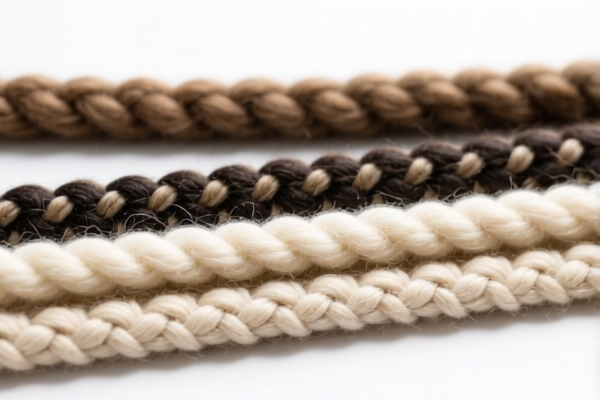
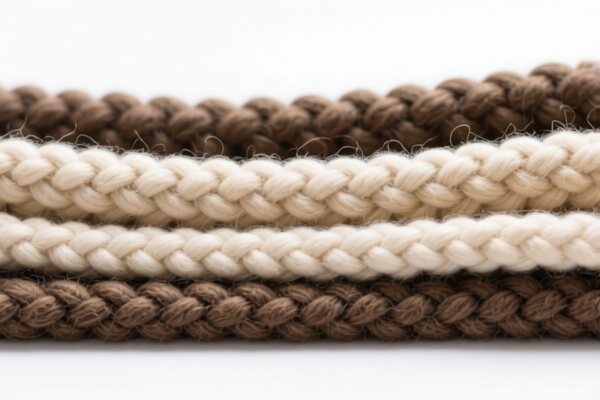
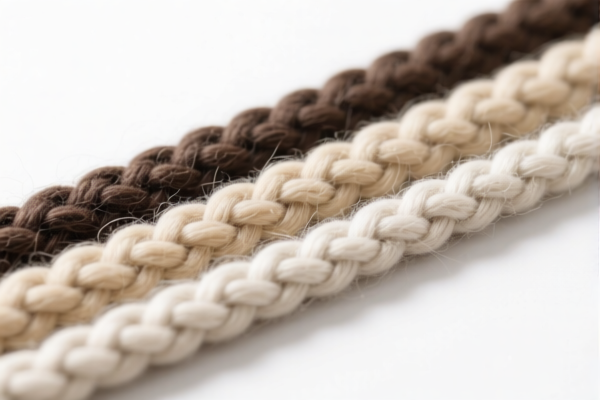
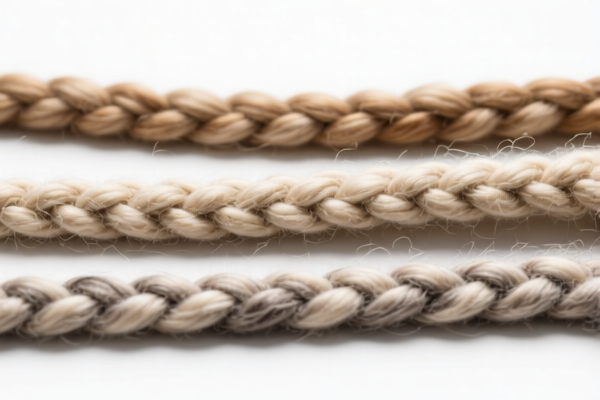
AI Analysis
🎀 Woven Ribbons and Narrow Fabrics (Narrow Woven Textiles)
🌐 HS Code Reference & Customs Clearance Guide | 2026 Latest Tariff Analysis | Professional Clearance Strategy
📌 1. Product Definition and Classification: Do You Really Understand "Narrow Fabrics"?
Narrow woven fabrics and ribbons are essential components in fashion, packaging, industrial applications, and stationery. In international trade, they are strictly categorized by width, material, and specific end-use. The data provided focuses specifically on man-made fiber ribbons under Heading 5806.
Key Distinction: * Heading 5807: Labels, badges, and similar articles (usually stitched or adhesive-backed, not woven). * Heading 5806: Woven narrow fabrics (including bolducs assembled by adhesive), specifically those other than goods of Heading 5807. * Material: The following codes apply only to ribbons made of Man-Made Fibers (e.g., Polyester, Nylon, Rayon). * Special Use: One category is specifically designated for typewriter ribbons (Heading 9612 suitability).
⚠️ Critical Classification Point:
- If the ribbon is intended for typewriter/ribbon cartridges → Use Code 5806.32.10.10
- If the ribbon is for general use (garments, crafts, packaging) → Use Code 5806.32.10.95
- Do NOT classify these under Heading 60 (Knitted fabrics) or Heading 54 (Yarn) if they are already woven into narrow fabric form.
📦 2. HS Code Classification Details (2026 Latest Tariff Authority Comparison)
| HS Code | Product Description | Applicability | Key Characteristics |
|---|---|---|---|
5806.32.10.10 |
Ribbons suitable for manufacture of typewriter/ similar ribbons (of Heading 9612) | Industrial/Office Supplies | Specifically designed for ink impregnation and printing; must be verifiable as compatible with typewriter ribbon cartridges. |
5806.32.10.95 |
Other ribbons (Other: Other) | General Use, Fashion, Packaging | All other man-made fiber ribbons not meeting the specific typewriter criteria (e.g., decorative grosgrain, satin, polypropylene tape). |
🔍 Important Note:
- Both codes fall under "Of man-made fibers" (e.g., Polyester, Acrylic, Nylon).
- Both codes fall under "Other woven fabrics" within Narrow Woven Fabrics.
- Exclusion: These codes do not apply to silk, cotton, or wool ribbons. Those would have different 8-digit codes within Heading 5806.
💰 3. 2026 Latest Tariff Rate Breakdown (Including Surcharge Policies)
✅ Applicable Country: United States (US)
✅ Origin: China (CN)
✅ Effective Date: 2026 Tariff Year
🎯 1. 5806.32.10.10 —— Ribbons for Typewriter/Similar Ribbons (Man-Made Fibers)
| Item | Details |
|---|---|
| Basic Tariff Rate | 0.0% |
| Section 301 Surcharge | 0.0% |
| Total Tariff Rate | 0.0% |
| Tax Detail | Base Tariff: 0.0% + Additional Tariff: 0.0% |
| Calculation Basis | Ad Valorem (0% of CIF Value) |
| De Minimis Eligibility | ✅ Yes (Generally eligible for $800 de minimis exemption under Section 321, unless restricted by specific CBP rulings on textile content, but tariff itself is 0%). |
📌 Explanation:
- Currently, there are NO additional tariffs applied to these specific narrow woven fabrics of man-made fibers from China.
- This makes them a low-cost import item compared to many other textile or electronics categories.
- Verification Required: You must be able to prove the end-use (suitability for typewriter ribbons) if challenged, though the 0% rate applies regardless.
🎯 2. 5806.32.10.95 —— Other Ribbons, Man-Made Fibers (General Use)
| Item | Details |
|---|---|
| Basic Tariff Rate | 0.0% |
| Section 301 Surcharge | 0.0% |
| Total Tariff Rate | 0.0% |
| Tax Detail | Base Tariff: 0.0% + Additional Tariff: 0.0% |
| Calculation Basis | Ad Valorem (0% of CIF Value) |
| De Minimis Eligibility | ✅ Yes (Likely eligible under de minimis, subject to standard textile quota checks, which are mostly abolished). |
📌 Explanation:
- This is the catch-all for all other man-made fiber narrow woven fabrics (e.g., polyester ribbons for hair bows, packaging bands, garment trims).
- Zero Duty Advantage: Unlike cotton or silk products which may face higher duties or quotas, synthetic narrow fabrics enjoy 0% duty.
- No Surcharge: No Section 301, IEEPA, or other special tariffs apply to this specific textile subheading.
🛠️ 4. Customs Clearance Practical Advice (Real-World Pitfall Guide)
✅ 1. Preparation Checklist (Missing Documents = Delay)
| Document | Required? | Explanation |
|---|---|---|
| ✅ Commercial Invoice | ✔️ | Must clearly state "Narrow Woven Fabric" or "Ribbons" and specify material (e.g., 100% Polyester). |
| ✅ Product Photos | ✔️ | Show width, texture, and end-use context. For 5806.32.10.10, show compatibility with ribbons/typewriter parts. |
| ✅ Material Composition Certificate | ✔️ | Critical to prove "Man-Made Fibers" (e.g., Polyester/Nylon). If cotton/mix, HS Code changes! |
| ✅ Packing List | ✔️ | Detail gross/net weight, dimensions, and number of rolls. |
| ✅ End-Use Declaration | ⚠️ | If claiming 5806.32.10.10, provide a brief statement that the fabric is suitable for typewriter/ribbon manufacturing. |
✅ 2. Declaration Tips (Key Mantra)
🔥 "Material First, Width Second, End-Use Specific!"
| Scenario | Correct Declaration | Wrong Practice |
|---|---|---|
| Polyester Ribbon for Packaging | 5806.32.10.95 |
Misclassifying as "Textile Yarn" (Chapter 54) → Higher scrutiny. |
| Synthetic Ribbon for Typewriter Refills | 5806.32.10.10 |
Calling it just "Fabric" without specifying typewriter suitability → Risk of misclassification audit. |
| Silk Ribbon | NOT these codes | Must use Silk-specific subheadings under 5806 (e.g., 5806.31.xxxx). |
| Cotton Ribbon | NOT these codes | Must use Cotton-specific subheadings under 5806. |
❌ Common Mistake:
- Declaring "Narrow Fabric" without specifying material composition.
- Result: Customs may default to a higher-duty category or demand additional testing.
✅ 3. Special Considerations
| Situation | Advice |
|---|---|
| Mixed Bundles | If a shipment contains both 5806.32.10.10 and 5806.32.10.95, split the invoice and declare separately to ensure accuracy. |
| Adhesive-Backed Bolducs | If the narrow fabric is assembled by adhesive (bolduc), it still falls under 5806, not 5807. Confirm with your supplier. |
| De Minimis (Section 321) | Since the duty is 0%, these shipments are highly suitable for $800 de minimis entries, provided they meet all other CBP requirements (no IP infringement, no prohibited materials). |
🌍 5. Global Market Comparison (2026 Overview)
| Country/Region | Recommended HS Code | Tariff Rate | Key Certification | Notes |
|---|---|---|---|---|
| 🇺🇸 USA | 5806.32.10.10 / .95 |
0% | None specific for duty | Zero duty advantage; focus on material accuracy. |
| 🇨🇳 China | 5806.32.10 | Varies (Import Duty) | CCC (if consumer goods) | Domestic production may have different VAT. |
| 🇪🇺 EU | 5806 32 90 | ~0-4% | CE (if industrial) | VAT applies (19-27% depending on country). |
| 🇬🇧 UK | 5806 32 90 | ~0-4% | UKCA (if applicable) | Post-Brexit rules may require new origin certificates. |
| 🇯🇵 Japan | 5806 32 90 | ~0-6% | PSE (if electrical components attached) | Generally low tariffs for synthetics. |
📌 Conclusion:
- The USA offers the most favorable duty treatment (0%) for these items from China.
- No anti-dumping or countervailing duties currently apply to these specific narrow woven fabrics.
- Compliance Focus: The risk is not in duty cost, but in misclassification (e.g., claiming man-made but it's cotton) or end-use fraud (claiming typewriter use for decorative ribbon).
📌 6. Common Errors & Pitfall Guide (Lessons Learned)
❌ Error 1: Confusing "Narrow Woven Fabrics" (5806) with "Labels" (5807)
👉 Consequence: Misclassification leading to potential penalties if 5807 has different trade remedies.
Fix: 5806 is for woven strips. 5807 is for labels/badges (often non-woven or printed on backing).
❌ Error 2: Ignoring Material Composition
👉 Consequence: If the ribbon is 50% Cotton/50% Polyester, it does NOT fit 5806.32 (Man-Made). It may fall under Cotton (5806.31 or similar).
Fix: Always get a material composition certificate from the supplier.
❌ Error 3: Failing to Specify "Typewriter Suitability" for Code .10
👉 Consequence: If audited, you may be reclassified to .95 (though duty is same, accuracy is key for trade data).
Fix: Include a product spec sheet showing compatibility with standard typewriter ribbon cartridges.
✅ Correct Declaration Example:
"Narrow Woven Fabric, 1/2 inch width, 100% Polyester, suitable for typewriter ribbon manufacture, 100 rolls, CIF Value $500."
🎯 7. Conclusion: Professional Clearance, Cost-Efficient Shipping!
🎯 Remember the Mantra:
🔹 "Man-Made Fibers Only for These Codes"
🔹 "0% Duty is Key – Keep It Clean!"
🔹 "Separate Typewriter Use from General Trim!"
📌 Pro Tip:
Since the tariff is 0%, the biggest risk is customs delay due to incorrect description. Always include:
1. Material: 100% Polyester/Nylon/etc.
2. Width: In inches or mm.
3. End-Use: "For Typewriter Ribbons" OR "For Garment Decoration".🚀 Action Item:
- Request Material Test Reports from suppliers.
- Use precise English descriptions on invoices.
- Consider De Minimis (Section 321) for small shipments to simplify entry.
📣 Immediate Action:
📞 Consult a licensed customs broker if your ribbon contains blended fibers (e.g., Cotton/Polyester) or is elastane-containing.
🚀 Ensure your supplier's HS Code matches your invoice to avoid discrepancies at US Customs (CBP).
✨ Professional clearance starts with precise classification!
💼 Your zero-duty advantage is guaranteed – don't lose it to bad paperwork!
Customer Reviews
About HS Code Classification
The Harmonized System (HS) is an internationally standardized nomenclature developed by the World Customs Organization (WCO) to classify traded products. Over 200 countries use the HS system as the basis for customs tariffs, trade statistics, and import/export regulations.
Each HS code follows a hierarchical structure:
- Chapter (2 digits) — Broad category of goods (e.g., Chapter 84: Machinery and Mechanical Appliances)
- Heading (4 digits) — More specific grouping within the chapter
- Subheading (6 digits) — Internationally standardized breakdown, used by all WCO member countries
- National subdivisions (8-10 digits) — Country-specific extensions for further classification, such as US HTSUS 10-digit codes
Correct HS code classification is essential for smooth customs clearance, accurate duty payment, and compliance with trade regulations. Misclassification can lead to customs delays, overpayment of duties, or penalties.
When importing from CN to US, the applicable tariff rates may include:
- Most-Favored-Nation (MFN) rate — The standard duty rate applied to WTO members
- General rate — Applied to countries without trade agreements
- Trade remedy duties — Additional tariffs such as Section 301 (anti-dumping), Section 232 (national security), or countervailing duties
The information provided on this page is for reference purposes only. For official classification, please consult with your local customs authority or a licensed customs broker.