Woven Storage Basket
CN → US| HS Code | Tariff Rate | Origin | Destination | Doc |
|---|---|---|---|---|
| 4602110700 | 35.0% | CN | US | Official Doc |
| 4602110900 | 45.0% | CN | US | Official Doc |
| 4601920500 | 37.7% | CN | US | Official Doc |
| 3926909989 | 22.8% | CN | US | Official Doc |
| 4602110700 | 35.0% | CN | US | Official Doc |
Product Images
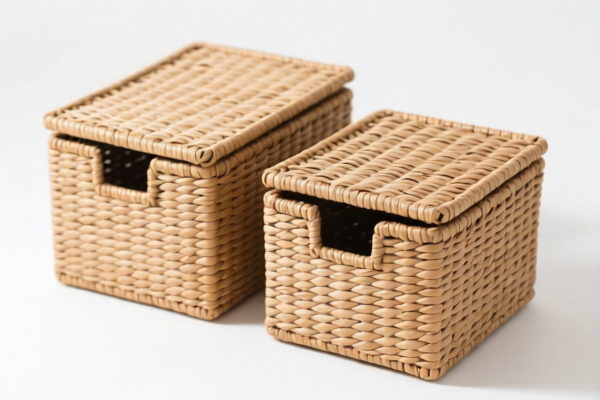
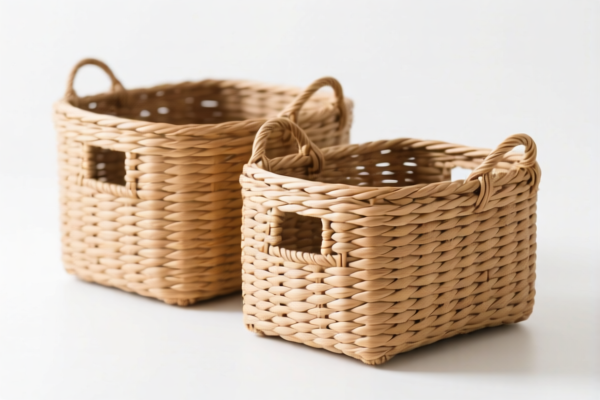
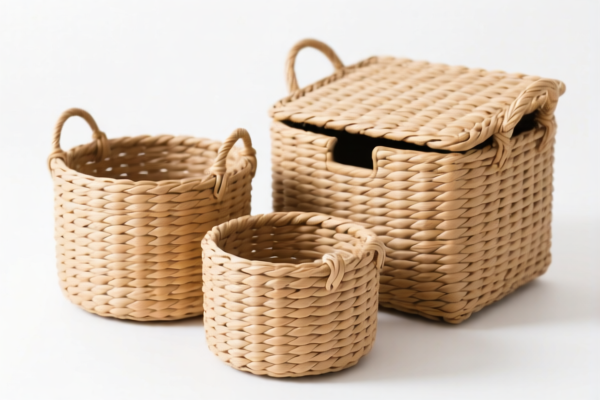
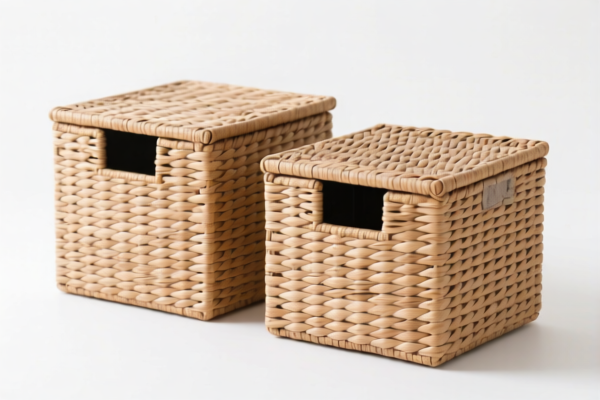
AI Analysis
🧺 Woven Storage Basket (Plant Fiber & Plastic Variants)
🌐 HS Code Reference & Customs Clearance Guide | 2026 Latest Tariff Analysis | Professional Entry Strategies for US Imports
📌 I. Product Definition & Classification: Do You Really Know Your "Basket"?
A "Woven Storage Basket" is a deceptively simple item in international trade, but its classification hinges entirely on material composition and manufacturing technique. Misclassification can lead to massive tariff discrepancies (from 22.8% to 45%) and customs delays.
In the context of US imports from China, these baskets are generally categorized into two main material groups: 1. Plant Fiber Baskets (Bamboo, Willow, Rattan): Traditional, natural materials. Usually fall under Chapter 46 (Made up of plaiting materials). 2. Synthetic/Plastic Baskets: Often mistaken for plant fibers due to appearance, but made from polypropylene (PP) or PVC. Falls under Chapter 39 (Articles of plastics).
⚠️ Critical Distinction:
- If the basket is made of natural plant strips (bamboo, reed, willow) → Look at HS 4602 or 4601.
- If the basket is made of plastic strips (even if it looks like bamboo) → Look at HS 3926.
- Do not assume "woven" equals "plant material." Plastic weaving is common in modern storage solutions!
📦 II. HS Code Classification Details (2026 Latest Tariff Authority)
Based on the provided data, here are the four potential HS Codes for Woven Storage Baskets, ranked by material inference.
| HS Code | Product Description | Inferred Material | Key Identification Feature |
|---|---|---|---|
4602.11.07.00 |
Baskets and other articles of plaiting materials (Bamboo/Willow) | Bamboo / Willow | Traditional woven structure, natural plant fiber texture. |
4602.11.09.00 |
Baskets of plaiting materials (Other plant materials like Rattan/Reed) | Rattan / Reed / Other | Woven basket form, plant-based material. |
4601.92.05.00 |
Woven mats and matting of plaiting materials & similar products | Woven Mats / Bamboo Mats | May be classified as matting or similar woven products if not strictly "baskets." |
3926.90.99.89 |
Other articles of plastics | Plastic / Synthetic | Trick Appearance: Looks woven but is actually plastic fiber/synthetic material. |
🔍 Key Insight:
-4602.11.07.00is the most common for traditional bamboo baskets.
-3926.90.99.89is the high-risk trap. If your supplier sends you "bamboo-look" baskets that are actually plastic, declaring them as bamboo (46xx) is customs fraud. The duty rate difference is significant.
💰 III. 2026 Latest Tariff Rate Breakdown (Including Add-ons & Policy Surcharge)
✅ Applicable Country: United States (US)
✅ Origin: China (CN)
✅ Effective Time: 2025/2026 (Current Trade War Context)
🎯 1. 4602.11.07.00 —— Bamboo/Willow Baskets (Traditional Plant Fiber)
| Item | Content |
|---|---|
| Base Duty Rate | 0.0% (Preferential for some plant products, but see below) |
| Section 301 Surcharge | +25.0% (USITC Footnote 9903.88.01) |
| Section 122 Tariff | +10.0% (Specific provision for Chinese goods) |
| Total Effective Rate | 35.0% |
| Tax Calculation | CIF Value × 35% |
| De Minimis Exemption | ❌ Not Applicable (High value items usually exceed $800 threshold; Section 301 applies) |
| Legal Basis Path | USITC:4602.11.07.00 → FOOTNOTE:9903.88.01 (301) + 122 Clause |
📌 Explanation:
- While the base tariff for bamboo baskets is 0%, the Section 301 tariff (25%) and Section 122 tariff (10%) are fully applicable.
- Total Cost Impact: You pay 35% on top of the product cost.
🎯 2. 4602.11.09.00 —— Other Plant Material Baskets (Rattan, etc.)
| Item | Content |
|---|---|
| Base Duty Rate | 10.0% |
| Section 301 Surcharge | +25.0% |
| Section 122 Tariff | +10.0% |
| Total Effective Rate | 45.0% |
| Tax Calculation | CIF Value × 45% |
| De Minimis Exemption | ❌ Not Applicable |
| Legal Basis Path | USITC:4602.11.09.00 → FOOTNOTE:9903.88.01 (301) + 122 Clause |
📌 Explanation:
- This code applies to baskets made from rattan, reed, or other plant fibers not specifically listed as bamboo.
- Highest Risk: This is the most expensive category at 45%. Many importers mistakenly use this for bamboo products.
🎯 3. 4601.92.05.00 —— Woven Mats / Similar Products (Bamboo)
| Item | Content |
|---|---|
| Base Duty Rate | 2.7% |
| Section 301 Surcharge | +25.0% |
| Section 122 Tariff | +10.0% |
| Total Effective Rate | 37.7% |
| Tax Calculation | CIF Value × 37.7% |
| De Minimis Exemption | ❌ Not Applicable |
| Legal Basis Path | USITC:4601.92.05.00 → FOOTNOTE:9903.88.01 (301) + 122 Clause |
📌 Explanation:
- If the item is considered a "woven mat" or "matting" rather than a "basket" (e.g., a flat bamboo mat with handles), it might fall here.
- Slightly Cheaper: 37.7% vs 35% or 45%. Ensure the product structure truly matches "matting" definition.
🎯 4. 3926.90.99.89 —— Plastic/Synthetic Woven Baskets (The "Trap")
| Item | Content |
|---|---|
| Base Duty Rate | 5.3% |
| Section 301 Surcharge | +7.5% (Note: Lower 301 rate for some plastic articles) |
| Section 122 Tariff | +10.0% |
| Total Effective Rate | 22.8% |
| Tax Calculation | CIF Value × 22.8% |
| De Minimis Exemption | ❌ Not Applicable (High value items usually exceed $800 threshold; Section 301 applies) |
| Legal Basis Path | USITC:3926.90.99.89 → FOOTNOTE:9903.88.01 (301) + 122 Clause |
📌 Explanation:
- Biggest Savings Potential: If your basket is plastic, this code offers the lowest total duty at 22.8%.
- CRITICAL WARNING: You MUST prove it is plastic. If it is bamboo but declared as plastic, you risk customs seizure, fines, and back taxes.
- Why the difference? Plastic articles often have different 301 surcharge calculations compared to plant fiber articles.
🛠️ IV. Customs Clearance Practical Advice (Battle-Tested Pitfall Guide)
✅ 1. Essential Documentation Checklist
| Document | Must Provide | Notes |
|---|---|---|
| ✅ Product Material Analysis | ✔️ | Lab test report proving Plant Fiber vs. Plastic. This is the #1 reason for classification disputes. |
| ✅ High-Res Photos | ✔️ | Show texture, weave pattern, and edges. Plastic often has molded seams; plant fiber has natural irregularities. |
| ✅ Commercial Invoice | ✔️ | Clearly state: "Woven Basket made of [Bamboo/Rattan/Plastic]." Do NOT just write "Basket." |
| ✅ Packing List | ✔️ | Include dimensions and weight. |
| ✅ Supplier Declaration | ✔️ | Written confirmation from manufacturer on material composition. |
✅ 2. Classification Strategy (Key Mantra)
🔥 "Look, Touch, Burn, and Declare!"
| Scenario | Correct HS Code | Why? |
|---|---|---|
| Natural Bamboo/Willow | 4602.11.07.00 |
Traditional plant fiber. 35% Duty. |
| Rattan/Reed/Seagrass | 4602.11.09.00 |
Other plant fibers. 45% Duty. |
| Plastic PP/PVC "Bamboo-Look" | 3926.90.99.89 |
Synthetic material. 22.8% Duty. Cheapest if honest! |
| Mixed Materials (Handle=Plastic, Body=Bamboo) | Complex | Usually classified by essential character (the body). Likely 4602. |
📌 Pro Tip:
- If you are importing plastic baskets that look like bamboo, declare them as Plastic (3926). It saves 12-22% in duties compared to plant fiber codes.
- If you are importing true bamboo, you have no choice but to pay 35%. Do not try to misdeclare as plastic.
✅ 3. Special Case Handling
| Situation | Handling Advice |
|---|---|
| "Bamboo" is actually Plastic | Declare as Plastic (3926). Provide material test report. If caught misdeclaring bamboo as plastic, penalties are severe. |
| Bamboo with Plastic Handles | The essential character is the bamboo body. Declare as Bamboo (4602). |
| Set of Baskets | If sold as a set, classify by the principal component (usually the largest basket). |
| Customs Audit Trigger | If customs questions the material, provide a cross-section photo or lab report immediately. |
🌍 V. Global Market Comparison (2026 Update)
| Country/Region | Recommended HS Code | Duty Rate (China Origin) | Certification | Notes |
|---|---|---|---|---|
| 🇺🇸 USA | 4602.11.07.00 (Bamboo) |
35.0% | N/A | High tariff due to 301 + 122. |
| 🇺🇸 USA | 3926.90.99.89 (Plastic) |
22.8% | N/A | Lower tariff if plastic. |
| 🇨🇳 China | 4602.11.00 |
5-10% | N/A | Export from China has lower duties. |
| 🇪🇺 EU | 4602.11.00 |
4.5% | N/A | No Section 301/122 equivalent. Much cheaper in EU. |
| 🇬🇧 UK | 4602.11.00 |
4.5% | N/A | Similar to EU post-Brexit. |
📌 Conclusion:
- The US market is the most expensive for Chinese woven baskets due to Section 301 (25%) and Section 122 (10%) tariffs.
- Plastic baskets offer a cost advantage in the US market (22.8% vs 35%) if you can ethically classify them as synthetic.
- Consider supply chain diversification (e.g., Vietnam or India) if tariffs on bamboo baskets become prohibitive, as some countries may have different 301 exemptions.
📌 VI. Common Mistakes & Pitfall Guide (Lessons Learned)
❌ Mistake 1: Declaring Plastic Baskets as Bamboo to avoid "Plastic" scrutiny
👉 Consequence: Customs requires lab test. If proven false, fine + back taxes + potential fraud charges.
✅ Fix: Use 3926.90.99.89 for plastic. It’s cheaper (22.8%) than bamboo (35%) anyway!
❌ Mistake 2: Declaring Bamboo Baskets as Plastic to save money
👉 Consequence: Customs detects natural fiber under microscope. Seizure of goods + 30% penalty.
✅ Fix: Be honest. Bamboo is 35%. There is no legal way to lower this without changing material.
❌ Mistake 3: Ignoring Section 122 Tariff (10%)
👉 Consequence: Budget calculation is wrong. You planned for 25% (301 only), but pay 35% total.
✅ Fix: Always add +10% for Section 122 on Chinese imports.
❌ Mistake 4: Using De Minimis ($800) for large shipments
👉 Consequence: Section 301 and Section 122 tariffs often apply even to small packages if the HS code is on the exclusion list or if value is high.
✅ Fix: Assume Tariff Applies for all B2B shipments.
🎯 VII. Conclusion: Smart Classification, Profit Protection
🎯 Remember the Mantra:
🔹 "Plastic is 22.8%, Bamboo is 35%, Rattan is 45%.
If it’s plastic, declare plastic! If it’s bamboo, accept the 35%.
Never fake the material, or Customs will take it all!"
📌 Pro Tip:
If you are a large importer, consider applying for a Customs Binding Ruling from CBP before your first shipment. This provides legal certainty on whether your specific basket is 4602 or 3926.
📣 Immediate Action Plan:
1. Inspect your inventory: Is it Plant or Plastic?
2. Test: If unsure, send a sample for lab analysis.
3. Declare: Use 3926.90.99.89 for plastic, 4602.11.07.00 for bamboo.
4. Calculate: Budget for 35% (Bamboo) or 22.8% (Plastic) total duty.
5. Document: Keep material certificates ready for customs inspection.
✨ Professional Clearance Starts with Accurate Classification!
💼 Every 1% of Duty Saved is 1% of Your Profit Increased!
Customer Reviews
About HS Code Classification
The Harmonized System (HS) is an internationally standardized nomenclature developed by the World Customs Organization (WCO) to classify traded products. Over 200 countries use the HS system as the basis for customs tariffs, trade statistics, and import/export regulations.
Each HS code follows a hierarchical structure:
- Chapter (2 digits) — Broad category of goods (e.g., Chapter 84: Machinery and Mechanical Appliances)
- Heading (4 digits) — More specific grouping within the chapter
- Subheading (6 digits) — Internationally standardized breakdown, used by all WCO member countries
- National subdivisions (8-10 digits) — Country-specific extensions for further classification, such as US HTSUS 10-digit codes
Correct HS code classification is essential for smooth customs clearance, accurate duty payment, and compliance with trade regulations. Misclassification can lead to customs delays, overpayment of duties, or penalties.
When importing from CN to US, the applicable tariff rates may include:
- Most-Favored-Nation (MFN) rate — The standard duty rate applied to WTO members
- General rate — Applied to countries without trade agreements
- Trade remedy duties — Additional tariffs such as Section 301 (anti-dumping), Section 232 (national security), or countervailing duties
The information provided on this page is for reference purposes only. For official classification, please consult with your local customs authority or a licensed customs broker.