Woven Tableware Set
CN → US| HS Code | Tariff Rate | Origin | Destination | Doc |
|---|---|---|---|---|
| 8215200000 | 0.0% | CN | US | Official Doc |
| 6911103710 | 25.5% | CN | US | Official Doc |
| 4419901100 | 15.3% | CN | US | Official Doc |
| 4419909100 | 20.7% | CN | US | Official Doc |
| 8215100000 | 0.0% | CN | US | Official Doc |
Product Images
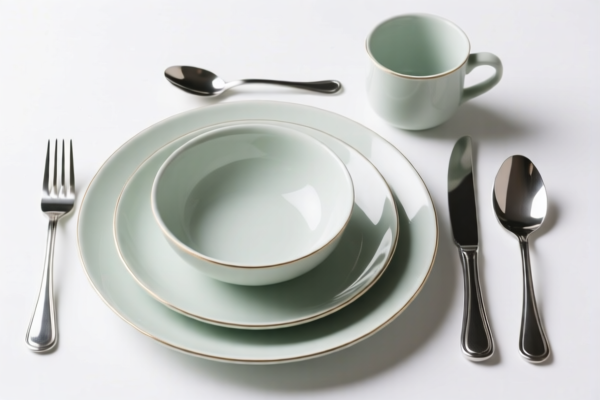
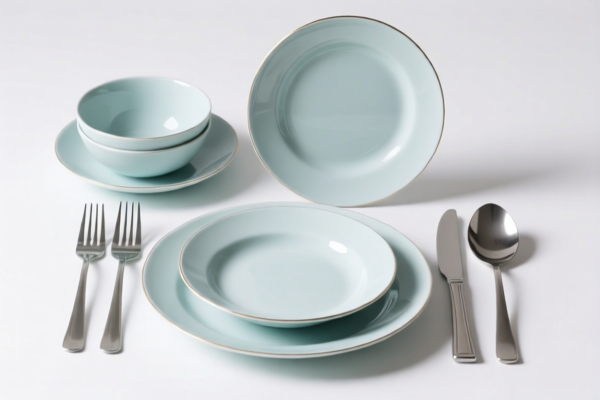
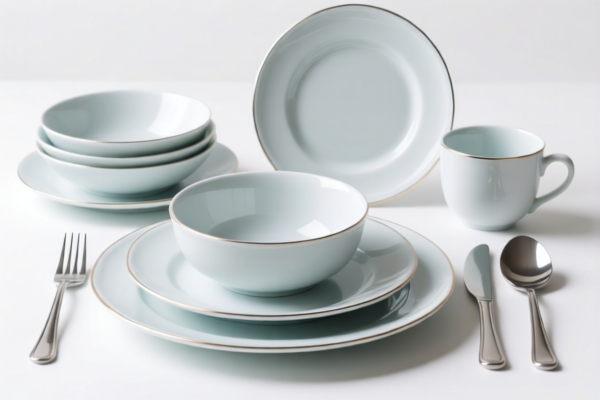
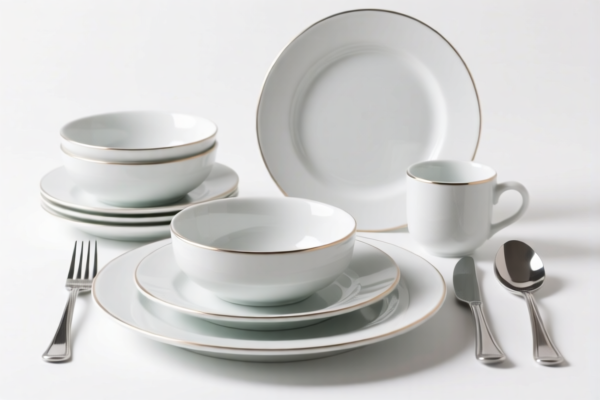
AI Analysis
🍽️ Woven Tableware Set: HS Code Classification & Customs Clearance Guide (2026 Edition)
🌐 HS Code Reference & Customs Clearance Strategy | 2026 Latest Tariff Analysis | Professional Clearance Protocol
📌 Part 1: Product Definition & Classification – Do You Really Understand "Woven Tableware Sets"?
Woven tableware sets encompass a diverse range of consumer goods used for dining, food serving, and kitchen organization. In international trade, the term "Woven" can refer to several materials, leading to different HS Code classifications. The primary materials include Metal (often wire-woven or metal-fiber), Ceramic (glazed/finished), and Wood (laminated or woven wood fibers).
⚠️ Key Distinction Point:
- If the set contains metal cutlery (forks, spoons) or metal wire baskets → Classified under Chapter 82 (Cutlery) or 8215.
- If the set contains ceramic plates/bowls → Classified under Chapter 69 (Ceramic Products).
- If the set contains wooden utensils (chopsticks, spoons, cutting boards) → Classified under Chapter 44 (Wood and Articles of Wood).
📦 Part 2: HS Code Classification Details (2026 Latest Tariff Authority Comparison)
Based on the provided data, here are the four possible HS Code classifications for a "Woven Tableware Set," depending on the primary material and composition:
| HS Code | Product Description | Material Inference | Key Features |
|---|---|---|---|
8215.20.00.00 |
Tableware Sets, Metal Cutlery | Metal / Base Metal | Includes forks, spoons, knives; often wire-woven baskets or metal sets. |
6911.10.37.10 |
Tableware Sets, Ceramic | Ceramic | Plates, bowls, cups; glazed or finished ceramic items. |
4419.90.11.00 |
Tableware Sets, Wooden Utensils | Wood | Specifically for wooden tableware and kitchen utensils. |
4419.90.91.00 |
Tableware Sets, General Wooden | Wood | General wooden tableware, not conflicting with specific wooden utensil codes. |
🔍 Critical Note:
- "Woven" in marketing often refers to wire-mesh baskets or bamboo/wood fiber mats.
- If the set is mixed (e.g., ceramic plates + wooden spoons), customs will classify based on the principal material or the essential character of the set.
- If the set contains metal cutlery, it is almost always classified under HS 8215, regardless of other components.
💰 Part 3: 2026 Latest Tariff Rate Breakdown (Including Surtaxes & Policy Add-ons)
✅ Applicable Country: United States (US)
✅ Country of Origin: China (CN)
✅ Effective Date: Current rates as per 2026 trade policies (Section 301 & IEEPA)
🎯 1. 8215.20.00.00 – Tableware Sets, Metal (Cutlery)
| Item | Detail |
|---|---|
| Base Tariff | The rate of duty applicable to that article in the set subject t (Note: Base rate is variable; check current HTS for exact %) |
| Section 301 Surtax | +25.0% (China-specific) |
| Section 122 Surtax | +10% (China-specific) |
| Total Effective Rate | Base Rate + 35.0% |
| Tax Calculation | CIF Value × (Base Rate + 35%) |
| De Minimis Exemption | ❌ Not Eligible (High-value goods, no $800 exemption) |
| Legal Basis | USITC:8215.20.00.00 → FOOTNOTE:301 → IEEPA:9903 |
📌 Explanation:
- Metal tableware sets (especially cutlery) face high tariffs due to their classification as "cutlery" under Chapter 82.
- The 35% additional tariff (25% Section 301 + 10% Section 122) is mandatory for Chinese-origin metal tableware.
- Base rate must be verified in the current HTS; if base is 5.3%, total = 40.3%.
🎯 2. 6911.10.37.10 – Tableware Sets, Ceramic
| Item | Detail |
|---|---|
| Base Tariff | 8.0% |
| Section 301 Surtax | +7.5% |
| Section 122 Surtax | +10% |
| Total Effective Rate | 25.5% |
| Tax Calculation | CIF Value × 25.5% |
| De Minimis Exemption | ❌ Not Eligible |
| Legal Basis | USITC:6911.10.37.10 → FOOTNOTE:301 → IEEPA:9903 |
📌 Explanation:
- Ceramic tableware has a moderate base rate of 8%.
- With surcharges, the total is 25.5%, which is lower than metal but still significant.
- Ceramic is often used in "woven" designs (e.g., ceramic plates with woven patterns or metal wire baskets holding ceramic items).
🎯 3. 4419.90.11.00 – Tableware Sets, Wooden Utensils
| Item | Detail |
|---|---|
| Base Tariff | 5.3% |
| Section 301 Surtax | +0.0% |
| Section 122 Surtax | +10% |
| Total Effective Rate | 15.3% |
| Tax Calculation | CIF Value × 15.3% |
| De Minimis Exemption | ❌ Not Eligible |
| Legal Basis | USITC:4419.90.11.00 → IEEPA:9903 |
📌 Explanation:
- Wooden tableware exempt from Section 301 (25% tariff) but subject to Section 122 (10%).
- This is the lowest tariff option among all four, at 15.3%.
- Ideal for "woven" bamboo or wood fiber sets.
🎯 4. 4419.90.91.00 – Tableware Sets, General Wooden
| Item | Detail |
|---|---|
| Base Tariff | 3.2% |
| Section 301 Surtax | +7.5% |
| Section 122 Surtax | +10% |
| Total Effective Rate | 20.7% |
| Tax Calculation | CIF Value × 20.7% |
| De Minimis Exemption | ❌ Not Eligible |
| Legal Basis | USITC:4419.90.91.00 → FOOTNOTE:301 → IEEPA:9903 |
📌 Explanation:
- General wooden tableware has a low base rate (3.2%) but is subject to both Section 301 (7.5%) and Section 122 (10%).
- Total rate is 20.7%, higher than4419.90.11.00due to the additional 7.5% Section 301 surcharge.
🛠️ Part 4: Customs Clearance Practical Advice (Real-World Pitfall Guide)
✅ 1. Preparation Checklist (Non-Negotiable)
| Document | Required? | Notes |
|---|---|---|
| ✅ Product Specification Sheet | ✔️ | Must clearly state material composition (e.g., "70% Wood, 30% Metal"). |
| ✅ Product Photos | ✔️ | Show "woven" structure, handle materials, and any metal/ceramic components. |
| ✅ Commercial Invoice | ✔️ | Must match HS Code description exactly. |
| ✅ Packing List | ✔️ | List each item separately (e.g., "4 Wooden Spoons," "2 Ceramic Plates"). |
| ✅ Material Certification | ✔️ | If claiming wood exemption, provide FSC or wood species documentation. |
| ✅ Origin Certificate | ✔️ | Required for Section 301/122 verification. |
✅ 2. Declaration Strategy (Key Tips)
🔥 "Declare by Material, Not by 'Woven'!"
| Scenario | Correct HS Code | Wrong HS Code | Consequence |
|---|---|---|---|
| Set contains metal cutlery (forks/knives) | 8215.20.00.00 |
6911.10.37.10 |
40.3% vs 25.5% → Overpaying 14.8% |
| Set contains only ceramic | 6911.10.37.10 |
4419.90.91.00 |
25.5% vs 20.7% → Overpaying 4.8% |
| Set contains wooden utensils (chopsticks/spoons) | 4419.90.11.00 |
4419.90.91.00 |
15.3% vs 20.7% → Overpaying 5.4% |
| Set contains wooden items (not utensils) | 4419.90.91.00 |
4419.90.11.00 |
20.7% vs 15.3% → Overpaying 5.4% |
📌 Critical Rule:
- If the set contains any metal cutlery (forks, knives, spoons), it MUST be classified under HS 8215, even if it also contains ceramic or wood.
- "Woven" metal baskets or wire sets also fall under HS 8215.
✅ 3. Special Cases
| Scenario | Handling Advice |
|---|---|
| Mixed Material Set | Classify based on principal material or essential character. If metal cutlery is present, use HS 8215. |
| Bamboo/Wood Fiber Mats | If no utensils, classify under HS 4601 (Plaiting Materials) or HS 4419.90.91.00 (Wooden Tableware). |
| Ceramic Plates with Metal Wire Handles | If metal handles are integral, may be classified under HS 8215. |
| Set Sold Separately | Each item must be classified individually. |
🌍 Part 5: Global Market Comparison (2026)
| Country/Region | Recommended HS Code | Tariff Rate | Notes |
|---|---|---|---|
| 🇺🇸 USA | 8215.20.00.00 |
35%+ | High surcharges (301+122) |
| 🇺🇸 USA | 4419.90.11.00 |
15.3% | Lowest tariff for wooden sets |
| 🇪🇺 EU | 8215.20.00.00 |
4.7% | No Section 301/122 |
| 🇨🇳 China | 8215.20.00.00 |
8% | No surcharges |
| 🇬🇧 UK | 8215.20.00.00 |
4.7% | Post-Brexit, no China surcharges |
📌 Conclusion:
- USA has the highest tariffs for tableware sets, especially metal and ceramic.
- Wooden utensil sets (4419.90.11.00) offer the lowest cost for the US market (15.3%).
- Consider shifting production to Vietnam/Mexico to avoid Section 301/122 surcharges.
📌 Part 6: Common Mistakes & Pitfalls
❌ Mistake 1: Declaring a metal cutlery set as "Ceramic Tableware"
👉 Result: Customs reclassifies to 8215.20.00.00 → Extra 14.8% tax + fines.
❌ Mistake 2: Ignoring Section 122 (10%) surcharge
👉 Result: Underpayment → Back taxes + interest.
❌ Mistake 3: Misclassifying wooden utensils as general wooden items
👉 Result: Paying 20.7% instead of 15.3% → 5.4% unnecessary cost.
❌ Mistake 4: Using "Woven Tableware" as HS Description
👉 Result: Customs cannot determine material → Delay + Inspection.
✅ Correct Declaration Example:
"Tableware Set, 20-piece, including 4 forks, 4 spoons, 4 knives, 4 plates, 4 bowls. Material: Stainless Steel Cutlery, Ceramic Plates/Bowls. HS Code: 8215.20.00.00."
🎯 Part 7: Conclusion – Professional Declaration, Cost Savings, Risk Mitigation
🎯 Key Takeaways:
🔹 "Metal Cutlery = HS 8215 (High Tariff)"
🔹 "Wooden Utensils = HS 4419.90.11.00 (Lowest Tariff: 15.3%)"
🔹 "Ceramic = HS 6911.10.37.10 (Moderate Tariff: 25.5%)"
📌 Pro Tip:
- If your product is wooden utensils, always use 4419.90.11.00 to save 5.4% vs. general wooden items.
- If your product contains metal cutlery, expect 35%+ total tariffs. Consider shifting supply chain to avoid US surcharges.
📣 Immediate Action:
📞 Contact Customs Broker + Provide Material Breakdown + Apply for Advance Ruling
🚀 Optimize HS Code, Reduce Tariffs, Boost Profits!
✨ Professional Clearance Starts with Accurate Classification!
💼 Every Dollar Saved is Pure Profit!
Customer Reviews
About HS Code Classification
The Harmonized System (HS) is an internationally standardized nomenclature developed by the World Customs Organization (WCO) to classify traded products. Over 200 countries use the HS system as the basis for customs tariffs, trade statistics, and import/export regulations.
Each HS code follows a hierarchical structure:
- Chapter (2 digits) — Broad category of goods (e.g., Chapter 84: Machinery and Mechanical Appliances)
- Heading (4 digits) — More specific grouping within the chapter
- Subheading (6 digits) — Internationally standardized breakdown, used by all WCO member countries
- National subdivisions (8-10 digits) — Country-specific extensions for further classification, such as US HTSUS 10-digit codes
Correct HS code classification is essential for smooth customs clearance, accurate duty payment, and compliance with trade regulations. Misclassification can lead to customs delays, overpayment of duties, or penalties.
When importing from CN to US, the applicable tariff rates may include:
- Most-Favored-Nation (MFN) rate — The standard duty rate applied to WTO members
- General rate — Applied to countries without trade agreements
- Trade remedy duties — Additional tariffs such as Section 301 (anti-dumping), Section 232 (national security), or countervailing duties
The information provided on this page is for reference purposes only. For official classification, please consult with your local customs authority or a licensed customs broker.