Woven Vintage Handbag
CN → US| HS Code | Tariff Rate | Origin | Destination | Doc |
|---|---|---|---|---|
| 4202224020 | 42.4% | CN | US | Official Doc |
| 4602192920 | 40.3% | CN | US | Official Doc |
| 4602112100 | 41.2% | CN | US | Official Doc |
| 4202228980 | 52.6% | CN | US | Official Doc |
Product Images
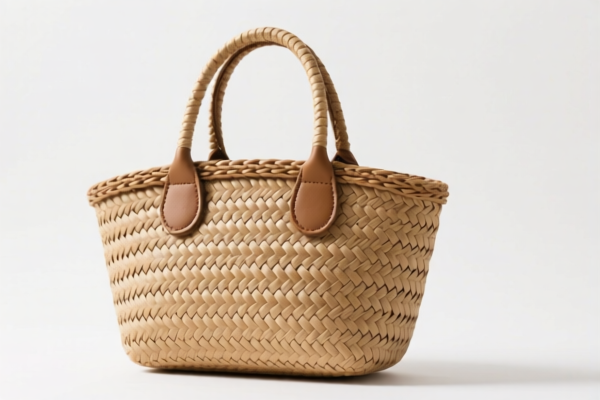
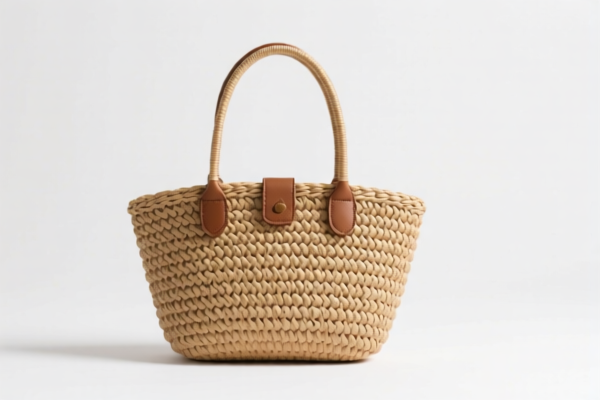
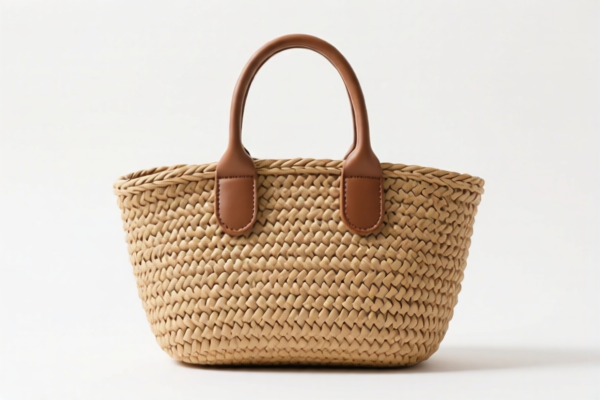
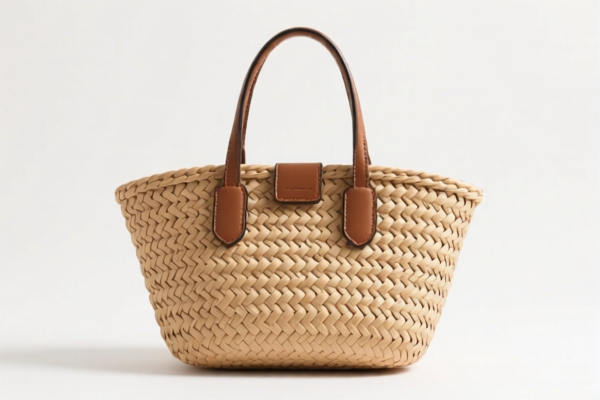
AI Analysis
👜 Woven Vintage Handbag (The Ultimate Style Statement)
🌐 HS Code Reference & Customs Clearance Guide | 2026 Latest Tariff Analysis | Professional Strategy for Woven Bags
📌 I. Product Definition & Classification: What Exactly is a "Woven Vintage Handbag"?
A Woven Vintage Handbag is not merely an accessory; it is a fusion of artisanal craftsmanship and retro aesthetics. In international trade, the classification depends strictly on two factors: Material Composition and Physical Form.
The term "Vintage" is a stylistic descriptor, not a customs classification category. Customs authorities look at: 1. Material: Is it made of bamboo, rattan, straw, or synthetic fibers? 2. Structure: Is it a rigid basket-like structure or a flexible fabric-based bag?
⚠️ Key Distinction:
- Plant Materials (Chapter 46): If the bag is made from woven vegetable materials like bamboo, rattan, reed, or straw → Chapter 46.
- Textile Materials (Chapter 42): If the bag is made from woven synthetic fibers, cotton, or other textile materials (even if it looks "natural" or "vintage") → Chapter 42.
- "Handbag" Definition: Must be carried by hand or shoulder. If it has rigid handles and no soft body, it might be classified differently.
📦 II. HS Code Classification Details (2026 Latest Tariff Authority Comparison)
Based on the input data for "Woven Vintage Handbag", here are the precise HS Code mappings, tax rates, and logical deductions.
| HS Code | Product Description & Logic | Material Inference | Form Factor |
|---|---|---|---|
| 4202.22.40.20 | Woven Handbag made of woven materials (General Textile/Synthetic Woven). | Inferred as woven textile/synthetic material due to "woven handbag" general categorization. | Handbag (Soft/Flexible) |
| 4602.19.29.20 | Handbag made of vegetable materials (Plant-based weaving). | Explicitly Plant Material (e.g., straw, reed, raffia). | Handbag |
| 4602.11.21.00 | Handbag inferred from Bamboo, Rattan, or similar plant materials. | Specific inference: Bamboo/Rattan. | Handbag |
| 4202.22.89.80 | Handbag inferred as Other Textile Materials (Non-woven or mixed). | Inferred as Other Textile (if not pure plant). | Handbag |
🔍 Critical Note:
- "Vintage" does not lower taxes. It does not qualify for "Used Goods" exemptions in most standard consumer imports.
- Material is King: You must provide material samples or detailed specs to distinguish between Chapter 42 (Textiles) and Chapter 46 (Vegetable Plaiting Materials).
💰 III. 2026 Latest Tariff Rate Breakdown (USA Market Focus)
✅ Applicable Country: United States (US)
✅ Origin: China (CN) (Implied by "122 Clause" and high add-on tariffs)
✅ Effective Date: 2026 (Current Tariff Regime)
🎯 1. 4202.22.40.20 – Woven Handbag (Textile/Woven Material)
| Item | Detail |
|---|---|
| Base Tariff | 7.4% |
| Section 301 Add-on | +25.0% |
| Section 122 Add-on | +10.0% |
| Total Tax Rate | 42.4% |
| Calculation | CIF Value × 42.4% |
| De Minimis Exemption? | ❌ No (Deny de minimis for Section 301/122 goods) |
| Legal Basis | Section 301 → Section 122 → HS 4202.22.40.20 |
📌 Explanation:
- Section 301 (25%): Retaliatory tariff on Chinese manufactured goods.
- Section 122 (10%): Additional tariff for certain textile/apparel accessories under specific trade acts.
- Total 42.4%: High impact on cost. Essential to confirm if material qualifies for lower base rates.
🎯 2. 4602.19.29.20 – Handbag, Vegetable Material (General Plant)
| Item | Detail |
|---|---|
| Base Tariff | 5.3% |
| Section 301 Add-on | +25.0% |
| Section 122 Add-on | +10.0% |
| Total Tax Rate | 40.3% |
| Calculation | CIF Value × 40.3% |
| De Minimis Exemption? | ❌ No |
| Legal Basis | Section 301 → Section 122 → HS 4602.19.29.20 |
📌 Explanation:
- Savings: $2.1% lower than4202.22.40.20due to lower base tariff (5.3% vs 7.4%).
- Requirement: Must prove material is natural vegetable fiber (e.g., straw, sisal). Synthetic "straw" bags will be rejected here.
🎯 3. 4602.11.21.00 – Handbag, Bamboo/Rattan
| Item | Detail |
|---|---|
| Base Tariff | 6.2% |
| Section 301 Add-on | +25.0% |
| > Section 122 Add-on | +10.0% |
| Total Tax Rate | 41.2% |
| Calculation | CIF Value × 41.2% |
| De Minimis Exemption? | ❌ No |
| Legal Basis | Section 301 → Section 122 → HS 4602.11.21.00 |
📌 Explanation:
- Specificity: If the bag is clearly bamboo or rattan, this code is more accurate than general plant materials.
- Base Rate: 6.2% is slightly higher than general plant (5.3%), making the total slightly higher than4602.19.29.20.
🎯 4. 4202.22.89.80 – Handbag, Other Textile Materials
| Item | Detail |
|---|---|
| Base Tariff | 17.6% |
| Section 301 Add-on | +25.0% |
| Section 122 Add-on | +10.0% |
| Total Tax Rate | 52.6% |
| Calculation | CIF Value × 52.6% |
| De Minimis Exemption? | ❌ No |
| Legal Basis | Section 301 → Section 122 → HS 4202.22.89.80 |
📌 Explanation:
- Highest Risk: If the material is ambiguous or mixed, customs may default to this "Other" category.
- Penalty: Base tariff of 17.6% is nearly 3x higher than natural plant materials.
- Advice: Avoid this code unless absolutely necessary. Always try to classify under Chapter 46 if natural fibers are used.
🛠️ IV. Customs Clearance Practical Advice (Real-World Pitfall Guide)
✅ 1. Documentation Checklist (Non-Negotiable)
| Document | Required? | Purpose |
|---|---|---|
| ✅ Material Composition Label | ✔️ | Must state: "100% Natural Bamboo," "Woven Raffia," or "Synthetic Fiber." |
| ✅ Product Photos | ✔️ | Clear shots of weave texture. Distinguish natural fiber vs. plastic imitation. |
| ✅ Commercial Invoice | ✔️ | Describe as "Woven Plant Fiber Handbag" or "Woven Textile Handbag," not just "Vintage Bag." |
| ✅ Origin Certificate | ✔️ | To prove Chinese origin (for tariff calculation). |
| ✅ Structure Diagram | ✔️ | If bag has metal/leather handles, clarify if they are integral or attached. |
✅ 2. Declaration Strategy (Key Mantra)
🔥 "Material First, Form Second. Natural Beats Synthetic!"
| Scenario | Correct Declaration | Wrong Declaration | Consequence |
|---|---|---|---|
| Bamboo/Rattan Bag | 4602.11.21.00 (41.2%) |
4202.22.89.80 (52.6%) |
Overpay 11.4% |
| Straw/Raffia Bag | 4602.19.29.20 (40.3%) |
4202.22.40.20 (42.4%) |
Overpay 2.1% |
| Synthetic "Wicker" | 4202.22.40.20 (42.4%) |
4602.19.29.20 (40.3%) |
Audit Risk + Underpayment Penalty |
| Mixed Material (Leather + Woven) | Check Leather Chapter (4202) | 4602.19.29.20 |
Classification Error |
📌 Critical Tip:
- If the bag contains metal frames, leather straps, or fabric lining, the classification may shift to Chapter 42 (Leather/Textile Accessories), not Chapter 46.
- Chapter 46 is strictly for plaiting materials (bamboo, rattan, straw, etc.) with minimal non-plaiting components.
✅ 3. Special Case Handling
| Situation | Recommendation |
|---|---|
| "Vintage" Labeling | Do not declare as "Used Goods." Declare as "New Woven Handbag." Used goods have different, often prohibitive, regulations. |
| Bamboo vs. Plastic | If it’s plastic woven to look like bamboo, it MUST be 4202... (Textile/Synthetic). Misdeclaring as 4602... is fraud. |
| Handles Made of Leather | If handles are >50% of surface area or integral, it may be classified as Leather Bag (4202.21...), not Woven Plant Bag. |
🌍 V. Global Market Comparison (2026 Update)
| Country | Recommended HS Code | Est. Total Tariff (China Origin) | Notes |
|---|---|---|---|
| 🇺🇸 USA | 4602.19.29.20 or 4202.22.40.20 |
40.3% - 42.4% | High due to Section 301 + 122. |
| 🇪🇺 EU | 4602.11.00 or 4202.22 |
~12% - 17% | No Section 301/122. Lower base rates. |
| 🇨🇳 China | 4602.11.00 or 4202.22 |
~10% - 15% | Import tariff only. No anti-dumping. |
| 🇬🇧 UK | 4602.11.00 or 4202.22 |
~12% - 17% | Post-Brexit tariffs apply. |
📌 Conclusion:
- The US market is the most expensive for woven handbags due to additive tariffs.
- Cost Optimization: Ensure material is correctly identified as natural plant fiber (4602...) to save 2.1% - 11.4% compared to synthetic/textile codes.
📌 VI. Common Errors & Pitfalls (Lessons Learned)
❌ Error 1: Calling a plastic woven bag "Natural Bamboo"
👉 Result: Customs seizure, fines, and forced reclassification to 4202.22.89.80 (52.6%).
❌ Error 2: Using "Vintage" as the primary descriptor
👉 Result: Confusion in valuation. Customs may reject the "vintage" claim and assess duty on new goods anyway, but delays clearance.
❌ Error 3: Ignoring Handles/Lining Material
👉 Result: If the bag is 40% leather, it may be classified as a Leather Bag, changing the tariff entirely.
❌ Error 4: Not distinguishing between 4602.11 (Bamboo) and 4602.19 (Other Plant)
👉 Result: Incorrect base rate. Bamboo (6.2%) vs. Other Plant (5.3%). Small difference, but accuracy matters for audits.
✅ Correct Practice:
"Handbag, Woven, 100% Natural Raffia, with Leather Handles, New Condition" →
4602.19.29.20
"Handbag, Woven, Synthetic Rattan, Poly-lined, New Condition" →4202.22.40.20
🎯 VII. Conclusion: Precision Saves Money!
🎯 Remember the Mantra:
🔹 "Plant = 4602 (Lower Tax). Textile = 4202 (Higher Tax). Verify Material First!"
🔹 "Vintage is Style, Not Status. Customs sees 'New Goods'."
🔹 "Total Tariff = Base + 25% (301) + 10% (122). Budget for ~42%."
📌 Pro Tip:
If your woven handbag uses recycled plastic but mimics natural fibers, it cannot use Chapter 46 codes. You must use Chapter 42.
For the USA, consider applying for a Section 301 Exclusion if your specific HS Code qualifies, though recent years have tightened exclusions for consumer goods.
📣 Immediate Action:
📞 Contact a Customs Broker: Provide material swatches.
📋 Pre-Classification: Request an Binding Ruling from US CBP if shipping large volumes.
🚀 Optimize Supply Chain: Source from regions with Free Trade Agreements (e.g., Vietnam, Mexico) to bypass Section 301 tariffs where possible.
✨ Accurate Classification is the First Step to Profitable Clearance!
💼 Every Percentage Point Counts in Global Trade!
Customer Reviews
About HS Code Classification
The Harmonized System (HS) is an internationally standardized nomenclature developed by the World Customs Organization (WCO) to classify traded products. Over 200 countries use the HS system as the basis for customs tariffs, trade statistics, and import/export regulations.
Each HS code follows a hierarchical structure:
- Chapter (2 digits) — Broad category of goods (e.g., Chapter 84: Machinery and Mechanical Appliances)
- Heading (4 digits) — More specific grouping within the chapter
- Subheading (6 digits) — Internationally standardized breakdown, used by all WCO member countries
- National subdivisions (8-10 digits) — Country-specific extensions for further classification, such as US HTSUS 10-digit codes
Correct HS code classification is essential for smooth customs clearance, accurate duty payment, and compliance with trade regulations. Misclassification can lead to customs delays, overpayment of duties, or penalties.
When importing from CN to US, the applicable tariff rates may include:
- Most-Favored-Nation (MFN) rate — The standard duty rate applied to WTO members
- General rate — Applied to countries without trade agreements
- Trade remedy duties — Additional tariffs such as Section 301 (anti-dumping), Section 232 (national security), or countervailing duties
The information provided on this page is for reference purposes only. For official classification, please consult with your local customs authority or a licensed customs broker.