Woven fabric blended with fine animal hair
CN → US| HS Code | Tariff Rate | Origin | Destination | Doc |
|---|---|---|---|---|
| 5112303000 | 60.0% | CN | US | Official Doc |
| 5112909010 | 60.0% | CN | US | Official Doc |
| 5111209000 | 60.0% | CN | US | Official Doc |
| 5111309000 | 60.0% | CN | US | Official Doc |
| 5515130520 | 60.0% | CN | US | Official Doc |
| 5515131020 | 47.0% | CN | US | Official Doc |
Product Images
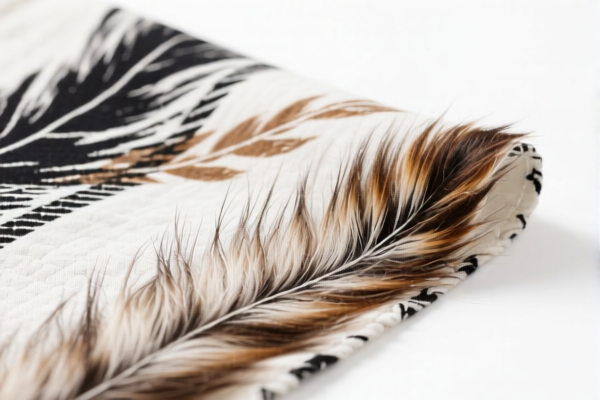
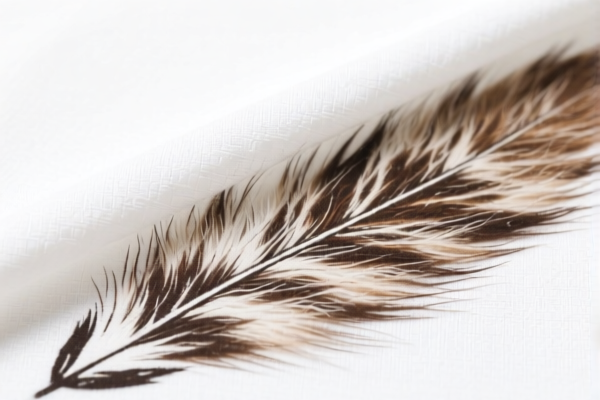
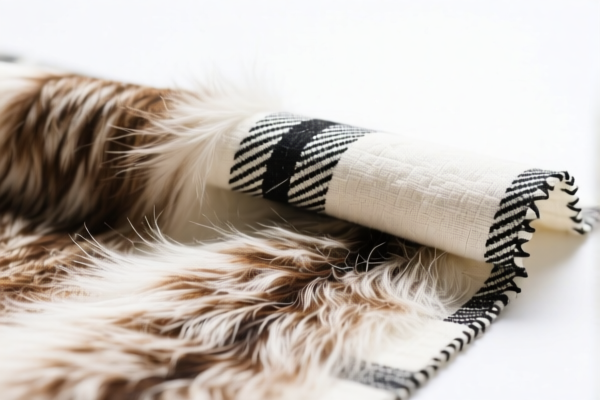
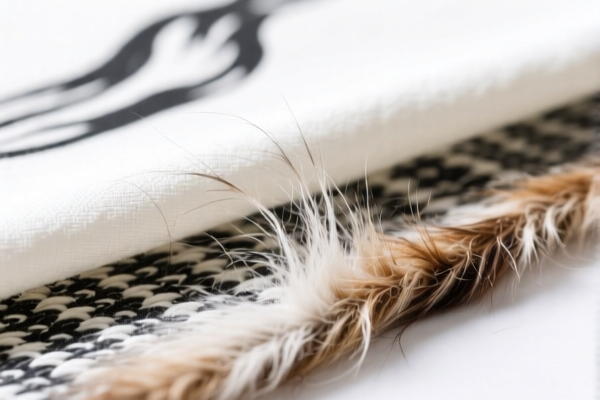
AI Analysis
🧶 Woven Fabric Blended with Fine Animal Hair
🌐 HS Code Reference & Customs Clearance Guide | 2026 Latest Tariff Analysis | Professional Strategy 📌 I. Product Definition & Classification: What Exactly is "Fine Animal Hair Blended Woven Fabric"?
Woven fabrics blended with fine animal hair are high-quality textile materials primarily used in luxury apparel, suits, and high-end tailoring. In international trade, these goods fall under Chapter 51 (Wool, Fine or Coarse Animal Hair; Yarn and Woven Fabric). The classification depends critically on:
- "Fine Animal Hair": Typically includes cashmere, mohair, camel hair, etc., as defined by HS codes.
- "Blended": Indicates mixing with other fibers (e.g., synthetic fibers, wool, cotton).
- "Woven Fabric": Must be in a woven state, not knitted.
⚠️ Key Distinction Point:
- If the fabric consists entirely of fine animal hair (100%) and is woven →归入 5111 series.
- If the fabric is a blend (e.g., animal hair + synthetic fiber) and meets specific weight/thickness criteria →归入 5112 or 5515 series depending on the dominant fiber and construction.
📦 II. HS Code Classification Details (2026 Latest Tariff Authority Comparison)
Based on the provided data, here are the 6 most likely HS Codes for "Woven Fabric Blended with Fine Animal Hair," along with their logic and tax rates:
| HS Code | Summary Description | Key Matching Logic | Total Tax Rate |
|---|---|---|---|
| 5112.30.30.00 | Match Material (Animal Hair) & Form (Woven Fabric/Blend), Inferential Inclusion of Synthetic Fibers. | Matches "animal hair" material with "woven/blend" form; allows reasonable inference of synthetic fiber blends. | 60.0% |
| 5112.90.90.10 | Matches Material (Animal Hair) & Form (Blended Fabric), Fits Category of "Combed Animal Hair Woven Fabric." | Fits the category of "combed animal hair woven fabric," suitable for high-grade blended fabrics. | 60.0% |
| 5111.20.90.00 | Matches Core Material (Fine Animal Hair) & Form (Woven/Blend), Belongs to "Other" Category. | Focuses on "fine animal hair" as core material; if blended, falls under "other" sub-category. | 60.0% |
| 5111.30.90.00 | Fully Complies with "Fine Animal Hair" & "Woven Fabric" Requirements, Classified under "Other." | Perfect match for pure or dominant fine animal hair woven fabric, classified as "other." | 60.0% |
| 5515.13.05.20 | Matches Material (Animal Hair Blend) & Form (Fabric/Woven), Reasonable Inference Allowed. | For blends where animal hair is not the sole defining fiber, but still significant; allows inference based on rules. | 60.0% |
| 5515.13.10.20 | "Blended Fabric" matches main silk fabric form; "Animal Hair" consistent with primary/sole blend with wool/fine hair. | Special case: When blended fabric aligns with silk-like structure but contains animal hair; lower base tax. | 47.0% |
🔍 Key Reminder:
- 5111 and 5112 codes generally apply to wool/fine animal hair-dominated fabrics.
- 5515 codes apply to synthetic/other fiber-dominated fabrics that are blended with animal hair.
- The difference in tax rates (60% vs. 47%) is significant. Misclassification can lead to overpayment or compliance risks.
💰 III. 2026 Latest Tariff Rate Breakdown (Including Surcharges & Policy Add-ons)
✅ Applicable Country: United States (US)
✅ Country of Origin: China (CN)
✅ Effective Date: From November 10, 2025 (including subsequent imports)
🎯 1. HS Codes with 60% Total Tax Rate
(Codes: 5112.30.30.00, 5112.90.90.10, 5111.20.90.00, 5111.30.90.00, 5515.13.05.20)
| Item | Content |
|---|---|
| Base Duty Rate | 25.0% (Ad Valorem) |
| Section 301 Surcharge | +25.0% (USITC Footnote related to Chinese imports) |
| Section 122 Tariff | +10.0% (Specific tariff clause for certain textiles/apparel) |
| Total Effective Rate | 60.0% |
| Tax Calculation | CIF Value × 60% |
| De Minimis Exemption | ❌ Not Available (deny_de_minimis) |
| Legal Basis Path | Base Tariff: 25.0% → 301 Tariff: 25.0% → Section 122: 10.0% |
📌 Explanation:
- "Base Duty 25%": Standard MFN rate for woven fabrics of fine animal hair.
- "301 Surcharge 25%": Additional tariff imposed under Section 301 of the Trade Act on Chinese goods.
- "Section 122 Tariff 10%": A specific additional tariff applicable to certain textile products under current US trade policy.
- Total 60%: This is a very high tariff rate, significantly impacting profit margins. Must be factored into pricing strategies.
🎯 2. HS Code with 47% Total Tax Rate
(Code: 5515.13.10.20)
| Item | Content |
|---|---|
| Base Duty Rate | 12.0% (Ad Valorem) |
| Section 301 Surcharge | +25.0% (USITC Footnote related to Chinese imports) |
| Section 122 Tariff | +10.0% (Specific tariff clause) |
| Total Effective Rate | 47.0% |
| Tax Calculation | CIF Value × 47% |
| De Minimis Exemption | ❌ Not Available (deny_de_minimis) |
| Legal Basis Path | Base Tariff: 12.0% → 301 Tariff: 25.0% → Section 122: 10.0% |
📌 Note:
- This code applies to blended fabrics where the animal hair component is not the sole defining characteristic, or the structure aligns with specific synthetic blends.
- Savings: Compared to the 60% rate, this saves 13% in total taxes.
- Caution: Eligibility is strict. Requires clear proof of blend composition and fabric structure.
🛠️ IV. Customs Clearance Practical Advice (Real-World Pitfall Avoidance Guide)
✅ 1. Required Documentation Checklist (Mandatory)
| Document | Required? | Explanation |
|---|---|---|
| ✅ Product Specification Sheet | ✔️ | Must detail fiber content % (e.g., 30% Cashmere, 70% Polyester), weight, width, weave type. |
| ✅ Fabric Structure Diagram | ✔️ | To confirm "woven" vs. "knitted" and determine correct Chapter 51 vs. 60. |
| ✅ Product Photos (with Label) | ✔️ | Clear shots of fabric texture, label showing fiber composition, and brand. |
| ✅ Third-Party Test Report | ✔️ | Fiber composition analysis from accredited lab (e.g., SGS, Intertek). Crucial for HS Code verification. |
| ✅ Commercial Invoice | ✔️ | Must clearly state "Woven Fabric, Blended with Fine Animal Hair" and correct HS Code. |
| ✅ Certificate of Origin (CO) | ✔️ | Essential for determining origin and applying correct surcharges. |
| ✅ Packing List | ✔️ | Details net/gross weight, quantity, and packaging type. |
✅ 2. Declaration Tips (Key Mnemonics)
🔥 "Blend Clearly, Structure Precise, Tax Rate Can Be Lowered!"
| Scenario | Correct Declaration | Wrong Practice | Consequence |
|---|---|---|---|
| High Animal Hair Content (>50%) | 5111/5112 Series | Misdeclare as 5515 | Overpayment of tax (60% vs. 47% if eligible) |
| Low Animal Hair Content + Synthetic Dominance | 5515.13.10.20 | Misdeclare as 5111 | Overpayment; possible audit for misclassification |
| Knitted Fabric (Not Woven) | Chapter 60 (e.g., 6006) | Declare as Chapter 51 | Refusal/Clearance Delay; 60% tax applied incorrectly |
| Fabric with No Animal Hair | 5515/5516 | Declare as Animal Hair Blend | Fraud Risk; severe penalties |
✅ 3. Special Case Handling
| Situation | Handling Advice |
|---|---|
| Custom-Dyed/Printed Fabric | Provide dyeing process description; does not change HS Code, but affects value declaration. |
| Small Batch Samples | Still subject to 60%/47% tax; no de minimis exemption. Declare accurately. |
| Blended with Silk | If silk is dominant, may fall under Chapter 50. Complex; seek pre-ruling. |
| Used/Reclaimed Fabric | Not allowed for standard textile HS codes; may fall under Chapter 63 (rags) with different tariffs. |
🌍 V. Global Market Customs Comparison (2026 Latest)
| Country/Region | Recommended HS Code | Estimated Tax (China Origin) | Certification Requirements | Notes |
|---|---|---|---|---|
| 🇺🇸 USA | 5111.30.90.00 / 5112.30.30.00 |
60.0% (Most common) | None specific for textiles, but origin proof critical | 122 Tariff + 301 Tariff apply. |
| 🇺🇸 USA | 5515.13.10.20 |
47.0% (If eligible) | Same as above | Lower tax if blend composition allows. |
| 🇨🇳 China | 5111.30.90.00 |
5% - 10% | CCC (if applicable) | No 301/122 surcharges. |
| 🇪🇺 EU | 5111.30.00 |
12% - 16% | CE (if applicable) | No Section 301/122 equivalents. |
| 🇬🇧 UK | 5111.30.00 |
12% | UKCA | Post-Brexit rules apply. |
| 🇯🇵 Japan | 5111.30.00 |
6% - 8% | None specific | Low tariffs, but strict hygiene standards. |
📌 Conclusion:
- USA has the highest effective tax rate (60%) for fine animal hair woven fabrics from China.
- EU, UK, and Japan offer significantly lower tariffs (~5-16%).
- Strategy: If targeting the US market, consider blending ratios to potentially qualify for 5515.13.10.20 (47%), or explore supply chain diversification (e.g., sourcing from Vietnam or India if rules of origin allow).
📌 VI. Common Errors & Pitfall Guide (Lessons Learned)
❌ Error 1: Declaring "Blended Fabric" without specifying fiber percentages.
👉 Consequence: Customs may apply the highest possible rate (60%) or request additional documentation, causing delays.
❌ Error 2: Confusing "Woven" with "Knitted."
👉 Consequence: Knitted fabrics fall under Chapter 60, not Chapter 51. Misclassification leads to penalty.
❌ Error 3: Ignoring Section 122 Tariff.
👉 Consequence: Underpayment by 10%. Customs will demand back payment + interest.
❌ Error 4: Using generic terms like "Wool Fabric" for "Fine Animal Hair."
👉 Consequence: "Wool" and "Fine Animal Hair" are distinct in HS codes. Misclassification can lead to higher base duties or incorrect surcharges.
✅ Correct Declaration Example:
"Woven Fabric, Blended, 30% Cashmere, 70% Polyester, 150cm Width, Weight 200gsm, HS Code: 5112.30.30.00, Country of Origin: China"
🎯 VII. Conclusion: Professional Declaration, Cost Efficiency
🎯 Remember the Mnemonic:
🔹 "Fiber % is King, Structure is Queen, Chapter 51 is Home, US Tax is Steep!"
🔹 "60% is Standard, 47% is Goal, 10% Savings, Worth the Control!"
📌 Pro Tip:
If your fabric blend allows, adjust the synthetic fiber content to ensure it falls under 5515.13.10.20 for the 47% tax rate instead of 60%.
Recommend pre-clearance ruling (Advance Ruling) from CBP to confirm the correct HS Code before shipping.
📣 Immediate Action:
📞 Consult a licensed customs broker + Provide Fiber Test Report + Apply for HS Code Pre-ruling
🚀 Ensure your fabric, clearly declared, efficiently cleared, profit maximized!
✨ Professional Customs Clearance Starts with Accurate Classification!
💼 Every Dollar Saved is a Dollar Earned!
Customer Reviews
About HS Code Classification
The Harmonized System (HS) is an internationally standardized nomenclature developed by the World Customs Organization (WCO) to classify traded products. Over 200 countries use the HS system as the basis for customs tariffs, trade statistics, and import/export regulations.
Each HS code follows a hierarchical structure:
- Chapter (2 digits) — Broad category of goods (e.g., Chapter 84: Machinery and Mechanical Appliances)
- Heading (4 digits) — More specific grouping within the chapter
- Subheading (6 digits) — Internationally standardized breakdown, used by all WCO member countries
- National subdivisions (8-10 digits) — Country-specific extensions for further classification, such as US HTSUS 10-digit codes
Correct HS code classification is essential for smooth customs clearance, accurate duty payment, and compliance with trade regulations. Misclassification can lead to customs delays, overpayment of duties, or penalties.
When importing from CN to US, the applicable tariff rates may include:
- Most-Favored-Nation (MFN) rate — The standard duty rate applied to WTO members
- General rate — Applied to countries without trade agreements
- Trade remedy duties — Additional tariffs such as Section 301 (anti-dumping), Section 232 (national security), or countervailing duties
The information provided on this page is for reference purposes only. For official classification, please consult with your local customs authority or a licensed customs broker.