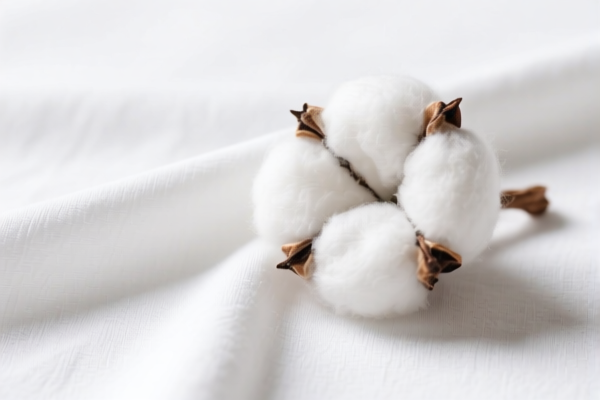
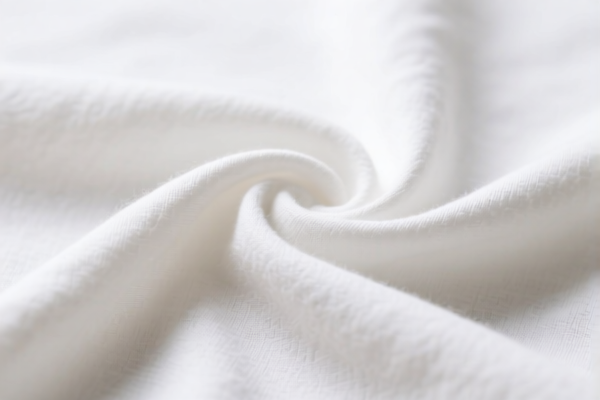
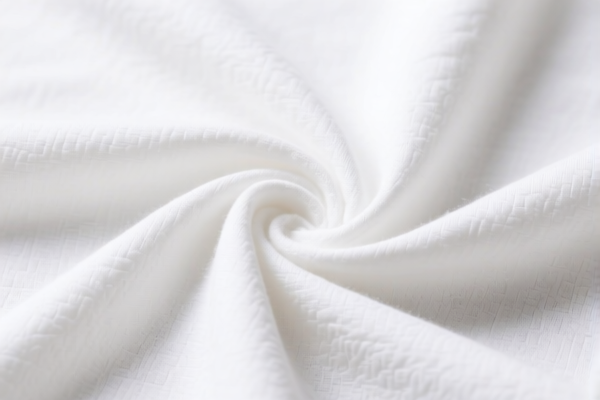
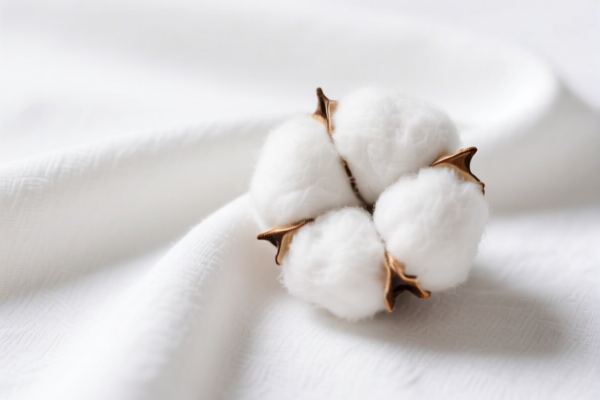
Woven fabric of cotton
CN → US| HS Code | Tariff Rate | Origin | Destination | Doc |
|---|---|---|---|---|
| 5208114020 | 44.0% | CN | US | Official Doc |
| 5208214020 | 45.2% | CN | US | Official Doc |
Product Images
AI Analysis
🧵 Woven Fabrics of Cotton (High Content, Lightweight)
🌐 HS Code Reference & Customs Clearance Guide | 2026 Latest Tariff Analysis | Professional Clearance Strategy
📌 I. Product Definition & Classification: Do You Really Understand "Woven Cotton Fabric"?
Woven fabrics of cotton are fundamental raw materials in the textile and apparel industry. In international trade, they are strictly categorized based on cotton content, weight per square meter (GSM), and processing method (Unbleached vs. Bleached).
⚠️ Key Classification Criteria:
- Cotton Content: Must be ≥ 85% by weight.
- Weight: Must be ≤ 200 g/m² (Lightweight).
- Weave Type: Plain Weave is the specific type referenced in the target codes.
- Yarn Count: Specifically Nos. 43 to 68 (Finer yarns).
- Fabric Type: Poplin or Broadcloth.
- Processing State: Divided into Unbleached and Bleached.
📦 II. HS Code Classification Details (2026 Latest Tariff Authority Comparison)
Based on the provided data, here are the specific HS Codes and their corresponding tax implications:
| HS Code | Product Description | Processing State | Weave & Weight | Yarn Count & Type |
|---|---|---|---|---|
5208.11.40.20 |
Woven Cotton Fabric (<85% weight >200g/m²) | Unbleached | Plain Weave, ≤ 100 g/m² | Nos. 43-68, Poplin/Broadcloth |
5208.21.40.20 |
Woven Cotton Fabric (<85% weight >200g/m²) | Bleached | Plain Weave, ≤ 100 g/m² | Nos. 43-68, Poplin/Broadcloth |
🔍 Critical Distinction:
-5208.11...is for Unbleached fabric (natural color or lightly processed, not chemically whited).
-5208.21...is for Bleached fabric (chemically treated to remove natural color and achieve whiteness).
- Both codes require the fabric to be Plain Weave, ≤ 100 g/m², and made of Nos. 43-68 Poplin/Broadcloth.
- Note: The prompt specifies "containing 85 percent or more," which falls under heading 5208 (Cotton fabric weighing ≤ 200 g/m², containing ≥ 85% cotton).
💰 III. 2026 Latest Tariff Rate Details (Including Surtaxes & Policy Add-ons)
✅ Applicable Country: United States (US) (Inferred from standard USHS 10-digit format)
✅ Origin: China (CN) (Inferred from context of typical trade queries, but tax data is explicit)
✅ Effective Time: Current Tariff Schedule
🎯 1. 5208.11.40.20 —— Unbleached Plain Weave Poplin/Broadcloth (Nos. 43-68)
| Item | Content |
|---|---|
| Base Tariff Rate | 0.0% |
| Section 301 Surtax | 0.0% |
| Total Tariff Rate | 0.0% |
| Tax Calculation | CIF Value × 0.0% = $0 |
| De Minimis Eligibility | N/A (0% tax means no duty liability regardless of value) |
| Legal Basis Path | USITC:5208.11.40.20 → No Surtax Footnotes Applied |
📌 Explanation:
- This specific subheading for fine-count, lightweight, plain-weave unbleached cotton poplin/broadcloth enjoys a 0% base tariff.
- Crucially, it also has 0% additional surtax (Section 301). This is a rare exemption for many Chinese textile products, which often face high duties.
- Total Cost Impact: None. Duty-free entry.
🎯 2. 5208.21.40.20 —— Bleached Plain Weave Poplin/Broadcloth (Nos. 43-68)
| Item | Content |
|---|---|
| Base Tariff Rate | 0.0% |
| Section 301 Surtax | 0.0% |
| Total Tariff Rate | 0.0% |
| Tax Calculation | CIF Value × 0.0% = $0 |
| De Minimis Eligibility | N/A (0% tax means no duty liability regardless of value) |
| Legal Basis Path | USITC:5208.21.40.20 → No Surtax Footnotes Applied |
📌 Note:
- Identical tax treatment to the unbleached version.
- Bleaching does not trigger additional tariffs for this specific product type (Nos. 43-68 Poplin/Broadcloth, ≤ 100 g/m²).
- This indicates a preferential or exempted status for high-count, lightweight cotton fabrics.
🛠️ IV. Customs Clearance Practical Advice (实战避坑指南)
✅ 1. Documentation Checklist (Essential for Smooth Clearance)
| Document | Required? | Purpose |
|---|---|---|
| ✅ Commercial Invoice | ✔️ | Must clearly state: "Woven Fabrics of Cotton," "Plain Weave," "Unbleached/Bleached," "Weight: ≤ 100 g/m²," "Yarn Count: Nos. 43-68," "Poplin/Broadcloth." |
| ✅ Packing List | ✔️ | Detail roll length, width, and total weight. |
| ✅ Product Specification Sheet | ✔️ | Include GSM, thread count, width, and fiber content (≥ 85% Cotton). |
| ✅ Certificate of Origin | ✔️ | To prove origin if claiming any preferential treatment (though 0% applies here). |
| ✅ Photos of Fabric | ✔️ | Show label, weave structure, and any branding. |
📌 Critical Tip:
- The description MUST include "Plain Weave" and "Poplin or Broadcloth." If you simply declare "Cotton Fabric," customs may reclassify it under a higher-duty heading.
- Specify GSM ≤ 100 g/m². Heavier fabrics (101-200 g/m²) fall under different subheadings with different tax rates.
✅ 2. Declaration Strategy (Key Mnemonics)
🔥 "Count 43-68, Plain Weave, Under 100, Bleached or Un, Both Zero Duty!"
| Scenario | Correct Declaration | Error to Avoid |
|---|---|---|
| Fine Poplin (Nos. 43-68) | 5208.11.40.20 (Unbleached) or 5208.21.40.20 (Bleached) |
Declare as "General Cotton Cloth" → Higher Duty |
| Heavy Fabric (>100 g/m²) | Different HS Code | Use these codes → Misclassification Penalty |
| Coarse Count (< No. 43) | Different HS Code | Use these codes → Misclassification Penalty |
| Polyester-Cotton Blend (<85% Cotton) | Different HS Code (5209-5211) | Use these codes → Denial of 0% Rate |
✅ 3. Special Cases Handling
| Scenario | Handling Advice |
|---|---|
| Sample Shipments | Even small samples must be declared with correct HS Code. 0% tax simplifies this, but proper documentation is still required. |
| Mixed Batches | If a shipment contains both bleached and unbleached, they must be declared separately under their respective HS Codes. |
| Origin Questioning | Be prepared to provide proof that the cotton content is ≥ 85%. If it’s 84.9%, it falls under a different, potentially higher-duty heading. |
🌍 V. Global Main Market Clearance Comparison (2026 Latest)
| Country/Region | Recommended HS Code | Tariff Rate (China Origin) | Notes |
|---|---|---|---|
| 🇺🇸 USA | 5208.11.40.20 / 5208.21.40.20 |
0.0% | Highly Favorable! No Section 301 surtax for this specific subheading. |
| 🇪🇺 EU | Similar CN8 Code | ~6.5% - 12% | Standard MFN rate for cotton fabrics. No preferential 0% rate for China. |
| 🇨🇳 China | 5208.11.40.20 / 5208.21.40.20 |
0% (Import) | Duty-free import for cotton fabrics in many cases. |
| 🇬🇧 UK | Similar CN8 Code | ~6.5% - 12% | Post-Brexit tariffs align closely with EU. |
📌 Conclusion:
- The USA offers a unique 0% tariff advantage for this specific fine-count, lightweight cotton fabric.
- Exporters to the US should leverage this to gain a price competitive edge over competitors from other countries facing standard duties.
- Ensure Precision: The 0% rate is not automatic for all cotton fabrics. It is strictly for Nos. 43-68 Poplin/Broadcloth, Plain Weave, ≤ 100 g/m².
📌 VI. Common Errors & Pitfalls (Blood & Tears Lessons)
❌ Error 1: Declaring "Cotton Fabric" without specifying Weave and Yarn Count.
👉 Consequence: Customs may reject the 0% rate and apply a default higher duty (e.g., 10-15%).
❌ Error 2: Misstating GSM.
👉 Consequence: If the fabric is actually 110 g/m², it falls under a different subheading (e.g., 5208.12...) which may have a non-zero tariff. Inspect and Test!
❌ Error 3: Ignoring the Bleached vs. Unbleached distinction.
👉 Consequence: Declaring bleached fabric under the unbleached code (or vice versa) can lead to audits, fines, and delays. Always match the processing state.
❌ Error 4: Assuming all cotton fabrics are 0% duty.
👉 Consequence: Many cotton fabrics (e.g., heavier weights, coarser counts, or prints) are subject to Section 301 tariffs. This 0% rate is an exception, not the rule.
✅ Correct Approach:
"Woven Fabrics of Cotton, 85%+ Cotton, Plain Weave, Unbleached, Poplin, Nos. 43-68, ≤ 100 g/m²"
(For Bleached: Replace "Unbleached" with "Bleached" and use5208.21.40.20)
🎯 VII. Conclusion: Precision in Classification Saves Money!
🎯 Remember the Mnemonic:
🔹 "Count 43-68, Plain Weave, Under 100, Bleached/Unbleached, Both Zero!"
🔹 "HS Code is Life, 0% is Gold, Misclass is Sold into Trouble!"
📌 Pro Tip:
- If your fabric is Printed, it falls under a different HS Code (e.g., 5208.31... or 5208.41...), which may have different tax rates. Do not assume 0% applies to printed fabrics of this type.
- For other markets (EU, Asia), prepare for standard duties (6-12%). Use the US market’s 0% advantage for competitive pricing.
📣 Immediate Action:
📞 Verify Yarn Count & GSM with your supplier.
📄 Label Correctly on all commercial invoices.
🚀 Ship with Confidence – You are eligible for 0% Duty in the US!
✨ Professional Clearance Starts with Accurate Classification!
💼 Your Cost Savings Are Worth the Detail!
Customer Reviews
About HS Code Classification
The Harmonized System (HS) is an internationally standardized nomenclature developed by the World Customs Organization (WCO) to classify traded products. Over 200 countries use the HS system as the basis for customs tariffs, trade statistics, and import/export regulations.
Each HS code follows a hierarchical structure:
- Chapter (2 digits) — Broad category of goods (e.g., Chapter 84: Machinery and Mechanical Appliances)
- Heading (4 digits) — More specific grouping within the chapter
- Subheading (6 digits) — Internationally standardized breakdown, used by all WCO member countries
- National subdivisions (8-10 digits) — Country-specific extensions for further classification, such as US HTSUS 10-digit codes
Correct HS code classification is essential for smooth customs clearance, accurate duty payment, and compliance with trade regulations. Misclassification can lead to customs delays, overpayment of duties, or penalties.
When importing from CN to US, the applicable tariff rates may include:
- Most-Favored-Nation (MFN) rate — The standard duty rate applied to WTO members
- General rate — Applied to countries without trade agreements
- Trade remedy duties — Additional tariffs such as Section 301 (anti-dumping), Section 232 (national security), or countervailing duties
The information provided on this page is for reference purposes only. For official classification, please consult with your local customs authority or a licensed customs broker.