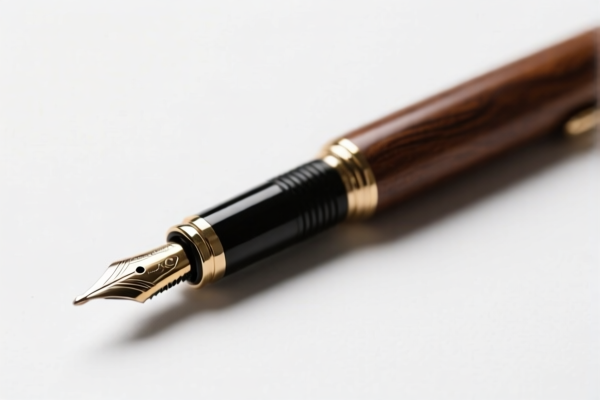
Writing Pen
CN → US| HS Code | Tariff Rate | Origin | Destination | Doc |
|---|---|---|---|---|
| 8543708800 | 10.0% | CN | US | Official Doc |
| 9608996000 | 17.5% | CN | US | Official Doc |
| 9608994000 | 17.5% | CN | US | Official Doc |
| 8543709500 | 35.0% | CN | US | Official Doc |
| 9609100000 | 0.0% | CN | US | Official Doc |
Product Images


AI Analysis
🖊️ Writing Pen (Ballpoint, Felt-Tip, Fountain Pens & Accessories)
🌐 HS Code Reference & Clearance Guide | 2024/2025 Duty Rate Breakdown | Strategic Customs Strategy
📌 I. Product Definition & Classification: Are You Classifying "Pens" Correctly?
The "Writing Pen" is a ubiquitous global commodity, spanning from simple disposable ballpoints to high-end styluses for digital interaction. In international trade, the classification hinges on function (electronic interaction vs. traditional writing) and technology.
Category A: Traditional Writing Instruments
Fountain Pens, Roller-balls, Ballpoint Pens, Markers: Used for physical ink transfer.
Pencils/Graphite Tools: Used for drawing/writing without ink.
Classification Logic: Based on the 9608 (Pens) and 9609* (Pencils) chapters.
Category B: Electronic Input Devices (Styluses)
Active Styluses/Digital Pens: Used for interacting with touchscreens, tablets, or digital displays.
Classification Logic: Based on the 8543 (Electrical Machinery) chapter, as they function as data input controllers rather than simple ink applicators.
⚠️ Critical Distinction:
- Ink Transfer Only → 9608 / 9609 (Pen/Pencil Chapter)
- Digital Data Input / Electronic Control → 8543 (Electrical Machinery Chapter)
- Confusion here can lead to a 20%–30% tax discrepancy due to "Section 301" / "122 Clause" tariffs!
📦 II. HS Code Classification Details (Based on Provided Data)
| HS Code | Product Description | Classification Logic | Tax Rate (Total) |
|---|---|---|---|
| 8543.70.88.00 | Electronic Control / Interaction Tool (General Electronic Stylus) | Inferred Use: Classified as an "electronic control/interaction tool." Fits the "Other electrical machinery" catch-all logic without material conflict. | 10.0% |
| 9608.99.60.00 | Other Writing Instruments (Ballpoint/Felt Tip) | Match Basis: Name "Writing Pen" fits "Pen" category (ballpoint, fountain). Material inferred as compatible. | 17.5% |
| 9608.99.40.00 | Writing Instruments (Fountain/Marker/General) | Match Basis: Fits 9608 definition for "Fountain pens, ballpoint pens." No material conflict. | 17.5% |
| 8543.70.95.00 | Touch Input Device / Electronic Component (Active Digital Stylus) | Inferred Use: Treated as a component of touch input devices. Logic aligns with data input interaction; no material conflict. | 35.0% |
| 9609.10.00.00 | Pencils / Graphite Writing Tools | Inferred Use: "Writing tool" covers pencils/waxes. Compatible with "Lead core enclosed in sheath" description. | 14¢/gross + 4.3% + 17.5% |
🔍 Key Insight:
- Electronic Pens (8543) carry the highest risk (10% – 35%) due to Section 301/122 clauses targeting advanced tech.
- Traditional Pens (9608) are moderately taxed (17.5%) due to anti-dumping/additional duties.
- Pencils (9609) have a complex mix of unit and ad valorem taxes.
💰 III. 2024/2025 Duty Rate Breakdown (Detailed Policy Analysis)
✅ Target Market: United States (US)
✅ Origin: China (CN)
✅ Applicable Clauses: Section 301, UFLPA, and "122 Clause" (Section 232/301 Extensions)
🎯 1. 8543.70.88.00 – General Electronic Control Stylus
| Item | Content |
|---|---|
| Base Tariff | 0.0% (General) |
| Additional Tariff | 0.0% (No Section 301 specific for this subcode yet, or cleared) |
| "122 Clause" (Section 301/232) | +10% (Specific China-targeted add-on) |
| Total Effective Rate | 10.0% |
| Tax Calculation | CIF Value × 10% |
| Policy Note | Lower risk for general electronic tools; avoids the "high-tech" surcharge if not strictly defined as a "touch input component." |
🎯 2. 9608.99.60.00 & 9608.99.40.00 – Traditional Writing Pens
| Item | Content |
|---|---|
| Base Tariff | 0.0% |
| Additional Tariff (Anti-Dumping/Section 301) | +7.5% |
| "122 Clause" (China Specific) | +10% |
| Total Effective Rate | 17.5% |
| Tax Calculation | CIF Value × 17.5% |
| Policy Note | High likelihood of facing Section 301 "Additional Duty" + "122 Clause" surcharge. Common for mass-market pens. |
🎯 3. 8543.70.95.00 – Active Touch Stylus / Data Input Device
| Item | Content |
|---|---|
| Base Tariff | 0.0% |
| Additional Tariff (Section 301) | +25.0% (High-tech classification) |
| "122 Clause" (China Specific) | +10% |
| Total Effective Rate | 35.0% |
| Tax Calculation | CIF Value × 35% |
| Policy Note | CRITICAL RISK! Classified as advanced touch input hardware. The 25% surcharge suggests strict scrutiny on "Smart" pens. |
🎯 4. 9609.10.00.00 – Pencils / Graphite Tools
| Item | Content |
|---|---|
| Base Tariff | 14¢ per gross + 4.3% (Compound Tax) |
| Additional Tariff | +7.5% |
| "122 Clause" | +10% |
| Total Effective Rate | ~14¢/gross + 21.8% (approx) |
| Policy Note | Unique "per unit" tax structure combined with percentage tariffs makes valuation tricky. |
🛠️ IV. Clearance Operational Advice (Practical Guide)
✅ 1. Preparation Checklist (Non-negotiable)
| Document | Must-Have? | Why? |
|---|---|---|
| Technical Specification Sheet | ✅ | Crucial to prove if the pen has electronics (Stylus) or is purely mechanical (Ink). |
| Product Photos (Open/Disassembled) | ✅ | Shows internal components (batteries, chips) vs. ink cartridges. |
| User Manual | ✅ | Must describe function: "Write on paper" vs. "Input to Tablet." |
| Packaging Artwork | ✅ | Must match the HS Code description (e.g., don't label a stylus as a "ballpoint"). |
| Bill of Lading / Invoice | ✅ | Must clearly state the HS Code used. |
✅ 2. Declaration Strategy (The "Pen" Trap)
🔥 Golden Rule: "Function Dictates Code!"
Do NOT simply declare "Writing Pen." Be specific.
| Scenario | Correct Declaration | Risk if Incorrect |
|---|---|---|
| Apple Pencil / Active Stylus | "Electronic Stylus for Touchscreens" | If declared as "Pen" (9608) → Under-declared Duty (35% vs 17.5%) → Penalty/Seizure! |
| Standard Ballpoint | "Ballpoint Pen, Refillable" | If declared as "Electronic Tool" (8543) → Over-paid Duty (Loss of margin). |
| Pencils | "Graphite Pencils with Eraser" | Avoid declaring as "Ink Pens" → Tax mismatch (Unit tax vs. % tax). |
✅ 3. Special Handling for High-Tax Items
| Issue | Solution |
|---|---|
| High Duty on Styluses (35%) | Consider Country of Origin diversification (e.g., Vietnam, Mexico) to avoid 122 Clause/Section 301 if eligible. |
| Material Conflict | If the pen contains metal or plastic that doesn't fit the "pen" description, provide a Material Safety Data Sheet (MSDS). |
| "Smart" Pens | If the pen has a chip/memory, declare under 8543 immediately to avoid classification disputes. |
🌍 V. Global Market Comparison (US Focus)
| Market | Recommended HS Code | Total Duty (China Origin) | Key Warning |
|---|---|---|---|
| 🇺🇸 USA | 8543.70.95.00 (Stylus) |
35.0% | HIGHEST RISK. Section 301 + 122 Clause. |
| 🇺🇸 USA | 9608.99.40.00 (Pen) |
17.5% | Moderate risk. Section 301 + 122 Clause. |
| 🇺🇸 USA | 9609.10.00.00 (Pencil) |
~22% + Unit Tax | Complex calculation. |
| 🇪🇺 EU | 9608.10 / 9609.10 |
0% - 2% | Usually no Section 301 equivalent; lower risk. |
| 🇨🇳 China | 9608 / 9609 |
0% - 5% | Domestic consumption tax varies. |
📌 VI. Common Pitfalls & "Blood and Tears" Lessons
❌ Pitfall 1: Calling a Stylus a "Pen"
Consequence: Declaring 8543.70.95.00 (35%) as 9608.99.40.00 (17.5%) = 17.5% Tax Evasion.
Result: Heavy fines, goods seizure, and blacklisting. Customs will demand proof of electronics.
❌ Pitfall 2: Ignoring the "122 Clause"
Consequence: Only calculating "Base + Section 301" and forgetting the +10% "122 Clause" surcharge.
Result: Profit margin erosion. You pay 10% less than required, leading to a surprise bill at arrival.
❌ Pitfall 3: Mixed Shipments
Consequence: Packing electronic styluses and ballpoint pens together without separate line items.
Result: Customs may classify the entire shipment at the highest rate (35%) or reject it for unclear origin.
✅ Best Practice:
"Separate Line Items: 'Electronic Stylus, 8543.70.95.00' AND 'Ballpoint Pen, 9608.99.40.00'."
"Include 'Tech Specs' in the Commercial Invoice."
🎯 VII. Conclusion: Precision is Profit!
🎯 Remember the Mantra:
🔹 "Pen vs. Stylus: 17.5% vs. 35%!"
🔹 "122 Clause: Don't forget the extra 10%!"
🔹 "Specs, Specs, Specs: Prove the function!"
📌 Pro Tip:
If you are shipping Active Styluses (digital pens), apply for a Binding Tariff Information (BTI) or Advance Ruling from US Customs (CBP) before shipping. This locks in the HS code and prevents future disputes over the "Electronic" vs. "Writing" definition.
📣 Action Plan:
📞 Consult a Customs Broker with "Electronics & Stationery" expertise.
📄 Prepare: Tech Sheets, Photos, and Function Descriptions.
🚀 Declare: Accurately split "Electronic Styluses" from "Traditional Pens" to avoid a 35% shock.
✨ Smart Clearance = Lower Costs = Higher Margin!
💼 Don't let a simple "Writing Pen" cost you half your profit!
Customer Reviews
About HS Code Classification
The Harmonized System (HS) is an internationally standardized nomenclature developed by the World Customs Organization (WCO) to classify traded products. Over 200 countries use the HS system as the basis for customs tariffs, trade statistics, and import/export regulations.
Each HS code follows a hierarchical structure:
- Chapter (2 digits) — Broad category of goods (e.g., Chapter 84: Machinery and Mechanical Appliances)
- Heading (4 digits) — More specific grouping within the chapter
- Subheading (6 digits) — Internationally standardized breakdown, used by all WCO member countries
- National subdivisions (8-10 digits) — Country-specific extensions for further classification, such as US HTSUS 10-digit codes
Correct HS code classification is essential for smooth customs clearance, accurate duty payment, and compliance with trade regulations. Misclassification can lead to customs delays, overpayment of duties, or penalties.
When importing from CN to US, the applicable tariff rates may include:
- Most-Favored-Nation (MFN) rate — The standard duty rate applied to WTO members
- General rate — Applied to countries without trade agreements
- Trade remedy duties — Additional tariffs such as Section 301 (anti-dumping), Section 232 (national security), or countervailing duties
The information provided on this page is for reference purposes only. For official classification, please consult with your local customs authority or a licensed customs broker.