X ray Film
CN → US| HS Code | Tariff Rate | Origin | Destination | Doc |
|---|---|---|---|---|
| 3701100030 | 38.7% | CN | US | Official Doc |
| 3702100060 | 38.7% | CN | US | Official Doc |
| 3702100030 | 38.7% | CN | US | Official Doc |
| 3701100060 | 38.7% | CN | US | Official Doc |
| 3701100030 | 38.7% | CN | US | Official Doc |
Product Images

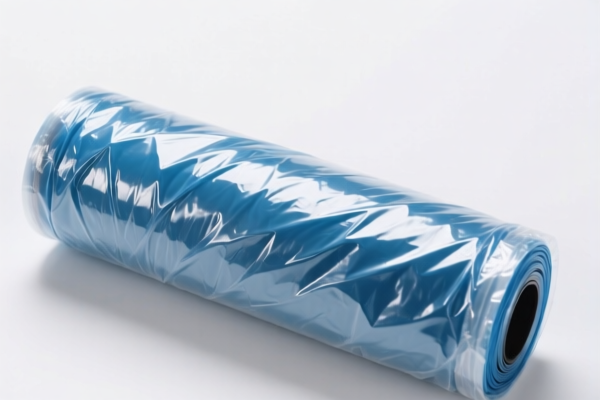

AI Analysis
🎞️ X-Ray Film (Medical & Industrial Radiography)
🌐 HS Code Reference & Customs Clearance Guide | 2024-2025 Tariff Analysis | Special US Trade Policy Alert
📌 I. Product Definition & Classification: What Exactly is "X-Ray Film"?
X-ray film refers to light-sensitive photographic film used to record images produced by X-ray radiation. In international trade, it is primarily categorized under Chapter 37 (Photographic or Cinematographic Goods). However, due to specific US trade restrictions (Section 122 and Section 301 tariffs), the distinction between Medical and Industrial/Aviation types, and the specific 8-digit HS Code used, is critical for cost calculation.
⚠️ Key Distinction Points:
- Medical X-Ray Film: Used for human/animal diagnosis. Often falls under3701.10.
- Industrial/Aviation X-Ray Film: Used for inspecting metal structures, aircraft parts, or pipelines. Often falls under3702.10or specific3701.10subheadings.
- Sensitized vs. Unsensitized: Most X-ray films are "sensitized" (coated with emulsion).
- Material Base: Must NOT be on paper, cardboard, or textile bases (those fall under different chapters). X-ray film is typically on a transparent plastic base.
📦 II. HS Code Classification Details (Based on Provided Data)
According to the provided dataset, the following HS Codes and descriptions are applicable. Note that all listed codes share the same tariff structure under current US-China trade policies.
| HS Code | Product Description & Summary | Applicable Scenario | Key Characteristics |
|---|---|---|---|
3701.10.00.30 |
X-Ray Medical Film: Defined as medical X-ray photography film. | Hospitals, Clinics, Diagnostic Labs. | Medical use, non-dental. |
3702.10.00.60 |
Sensitized X-Ray Film: Matches X-ray use and sensitized film form. | Industrial radiography, general medical. | Sensitized, plastic base. |
3702.10.00.30 |
Sensitized X-Ray Film (Used): Sensitized, used for X-ray, not on paper/textile. | Post-processing industrial films. | Not on paper/textile base. |
3701.10.00.60 |
Aviation X-Ray Film: Used for X-ray inspection, not paper/cardboard/textile. | Aerospace industry, aircraft maintenance. | Aviation/Industrial focus. |
3701.10.00.30 |
Aviation X-Ray Film (Non-Dental): Non-dental X-ray application, sensitized film features. | Aviation maintenance, non-medical imaging. | Specifically excludes dental use. |
🔍 Important Note:
- Although3701.10.00.30appears twice with slightly different summaries (Medical vs. Aviation Non-Dental), the HS Code is identical, and thus the Tariff Rate is identical.
- The key is ensuring your commercial invoice and product description match the specific application (Medical vs. Aviation) to avoid customs delays, even if the tax rate is the same.
💰 III. Detailed Tariff Rate Breakdown (US Market Focus)
✅ Applicable Country: United States (US)
✅ Origin: China (CN) (Implied by the specific tariff structure: Base + Section 301 + Section 122)
✅ Total Tax Rate: 38.7%
✅ De Minimis Exemption: ❌ NOT APPLICABLE (Denied)
🎯 1. 3701.10.00.30 & 3702.10.00.60 & 3702.10.00.30 & 3701.10.00.60
All Listed HS Codes Share This Tax Structure
| Component | Rate | Description & Legal Basis |
|---|---|---|
| Base Duty | 3.7% | Standard Most Favored Nation (MFN) duty for Chapter 37. |
| Section 301 Tariff | 25.0% | Additional duty on Chinese goods under USTR List 3/4A. |
| Section 122 Tariff | 10.0% | Additional duty under Section 122 of the Trade Act of 1974 (national security). |
| TOTAL RATE | 38.7% | Sum of all components (3.7% + 25.0% + 10.0%). |
📌 Explanation:
- 3.7%: Standard import duty.
- 25.0%: This is the significant "Section 301" tariff, often referred to as the "Trump Tariff" or "Trade War Tariff," applied to a wide range of Chinese imports.
- 10.0%: Section 122 tariffs are less common but apply here, likely due to national security concerns regarding dual-use technologies or strategic materials.
- No De Minimis: Small parcels (under $800) do NOT qualify for exemption. Every shipment is subject to this 38.7% rate.💡 Cost Impact Example:
If you import $10,000 worth of X-ray film:
- Duty Amount = $10,000 × 38.7% = $3,870
- This is a significant cost that must be factored into your pricing strategy.
🛠️ IV. Customs Clearance Practical Advice (Real-World Pitfalls)
✅ 1. Required Documentation Checklist
| Document | Required? | Notes |
|---|---|---|
| ✅ Commercial Invoice | ✔️ | Must clearly state: "X-Ray Film, Sensitized, on Plastic Base, Not on Paper/Textile." |
| ✅ Packing List | ✔️ | Specify net/gross weight and number of rolls/sheets. |
| ✅ Product Specification | ✔️ | Detail chemical composition, base material (e.g., polyester), and sensitivity. |
| ✅ Certificate of Origin | ✔️ | Critical for proving origin as China (to apply correct tariffs). |
| ✅ FDA Registration (if Medical) | ✔️ | If labeled for medical diagnostic use in humans, FDA prior notice may be required. |
| ✅ BIS License (if Dual-Use) | ✔️ | Ensure no controlled technology restrictions apply. |
✅ 2. Declaration Tips (Crucial for Accuracy)
🔥 "Declare Application, Not Just 'Film'"
| Scenario | Correct Declaration | Risk of Incorrect Declaration |
|---|---|---|
| Medical Use | "Medical X-Ray Film, Sensitized, for Diagnostic Imaging" | Risk of misclassification if described vaguely as "Photographic Film." |
| Aviation/Industrial | "Aviation X-Ray Film, for NDT (Non-Destructive Testing)" | Risk of higher scrutiny if not distinguished from medical film. |
| Dental Film | ❌ Do NOT use 3701.10.00.30 if Dental |
Dental film may have different subheadings or exemptions. Ensure it is non-dental. |
| Paper-Based Film | ❌ Do NOT use Chapter 37 | If on paper, it falls under Chapter 49. Misclassification leads to penalties. |
✅ 3. Special Handling for "122 Clause" Tariffs
- Section 122 tariffs are discretionary and can change. Verify with a customs broker if any recent executive orders have modified this rate.
- Keep Records: Since the total tax is high (38.7%), maintain detailed records of valuation (CIF: Cost, Insurance, Freight) to justify the duty base.
🌍 V. Global Market Comparison (2024-2025)
| Country/Region | Recommended HS Code | Approx. Tariff (China Origin) | Key Notes |
|---|---|---|---|
| 🇺🇸 USA | 3701.10.00.30 / 3702.10.00.60 |
38.7% | High due to Section 301 + 122. No de minimis. |
| 🇨🇳 China | 3701.10.00.30 |
Varies (0-6%) | Low duty, VAT (13%) applies. |
| 🇪🇺 EU | 3701.10 / 3702.10 |
0-6% | Generally low duties; check for anti-dumping if applicable. |
| 🇯🇵 Japan | 3701.10 / 3702.10 |
0-3% | Very low; EPA benefits may apply. |
| 🇬🇧 UK | 3701.10 / 3702.10 |
0-6% | Post-Brexit tariff schedule; generally favorable. |
📌 Conclusion:
The USA is the most expensive market for X-ray film imports from China due to the cumulative 38.7% tariff. Consider sourcing from Vietnam or Mexico if possible, as they may avoid Section 301 tariffs (subject to USMCA/FTAA rules).
📌 VI. Common Errors & Pitfalls (Lessons Learned)
❌ Error 1: Declaring "Photographic Film" without specifying "X-Ray"
👉 Consequence: Customs may apply a different HS code, leading to underpayment or overpayment and audits.
❌ Error 2: Ignoring the "Not on Paper/Textile" Clause
👉 Consequence: If the film is on paper, it’s not Chapter 37. Misdeclaration = Penalties + Back Duties.
❌ Error 3: Assuming De Minimis Applies to Small Samples
👉 Consequence: False. Section 301 and 122 tariffs apply to all shipments, regardless of value. Even a $100 sample pays $38.70 in duties.
❌ Error 4: Confusing Dental X-Ray Film with Medical X-Ray Film
👉 Consequence: Dental film has specific exclusions. Using the general medical code for dental film may trigger questions. Check specific dental subheadings.
✅ Correct Practice:
"Sensitized X-Ray Film, Polyester Base, Non-Dental, For Industrial Radiography, HS Code 3701.10.00.30, Origin China, Subject to Section 301 & 122 Tariffs."
🎯 VII. Conclusion: Professional Clearance, Cost Control, Efficiency!
🎯 Key Takeaways:
1. Total Tariff is 38.7%: This is a fixed, high-cost barrier for US imports from China.
2. No De Minimis: Small shipments are NOT exempt.
3. Precise Description Matters: Distinguish between Medical, Aviation, and Industrial use to ensure correct HS code alignment, even if rates are similar.
4. Documentation is Key: Provide clear specs, especially on the base material (plastic vs. paper).
📌 Pro Tip:
If your volume is high, consider tariff engineering or supply chain diversification. Sourcing from countries not subject to Section 301/122 tariffs (e.g., Japan, South Korea, or EU) can save 38.7% on every shipment.
📣 Action Required:
📞 Consult a US Customs Broker before shipping.
📄 Prepare Detailed Product Descriptions.
💰 Factor 38.7% into your landed cost.
✨ Clear Compliance, Clear Profits!
💼 Your X-Ray Film’s Journey Starts with the Right HS Code!
Customer Reviews
About HS Code Classification
The Harmonized System (HS) is an internationally standardized nomenclature developed by the World Customs Organization (WCO) to classify traded products. Over 200 countries use the HS system as the basis for customs tariffs, trade statistics, and import/export regulations.
Each HS code follows a hierarchical structure:
- Chapter (2 digits) — Broad category of goods (e.g., Chapter 84: Machinery and Mechanical Appliances)
- Heading (4 digits) — More specific grouping within the chapter
- Subheading (6 digits) — Internationally standardized breakdown, used by all WCO member countries
- National subdivisions (8-10 digits) — Country-specific extensions for further classification, such as US HTSUS 10-digit codes
Correct HS code classification is essential for smooth customs clearance, accurate duty payment, and compliance with trade regulations. Misclassification can lead to customs delays, overpayment of duties, or penalties.
When importing from CN to US, the applicable tariff rates may include:
- Most-Favored-Nation (MFN) rate — The standard duty rate applied to WTO members
- General rate — Applied to countries without trade agreements
- Trade remedy duties — Additional tariffs such as Section 301 (anti-dumping), Section 232 (national security), or countervailing duties
The information provided on this page is for reference purposes only. For official classification, please consult with your local customs authority or a licensed customs broker.