X ray Film Waste Disposal Bag
CN → US| HS Code | Tariff Rate | Origin | Destination | Doc |
|---|---|---|---|---|
| 3923210085 | 38.0% | CN | US | Official Doc |
| 3923290000 | 38.0% | CN | US | Official Doc |
| 4819502000 | 35.0% | CN | US | Official Doc |
| 4819504060 | 35.0% | CN | US | Official Doc |
Product Images

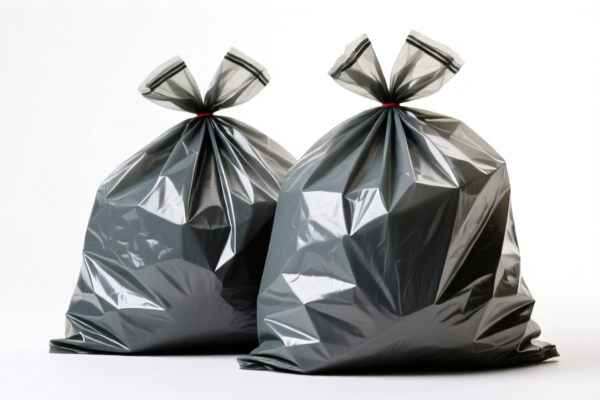
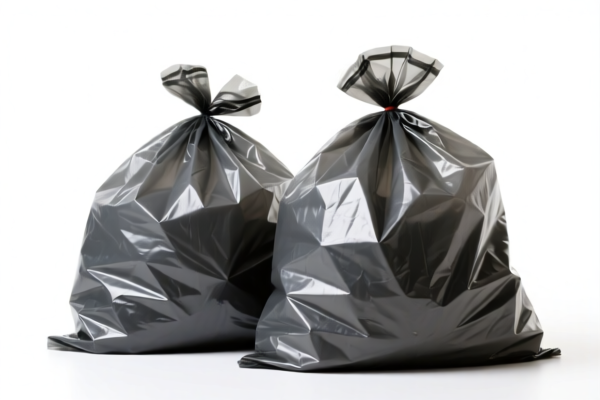

AI Analysis
📸 X-Ray Film Waste Disposal Bags (Medical Radiography Waste)
🌐 HS Code Reference & Customs Clearance Guide | 2026 Latest Tariff Analysis | Professional Import Strategy for Medical Packaging
📌 I. Product Definition & Classification: Are These Just "Plastic Bags"?
X-Ray Film Waste Disposal Bags are specialized medical waste containment solutions designed specifically for the collection and disposal of spent radiographic films (developed/used X-ray prints). While they appear to be simple plastic sacks, their specific use case (medical/hazardous waste) and material composition dictate their tariff classification.
In international trade, these are NOT classified as medical devices or pharmaceuticals. Instead, they fall under "Articles for the conveyance or packing of goods, of plastics."
⚠️ Critical Distinction:
- If the bag is a standard Polyethylene Retail Carrier Bag (PRCB) with handles, used for general medical waste or film waste, it falls under 3923.21.00.85.
- If the bag is a generic sack/bag of other plastics (no specific retail handle constraints), it falls under 3923.29.00.00.
- ❌ Do NOT classify as medical equipment (Chapter 90) or paper containers (Chapter 48). These are purely plastic packaging articles.
📦 II. HS Code Classification Details (2026 Latest Tariff Authority)
The provided data indicates two primary classifications depending on the specific physical attributes of the bag (specifically handles and dimensions).
| HS Code | Product Description | Key Characteristics | Application Scenario |
|---|---|---|---|
3923.21.00.85 |
Sacks and bags of polymers of ethylene: Polyethylene retail carrier bags (PRCBs) with handles | - Material: Polyethylene (PE) - Has handles (drawstrings or otherwise) - Dimensions: Length/Width between 6 inches (152.4 mm) and 40 inches (1,016 mm) |
Standard X-ray film waste bags sold to hospitals/labs for easy lifting and disposal. |
3923.29.00.00 |
Sacks and bags of other plastics | - Material: Not specifically ethylene polymers with handles under the PRCB definition - Generic sacks/bags |
Bulk medical waste bags, non-handle bags, or bags made of different plastic formulations not meeting the PRCB definition. |
🔍 Classification Logic:
- The vast majority of X-ray film waste bags supplied to healthcare facilities are Polyethylene with handles for safe handling of heavy, wet waste.
- Therefore,3923.21.00.85is the most likely correct code for standard commercial X-ray waste bags.
-3923.29.00.00is a fallback for generic plastic sacks that do not meet the specific "retail carrier bag with handles" criteria.
💰 III. 2026 Latest Tariff Rate Breakdown (Including Surtaxes)
✅ Applicable Country: United States (US)
✅ Origin: China (CN)
✅ Effective Date: 2025/2026 Current Trade Policy
🎯 1. 3923.21.00.85 —— Polyethylene Retail Carrier Bags (PRCBs) with Handles
| Item | Content |
|---|---|
| Base Tariff | 3.0% (ad valorem) |
| Section 301 Surtax | +25.0% |
| Total Tariff Rate | 28.0% |
| Tax Calculation | CIF Value × 28% |
| De Minimis Eligibility | ❌ Not Eligible (High risk for Section 301 goods) |
| Legal Basis Path | USITC:3923.21.00.85 → Section 301 Footnote |
📌 Explanation:
- These bags are considered plastic packaging articles. Under US Trade Law (Section 301), plastic bags from China are subject to a significant 25% surtax on top of the base rate.
- Total Cost Impact: 3% base + 25% surtax = 28% total duty. This is a high-cost item for importers.
🎯 2. 3923.29.00.00 —— Other Plastic Sacks and Bags
| Item | Content |
|---|---|
| Base Tariff | 0.0% |
| Section 301 Surtax | 0.0% (Based on provided data) |
| Total Tariff Rate | 0.0% |
| Tax Calculation | None |
| De Minimis Eligibility | ✅ Potentially Eligible (Check current CBP enforcement on "other plastics") |
| Legal Basis Path | USITC:3923.29.00.00 |
📌 Note:
- If the product can be legally classified under "Other Plastics" (3923.29) rather than "Polyethylene Retail Carrier Bags" (3923.21), the tariff is significantly lower (0%).
- Risk: Customs may challenge this classification if the bag has handles and is made of PE, forcing a reclassification to3923.21.00.85and demanding back duties + penalties.
🛠️ IV. Customs Clearance Practical Advice (Operational Pitfalls Guide)
✅ 1. Documentation Checklist (Must-Have)
| Document | Required? | Purpose |
|---|---|---|
| ✅ Commercial Invoice | ✔️ | Must clearly state "Plastic Waste Bags for X-Ray Film" or "Medical Waste Disposal Bags". Avoid vague terms like "Plastic Goods". |
| ✅ Product Specification Sheet | ✔️ | Must detail: Material (Polyethylene/Ethylene), Dimensions, Presence of Handles, Thickness. |
| ✅ Material Composition Certificate | ✔️ | Proof that the material is Polyethylene (to support 3923.21) or "Other Plastic" (to support 3923.29). |
| ✅ Photo of Product | ✔️ | Show handles clearly if claiming 3923.21.00.85. Handle presence is key for the 28% tax category. |
| ✅ Packaging List | ✔️ | Net weight and gross weight for customs valuation. |
✅ 2. Declaration Strategy (Key Mantras)
🔥 "Handle Determines Tax, Material Determines Code!"
| Scenario | Correct Declaration | Wrong Action | Consequence |
|---|---|---|---|
| Bag HAS handles & is PE | 3923.21.00.85 (28% Tax) |
Declare as "Other Plastic" (3923.29) |
Customs Audit: High risk of reclassification, back taxes, and fines. |
| Bag NO handles or non-PE | 3923.29.00.00 (0% Tax) |
Declare as "PRCB with Handles" | Lower tax, but must prove no handles/non-PE to justify. |
| Bag made of Paper/Cardboard | 4819.50.20.00 or 4819.50.40.60 (25% Tax) |
Declare as Plastic | Wrong Chapter: Paper bags are taxed differently (25% surtax, 0% base). |
✅ 3. Special Considerations for Medical Waste Packaging
| Issue | Handling Advice |
|---|---|
| Biohazard Labeling | While the bags themselves are plastic, ensure your invoice does not claim they are "infected." They are empty, unused containers. |
| Origin Marking | Clearly mark "Made in China" on the outer packaging. Section 301 applies to Chinese origin. |
| Value for Duty | Ensure the transaction value includes all costs up to US port (CIF). Undervaluation leads to severe penalties. |
🌍 V. Global Market Comparison (2026)
| Country/Region | Recommended HS Code | Tariff (China Origin) | Notes |
|---|---|---|---|
| 🇺🇸 USA | 3923.21.00.85 |
28% | High tax due to Section 301 on plastic bags. |
| 🇺🇸 USA | 3923.29.00.00 |
0% | Only if no handles/PE. Risk of audit. |
| 🇪🇺 EU | 3923.21.00 |
~2.7% | No Section 301 equivalent, but potential environmental plastic taxes. |
| 🇨🇳 China | 3923.21.00 |
~0-5% | Import duty varies, but lower than US. |
| 🇨🇦 Canada | 3923.21.00 |
~0-5% | Similar to EU, no punitive surtax. |
📌 Conclusion:
The United States is the most expensive market for importing X-ray film waste bags due to the 25% Section 301 surtax on plastic carrier bags.
- If you are exporting to the US, budget for 28% duty on handle-equipped PE bags.
- If the bag has no handles, investigate if3923.29.00.00(0%) is defensible, but consult a customs broker first.
📌 VI. Common Mistakes & Pitfalls (Lessons Learned)
❌ Mistake 1: Classifying X-ray waste bags as "Medical Devices" (Chapter 90).
👉 Result: Incorrect chapter. These are packaging, not devices. Penalty for wrong classification.
❌ Mistake 2: Hiding handles on invoices to claim 0% tax (3923.29).
👉 Result: Customs inspect physical samples. If handles are found, 28% tax + penalties apply.
❌ Mistake 3: Confusing Paper Bags vs. Plastic Bags.
👉 Result: Paper bags (4819) have different duties (25% surtax, 0% base). Plastic (3923) has 28% total. Material proof is essential.
✅ Correct Approach:
"Polyethylene Waste Disposal Bags for Radiographic Film, With Handles, 15x15 Inches, Empty and Uncontaminated"
🎯 VII. Conclusion: Professional Classification Saves Money!
🎯 Remember:
🔹 "Handles = 28% Tax (US)"
🔹 "No Handles/Other Plastic = 0% Tax (Potentially)"
🔹 "Material Proof is King!"
📌 Pro Tip:
If your X-ray waste bags are originating from Vietnam, Mexico, or Thailand, you may qualify for lower or zero Section 301 tariffs. Consider supply chain diversification if volume is high.
📣 Immediate Action:
📞 Contact a Licensed Customs Broker to review your specific product samples.
🚀 Pre-clearance ensures you pay the right tax and avoid shipment delays.
✨ Precision in Classification, Profit in Clearance!
💼 Your packaging product deserves accurate duty treatment.
Customer Reviews
About HS Code Classification
The Harmonized System (HS) is an internationally standardized nomenclature developed by the World Customs Organization (WCO) to classify traded products. Over 200 countries use the HS system as the basis for customs tariffs, trade statistics, and import/export regulations.
Each HS code follows a hierarchical structure:
- Chapter (2 digits) — Broad category of goods (e.g., Chapter 84: Machinery and Mechanical Appliances)
- Heading (4 digits) — More specific grouping within the chapter
- Subheading (6 digits) — Internationally standardized breakdown, used by all WCO member countries
- National subdivisions (8-10 digits) — Country-specific extensions for further classification, such as US HTSUS 10-digit codes
Correct HS code classification is essential for smooth customs clearance, accurate duty payment, and compliance with trade regulations. Misclassification can lead to customs delays, overpayment of duties, or penalties.
When importing from CN to US, the applicable tariff rates may include:
- Most-Favored-Nation (MFN) rate — The standard duty rate applied to WTO members
- General rate — Applied to countries without trade agreements
- Trade remedy duties — Additional tariffs such as Section 301 (anti-dumping), Section 232 (national security), or countervailing duties
The information provided on this page is for reference purposes only. For official classification, please consult with your local customs authority or a licensed customs broker.