X ray Intensifying Screen Film
CN → US| HS Code | Tariff Rate | Origin | Destination | Doc |
|---|---|---|---|---|
| 3705000000 | 35.0% | CN | US | Official Doc |
| 3704000000 | 35.0% | CN | US | Official Doc |
| 3701100030 | 38.7% | CN | US | Official Doc |
| 9018902000 | 35.0% | CN | US | Official Doc |
| 3705000000 | 35.0% | CN | US | Official Doc |
Product Images
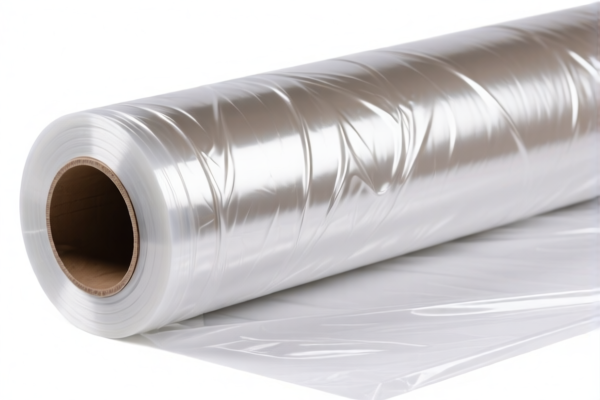

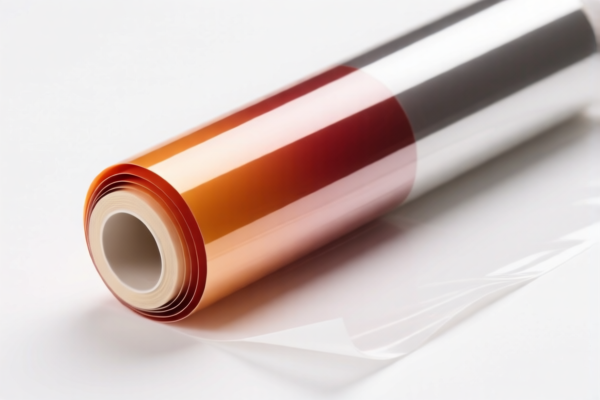
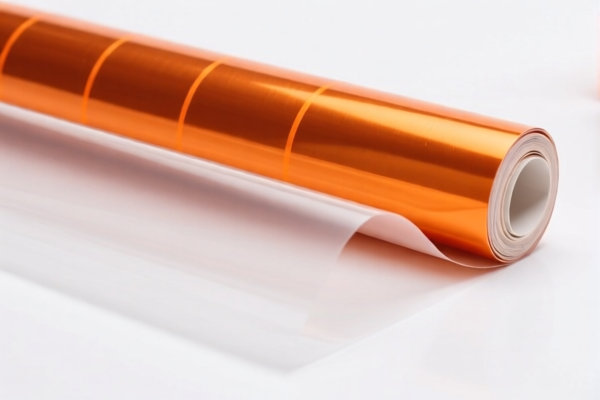
AI Analysis
🎞️ X-Ray Intensifying Screen Film (Medical Imaging Plates)
🌐 HS Code Reference & Customs Clearance Guide | 2026 Latest Tariff Analysis | Professional Clearance Strategy
📌 I. Product Definition & Classification: What Exactly is "Intensifying Screen Film"?
X-ray Intensifying Screen Film, often referred to as Medical X-ray Film or Photographic Plates for Medical Use, is a specialized sensory material used in radiology. It consists of a film base coated with a light-sensitive emulsion (silver halide crystals).
In modern digital radiography (DR/CR), this physical film is increasingly being replaced by phosphor plates or digital sensors. However, for traditional analog or specific legacy medical imaging, these films remain a critical consumable.
Key Characteristics: * Purpose: Medical Diagnosis (X-ray Imaging). * State: Unexposed, unprocessed (Raw Sensory Material). * Form: Sheets, rolls, or plates (Film/Plate format). * Mechanism: It works in tandem with intensifying screens (which convert X-rays to visible light) to expose the film, reducing the required radiation dose.
⚠️ Critical Distinction:
- If the product is strictly photographic film for medical X-ray use, it falls under Chapter 37 (Photographic Goods) or Chapter 90 (Medical Instruments).
- The correct HS Code depends heavily on whether it is classified primarily as a photographic chemical/sensory good (Ch. 37) or a medical instrument accessory/consumable (Ch. 90).
- Misclassification Risk: Declaring as a general "medical device" without specifying the photographic nature may lead to duty disputes. Conversely, declaring as general "photographic film" (e.g., for cameras) ignores the medical designation, which carries different tariff treatments.
📦 II. HS Code Classification Details (2026 Latest Tariff Authority Comparison)
Based on the provided data, here are the four potential HS Codes and their corresponding rationale for X-ray Intensifying Screen Film:
| HS Code | Product Description | Rationale for Classification | Total Tax Rate |
|---|---|---|---|
| 3705.00.00.00 | Photographic plates and film, exposed but not developed (for X-ray) | Summary: X-ray film belongs to the category of photographic/imaging sensory materials, fitting the purpose scope of photographic plates and films. Key: Focuses on the material nature (photographic plate/film). |
35.0% |
| 3704.00.00.00 | Photographic paper, film, and other support materials, exposed but not developed | Summary: X-ray film falls under exposed-but-undeveloped photographic products in terms of use; material and use match. Key: Focuses on the state (exposed/unprocessed) and photographic origin. |
35.0% |
| 3701.10.00.30 | Photographic plates and film for X-ray use (Medical) | Summary: The product name explicitly includes "X-ray" and "Medical" use, fully matching the purpose limit (medical use) in the classification interpretation, and the film form matches photographic plates and films. Key: The Most Specific & Accurate match for Medical X-ray Film. Explicitly mentions "Medical" and "X-ray." |
38.7% |
| 9018.90.20.00 | Other instruments and apparatus for medical, surgical, dental, or veterinary sciences | Summary: Product use (medical) and form (X-ray imaging imaging, belonging to optical/imaging equipment related consumables/accessories) fit the category of medical scientific instruments; material can be inferred as sensory film, logically consistent with optical instruments and accessories. Key: Focuses on the application (Medical Instrument Accessory). |
35.0% |
🔍 重点提醒 (Critical Analysis):
- HS Code3701.10.00.30is the most precise classification for X-ray Intensifying Screen Film because it explicitly references "X-ray" and "Medical" purposes. This aligns best with the specific nature of the product.
- HS Code9018.90.20.00is a viable alternative if the film is considered a direct accessory/component of a medical imaging system, but customs often prefer Chapter 37 for standalone sensory films.
- HS Codes3705.00.00.00and3704.00.00.00are broader photographic categories. They may be accepted if the "medical" aspect is not sufficiently highlighted in the product description, but they risk higher scrutiny if the medical designation is clear.
💰 III. 2026 Latest Tariff Rate Details (Including Surtaxes & Policy Add-ons)
✅ Applicable Country: United States (US)
✅ Origin: China (CN)
✅ Effective Date: November 10, 2025 onwards (including subsequent imports)
🎯 1. 3705.00.00.00 / 3704.00.00.00 / 9018.90.20.00 — X-ray Film (Medical/Photographic)
| Item | Content |
|---|---|
| Base Tariff | 0.0% (ad valorem) (Note: Base duty is 0% for most photographic/medical film imports from China under current HTSUS) |
| Section 301 Surtax | +25.0% (From USITC Footnote 9903.88.01 / China Trade Act) |
| IEEPA Surtax | +10.0% (Targeting China/HK products, effective Nov 10, 2025) |
| Total Tax Rate | 35.0% |
| Tax Calculation | CIF Value × 35% |
| De Minimis Eligibility | ❌ Not Eligible (deny_de_minimis) (High tax rates and IEEPA restrictions usually block the $800 de minimis exemption for these categories) |
| Legal Basis Path | IEEPA:9903.01.25 → USITC:3705.00.00.00 → FOOTNOTE:9903.88.01 |
📌 Explanation:
- Although the base tariff is 0%, the Section 301 (25%) and IEEPA (10%) surtaxes apply, resulting in a 35% effective duty rate.
- Warning: For HS Code3701.10.00.30, the base tariff is 3.7%, making the total 38.7%. This is 3.7% higher than the other codes due to the specific medical/X-ray designation in Chapter 37.
🎯 2. 3701.10.00.30 — Specific Medical X-ray Film
| Item | Content |
|---|---|
| Base Tariff | 3.7% (ad valorem) |
| Section 301 Surtax | +25.0% |
| IEEPA Surtax | +10.0% |
| Total Tax Rate | 38.7% |
| Tax Calculation | CIF Value × 38.7% |
| De Minimis Eligibility | ❌ Not Eligible |
| Legal Basis Path | IEEPA:9903.01.25 → USITC:3701.10.00.30 → FOOTNOTE:9903.88.01 |
📌 Note:
- This code is more specific to "Medical X-ray" use.
- While more accurate, it incurs a 3.7% higher total cost compared to the broader photographic codes (3705/3704) or medical instrument code (9018).
- Customs Advice: If the film is strictly for medical use,3701.10.00.30is the correct classification. Using a broader code to save 3.7% is risky and may lead to penalties for misclassification if audited.
🛠️ IV. Customs Clearance Operational Suggestions (Practical Pitfall Avoidance)
✅ 1. Preparation Checklist (No Exceptions)
| Material | Required | Explanation |
|---|---|---|
| ✅ Product Specification Sheet | ✔️ | Must specify: "X-ray Intensifying Screen Film," "Medical Use," "Emulsion Type," "Size," "Sensitivity." |
| ✅ HS Code Justification | ✔️ | Explain why 3701.10.00.30 or 9018.90.20.00 is chosen (e.g., "Used in Radiology Departments for Diagnostic Imaging"). |
| ✅ Product Photos | ✔️ | Clear images of the film packaging showing "For Medical Use Only" or "X-Ray Film." |
| ✅ Commercial Invoice | ✔️ | Must explicitly state: "X-ray Intensifying Screen Film for Medical Imaging, Unexposed." |
| ✅ Packing List | ✔️ | List quantity, weight, and dimensions. |
| ✅ Certificate of Origin | ✔️ | To determine eligibility for any potential exemptions (though unlikely for China-origin under current tariffs). |
✅ 2. Declaration Tips (Key Mantras)
🔥 "Medical Purpose, X-ray Specific, Chapter 37 or 90, Avoid General Film!"
| Scenario | Correct Declaration | Incorrect Practice |
|---|---|---|
| Strictly Medical X-ray Film | 3701.10.00.30 or 9018.90.20.00 |
Declaring as "Photographic Film" (Ch. 3704) → Risk of audit for misclassification. |
| Film + Intensifying Screens (Kit) | Declare as Accessory (9018.90.20.00) if bundled as a set |
Declaring separately → Potential for higher combined duties if not recognized as a set. |
| Digital X-ray Plates (CR/DR) | 9018.90.20.00 (if reusable phosphor plates) |
Misdeclaring as "Single-use Film" → Wrong tax treatment. |
| General Purpose X-ray Film | 3705.00.00.00 |
Declaring as "Camera Film" → 100% non-compliance. |
✅ 3. Special Case Handling
| Scenario | Handling Advice |
|---|---|
| OEM Customized Medical Film | Provide the end-user contract (Hospital/Radiology Center) to prove Medical Use. |
| Sample Shipments | Even for samples, declare the true nature. Small value does not exempt from IEEPA/301 if the product type is restricted. |
| Return of Defective Film | If returning previously exported goods, file a Prior Exportation claim to avoid re-duty, but prove the goods were previously exported. |
🌍 V. Global Market Clearance Comparison (2026 Latest)
| Country/Region | Recommended HS Code | Tariff Rate | Certification Requirements | Notes |
|---|---|---|---|---|
| 🇺🇸 USA | 3701.10.00.30 |
38.7% | FDA Registration (if Class II Device), 510(k) may apply for some films | High tariff due to China origin. |
| 🇨🇳 China | 3701.10.00.30 |
8.5% (Import) | NMPA Registration | Domestic production is common. |
| 🇪🇺 EU | 3701.10.00.30 |
4.0% | CE Marking (MDR), RoHS | No Section 301/IEEPA equivalent, but strict medical device regulations. |
| 🇯🇵 Japan | 3701.10.00.30 |
6.0% | PSE (if electronic components), PMDA | High standards for medical clarity. |
📌 Conclusion:
- The USA imposes the highest effective cost (38.7%) due to the combination of base tariff and surtaxes.
- EU and Japan offer lower tariff rates but have stringent medical device regulatory requirements (CE/PMDA).
- Supply Chain Strategy: For US-bound shipments, consider Third-Country Assembly (e.g., Vietnam, Thailand) if possible to mitigate Section 301 and IEEPA duties, provided substantial transformation rules are met.
📌 VI. Common Errors & Pitfall Guide (Lessons Learned)
❌ Error 1: Declaring "X-ray Film" as "General Photographic Film" (3704)
👉 Consequence: Customs may audit for medical device compliance and apply penalties for misclassification.
👉 Cost Impact: Potential back-taxes + 25% penalty.
❌ Error 2: Ignoring the "Intensifying Screen" aspect
👉 Consequence: If sold with screens, declaring only film may lead to under-declaration of value if the screen is a significant component.
👉 Cost Impact: Duty evasion risk.
❌ Error 3: Assuming De Minimis ($800) applies
👉 Consequence: IEEPA and Section 301 goods from China are excluded from de minimis treatment.
👉 Cost Impact: All shipments, regardless of value, are subject to 35%+ duty.
❌ Error 4: Failing to specify "Medical Use" on the Invoice
👉 Consequence: Customs may classify under general photographic codes (3705/3704) or, worse, treat it as a non-compliant medical device.
👉 Cost Impact: Delays, fines, or forced reclassification.
✅ Correct Practice:
"X-Ray Intensifying Screen Film, Unexposed, for Medical Diagnostic Imaging, 14x17 inch, 400 Speed, Medical Use Only, Model XYZ"
🎯 VII. Conclusion: Professional Declaration, Cost Optimization!
🎯 Remember the Mantra:
🔹 "Medical X-ray Film is Specific,
3701.10.00.30is King."
🔹 "Base 3.7% + 301 25% + IEEPA 10% = 38.7% Total."
🔹 "De Minimis is Off, Compliance is Key."
📌 Pro Tip:
If your film is originating from Vietnam, Mexico, or Thailand, you may apply for IEEPA Exemption or Section 301 Exclusion, reducing the rate to 0%~5%.
Recommendation: Apply for an Advance Ruling (CBP Ruling) before shipment to confirm the HS Code (3701.10.00.30 vs. 9018.90.20.00) and mitigate classification risk.
📣 Immediate Action:
📞 Contact a licensed Customs Broker + Provide Product Specs + Apply for HS Code Advance Ruling
🚀 Ensure your X-Ray Film clears customs smoothly, efficiently, and with optimized costs!
✨ Professional Clearance Starts with Precise Classification!
💼 Every Cent of Cost Should Be Precisely Calculated!
Customer Reviews
About HS Code Classification
The Harmonized System (HS) is an internationally standardized nomenclature developed by the World Customs Organization (WCO) to classify traded products. Over 200 countries use the HS system as the basis for customs tariffs, trade statistics, and import/export regulations.
Each HS code follows a hierarchical structure:
- Chapter (2 digits) — Broad category of goods (e.g., Chapter 84: Machinery and Mechanical Appliances)
- Heading (4 digits) — More specific grouping within the chapter
- Subheading (6 digits) — Internationally standardized breakdown, used by all WCO member countries
- National subdivisions (8-10 digits) — Country-specific extensions for further classification, such as US HTSUS 10-digit codes
Correct HS code classification is essential for smooth customs clearance, accurate duty payment, and compliance with trade regulations. Misclassification can lead to customs delays, overpayment of duties, or penalties.
When importing from CN to US, the applicable tariff rates may include:
- Most-Favored-Nation (MFN) rate — The standard duty rate applied to WTO members
- General rate — Applied to countries without trade agreements
- Trade remedy duties — Additional tariffs such as Section 301 (anti-dumping), Section 232 (national security), or countervailing duties
The information provided on this page is for reference purposes only. For official classification, please consult with your local customs authority or a licensed customs broker.