X ray Sensitizing Film and Photographic Paper
CN → US| HS Code | Tariff Rate | Origin | Destination | Doc |
|---|---|---|---|---|
| 3707100090 | 38.0% | CN | US | Official Doc |
| 3703903090 | 38.7% | CN | US | Official Doc |
| 3702100060 | 38.7% | CN | US | Official Doc |
| 3707100005 | 38.0% | CN | US | Official Doc |
| 3703906000 | 37.8% | CN | US | Official Doc |
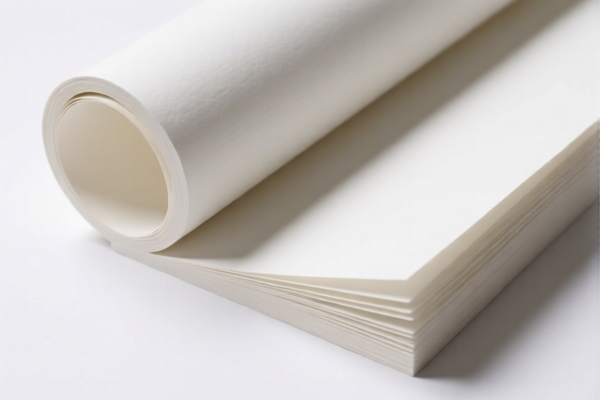
Product Images



AI Analysis
📸 X-Ray Sensitizing Film & Photographic Paper (Sensitized Materials)
🌐 HS Code Reference & Customs Clearance Guide | 2026 Latest Tariff Analysis | Professional Clearance Strategy
📌 I. Product Definition & Classification: Do You Truly Understand "Sensitized Materials"?
X-ray sensitizing film and photographic paper are critical chemical products in the medical, industrial, and photographic imaging industries. In international trade, they fall under Chapter 37 (Photographic or Cinematographic Goods). These products are characterized by being unexposed and coated with light-sensitive emulsions (typically silver halides) on a support material (film base or paper).
Key Distinction:
- X-Ray Film: Typically uses a plastic or polyester base, designed for high-density radiation imaging.
- Photographic Paper: Uses paper or cardboard support, designed for visible light imaging.
- Sensitizing Emulsion (Chemical): The raw liquid/paste used to coat the supports, not yet on a base.
⚠️ Critical Classification Point:
- If the product is unexposed and contains silver halide emulsion → It belongs to Chapter 37.
- If the product is pre-exposed or developed (i.e., already used to create an image) → It generally falls outside Chapter 37 (e.g., Chapter 39 or 48).
- If the product is raw chemical emulsion (liquid/paste) not on a support → It falls under 3707.10.
📦 II. HS Code Classification Details (2026 Latest Tariff Authority对照)
| HS Code | Product Description | Application Scenario | Base Material | Total Tax Rate (US Import from CN) |
|---|---|---|---|---|
3707.10.00.90 |
Sensitizing emulsions (other than those of heading 37.07) | Raw chemical coatings, lab-prepared emulsions | Liquid/Paste (Not on support) | 38.0% |
3703.90.30.90 |
X-ray films, sensitized, unexposed (other) | Medical/Industrial X-ray films on plastic base | Plastic/Polyester | 38.7% |
3702.10.00.60 |
X-ray films, sensitized, unexposed (paper/cardboard/textile) | Rare: X-ray film on non-plastic support | Paper/Cardboard/Textile | 38.7% |
3707.10.00.05 |
Sensitizing emulsions (specific sub-category) | Specific raw chemical formulations for coating | Liquid/Paste | 38.0% |
3703.90.60.00 |
Other sensitized paper & cardboard, unexposed | Standard photographic paper, artistic prints | Paper/Cardboard | 37.8% |
🔍 Key Clarification:
-3707.10applies to sensitizing emulsions (the chemical coating itself, not yet applied to film/paper).
-3703.90applies to X-ray films (on plastic or other supports).
-3702.10applies to X-ray films on paper/cardboard/textile (less common).
-3703.90.60applies to photographic paper (sensitized, unexposed).
- Base Tariff: Varies from 2.8% to 3.7%.
- Section 301 Tariff: 25% (Uniform for all these codes).
- IEEPA 122 Tariff: 10% (Uniform for all these codes, effective from Nov 2025).
- Total Effective Rate: ~37.8% – 38.7%.
💰 III. 2026 Latest Tariff Rate Breakdown (Including Surcharges)
✅ Applicable Country: United States (US)
✅ Country of Origin: China (CN)
✅ Effective Date: November 10, 2025 onwards
🎯 1. 3707.10.00.90 & 3707.10.00.05 —— Sensitizing Emulsions (Chemicals)
| Item | Detail |
|---|---|
| Base Tariff | 3.0% (ad valorem) |
| Section 301 Surcharge | +25.0% (USITC Footnote) |
| IEEPA 122 Surcharge | +10.0% (China-specific) |
| Total Tax Rate | 38.0% |
| Tax Calculation | CIF Value × 38.0% |
| De Minimis Exemption | ❌ Not Eligible (Section 301 & IEEPA apply to all values) |
| Legal Basis Path | IEEPA:9903.01.24 → USITC:3707.10 → FOOTNOTE:301 |
📌 Explanation:
- These are raw chemical sensitizing emulsions, not yet coated on film or paper.
- High tariff due to chemical + imaging material dual nature.
- Total 38% applies regardless of whether it’s3707.10.00.90or3707.10.00.05.
🎯 2. 3703.90.30.90 & 3702.10.00.60 —— X-Ray Films (Sensitized, Unexposed)
| Item | Detail |
|---|---|
| Base Tariff | 3.7% (ad valorem) |
| Section 301 Surcharge | +25.0% |
| IEEPA 122 Surcharge | +10.0% |
| Total Tax Rate | 38.7% |
| Tax Calculation | CIF Value × 38.7% |
| De Minimis Exemption | ❌ Not Eligible |
| Legal Basis Path | IEEPA:9903.01.24 → USITC:3703.90 / 3702.10 → FOOTNOTE:301 |
📌 Explanation:
-3703.90.30.90: X-ray film on plastic/polyester base.
-3702.10.00.60: X-ray film on paper/cardboard/textile base.
- Both incur 38.7% total tariff.
- Commonly used in medical diagnostics and industrial non-destructive testing.
🎯 3. 3703.90.60.00 —— Photographic Paper (Sensitized, Unexposed)
| Item | Detail |
|---|---|
| Base Tariff | 2.8% (ad valorem) |
| Section 301 Surcharge | +25.0% |
| IEEPA 122 Surcharge | +10.0% |
| Total Tax Rate | 37.8% |
| Tax Calculation | CIF Value × 37.8% |
| De Minimis Exemption | ❌ Not Eligible |
| Legal Basis Path | IEEPA:9903.01.24 → USITC:3703.90.60 → FOOTNOTE:301 |
📌 Explanation:
- This code covers sensitized photographic paper (used for traditional darkroom printing).
- Slightly lower base tariff (2.8%) due to paper-based support.
- Still subject to 35% total surcharge (25% + 10%).
🛠️ IV. Customs Clearance Practical Advice (Real-World Pitfall Avoidance)
✅ 1. Required Documentation Checklist (All Mandatory)
| Document | Mandatory? | Notes |
|---|---|---|
| ✅ Product Specification Sheet | ✔️ | Must specify: Emulsion type (AgBr/AgCl), base material (paper/plastic), size, sensitivity. |
| ✅ Certificate of Analysis (COA) | ✔️ | For chemical emulsions (3707), proves composition and shelf life. |
| ✅ Product Photos (Clear Labels) | ✔️ | Must show: "Sensitized, Unexposed," brand, model, and safety warnings. |
| ✅ Commercial Invoice | ✔️ | Must explicitly state: "X-Ray Sensitizing Film, Unexposed" or "Photographic Paper, Sensitized, Unexposed." |
| ✅ Packing List | ✔️ | Detail quantity, weight, and packaging type (light-proof packaging required). |
| ✅ MSDS (Material Safety Data Sheet) | ✔️ | Required for chemical products; confirms non-hazardous classification. |
| ✅ Origin Certificate (CO) | ✔️ | If not from China, may apply for preferential rates. |
✅ 2. Declaration Best Practices (Key Mantras)
🔥 "Unexposed is Key, Base Matters, Name Precise, Tax Avoids Surprise!"
| Scenario | Correct Declaration | Wrong Practice |
|---|---|---|
| Raw Chemical Emulsion | 3707.10.00.90 "Sensitizing Emulsion, Liquid, Uncoated" |
Misdeclare as "Film" → 38.7% instead of 38.0% (minor, but inaccurate) |
| X-Ray Film on Plastic | 3703.90.30.90 "X-Ray Film, Sensitized, Unexposed, Polyester Base" |
Misdeclare as "Photographic Paper" → Wrong base material penalty |
| X-Ray Film on Paper | 3702.10.00.60 "X-Ray Film, Sensitized, Unexposed, Paper Base" |
Rare, but correct for non-plastic supports |
| Photographic Paper | 3703.90.60.00 "Photographic Paper, Sensitized, Unexposed" |
Misdeclare as "Plain Paper" → Incorrect Chapter (Chapter 48) |
| Pre-Exposed/Developed Film | ❌ Not Chapter 37 | Declare as 3703 → Rejected by Customs, redirected to Ch. 39/48 |
✅ 3. Special Handling Notes
| Situation | Recommendation |
|---|---|
| Light-Sensitive Packaging | Must be declared as "Light-Proof Packaging" to avoid damage claims. |
| Chemical Stability | Provide expiration date on invoice; aged emulsions may be rejected. |
| OEM Custom Orders | Provide client’s technical specs to justify specific HS Code. |
| Sample Shipments | Even small quantities are subject to 38%+ tariff; no de minimis exemption. |
🌍 V. Global Market Comparison (2026 Update)
| Country/Region | Recommended HS Code | Tariff Rate | Certification | Notes |
|---|---|---|---|---|
| 🇺🇸 USA | 3703.90.30.90 / 3703.90.60.00 |
37.8% – 38.7% | FDA (if medical) | High tariff due to Section 301 + IEEPA |
| 🇨🇳 China | 3703.90.30.90 / 3703.90.60.00 |
~5% – 6% | CCC (if applicable) | Lower base tariff, no surcharges |
| 🇪🇺 EU | 3703.90 |
~6.5% | CE (if medical device component) | No Section 301 surcharge |
| 🇯🇵 Japan | 3703.90 |
~4.8% | PSE (if electronic accessory) | Moderate tariff |
| 🇬🇧 UK | 3703.90 |
~4.8% | UKCA | Post-Brexit rules apply |
📌 Conclusion:
- USA imposes the highest effective tariff due to Section 301 (25%) + IEEPA (10%).
- China, EU, Japan offer significantly lower duties.
- Supply Chain Strategy: Consider sourcing from or shipping via non-China origins if possible to avoid surcharges.
📌 VI. Common Mistakes & Pitfalls (Lessons Learned)
❌ Mistake 1: Declaring "X-Ray Film" without specifying "Unexposed"
👉 Consequence: Customs may classify as "Used/Developed Film" → Wrong Chapter → Penalty + Delay.
❌ Mistake 2: Using "Photographic Paper" for X-Ray Film on Plastic Base
👉 Consequence: Misclassification → Audit → Back Taxes + Interest.
❌ Mistake 3: Ignoring Light-Sensitive Nature in Packaging
👉 Consequence: Product damage during transit → Claims + Rejected Shipment.
❌ Mistake 4: Assuming De Minimis Exemption Applies
👉 Consequence: Small samples still face 38%+ tariff → Unexpected cost.
✅ Correct Declaration Example:
"X-Ray Sensitizing Film, Unexposed, Polyester Base, Silver Halide Emulsion, for Medical Imaging, Model XR-500, Light-Proof Packaging"
🎯 VII. Conclusion: Precision Declaration Saves Costs!
🎯 Remember the Mantra:
🔹 "Unexposed is King, Base Defines Code, China Origin = 38% Tax, Declare Precisely!"
🔹 "HS Code Dictates Cost, 25% + 10% Surcharge, Mistake Means Delay!"
📌 Pro Tip:
If your X-Ray Film or Photographic Paper is originating from Vietnam, Mexico, or Thailand, you may apply for IEEPA Exemption or lower Section 301 rates.
Recommend applying for an Advance Ruling from US Customs (CBP) to confirm HS Code and tariff liability.
📣 Immediate Action:
📞 Contact Licensed Customs Broker + Provide Product Photos + Request CBP Advance Ruling
🚀 Ensure Smooth Clearance, Avoid Surprises, Maximize Profit Margins!
✨ Professional Clearance Starts with Accurate Classification!
💼 Every Percent Saved is Pure Profit!
Customer Reviews
About HS Code Classification
The Harmonized System (HS) is an internationally standardized nomenclature developed by the World Customs Organization (WCO) to classify traded products. Over 200 countries use the HS system as the basis for customs tariffs, trade statistics, and import/export regulations.
Each HS code follows a hierarchical structure:
- Chapter (2 digits) — Broad category of goods (e.g., Chapter 84: Machinery and Mechanical Appliances)
- Heading (4 digits) — More specific grouping within the chapter
- Subheading (6 digits) — Internationally standardized breakdown, used by all WCO member countries
- National subdivisions (8-10 digits) — Country-specific extensions for further classification, such as US HTSUS 10-digit codes
Correct HS code classification is essential for smooth customs clearance, accurate duty payment, and compliance with trade regulations. Misclassification can lead to customs delays, overpayment of duties, or penalties.
When importing from CN to US, the applicable tariff rates may include:
- Most-Favored-Nation (MFN) rate — The standard duty rate applied to WTO members
- General rate — Applied to countries without trade agreements
- Trade remedy duties — Additional tariffs such as Section 301 (anti-dumping), Section 232 (national security), or countervailing duties
The information provided on this page is for reference purposes only. For official classification, please consult with your local customs authority or a licensed customs broker.