X ray photographic film and paper
CN → US| HS Code | Tariff Rate | Origin | Destination | Doc |
|---|---|---|---|---|
| 3707100090 | 38.0% | CN | US | Official Doc |
| 3703903090 | 38.7% | CN | US | Official Doc |
| 3702100060 | 38.7% | CN | US | Official Doc |
| 3707100005 | 38.0% | CN | US | Official Doc |
| 3703906000 | 37.8% | CN | US | Official Doc |
Product Images

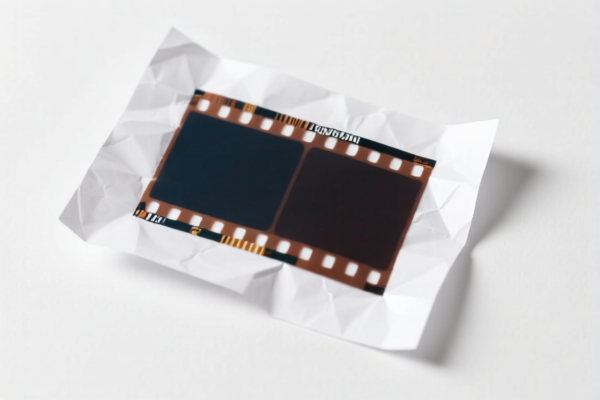
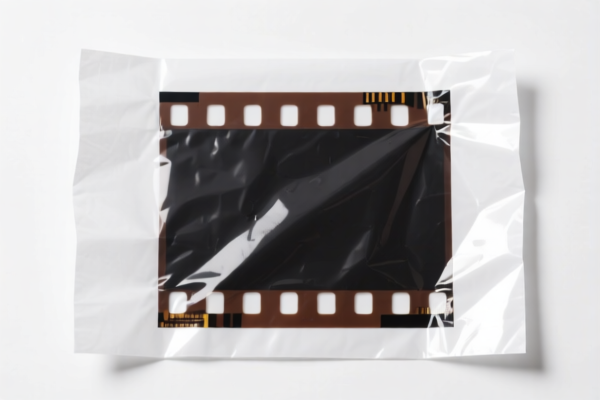
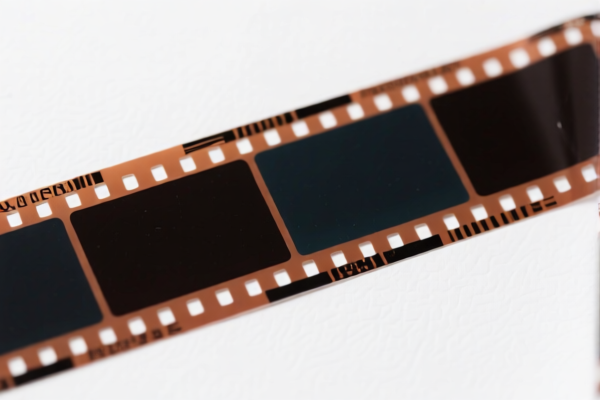
AI Analysis
🎞️ X-Ray Photographic Film & Paper (Medical Imaging Materials)
🌐 HS Code Reference & Customs Clearance Guide | 2026 Latest Tariff Full Analysis | Professional Clearance Strategy
📌 I. Product Definition & Classification: What Exactly Are You Shipping?
X-ray photographic film and paper are light-sensitive materials used in medical and industrial imaging. In international trade, they fall under Chapter 37 (Photographic or Cinematographic Goods). The key to accurate classification lies in distinguishing between the base material (paper vs. plastic/film) and the intended use (general photography vs. X-ray/Medical).
⚠️ Key Distinction Point:
- Paper-Based: If the base material is paper or cardboard, it falls under 3703 or 3707.
- Film-Based (Non-Paper): If the base material is plastic, cellulose acetate, or other non-paper substrates (typical for X-ray films), it falls under 3702 or 3707.
- X-Ray Specific: While "X-ray" is a use case, customs often classifies these as "Sensitive to X-Rays" (3702.10) or general photographic materials if the specific X-ray code is not strictly enforced, but 3707 is often used for emulsions/sensitizers.
📦 II. HS Code Classification Details (2026 Latest Tariff Authoritative Comparison)
Based on the provided data, here are the four matched HS Codes for "X-ray photographic film and paper":
| HS Code | Product Description | Matching Logic (Summary) | Substrate Type |
|---|---|---|---|
3707.10.00.90 |
Sensitive Emulsions for Photographic Use | Matches "photographic sensitizers" based on material and usage characteristics. | Liquid/Paste Emulsion |
3703.90.30.90 |
Other Photographic Paper & Cardboard | Matches material (paper/cardboard) and usage (photographic/sensitive). | Paper/Cardboard |
3702.10.00.60 |
Photographic Film Sensitive to X-Rays | Matches usage (X-ray) and classification logic; inferred as non-paper fabric/film. | Plastic/Film |
3707.10.00.05 |
Photographic Emulsions & Papers | "Photographic film & paper" aligns highly with "sensitive emulsions" in category 3707.10. | Liquid/Paste Emulsion |
3703.90.60.00 |
Other Photographic Paper/Cardboard/Fabrics | "Photographic paper" and "film" match the material requirement for "paper/cardboard/fabrics (sensitive/unexposed)". | Paper/Cardboard |
🔍 Critical Note:
-3702.10.00.60is the most direct match for X-ray film if it is on a non-paper base (plastic).
-3703.90.30.90and3703.90.60.00are the best matches if the product is X-ray paper (paper-based).
-3707.10codes are used if the product is considered a sensitive emulsion or a broader category of photographic chemicals/materials.
💰 III. 2026 Latest Tariff Rate Breakdown (Including Surtaxes & Policy Add-ons)
✅ Applicable Country: United States (US)
✅ Origin: China (CN)
✅ Effective Time: From November 10, 2025 (including subsequent imports)
🎯 1. 3707.10.00.90 – Photographic Sensitive Emulsions
| Item | Details |
|---|---|
| Base Tariff | 3.0% |
| Surtax (Section 301) | +25.0% |
| Section 122 Surtax | +10.0% |
| Total Tariff Rate | 38.0% |
| Tax Calculation | CIF Value × 38.0% |
| De Minimis Eligibility | ❌ Not Eligible (High tariff rate exceeds threshold) |
| Legal Basis Path | Base Tariff: 3.0% → Surtax: 25.0% → Section 122: 10% |
📌 Explanation:
- The total duty is 38.0%. This applies to liquid/paste emulsions used in photography.
- Section 122 (10%) and Section 301 (25%) are additive surcharges for Chinese origin goods.
🎯 2. 3703.90.30.90 – Other Photographic Paper & Cardboard
| Item | Details |
|---|---|
| Base Tariff | 3.7% |
| Surtax (Section 301) | +25.0% |
| Section 122 Surtax | +10.0% |
| Total Tariff Rate | 38.7% |
| Tax Calculation | CIF Value × 38.7% |
| De Minimis Eligibility | ❌ Not Eligible |
| Legal Basis Path | Base Tariff: 3.7% → Surtax: 25.0% → Section 122: 10% |
📌 Note:
- This code is for paper-based photographic materials.
- The rate (38.7%) is slightly higher than3707.10.00.90due to the higher base tariff (3.7% vs. 3.0%).
🎯 3. 3702.10.00.60 – Photographic Film Sensitive to X-Rays
| Item | Details |
|---|---|
| Base Tariff | 3.7% |
| Surtax (Section 301) | +25.0% |
| Section 122 Surtax | +10.0% |
| Total Tariff Rate | 38.7% |
| Tax Calculation | CIF Value × 38.7% |
| De Minimis Eligibility | ❌ Not Eligible |
| Legal Basis Path | Base Tariff: 3.7% → Surtax: 25.0% → Section 122: 10% |
📌 Important:
- This is the most precise code for X-ray film (if non-paper).
- Despite being "X-ray specific," it still incurs the full 38.7% tariff due to origin-based surcharges.
🎯 4. 3707.10.00.05 – Photographic Emulsions & Papers
| Item | Details |
|---|---|
| Base Tariff | 3.0% |
| Surtax (Section 301) | +25.0% |
| Section 122 Surtax | +10.0% |
| Total Tariff Rate | 38.0% |
| Tax Calculation | CIF Value × 38.0% |
| De Minimis Eligibility | ❌ Not Eligible |
| Legal Basis Path | Base Tariff: 3.0% → Surtax: 25.0% → Section 122: 10% |
📌 Note:
- Similar to3707.10.00.90, this is for emulsions.
- 38.0% is the lower end of the tariff range for these goods.
🎯 5. 3703.90.60.00 – Other Photographic Paper/Cardboard/Fabrics
| Item | Details |
|---|---|
| Base Tariff | 2.8% |
| Surtax (Section 301) | +25.0% |
| Section 122 Surtax | +10.0% |
| Total Tariff Rate | 37.8% |
| Tax Calculation | CIF Value × 37.8% |
| De Minimis Eligibility | ❌ Not Eligible |
| Legal Basis Path | Base Tariff: 2.8% → Surtax: 25.0% → Section 122: 10% |
📌 Note:
- This code offers the lowest total tariff (37.8%) for paper-based materials.
- Use this if the product is clearly photographic paper and fits the "other" category.
🛠️ IV. Customs Clearance Practical Advice (Battle-Tested Pitfall Guide)
✅ 1. Documentation Checklist (Non-Negotiable)
| Document | Mandatory? | Description |
|---|---|---|
| ✅ Product Specification Sheet | ✔️ | Must specify: Substrate (Paper vs. Plastic), Sensitivity (X-Ray vs. Visible Light), Dimensions. |
| ✅ Material Composition Statement | ✔️ | Explicitly state the base material (e.g., "Cellulose Acetate Film" or "Baryta Paper"). |
| ✅ Product Photos (Clear) | ✔️ | Show the packaging, label, and any safety warnings (X-ray materials may require radiation safety labels). |
| ✅ Certificate of Origin (CO) | ✔️ | Crucial for proving Chinese origin (to apply surcharges) or if claiming exemption from other countries. |
| ✅ Commercial Invoice | ✔️ | Description must match HS code logic (e.g., "X-ray Film, Plastic Base, Sensitive to X-rays"). |
| ✅ Packing List | ✔️ | Detail net/gross weight, box dimensions. |
✅ 2. Declaration Tips (Key Mnemonic)
🔥 "Base Material First, Use Case Second, Emulsion vs. Sheet Clear!"
| Scenario | Correct Declaration | Wrong Practice |
|---|---|---|
| X-ray Film (Plastic Base) | 3702.10.00.60 |
Misclassifying as "Printer Paper" → Low tariff, high penalty |
| X-ray Paper (Paper Base) | 3703.90.30.90 or 3703.90.60.00 |
Misclassifying as "3707" (Emulsion) → Potential discrepancy |
| Photographic Emulsion (Liquid) | 3707.10.00.90 or 3707.10.00.05 |
Shipping liquid as "Film" → Safety/Customs rejection |
| Unexposed X-ray Film | Must declare as "Unexposed" | Declaring as "Exposed/Used" → Different HS code, potential biohazard review |
✅ 3. Special Handling Cases
| Case | Handling Advice |
|---|---|
| OEM Custom X-ray Film | Provide customer PO + technical specs to justify "Special Purpose" classification. |
| X-ray Film for Industrial Use (Non-Medical) | Still classified under Chapter 37, but ensure description highlights "Industrial NDT (Non-Destructive Testing)" if applicable. |
| Combined Shipment (Film + Paper) | Do not split unless necessary. Declare each item separately with its correct HS Code. Splitting incorrectly can lead to audits. |
| Radiation Safety Labels | Ensure packaging includes required radiation symbols. US Customs may flag shipments without proper safety labeling for inspection. |
🌍 V. Global Market Clearance Comparison (2026 Latest)
| Country/Region | Recommended HS Code | Tariff (CN Origin) | Certification Requirements | Notes |
|---|---|---|---|---|
| 🇺🇸 USA | 3702.10.00.60 (Film) 3703.90.60.00 (Paper) |
37.8% - 38.7% | FDA (if medical device accessory), RoHS (if electronics integrated) | Highest surcharges: 301 (25%) + 122 (10%) |
| 🇨🇳 China | 3702.10.00.60 |
~3.0% - 3.7% | CCC (if medical device) | No surcharges. |
| 🇪🇺 EU | 3702.10.00 |
0% - 4.5% | CE Mark (if medical device), REACH | No US-style surcharges. |
| 🇯🇵 Japan | 3702.10.00 |
3.0% - 5.0% | PMDA (if medical) | Moderate tariffs. |
| 🇦🇺 Australia | 3702.10.00 |
5.0% | TGA (if medical) | No major surcharges. |
📌 Conclusion:
- USA is the most expensive market for Chinese-origin X-ray film/paper due to Section 301 (25%) and Section 122 (10%) surcharges.
- Total duty of ~38% significantly impacts profit margins.
- EU/Asia markets offer much lower duty rates (0-5%), making them more competitive for price-sensitive shipments.
📌 VI. Common Mistakes & Pitfall Guide (Lessons from Blood & Tears)
❌ Mistake 1: Declaring X-ray Film as "Printer Paper" or "Office Supplies"
👉 Consequence: Customs audit, seizure, and retroactive application of 38%+ tariffs + fines.
❌ Mistake 2: Using 3707 (Emulsions) for solid Film/Paper
👉 Consequence: Misdeclaration. Customs may reject the shipment or reclassify it, causing delays.
❌ Mistake 3: Ignoring Section 122 (10%) surcharge
👉 Consequence: Underpayment of duty by 10%. CBP will demand back payment + interest.
❌ Mistake 4: Failing to specify "Unexposed"
👉 Consequence: If described vaguely as "X-ray Film," customs may assume it's "Used/Exposed" and apply different rules or security reviews.
✅ Correct Declaration Example:
"X-RAY PHOTOGRAPHIC FILM, UNEXPOSED, PLASTIC BASE, SENSITIVE TO X-RAYS, FOR MEDICAL IMAGING USE, MODEL XYZ, NO FDA DEVICE CODE REQUIRED (IF APPLICABLE)"
🎯 VII. Conclusion: Precision in Classification Saves Thousands!
🎯 Remember the Mnemonic:
🔹 "Paper goes to 3703, Film to 3702, Emulsion to 3707."
🔹 "US Tariff is 38%, Don't forget 301 & 122!"
🔹 "X-ray is a use, Base Material is the Key!"
📌 Pro Tip:
If your X-ray film is sourced from Vietnam, Mexico, or Thailand, you may qualify for USMCA or other FTAs, potentially reducing the tariff to 0% - 5%.
Recommend Advance Ruling with US CBP if shipping large volumes, to confirm the exact HS Code and avoid surprise bills.
📣 Immediate Action:
📞 Contact a Licensed Customs Broker + Provide Product Specs + Verify Base Material
🚀 Clear Customs Smoothly, Avoid Seizure, Protect Your Margins!
✨ Professional Clearance Starts with Precise Classification!
💼 Every Percentage Point of Tariff Matters!
Customer Reviews
About HS Code Classification
The Harmonized System (HS) is an internationally standardized nomenclature developed by the World Customs Organization (WCO) to classify traded products. Over 200 countries use the HS system as the basis for customs tariffs, trade statistics, and import/export regulations.
Each HS code follows a hierarchical structure:
- Chapter (2 digits) — Broad category of goods (e.g., Chapter 84: Machinery and Mechanical Appliances)
- Heading (4 digits) — More specific grouping within the chapter
- Subheading (6 digits) — Internationally standardized breakdown, used by all WCO member countries
- National subdivisions (8-10 digits) — Country-specific extensions for further classification, such as US HTSUS 10-digit codes
Correct HS code classification is essential for smooth customs clearance, accurate duty payment, and compliance with trade regulations. Misclassification can lead to customs delays, overpayment of duties, or penalties.
When importing from CN to US, the applicable tariff rates may include:
- Most-Favored-Nation (MFN) rate — The standard duty rate applied to WTO members
- General rate — Applied to countries without trade agreements
- Trade remedy duties — Additional tariffs such as Section 301 (anti-dumping), Section 232 (national security), or countervailing duties
The information provided on this page is for reference purposes only. For official classification, please consult with your local customs authority or a licensed customs broker.